
REVIEW · GREECE STREET FOOD TOURS
Souvlaki Class in Mykonos
The best part of this Mykonos experience is that you do not just eat souvlaki, you make the whole meal yourself. At Mykonian Farm, chef Mike guides you through the marinade, skewers, vegetables, tzatziki, grill, and final pita wrap. I like the hands-on pace, and I like that the meal ends with your own souvlaki, Greek salad, and a beer.
I also appreciate the farm setting and the chance to see more than the usual whitewashed lanes. The main caution is that the farm tour can become a long talk about gardening and farming, and one class finished early enough for a half-hour wait before transport arrived. Ask about timing if your schedule is tight.
Key points to know before booking
- Chef Mike leads the cooking: His warm, friendly teaching style receives repeated praise, though his English may be limited at times.
- You prepare every major part: Expect marinating, skewering, chopping, tzatziki, grilling, and wrapping.
- The tzatziki contest adds a playful challenge: You make your own sauce before judging whose version is best.
- The meal is included: Your finished souvlaki comes with Greek salad and one beer.
- Transfers cover hotels and ports: Remote areas such as Elia, Kalafatis, and Paradise may carry a €10 per-person round-trip supplement.
- Allow a full three hours: Farm visits, cooking, eating, and transport timing may not follow a tight cruise schedule.
Why a souvlaki class fits a Mykonos day
Souvlaki is Greece’s great fast food, but the simple name hides several small decisions. The meat must be seasoned, the pieces must sit properly on the skewer, the vegetables need the right cut, and the tzatziki must balance garlic, cucumber, and yogurt.
That makes this class more useful than a standard restaurant meal if you want to understand what you are eating. You learn the steps in the order that matters, then sit down with the finished result. I like this kind of cooking activity because the food is both the lesson and the reward.
The class is held at Mykonian Farm, rather than in a city kitchen. That changes the mood. You get a farm visit along with the food lesson, and the setting gives the activity a stronger sense of place. You may see grapes, animals, and farm facilities during the visit, depending on how the host structures the tour that day.
The experience lasts three hours. That is long enough for a proper lesson without taking up an entire day on Mykonos. Still, you should not treat the schedule as a tightly timed transfer from one attraction to another. The cooking portion may finish before your ride, so build in some breathing room.
A few more street food tours around Greece worth a look
- Athens: Food Market Visit and Cooking Class with Wine
★ 4.9 · 1,087 reviews - Athens Greek Cooking Class Pita Gyros from Scratch with a Local
★ 5.0 · 175 reviews - Naxos: Food Walking Tour & Cooking Class with Meal & Drinks
★ 4.9 · 86 reviews
Getting to Mykonian Farm from your hotel or port
Pickup is included from hotels across Mykonos, as well as the old port and new port. When you book, provide your hotel name or cruise port clearly. For a villa, apartment, house, or accommodation without a clear name, you may need to send a Google Maps location, a nearby hotel address, or another useful landmark.
This matters on Mykonos, where road names and property names are not always enough for a driver to find you quickly. Be ready at the agreed pickup point, too. A delay of more than 15 minutes can affect the transfer schedule for everyone else.
Remote pickup areas can cost extra. The listed examples include Elia, Kalafatis, Agrari, Panormos, Super Paradise, Paradise, and Kanalia. The supplement is €10 per person round trip, paid in cash to the driver. Villas and other private rentals may also involve an extra charge if they sit far from the normal route.
The transfer makes this a practical choice for visitors who do not want to arrange a taxi to a rural farm. It is especially handy if you are staying away from Mykonos Town. On the other hand, pickup times can make the total outing feel longer than the three-hour activity itself.
Meeting chef Mike and seeing the farm
At the farm, you are welcomed by the superintendent and taken to a prepared cooking area. Chef Mike handles the cooking instruction. He has a friendly, hands-on approach, and the strongest praise for the class centers on his warmth and willingness to show people how things work.
His English may be limited, so do not expect a long, technical cooking lecture. The lesson works best as a demonstration followed by action. Watch closely, copy the steps, and ask simple questions as you go. The food itself provides plenty of visual guidance.
The farm visit is part of the appeal, but it is also the least predictable part of the experience. You may see grapes, animals, and new farm facilities. One account describes the farm manager giving a long talk about horticulture and personal farming concerns, which was not what the participant expected from a light cooking outing.
My advice is simple: think of the farm tour as an extra, not the main reason to book. If you enjoy rural life and gardening, you may find it interesting. If you want a quick cooking class with no side discussion, the farm portion may test your patience.
Marinating, skewering, and preparing the filling
The hands-on cooking begins with the ingredients. You learn how to marinate the meat, then thread it onto skewers. This is basic work, but it is where you begin to see why good souvlaki is more than meat placed over a flame.
The size of the pieces matters. So does the way they sit together on the skewer. The class gives you a chance to handle these steps under the head griller’s supervision rather than watching someone else do them behind a counter.
You also prepare the vegetables. The class includes cutting and slicing the ingredients that go into the pita. Souvlaki is often served with tomato, onion, lemon, sauces, and sometimes fried potatoes. The exact filling used in your class is not fully specified, but the process includes preparing the vegetables and wrapping the finished ingredients in pita bread.
This part suits families, couples, and small groups who like doing rather than watching. You are not expected to arrive with cooking skills. The instruction is built around ordinary kitchen tasks, and the head griller helps keep things on track.
Same city, a different plate:
- Greek Food Walking Tour in Athens
★ 5.0 · 4,740 reviews - Athens: Street Food Tasting Tour
★ 4.9 · 3,343 reviews - Athens: Guided Greek Food Walking Tour with Tastings
★ 4.9 · 2,859 reviews - Athens Authentic Greek Food Walking Tour (Small Group)
★ 5.0 · 809 reviews
Making tzatziki and joining the friendly contest
Tzatziki gets its own place in the lesson. You watch a demonstration of the main sauce, then make your own version. A small competition follows, with the goal of producing the best tzatziki.
I like this detail because it gives the class a little energy without turning it into a serious contest. You can compare the results, notice how different amounts of garlic or seasoning change the flavor, and then use your sauce in the final souvlaki.
The activity does not provide a full recipe in advance, so you should not assume you will leave with a written formula. If you want to recreate the sauce at home, pay attention and ask questions during the demonstration. The value here is learning through the process, not collecting a formal cooking certificate.
For children, the tzatziki challenge may be the most entertaining part of the class. For adults, it is a useful reminder that familiar Greek food depends on balance. A heavy sauce can overpower the meat, while a mild one may disappear inside the pita.
Grilling your own souvlaki
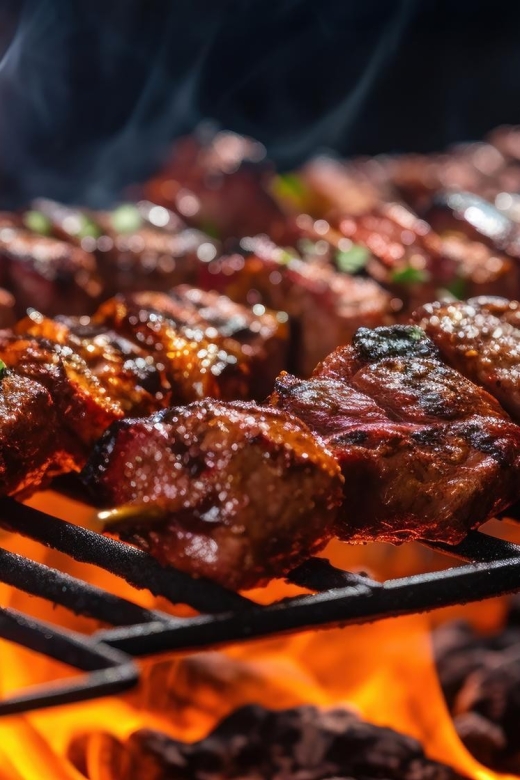
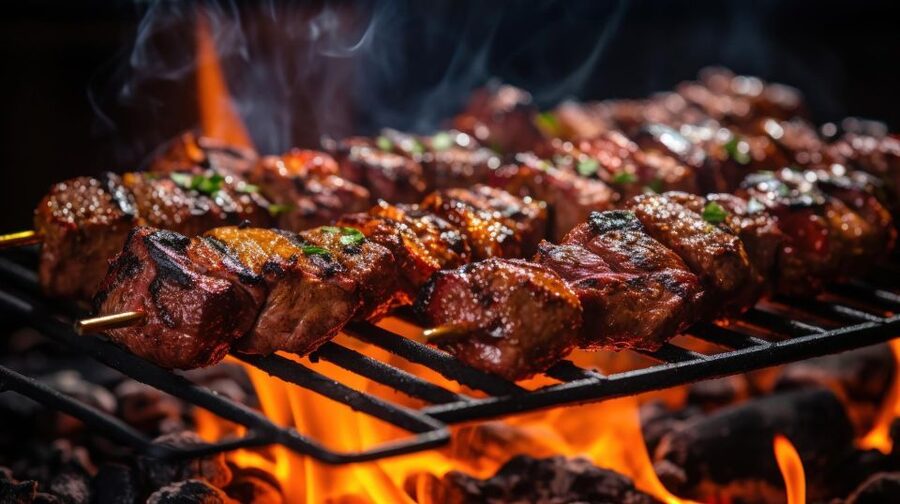
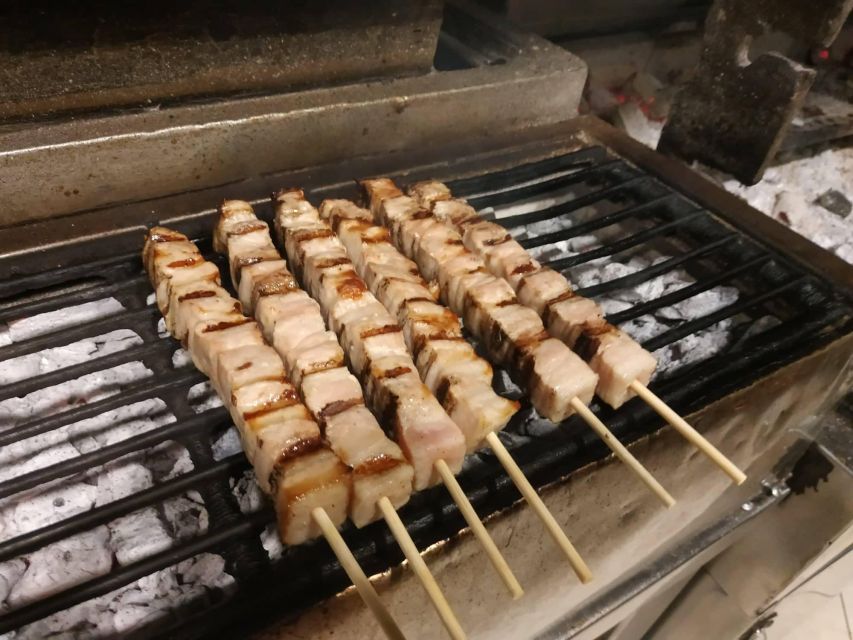
Once the ingredients are ready, the meat goes to the grill. You take part in the cooking under the supervision of the head griller. This is the point when the class shifts from preparation to payoff: the smell changes, the meat takes on color, and your meal begins to look like the souvlaki you ordered all over Greece.
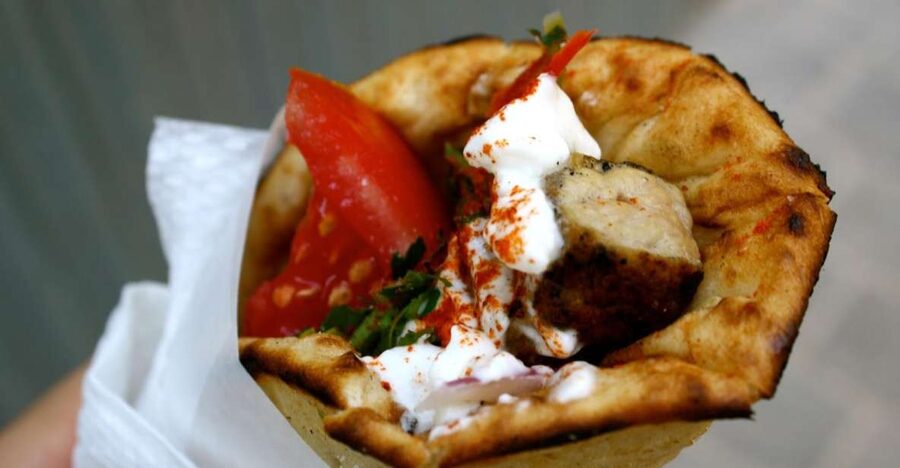
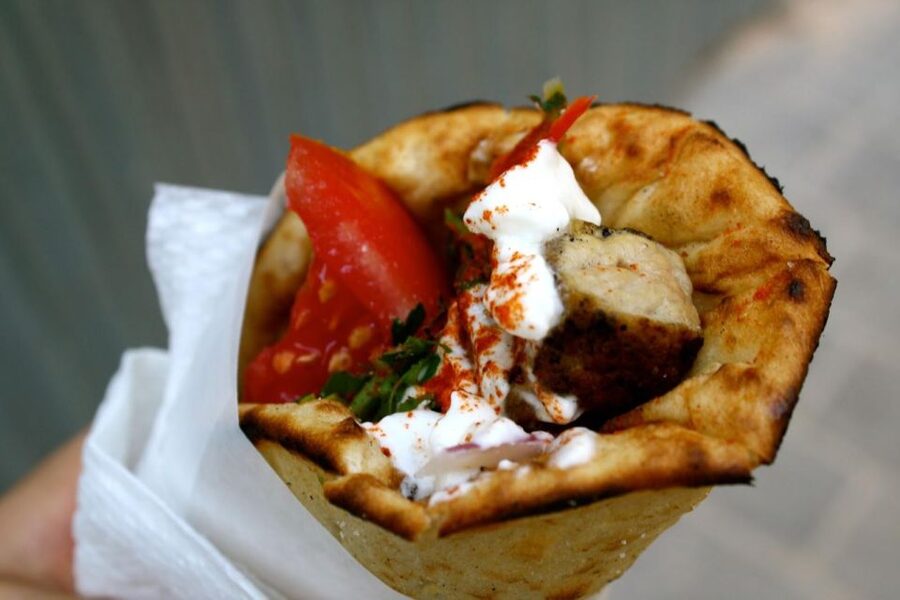
Souvlaki is often eaten straight from the skewer while still hot. In modern Greek service, it is also commonly wrapped in pita with vegetables and sauces. Here, you work toward the wrapped version, placing the grilled meat and prepared ingredients together before eating.
The supervision matters. Grilling meat requires attention, and the class is not asking you to manage the fire alone. You get the fun of taking part without being left to guess when the meat is ready.
The finished meal includes a Greek salad and a beer. That turns the class into a full lunch or dinner rather than a quick cooking demonstration. A Greek salad also gives the meal some freshness beside the grilled meat and pita.
Eating the meal you prepared
The final meal is the strongest reason to choose this activity over a simple farm visit. You sit down with souvlaki made by your own hands, along with salad and beer. The setting may offer a memorable view, and one account describes enjoying the food while chatting with the farm team and new friends.
I find this kind of ending more satisfying than receiving a sample plate at the start. You have handled each stage, made decisions along the way, and then get to judge the result yourself. Even an imperfect skewer can taste good when you know the work behind it.
The meal also gives you time to relax after the cooking. The class is social, so it works well for people who enjoy sharing food and conversation. It may be less appealing if you want a quiet, private dinner or a polished restaurant service.
Commemorative photo shots are included. That is a small extra, but it suits the experience. You get a record of the cooking session rather than only a memory of the meal.
What the $106 price includes
At $106 per person, this is not a bargain meal. You could buy souvlaki in Greece for far less. The question is what you are paying for beyond the food.
The price includes the three-hour cooking class, entrance to the farm, the meal of souvlaki, Greek salad, and beer, commemorative photos, and hotel or port pickup and drop-off. When you add transport, the farm setting, instruction, and several hours of activity, the cost becomes easier to justify for someone who wants an organized food experience.
The value is strongest if you would otherwise pay for a taxi to a rural farm or spend money on a separate food tour. It is weaker if you mainly want to eat souvlaki and have little interest in preparing it yourself.
Remember the possible €10 per-person round-trip supplement for remote pickup areas. Ask about that cost before booking if you are staying in one of the listed villages or at a distant villa.
Who will enjoy this class most
I would recommend the class to you if you enjoy Greek food, like practical activities, and want a break from beach time or sightseeing in Mykonos Town. It is a good fit for couples, families, and groups of friends who enjoy a relaxed, social meal.
It also suits cruise passengers because pickup is available at the old or new port. Still, cruise schedules can be unforgiving. Confirm the start time and leave a generous buffer for the return, especially if you must be back on board by a fixed hour.
The class may not suit you if you dislike group activities, farm settings, or informal instruction. The English-language teaching is available, but Chef Mike’s English may be limited. The farm manager’s talk can also run longer than expected, and the activity may finish before transport arrives.
People with strict food requirements should ask before booking. The supplied details describe meat, pita, vegetables, tzatziki, salad, and beer, but they do not specify vegetarian, vegan, gluten-free, or allergy arrangements.
Booking details that matter
You can cancel up to 24 hours before the activity for a full refund. You can also reserve now and pay later, which helps if your Mykonos schedule is still shifting.
Starting times depend on availability. The duration is three hours, but pickup and drop-off add travel time. Give accurate location details when booking, and be ready on time so the transfer does not affect other participants.
The activity is conducted in English. The provider is Cretan Spiti, and the farm portion is hosted with support from the farm superintendent and manager.
Should you book this Mykonos souvlaki class?
Book it if you want to cook, not just eat, and if a farm setting sounds more appealing than another restaurant meal. The hands-on sequence, tzatziki competition, grilled souvlaki, salad, beer, and included transfer create a well-rounded half-day outing.
Skip it if your schedule is tight, you want a polished chef-led lesson in fluent English, or you have no interest in the farm visit. The occasional long farm talk and possible waiting time after class are real considerations.
For most food-loving visitors, I see this as a worthwhile Mykonos choice at $106, provided you value the activity and transport as much as the meal. Go in expecting a friendly, informal class rather than a formal culinary school, and you will be better prepared to enjoy it.
FAQ
How long does the souvlaki class last?
The cooking experience lasts three hours. Pickup and drop-off time are additional.
What food and drink are included?
You eat the souvlaki you prepare, along with a Greek salad and one beer.
Is hotel pickup included?
Yes. Pickup and drop-off are included from hotels anywhere on Mykonos, as well as the old port and new port.
Can I be picked up from a villa or apartment?
Pickup may be available, but villas, apartments, houses, and remote accommodations may involve an extra charge. You may need to provide a Google Maps location or a nearby hotel address.
Is there an extra pickup fee for remote areas?
Yes. Areas such as Elia, Kalafatis, Agrari, Panormos, Super Paradise, Paradise, and Kanalia may have a €10 per-person round-trip supplement, paid in cash to the driver.
What language is the class taught in?
The class is conducted in English.
What cooking steps will I learn?
You learn to marinate the ingredients, skewer the meat, prepare vegetables, make tzatziki, grill the meat, and wrap the souvlaki in pita.
Can I cancel the booking?
Yes. You can cancel up to 24 hours in advance for a full refund. You can also reserve now and pay later.
Just added around Greece
- Premium Cretan Olive Oil Tasting, Wine, Raki and Local Food Tour★ 5.0 · 17 reviews
- Street food walking Heraklion tour★ 5.0 · 14 reviews
- Private Chania Old Town Food Walking Tour★ 5.0 · 5 reviews
- Private History, Sights, and Food Walking Tour of Chania City★ 5.0 · 2 reviews
- Taste Corfu: Private Corfu Food Walking Tour★ 5.0 · 82 reviews
- Athens Sights Highlights on eBike Tour with Local Food & Drinks★ 5.0 · 13 reviews
- Classic Athens Food Tour with Local Drink & Market Visit★ 5.0 · 34 reviews
- Street Food Tour – Sample the Food the Locals Love★ 4.0 · 13 reviews
Greece Street Food Tours, compared.
Food Market Visit and Cooking Class with Wine
Read our review →
Athens Authentic Greek Food Walking Tour (Small Group)
Read our review →

Browse the lists this tour appears in