
REVIEW · GREECE STREET FOOD TOURS
Private History, Sights, and Food Walking Tour of Chania City
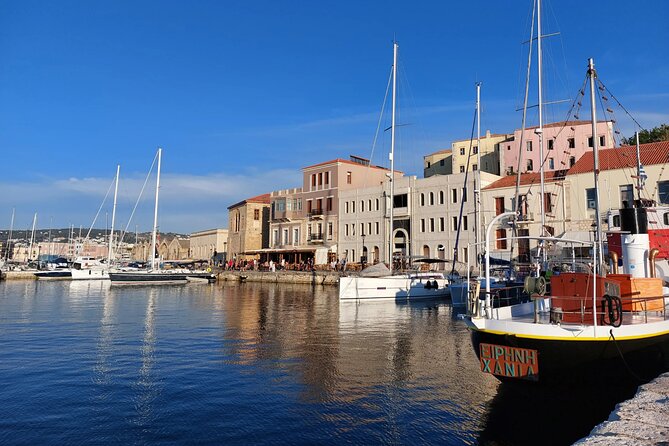
Chania’s past comes at you from every direction on this private walk: Venetian harbor walls, Ottoman houses, Orthodox church traditions, World War II photographs, and the smells of olive oil, honey, cheese, and warm pastry. Guide Apostolis brings the city’s changing rulers into focus without turning the old town into a museum exhibit.
I like the private format, since your group can ask questions and request small changes to the route. I also like the pairing of history with food, especially the final stop for bougatsa filled with mizythra, a fresh goat’s cheese.
The main consideration is the price: at $156.28 per person, this is a serious spend for a three- to four-hour walk. It makes the most sense for a small group that values personal guiding, rather than for someone who simply wants a quick harbor stroll.
Key points at a glance
- World War II context: Historical photographs help connect Chania’s streets with the Battle of Crete and the city’s wartime past.
- Several eras in one walk: Venetian, Roman, Egyptian, Ottoman, and modern Cretan history all appear along the route.
- A real food finish: You taste olive oil, dairy products, honey, wine, rusks, and Chania-style bougatsa.
- Private and flexible: Only your group takes part, with possible changes based on your needs.
- Useful meeting point: The tour begins at the Old Chania Market at 9:00 a.m. and ends back there.
- Strong guide focus: Apostolis is praised for explaining Chania and Crete in detail, especially the Battle of Crete.
Chania’s story begins at the old market
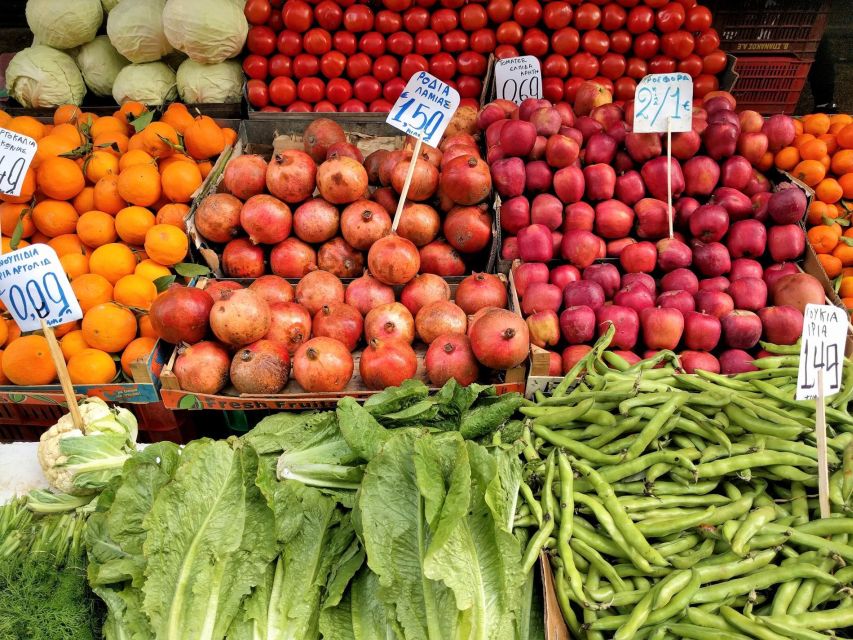
Meet at Chania’s Municipal Market at 9:00 a.m. The market, called the Agora, is not just a place to buy food. It offers a useful starting point for understanding how commerce, daily life, and older settlements shaped the city.
Your licensed historian-guide explains the market’s role in Cretan life and links it to the archaeological past. That connection matters. Chania is not a city where history sits neatly behind glass. Old religious, commercial, military, and domestic layers share the same streets.
The stop lasts about 15 minutes, so do not expect a long market visit or a full shopping break. Think of it as an orientation. You get the setting, the background, and a sense of how local life fits into the city’s larger story.
Starting here also makes practical sense. You begin in a central part of Chania before moving toward the old harbor and the narrower lanes beyond it.
More Street Food Walking Tours in Greece
- Greek Food Walking Tour in Athens
★ 5.0 · 4,740 reviews - Athens: Guided Greek Food Walking Tour with Tastings
★ 4.9 · 2,859 reviews - Athens Authentic Greek Food Walking Tour (Small Group)
★ 5.0 · 809 reviews
Walking from Venetian walls to Ottoman homes
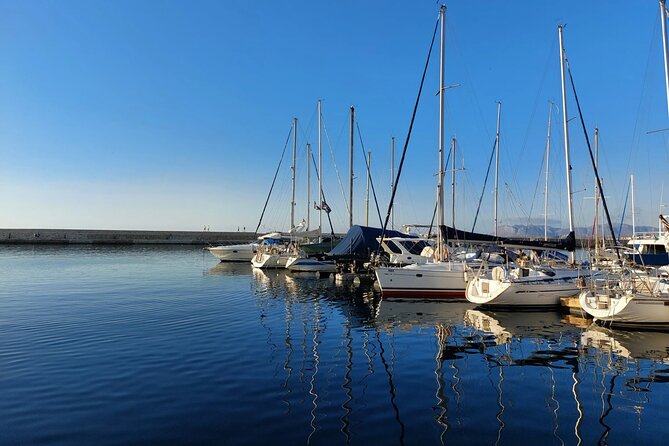
The longest portion of the tour takes place around Chania’s old town and Venetian harbor. Plan on roughly an hour of walking through streets and alleys, with explanations of the Venetian era, Roman rule, the Egyptian period, Ottoman control, and later events.
The appeal is the way the history appears in ordinary details. You may pass traditional houses, fortification remains, and buildings that show how different powers left their mark. Instead of hearing a list of dates, you see how architecture and street patterns preserve the city’s past.
The private setting should help here. You can stop to ask why a building looks the way it does, how a certain period affected Chania, or what changed under Ottoman rule. A larger group often has to keep moving. On this walk, your guide can shape the pace around your interests, within the tour’s time limit.
Apostolis receives particular praise for his explanations of Chania and Crete during World War II. The Battle of Crete receives special attention, supported by rare historical photographs. These images give the old town a more human scale. You are not only looking at old stone. You are comparing the city as it appears now with the city seen during a difficult period.
The route is still a walking tour, not a formal museum program. Details about specific buildings or interiors can vary, and the supplied information does not promise entry to a long list of monuments. You should book it for guided interpretation of the streets, views, and selected stops rather than for extensive indoor sightseeing.
A harbor viewpoint with the lighthouse in view
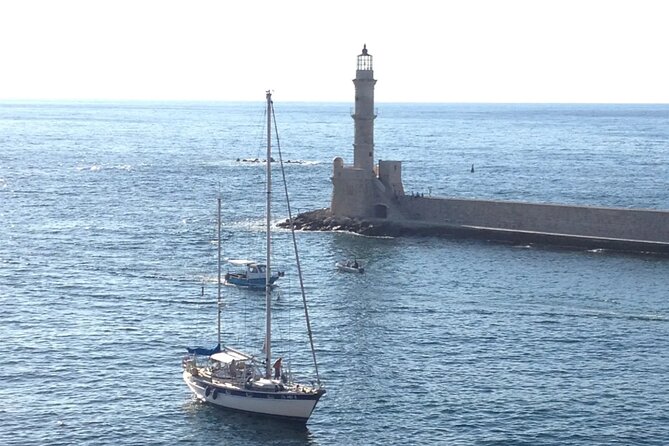
After exploring the old town, the walk reaches a higher point for photographs and a broader look at Chania. This 30-minute stop focuses on the remains of the old settlement, the city’s long habitation, the Venetian lighthouse, and views toward the Aegean Sea.
This is one of the tour’s better pauses because it gives you a chance to connect the details from the lanes with the wider shape of the city. From above, the harbor, fortifications, and old settlement are easier to understand.
Bring a camera, but also give yourself a moment to listen. The guide uses the view to explain how Chania developed over the centuries. The point is not simply a pretty harbor picture. It is the relationship between the early settlement, the waterfront, and the later city.
The viewpoint stop lasts about half an hour. That is enough time for photographs and conversation, though not enough for a long independent break. If your group wants a relaxed morning with frequent pauses, the private format may allow some adjustment, but the advertised tour still has a fixed overall length.
Trimartiri and the customs of modern Crete
The next stop is the Holy Metropolitan Church of the Presentation of the Virgin Mary, commonly called Trimartiri. You spend about 30 minutes here discussing Christian Orthodox traditions, local customs, unwritten social rules, and the place of the church in present-day Cretan society.
This part adds something that architecture alone cannot provide. You learn how religious tradition connects with everyday life in Crete. The guide is not only pointing out a famous church. He is explaining why the building and its traditions still matter.
For visitors who enjoy cultural context, this may be more useful than another quick photo stop. You get a chance to ask about customs and local ethics in a setting tied directly to the subject.
The supplied details do not promise a particular religious service, special access, or a formal interior tour. Treat the stop as a guided cultural explanation centered on one of Chania’s best-known churches.
Same city, a different plate:
- Athens: Street Food Tasting Tour
★ 4.9 · 3,343 reviews - Athens: Food Market Visit and Cooking Class with Wine
★ 4.9 · 1,087 reviews - Athens: Ultimate Food Walking Tour with 15 Tastings
★ 4.9 · 567 reviews - Athens: Authentic Greek Food Walking Tour
★ 4.9 · 549 reviews
Tasting Cretan staples in the old town
Food enters the tour before the final pastry. After the main historical walk, you stop at a traditional Cretan shop for about 20 minutes. The tasting includes extra virgin olive oil, fresh dairy products, honey, wine, and traditional rusks.
This is a compact introduction to the island’s food traditions. Your guide explains local eating habits and the role of the Mediterranean diet in modern life. That context makes the tasting more useful than simply sampling products without knowing how they fit into Cretan households and meals.
The selection also gives you practical shopping ideas. If you want to bring something home, you can learn more about familiar staples such as olive oil, honey, and rusks. The tour description does not state that purchases are required, and the tasting is included rather than listed as an extra charge.
Keep your expectations in check. This is a 20-minute food stop, not a full meal or a cooking class. The tour includes snacks and tastings, but you should not assume it replaces lunch, especially if you prefer a substantial meal in the middle of the day.
Bougatsa at Iordanis
The tour finishes at Bougatsa Iordanis, a Chania shop known locally for more than 100 years. You spend about 30 minutes tasting the city’s familiar bougatsa, made with flaky fyllo pastry and filled with mizythra, a fresh traditional goat’s cheese.
This is a smart ending. The pastry gives you a clear local taste, and the stop is specific enough to remember after the tour. Bougatsa can be associated with other Greek fillings and styles, so tasting Chania’s version with mizythra gives you something tied to the city rather than a generic snack.
The combination of pastry, cheese, and the earlier products makes the food side feel connected to the historical side. Cretan food is not treated as a separate attraction. It is part of the story of daily life, agriculture, and local identity.
The tasting is included, but the information provided does not specify the serving size or offer alternatives for dietary restrictions. If you have a food allergy or avoid dairy, ask before booking or at the start of the tour. The pastry includes dairy, and much of the earlier tasting also centers on food products.
What the private format is worth
The listed price is $156.28 per person. That is high for a three- to four-hour city walk, particularly if you compare it with a large group tour or a self-guided visit.
The value comes from the guide rather than from expensive admissions. Fees and taxes are included, and the tour includes the food tastings, but the main purchase is access to a licensed historian who can connect Chania’s many eras and answer questions as you go.
A private tour can be especially worthwhile for a small family group, a couple with a strong interest in history, or anyone visiting Chania for a short time. It can also work well as a shore excursion from Chania or Souda cruise port, since the provider offers the experience for cruise visitors.
Ask yourself how you normally sightsee. If you enjoy reading plaques, wandering without a plan, and stopping at cafes, the cost may feel excessive. If you want a clear route, historical photographs, local food explanations, and a guide who can adapt parts of the walk, the price is easier to defend.
Group discounts are available, though no discount amount is provided. Since the experience is private, the per-person cost may make more sense when shared among several people.
Timing, walking, and practical details
The tour starts at 9:00 a.m. at the Old Chania Market, Chania 731 32, Greece. It ends back at the same meeting point. The listed stops add up to about three hours and five minutes, while the full experience is described as lasting approximately three to four hours.
That morning start is helpful in a city where you may want to keep the afternoon open. It also gives you a useful introduction before exploring Chania on your own. You can return later to a street, church, shop, or harbor view that caught your attention.
You should be ready for a walking route through streets and alleys. The details do not provide a total distance, step count, or an accessibility rating. Most people can participate, and service animals are allowed, but anyone with mobility concerns should ask the provider about the exact route before booking.
The meeting point is near public transportation. A mobile ticket is available, and confirmation arrives at booking. These details make the experience easy to fit into a wider Chania day, but you should still allow time to reach the market for the 9:00 a.m. start.
The tour runs only for your group. Possible diversions or alterations can be arranged according to your needs, which is one of the clearest benefits of booking privately. The changes are not unlimited, so tell the provider in advance if a particular interest, food concern, or mobility need matters to you.
Cancellation is free up to 24 hours before the start time. Cancel later than that, or request a change within the final 24 hours, and the payment is not refunded. Gratuities are optional and not included.
Who will enjoy this Chania walk most
I would choose this experience if you want Chania explained by a historian rather than simply shown to you. The strongest fit is someone who enjoys the links between buildings, political eras, religion, wartime events, and food.
It also suits families and mixed-interest groups. One person can focus on Venetian architecture, another on World War II, and another on olive oil or bougatsa. A private guide has more room to answer different questions than a standard group walk.
Cruise passengers may find the route useful because it covers central Chania and returns to the starting point. The morning schedule leaves time for other plans, though your exact port timing and transport arrangements are not provided here.
I would hesitate if you want a long meal, extensive monument interiors, or a low-cost overview. The food portions are tastings, and the tour’s strength is interpretation along the streets rather than a series of major admission-ticket attractions.
Should you book this tour?
Book it if you want personal historical context and a food stop that feels tied to Chania. Apostolis’s focus on the Battle of Crete, the use of historical photographs, and the visit to Bougatsa Iordanis give the walk a clear identity.
Think twice if $156.28 per person strains your budget or if you prefer to explore independently. For a group willing to pay for a private licensed guide, the combination of Venetian harbor views, Ottoman and Roman context, Orthodox traditions, Cretan tastings, and bougatsa offers a well-shaped introduction to Chania.
FAQ
Where does the Chania walking tour begin?
The tour begins at the Old Chania Market, at Chania 731 32, Greece.
What time does the tour start?
The start time is 9:00 a.m.
Where does the tour end?
The activity ends back at the Old Chania Market, the same place where it begins.
How long does the tour last?
The experience lasts approximately three to four hours.
Is this a private tour?
Yes. Only your group participates in the activity.
Who leads the tour?
A professional licensed tour guide and historian leads the walk. The guide identified in the supplied information is Apostolis.
What food is included?
The experience includes tastings of extra virgin olive oil, fresh dairy products, honey, wine, and traditional Cretan rusks. It also includes bougatsa with mizythra cheese at Bougatsa Iordanis.
Is the tour available as a shore excursion?
Yes. It is available for visitors arriving through Chania and Souda cruise port.
What is the cancellation policy?
You can cancel for a full refund up to 24 hours before the tour’s start time. Cancellations or changes made less than 24 hours before the start are not accepted for a refund.
More Heritage Tours in Greece
- Historic Ybor City Food Walking Tour
★ 5.0 · 2,210 reviews - Palermo: Street Food and History Walking Tour
★ 4.9 · 1,486 reviews - Old Cairo Guided Walk Tour: History, Culture & Street Bites
★ 4.6 · 633 reviews - Walking Tour and street food Tour Palermo / History and Food
★ 5.0 · 386 reviews
Just added around Greece
- Premium Cretan Olive Oil Tasting, Wine, Raki and Local Food Tour★ 5.0 · 17 reviews
- Street food walking Heraklion tour★ 5.0 · 14 reviews
- Private Chania Old Town Food Walking Tour★ 5.0 · 5 reviews
- Taste Corfu: Private Corfu Food Walking Tour★ 5.0 · 82 reviews
- Athens Sights Highlights on eBike Tour with Local Food & Drinks★ 5.0 · 13 reviews
- Classic Athens Food Tour with Local Drink & Market Visit★ 5.0 · 34 reviews
- Fun Athens Street Food Tour with Local Guide Marina★ 5.0 · 2 reviews
- Street Food Tour – Sample the Food the Locals Love★ 4.0 · 13 reviews
Greece Street Food Tours, compared.

Food Market Visit and Cooking Class with Wine
Read our review →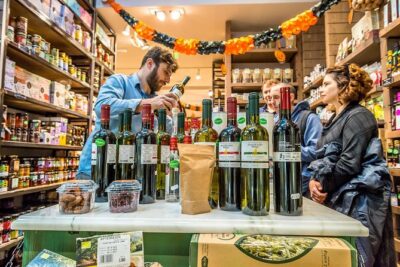
Athens Authentic Greek Food Walking Tour (Small Group)
Read our review →
Browse the lists this tour appears in