
REVIEW · BUENOS AIRES STREET FOOD TOURS
Buenos Aires: Empanadas and Alfajores Guided Cooking Class
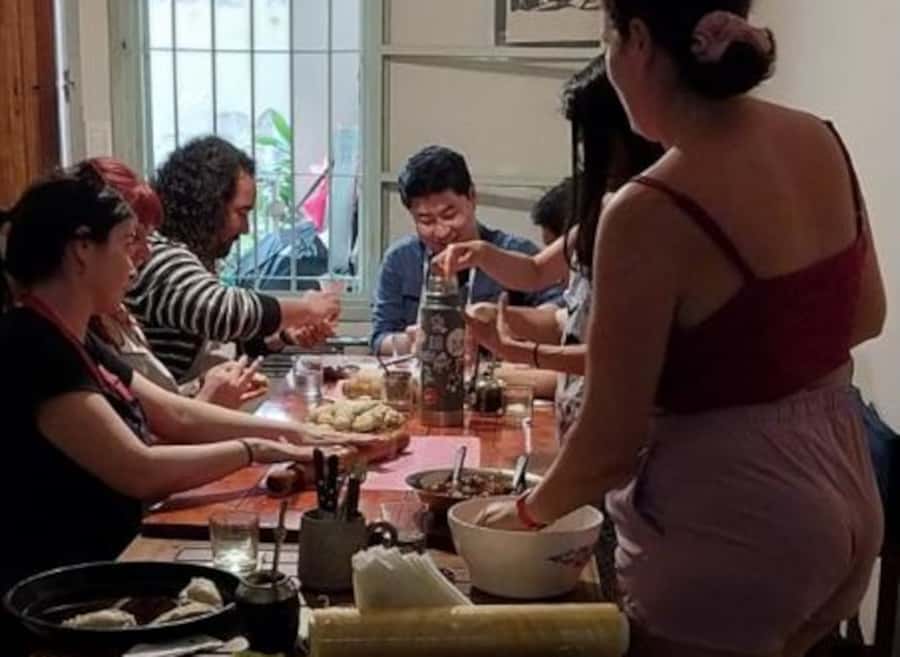
A cooking class in a local Buenos Aires home can tell you more about daily life than a formal food tour. Here, you make empanadas from scratch, learn the twisted repulgue seal, prepare alfajores with dulce de leche, and share mate around a table with people from several countries.
I like the warm family setting and the fact that the class is truly hands-on. I also like the generous format: your $37 covers ingredients, mate, water, the cooking lesson, and the meal. The main thing to consider is that the class can feel a little crowded around the worktable, and some beginners may want clearer instructions or a closer view of each step.
Key points to know before booking
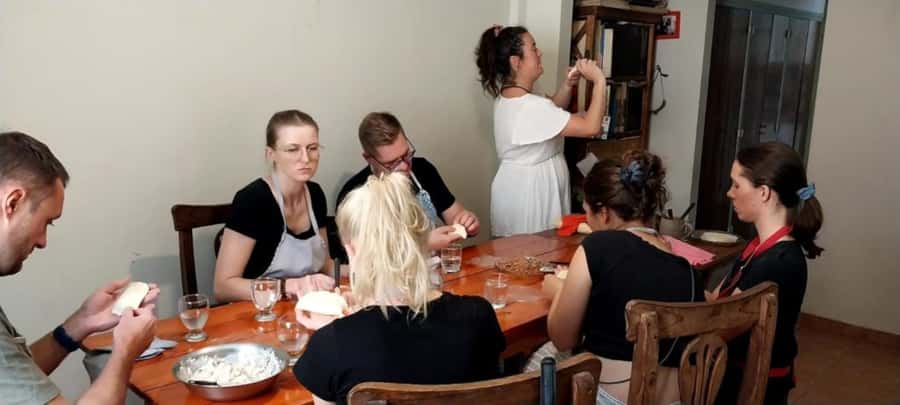
- A real San Telmo home: The class takes place at Paseo Colon 1355, where you ring the bell and enter a local household rather than a restaurant kitchen.
- Three Argentine staples: You prepare savory empanadas, corn-starch alfajores filled with dulce de leche, and mate.
- Small groups of up to eight: The size encourages conversation, though some people at the end of the table may need to move closer during demonstrations.
- Meat and vegetarian options: The class includes a traditional meat filling and vegetarian alternatives.
- English and Portuguese instruction: Hosts such as Thomas and Sophia have guided sessions in clear, friendly English.
- A full evening for $37: Ingredients, cooking, mate, water, and the meal are included. Wine costs extra.
A Buenos Aires meal that begins at the kitchen table
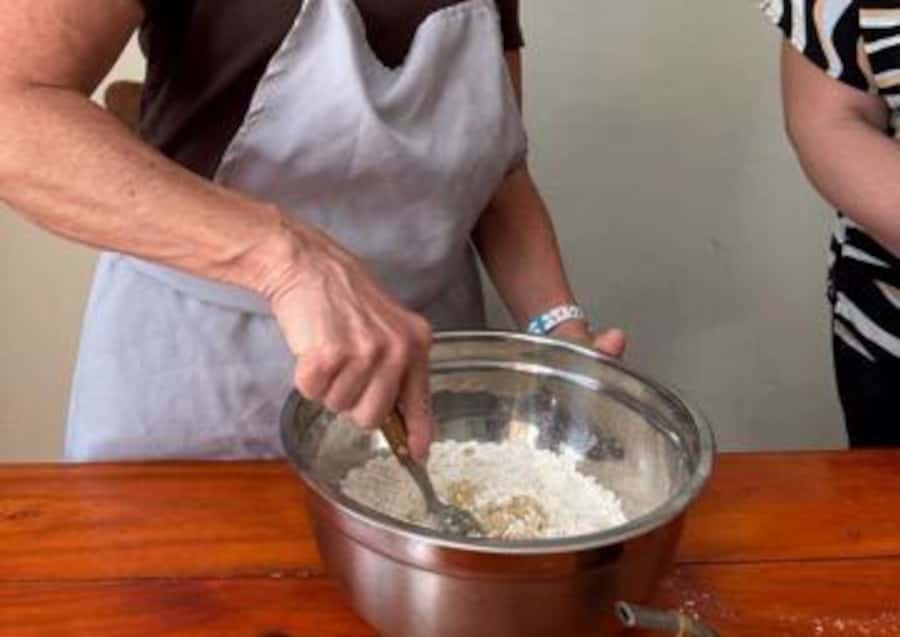
This is not a class where you sit back and watch a chef do all the work. You mix, shape, fill, seal, and help prepare the food. That makes the experience useful after you leave Buenos Aires, since you gain techniques you can repeat at home rather than just a taste of local cuisine.
The setting matters. You meet at Paseo Colon 1355 in San Telmo, ring the bell at the scheduled start time, and enter a real Argentine home. Several people describe the house as cozy, welcoming, and more than a simple venue. One account places it in a home more than 100 years old, giving the class a personal sense of place.
The hosts are part of the appeal. Thomas is praised for a relaxed teaching style and good humor, while Sophia is described as warm, clear, and well informed about Buenos Aires and Argentine traditions. Other sessions mention Maria and her family. Since the named host may vary, check the booking details if a particular instructor matters to you.
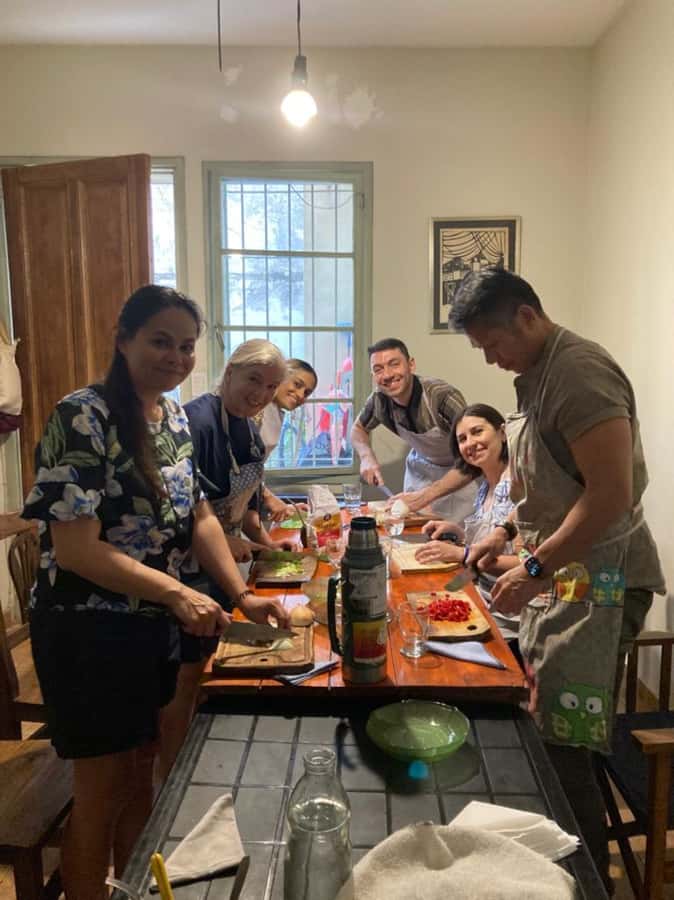
You should expect the class to feel social. The limited group size makes it easy to talk while chopping, folding, and waiting for the food. People have come from several countries, and strangers quickly find themselves sharing a meal. If you want quiet, private instruction, this may not be the right fit. If you like meeting people over food, it has the right ingredients.
More Cooking Classes in the world:
- Florence: Cooking Class with Local Food Market Tour
★ 4.9 · 407 reviews - Street Food Cooking Class
★ 5.0 · 125 reviews - Busan Local Food Cooking Class with Market Tour
★ 5.0 · 53 reviews
Why empanadas are the heart of the class
Empanadas are one of Argentina’s most useful foods. They work as a quick meal, a snack, a party dish, or a filling dinner. The basic idea is simple: dough wrapped around a savory filling, then baked or fried. The skill lies in the details.
You begin with the dough and fillings, following the process step by step. The class focuses on a traditional meat option, with vegetarian alternatives available. One point to keep in mind is that the exact number of fillings may vary. A participant specifically wished there had been a second filling instead of making the same meat filling twice, while another session included both meat and vegetable choices.
The most practical lesson is the repulgue, the folded or twisted edge that seals each empanada. It is part decoration, part cooking technique. A good seal keeps the filling inside and gives the pastry its familiar Argentine look. Do not expect every one of yours to come out perfect on the first attempt. The point is to learn the hand movement and enjoy the process.
The class is suitable for people with modest kitchen skills, but the instruction is not always equally easy to follow from every seat. The worktable can limit your view, especially if you are at the far end. If a demonstration begins and you cannot see, ask to move closer. That small bit of initiative can make the lesson much easier.
The food is prepared collectively, so you are not cooking an entire dinner alone. You work alongside the hosts and the rest of the group. That format keeps the mood light and means you can learn by watching another person’s technique as well as your own.
Alfajores and the sweet finish
The second food project is the alfajor, one of Argentina’s best-known sweets. This version uses corn starch for the cookie and dulce de leche for the creamy filling. The result is softer and more delicate than a standard biscuit, with the caramel-like filling providing the main flavor.
You prepare the cookies and assemble the alfajores during the class. The sweet course gives the evening a nice rhythm: first the savory work of making empanadas, then the more precise pastry task, followed by a meal that includes both.
The alfajores are also a good reason to book this class even if you have already eaten plenty of empanadas in Buenos Aires. The two recipes show different sides of Argentine home cooking. One is practical and savory, the other is indulgent and closely tied to the country’s love of dulce de leche.
The hosts explain the steps rather than simply handing you finished dough. That makes the recipe worth taking home. Several people refer to receiving the recipes afterward, but the handoff has not always been completely straightforward. In at least one case, the recipe required following the guide on Instagram and asking for it. Before leaving, confirm how you will receive the recipes if you want to make the food at home.
You may also have leftovers. The portions are described as generous, and one family said they had empanadas left after eating. That is useful if you want to keep some for later, though it also means you should pace yourself. The food you make becomes the meal, so it pays to take the shaping and filling seriously.
Learning the mate ritual, not just drinking it
Mate is more than a hot herbal drink. It is a social custom with its own preparation and serving habits. The class shows you the traditional method of preparing it, then lets you share it while the food is being made.
This is one of the most worthwhile parts of the class because it adds cultural context to the cooking. You are not simply tasting an unfamiliar drink. You learn how it fits into everyday Argentine life and why passing mate around a group carries a social meaning.
The experience includes mate and water. Wine is not included, but it is available for purchase. That gives you a simple choice: stick with the included mate and water, or add wine if you want something extra with the meal.
If you are new to mate, listen closely to the explanation and follow the host’s lead. The preparation is part of the lesson, and the shared drink creates an easy pause in the cooking. It is also a natural conversation starter when people are still getting to know one another.
A few more street food tours around the world worth a look
- Ao Nang: Hands-on Learn to Cook 3 Popular Thai’s street food
★ 4.8 · 417 reviews - Hungarian Langos Making Class: The No. 1 Street Food in Hungary
★ 5.0 · 55 reviews - Syracuse: Sicilian Street Food Hands-On Cooking Class
★ 4.9 · 38 reviews - Lisbon: Portuguese street food cooking class with Drinks
★ 4.9 · 37 reviews
Three hours with a relaxed, social rhythm
The class lasts three hours, which gives you enough time to prepare both dishes without rushing every movement. You have time to hear explanations, take part in the cooking, eat the results, and talk with the hosts and other participants.
The pace is not described as formal or rigid. It is closer to being welcomed into someone’s home for a shared cooking session. That can be a strength, especially if you want an evening with personality rather than a polished demonstration.
It also means the experience may not feel identical from one session to another. The host’s teaching style, the mix of people, and the flow around the table will shape the evening. Thomas is described as professional without sounding like a schoolteacher, while Sophia is praised for her patience and cultural explanations.
Families can fit in well. A family with children aged 12 and 16 found the activity suitable, and another 14-year-old took part in making the food from scratch. The work is practical and social, so older children and teens who enjoy cooking should have plenty to do. Very young children may find the three-hour length less manageable, but the supplied information does not set an age limit.
The language options are English and Portuguese. That is important for a hands-on class, since understanding the dough, filling, and sealing instructions makes a real difference. If you need another language, this activity does not advertise one.
What the $37 price really covers
At $37 per person, this is a strong-value meal activity in Buenos Aires. You are not paying only for an hour of instruction. The price includes the cooking class, all ingredients, mate, water, and the food you prepare.
The value is strongest if you want three things in one booking:
- A practical food lesson
- A chance to meet people in a small group
- A substantial meal in a local home
Wine costs extra, so budget for that only if you want it. The meal itself is included, and the portions are described as plentiful.
The price also reflects the setting. You are not simply buying empanadas and alfajores at a shop. You are paying for access to a household setting, a host’s time, cultural explanations, and the chance to practice the recipes yourself. For a three-hour activity, that is a fair deal.
Still, value depends on what you want. If your priority is tasting many different fillings, a food walk may offer more variety. This class concentrates on learning a small number of dishes well. One filling may be repeated, and the food choices are not presented as a large tasting menu.
The small-group setup and its limits
The group is limited to eight people. That is small enough for direct contact with the host and large enough to create a lively table. You will likely have more opportunity to ask questions than in a large demonstration class.
The tradeoff is physical space. A small home kitchen or dining area does not give everyone a perfect view at once. People sitting at the end of the table have found it harder to see parts of the demonstration. Move closer when a key step is being shown, and do not hesitate to ask the host to repeat it.
The group format also rewards participation. You will get more out of the class if you ask questions, help with preparation, and talk with the people beside you. A participant suggested a quick introduction at the start, which would help everyone connect sooner. Until that happens, you may need to introduce yourself to the person next to you.
The atmosphere is generally informal and welcoming, but it is still a shared activity. You will not have your own private chef or a separate workstation. Couples, solo visitors, families, and small friend groups can all fit, provided they are comfortable working around others.
Practical details for your evening
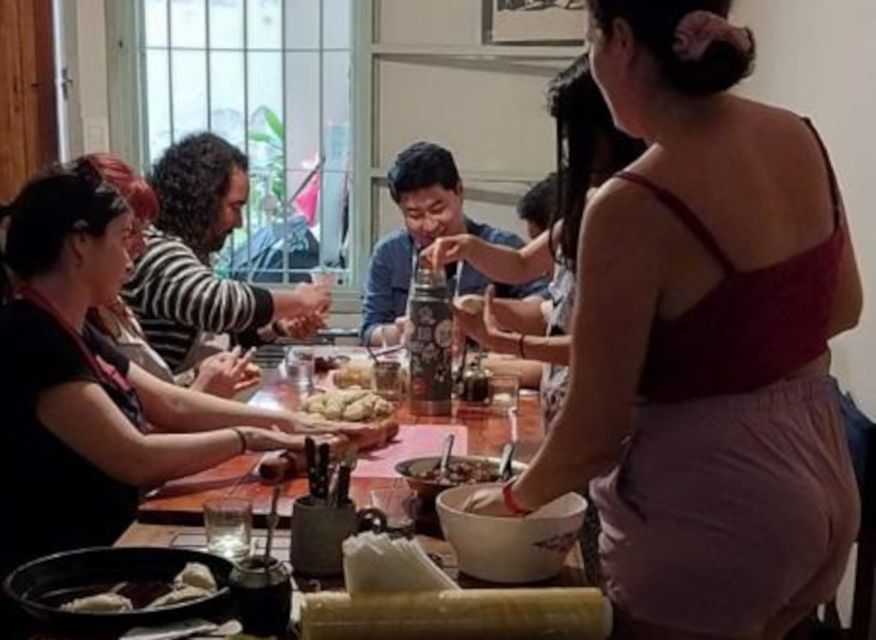
The meeting point is Paseo Colon 1355 in San Telmo. Go to the address at the class start time and ring the bell. No transport is included, so plan your route to San Telmo before the class begins.
The activity is wheelchair accessible. Since the class takes place in a home, you may want to confirm any particular access needs before booking, but the experience is listed as accessible.
You can cancel up to 24 hours in advance for a full refund. The reserve-now, pay-later option lets you hold a place without paying at the time of booking, which is helpful when your Buenos Aires schedule is still changing.
The best practical tip is to arrive ready to work and eat. You do not need to be an experienced cook, but pay attention when the dough and sealing techniques are shown. Also confirm the recipe delivery before you leave, especially if making the dishes again at home is part of your plan.
Who should book this cooking class?
I would choose this for anyone who wants food and conversation in equal measure. It suits solo visitors who like meeting people, couples looking for a relaxed evening, and families with older children or teens who will enjoy making something with their hands.
It is also a good choice if you want a direct connection to Argentine food culture. You learn what empanadas and alfajores are, but you also learn how mate is prepared and shared, and you hear about Argentine traditions and Buenos Aires from the hosts.
You may want another activity if you need a highly polished culinary school format, a wide range of fillings, or a private class. The home setting is part of the charm, but it also brings less space, a less formal structure, and occasional concerns about seeing every demonstration clearly.
Should you book it?
Book this class if you want to spend three hours cooking, eating, and talking in a real Buenos Aires home. The strongest reasons are the small group, the hands-on empanada work, the alfajores with dulce de leche, and the chance to learn the mate ritual from local hosts.
At $37, the inclusion of ingredients, mate, water, and a full meal makes the price easy to justify. Just arrive on time, ask to see demonstrations up close, and make sure you receive the recipes before leaving. If those details suit you, this is a friendly and practical way to turn Argentine food from something you order into something you can make.
FAQ
Where does the cooking class take place?
The class takes place at Paseo Colon 1355 in San Telmo, Buenos Aires. Go to the address at the scheduled starting time and ring the bell.
How long does the experience last?
The cooking class lasts three hours.
How much does the class cost?
The listed price is $37 per person.
What food will I prepare?
You will prepare Argentine empanadas with savory fillings and alfajores made with corn starch and dulce de leche.
Are vegetarian fillings available?
Yes. Vegetarian alternatives are available alongside a traditional meat filling.
Is mate included?
Yes. Mate and water are included, and the class covers the traditional way to prepare and drink mate.
Is wine included?
No. Wine is available to purchase separately.
What languages are spoken during the class?
Instruction is offered in English and Portuguese.
How many people can join the class?
It is a small-group activity limited to eight participants.
Just added around the world
- 1 Istanbul Tour: Highlights, Street Food & Hidden Pearls★ 5.0 · 9 reviews
- Evening Hyderabad Street Food Walk with Hyderabad Biryani★ 4.5 · 24 reviews
- Hyderabad Street Food Crawl (2 Hours Guided Food Tasting Tour)★ 4.0 · 5 reviews
- Japanese Street Food Class in Beech Grove★ 5.0 · 9 reviews
- Small-group Street food tour in Ischia★ 3.5 · 2 reviews
- Hyderabad : Evening Street Food Tasting with Guided Old City Tour★ 5.0 · 10 reviews
- Hyderabad Street Food Experience with Local Expert★ 4.5 · 2 reviews
- Hue Street Food On Foot (Daily Tour – Group Tour | 12 pax max)★ 5.0 · 15 reviews
Buenos Aires Street Food Tours, compared.
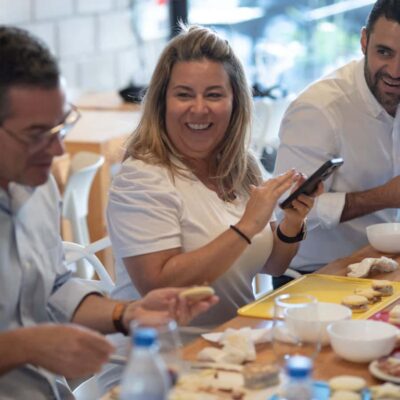
Buenos Aires: Empanada & Alfajor Cooking Lesson in Palermo
Read our review →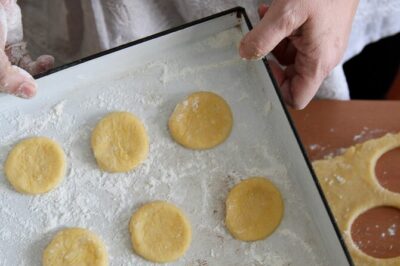
BA: Empanadas and Alfajores Cooking Experience in Palermo
Read our review →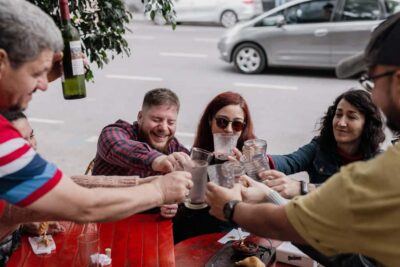
San Telmo: Historical Guided Tour with Street Food & Drinks
Read our review →
Argentinian Empanadas Cooking Experience in Palermo, Bs As
Read our review →
Premium Empanadas Cooking Class & Wine Tasting Experience
Read our review →
5hs Small Group City Tour of Buenos Aires with Street Food
Read our review →
Browse the lists this tour appears in