
REVIEW · STREET FOOD TOURS
Kathmandu UNESCO Heritage Tour with Local Food Tasting
Kathmandu’s best introduction may be a day that moves from Swayambhunath’s hilltop calm to the crowded lanes of Asan Market, with a plate of local food in between. This private five-hour tour brings together temples, royal courtyards, street life, and traditional dishes without asking you to sort out the city’s busy transport or history on your own.
I like the way the route shows two sides of Kathmandu: the quiet Buddhist mood around Swayambhunath and the everyday trade of Asan. I also like the generous food program, which includes much more than a token snack. The main consideration is pace. An hour at each major stop gives you a useful introduction, but not the time for a slow, detailed study of every shrine and carving.
Key points at a glance
- Swayambhunath views: Reach a hilltop stupa with prayer flags, chanting, Buddhist traditions, and broad views across the Kathmandu Valley.
- Three major cultural stops: See Swayambhunath, Kathmandu Durbar Square, and Asan Market in a single five-hour outing.
- A serious food tasting: Try momo, Newari samaybaji, yomari, bara, chatamari, gwaramari, and Indrachowk lassi.
- A chance to see Kumari: At Kathmandu Durbar Square, you may see Nepal’s Living Goddess appear at her window.
- Private guiding: The private group format lets the guide adjust the schedule, a useful advantage in a busy city.
- Easy transport plan: Pickup and drop-off are available in Kathmandu or Thamel, with transportation and bottled water included.
Why this route works for a first look at Kathmandu
Kathmandu can feel like several cities at once. Thamel has trekking shops, handicrafts, restaurants, and visitors from around the world. A short ride takes you to Swayambhunath, where the mood changes to prayer flags, Buddhist symbols, and a sweeping view over the valley. Later, Kathmandu Durbar Square brings royal history and living religious practice into the center of the trip.
I like this contrast because it gives you a sense of how Kathmandu works, not just a checklist of monuments. The tour does not isolate heritage behind a museum door. It connects sacred sites with the market streets where people buy spices, grains, clothing, utensils, and food.
The private format is another advantage. Rajan is named as one of the guides, and the available feedback describes him as flexible, kind, and strong on cultural explanation. That matters here. Kathmandu’s symbols can be easy to misread if you are only taking photographs, while a good guide can explain why a shrine, image, or ritual matters.
The tour lasts five hours, so think of it as a focused city introduction rather than a full study of Kathmandu. Each main stop receives about an hour. That is enough to understand the character of each place, but you may want extra independent time later if you are especially interested in temple architecture or Newari culture.
More Heritage Tours in the world:
- Palermo: Street Food and History Walking Tour
★ 4.9 · 1,486 reviews - Old Cairo Guided Walk Tour: History, Culture & Street Bites
★ 4.6 · 633 reviews - Walking Tour and street food Tour Palermo / History and Food
★ 5.0 · 386 reviews
Swayambhunath, from city noise to Buddhist calm
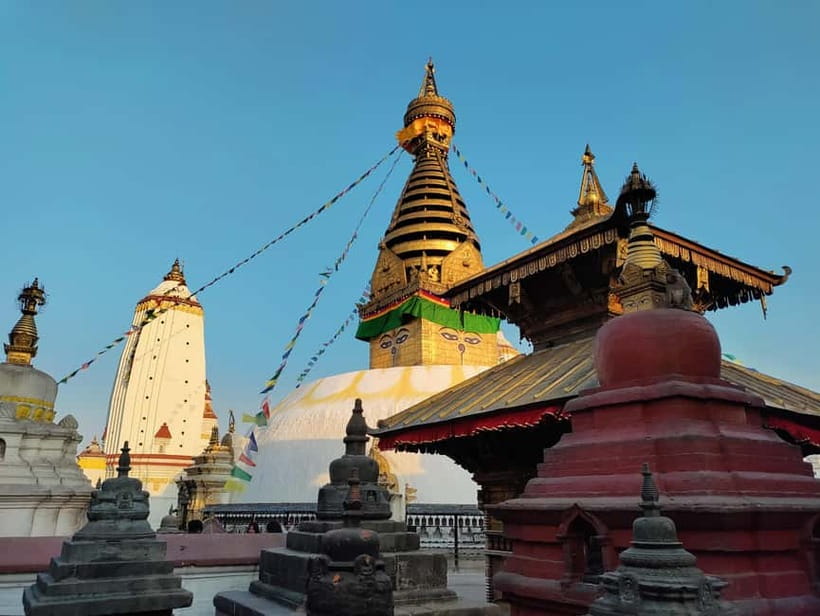
The day begins with pickup in Kathmandu or Thamel before heading toward Swayambhunath, also called the Monkey Temple. The site sits on a hilltop above the city, giving you a quick change of setting and a broad view of the Kathmandu Valley.
Your guide explains the stupa’s Buddhist culture and history as you look at the prayer flags, sacred details, and surrounding religious activity. The atmosphere can feel peaceful, with monks chanting and the stupa’s watchful eyes facing out over the city. It is one of those places where the setting is as important as the monument itself.
The one-hour visit is well judged for a first stop. You have enough time to see the main religious features and hear the essential background without using up the whole morning. The tradeoff is that the visit is an overview. If you want to linger over every carving, prayer wheel, or smaller shrine, you will need to return on your own.
The hilltop view also gives useful orientation. Kathmandu is not presented as a collection of unrelated temples. From above, you begin to understand the city as a dense urban center spread across a wide valley. Bring a camera if you like, but give yourself time to watch the prayer flags and listen to the place. This stop rewards attention more than speed.
Kathmandu Durbar Square and the living Kumari tradition
The next major stop is Kathmandu Durbar Square, a UNESCO World Heritage Site filled with old temples, woodwork, courtyards, and religious images. The square carries the weight of royal history, but it is not only a monument frozen in the past. Worship and local tradition continue here.
The guide points out Kal Bhairav and Swet Bhairav, two important sacred images with different cultural roles. You will also learn about the Kumari, Nepal’s Living Goddess. The tour includes the chance to see her appear at a window, though this is not something anyone can promise at a precise moment.
That detail is worth keeping in mind. The Kumari tradition is part of the cultural life of the square, but the appearance may be brief. If you do see her, treat the moment with respect and follow the guide’s instructions about photography and behavior.
The square gets about an hour, which gives you a practical introduction to its major sights. You will see centuries-old temples and carved wooden details, hear the stories behind key images, and get a feel for the square’s continuing religious use. The short timing means you should not expect an exhaustive architectural tour.
I would pay close attention to the woodcarvings. Kathmandu’s older buildings often communicate through fine details rather than grand scale. A guide such as Rajan can help you notice what you might otherwise pass without understanding.
Asan Market, where Kathmandu does its daily business
The route then moves into Asan Market, one of the most useful places on the tour for seeing ordinary city life. Traders sell spices, grains, traditional goods, saris, jewelry, brass utensils, and seasonal produce. The lanes are full of color, sound, and movement, but the important point is that this is a working market, not a performance arranged for sightseeing.
You receive about an hour here, with time for guided exploration, local snacks, food tasting, and some shopping. That balance works well. The guide can explain what you are seeing, then give you room to browse or pause at a food stall.
Asan is also where the tour’s cultural themes come together. The temples show formal religious traditions. The market shows how those traditions fit into daily life, commerce, cooking, and household routines. You may find the market more intense than the hilltop stupa, especially if you prefer quiet sightseeing. That contrast is part of the experience, but it is worth knowing before you book.
I would avoid treating this as a dedicated shopping trip. You have free time, but only around an hour. The real value is the chance to see local trade up close and taste foods in the setting where people actually buy and eat them.
A few more street food tours around the world worth a look
- Reykjavik Food Walk – Local Foodie Adventure in Iceland
★ 5.0 · 18,952 reviews - Dubai: Old Town, Creek, Museums, Souks, & Street Food Tour
★ 4.8 · 10,816 reviews - Ho Chi Minh City Street Food Tour & Sightseeing By Motorbike
★ 5.0 · 9,413 reviews - Medellin: Comuna 13 Graffiti Tour, Cable Car & Street Food
★ 4.8 · 9,046 reviews
The food tasting is the tour’s biggest surprise
Food is not an afterthought here. The tasting can include a long list of Nepali and Newari favorites:
- Momo: Nepali dumplings, a familiar favorite and an easy first taste of local food.
- Newari samaybaji: A ceremonial platter with beaten rice, marinated meat, fried eggs, and pickles.
- Yomari: A sweet steamed dumpling filled with jaggery.
- Bara: A savory lentil pancake.
- Chatamari: A rice flour crepe often described as Nepali pizza.
- Gwaramari: Crisp fried bread.
- Indrachowk lassi: A cooling yogurt drink associated with the famous local food area.
The variety gives you more than one standard dish. You taste savory, sweet, crisp, soft, spicy, and cooling flavors in one outing. Samaybaji is especially useful for understanding Newari food traditions because it combines several elements on one plate rather than presenting a single snack in isolation.
The amount of food may surprise you. Jacqueline’s account describes ending the afternoon full and grateful, with more food than expected. That is useful advice: arrive ready to eat, and do not fill up before the tasting. The description also says you can eat as much as you like, so this suits anyone who wants a real food experience rather than a small sample.
The food section is also where a guide’s personality matters. Rajan is praised for introducing dishes and explaining the culture around them. You can ask questions about ingredients and customs as you go, instead of trying to identify every dish later.
The tour does not provide a detailed allergy or dietary menu in the available information. If you have food restrictions, ask the provider before booking. The listed dishes include meat, eggs, lentils, dairy, and sweet fillings, so you should not assume every item suits your diet.
What the five-hour schedule means in practice
This is a compact route. Swayambhunath receives one hour, Kathmandu Durbar Square one hour, and Asan Market one hour. The remaining time covers pickup, transport, transitions, and the food stops.
That structure is efficient for a short stay in Kathmandu. You see major cultural sites, a working market, and several local dishes without committing a full day. It also works well near the beginning of a Nepal trip because it gives you reference points for later visits.
The limitation is depth. You will not have endless time at any one location, and Asan’s shopping time is part of a larger visit rather than a standalone market tour. If you want long photography sessions, detailed temple study, or a leisurely restaurant meal, this itinerary may feel quick.
The private group setup helps. With Rajan or another English-speaking guide, you can ask for explanations, adjust the pace where possible, and focus on the subjects that interest you most. Jessica specifically found the guide flexible with the schedule, which is useful in a city where a short delay can affect the rhythm of the day.
Transportation is included, along with pickup and drop-off in Kathmandu or Thamel. That makes the tour easier to manage than arranging each stop yourself. A driver is also part of the operation, and the available comments describe the driver as careful and welcoming.
Is $64 a fair price?
At $64 per person, the value depends on how much of the included program you would otherwise arrange yourself. The price covers entrance fees, transportation, an English-speaking guide, bottled drinking water, local food, and government taxes.
That is a solid bundle for a five-hour private experience. You are paying not only for entry to three places, but also for the time saved arranging transport and for help making sense of Kathmandu’s religious and cultural details. The food tasting adds real value because it includes several dishes rather than a single snack.
The price is less attractive if you mainly want a cheap ride between landmarks or prefer to explore independently. You will pay for a guided experience, cultural explanation, and a substantial tasting session. For a first visit, especially if you have only one free day in Kathmandu, that package makes practical sense.
Personal expenses are not included. Plan to pay separately for anything you buy in Asan Market or elsewhere.
Who should book this Kathmandu tour?
I would recommend it to you if you want a strong first look at Kathmandu and prefer a private guide to independent research. It suits visitors who care about local food, religious traditions, markets, and the stories behind major sites.
It is also a good match for anyone staying in Thamel. Pickup and drop-off there keep the plan simple, and the route gives you a break from the neighborhood’s visitor-focused shops and restaurants.
Food lovers should pay special attention. The list includes enough variety to make the tasting a main part of the day, not a small bonus. If you like trying dishes with a guide who can explain what you are eating, this is one of the tour’s best reasons to book.
I would hesitate only if you dislike busy markets, want a slow archaeological visit, or need a tour built around strict dietary requirements. The route is active and compact, and the food program is generous.
Practical details before you book
The tour runs for five hours, with starting times shown according to availability. It is offered as a private group with an English-speaking live guide. Rajan is one named guide associated with the experience, though the assigned guide may depend on availability.
Pickup and drop-off options include Kathmandu and Thamel. Transportation, site entrance fees, food, bottled water, and government taxes are included. Personal spending is not.
You can cancel up to 24 hours in advance for a full refund, and the reserve-now, pay-later option keeps payment flexible. Those terms are helpful if your Nepal schedule may change.
Should you book it?
Book this tour if you want Kathmandu explained through sacred places, market life, and a generous tasting session rather than through monuments alone. The strongest parts are the route’s variety, the private guiding, and the chance to try several classic dishes in one morning or afternoon.
Do not book it expecting a slow, specialist tour of every carving in Durbar Square. Five hours moves quickly, and each major stop gets about an hour. For a first introduction to Kathmandu at $64, though, the combination of transport, entrance fees, guide, and food makes the price reasonable, especially if Rajan is available and you value clear cultural context.
FAQ
How long does the Kathmandu UNESCO Heritage Tour last?
The tour lasts five hours.
Which places are included?
The route includes Swayambhunath Stupa, Kathmandu Durbar Square, and Asan Market.
Is food included?
Yes. Local food tasting is included, along with the listed dishes and local snacks.
Which foods might I try?
The tasting can include momo, Newari samaybaji, yomari, bara, chatamari, gwaramari, and Indrachowk lassi.
Can I see the Kumari?
You have a chance to see the Kumari, Nepal’s Living Goddess, at Kathmandu Durbar Square. An appearance is not guaranteed at a specific time.
Is the tour private?
Yes. The activity is offered for a private group.
What language does the guide speak?
The live tour guide speaks English.
Where can pickup and drop-off take place?
Pickup and drop-off options are available in Kathmandu and Thamel.
What is included in the price?
The price includes entrance fees, local food, an English-speaking guide, transportation, one bottle of drinking water, and government taxes. Personal expenses are not included.
Just added around the world
- 1 Istanbul Tour: Highlights, Street Food & Hidden Pearls★ 5.0 · 9 reviews
- Hyderabad Street Food Crawl (2 Hours Guided Food Tasting Tour)★ 4.0 · 5 reviews
- Evening Hyderabad Street Food Walk with Hyderabad Biryani★ 4.5 · 24 reviews
- Japanese Street Food Class in Beech Grove★ 5.0 · 9 reviews
- Small-group Street food tour in Ischia★ 3.5 · 2 reviews
- Hyderabad : Evening Street Food Tasting with Guided Old City Tour★ 5.0 · 10 reviews
- Hyderabad Street Food Experience with Local Expert★ 4.5 · 2 reviews
- Hue Street Food On Foot (Daily Tour – Group Tour | 12 pax max)★ 5.0 · 15 reviews
Street Food Tours, compared.
Ho Chi Minh City Street Food Tour & Sightseeing By Motorbike
Read our review →
Dubai: Old Town, Souks, Street Food, Guided Tour & Abra Ride
Read our review →
Naples: Street Food Walking Tour with Local Guide
Read our review →
Small Group Hanoi Street Food Tour with a Real Foodie
Read our review →
Saigon By Night and Street Food By Motorbike | Opt: Ao Dai Riders
Read our review →
Private Street Food Tour by Motorbike/Car with Local Students
Read our review →
Saigon: Street Food Tasting & Sightseeing Tour by Motorbike
Read our review →Browse the lists this tour appears in