
REVIEW · POLAND STREET FOOD TOURS
Warsaw’s No 1 cooking class-Polish dumplings with liqueur tasting
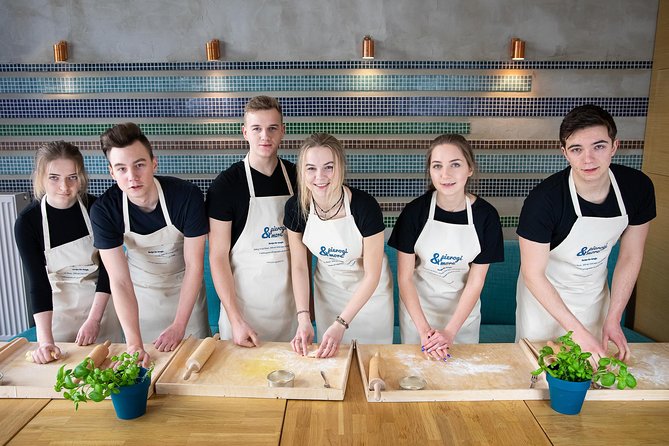
Making pierogi is the heart of this Warsaw experience. You learn to knead and roll the dough, fill it, fold it in several styles, and cook the dumplings yourself. Then you sit down to eat the whole batch family-style, with Polish liqueurs to finish. The meal is both lesson and reward.
I like the small group, limited to 10 people, because the instructors can move around and help at each work station. I also like the practical take-home value: you leave with techniques you can use in your own kitchen, not just a pleasant memory. The main drawback is that the room can get hot, and the family-style meal means sharing food prepared by the whole group.
Key points to know
- You make the dough yourself: Learn how to knead it, roll it thin, and prepare it for filling.
- Several folding methods are taught: The class includes useful shaping tricks and ways to seal the edges.
- You eat what the group makes: The final meal includes everyone’s pierogi, served family-style.
- Dietary requests are possible: Vegetarian and vegan fillings can be arranged in advance.
- The class stays small: A maximum of 10 people allows for personal help at the table.
- Polish liqueurs finish the meal: The tasting adds a distinctly local touch to the cooking lesson.
Why pierogi make such a good Warsaw cooking class
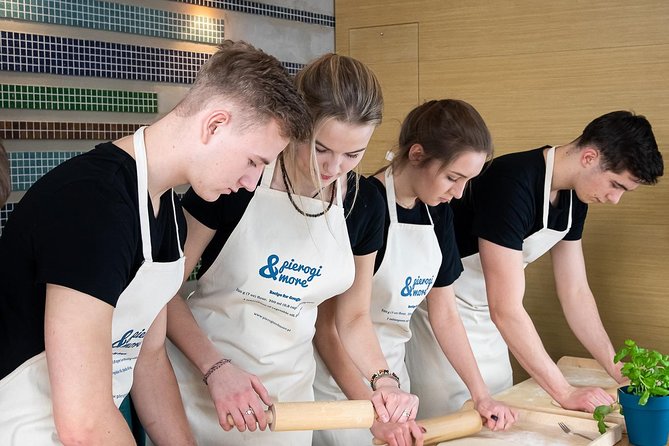
Pierogi are one of Poland’s most familiar foods, but eating them in a restaurant tells you only half the story. Here, you handle the dough, learn how much filling to use, and see why a neatly sealed dumpling matters. That hands-on work makes the dish easier to understand and much easier to recreate at home.
The class begins with a short introduction to the origins of pierogi. It is not a long lecture, which is a good fit for a two-hour session. You get enough context to understand the dish as part of Polish food culture, then move quickly to the useful part: making it.
I like this balance. You are not sitting through a cooking demonstration while someone else does all the work. You are also not thrown into the kitchen without an explanation. The instruction is broken into clear stages, and the teachers demonstrate each part before you try it.
The setting is Pierogi & More, at Stawki 3 in Warsaw. It is northwest of the Old Town and near public transport. One visitor described it as easily walkable from the Old Town, though your exact walking time will depend on where you start.
More Dumpling and Dim Sum Tours in the world:
- Hong Kong: Street Food Tour with Locals – Dim Sum and Wonton
★ 4.8 · 673 reviews - Bagels Dumplings Pizza & Tacos: A Downtown Food Crawl
★ 5.0 · 63 reviews - Tokyo Local Food Tour: Noodles, Skewers, Dumplings, Sweets
★ 5.0 · 48 reviews
Kneading, rolling, and filling the dough
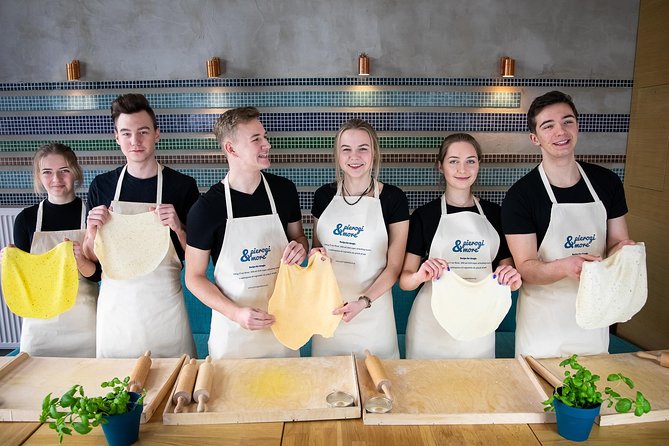
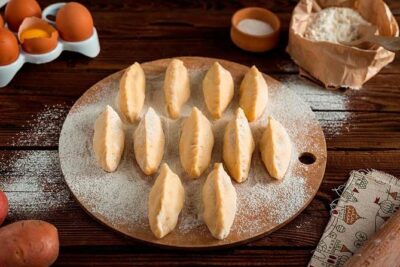
The first practical stage is the dough. You learn how to knead it and how to roll it out properly. This sounds simple, but dough thickness can make or break pierogi. Too thick, and the dumpling feels heavy. Too thin, and it can split during cooking.
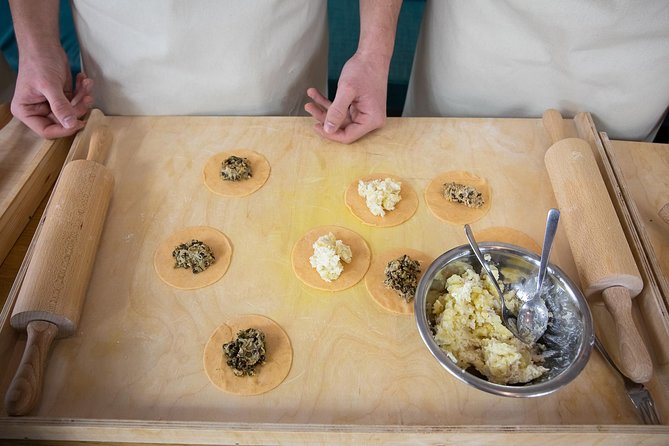
The teachers show you how to prepare circles for filling and how to judge the right amount of stuffing. The fillings include meat and vegetarian choices. You do not just watch the process. You work at your own station while the instructor and assistant circulate to help.
That personal help is one of the strongest reasons to choose a small class. You can ask about dough, filling, sealing, or cooking as you go. The class is set up for pairs at each station, though single participants can also take part. The small maximum means you should not be lost at the back of a large demonstration.
The fillings are prepared for you, so this is not a full lesson in making every component from the raw ingredients. One participant specifically wished for more work on the fillings. That is worth knowing if you want an advanced cooking course. The focus here is the pierogi itself: dough, shape, technique, and cooking.
Folding techniques you can use at home
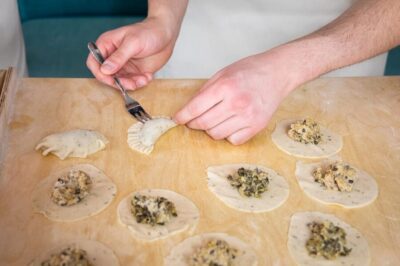
The shaping stage gives the class its most useful craft element. You learn several ways to fold and seal the dumplings, along with small tricks that help them cook well and taste better.
You can follow the traditional forms shown by the teacher, then try different folds yourself. The instructors encourage some creativity, but the aim is not decoration for its own sake. A good seal keeps the filling inside the dough, and a consistent shape helps the dumplings cook evenly.
This is where the class works well for beginners. The teachers demonstrate first, then coach you through the same steps. Several people found the process easier than expected, which is encouraging if you have never made dumplings before.
Do not worry if your first few pierogi look uneven. The point is to learn the feel of the dough and the right pressure for sealing the edges. By the end, you should have a better sense of what to do when you try the recipe without an instructor beside you.
Cooking your own pierogi for dinner
Once the dumplings are assembled, the class moves to cooking. The instructor demonstrates how to boil them, and the group prepares the finished pierogi together.
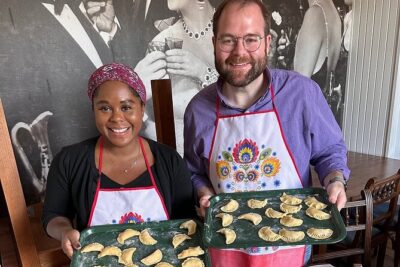
Then comes the best part for most people: eating the results. The food is served family-style, so you sit down with the rest of the group and share the dumplings everyone has made. You get a chance to try the different fillings and shapes rather than eating only the pierogi from your own station.
This creates a relaxed, social meal. One family described it as sitting down to dinner with people from different parts of the world. That feeling is helped by the modest group size and the fact that everyone has worked toward the same meal.
There is one practical point to keep in mind. The group shares the finished food, so the meal is not limited to the dumplings you personally prepared. If that arrangement makes you uncomfortable, this may not be the right cooking class for you.
The portion is intended to function as a meal, not just a sample. Several people left full, and one person had leftovers. Come hungry, especially if you book the class around lunchtime or dinner.
More Cooking Classes in the world:
- Florence: Cooking Class with Local Food Market Tour
★ 4.9 · 407 reviews - Street Food Cooking Class
★ 5.0 · 125 reviews - Busan Local Food Cooking Class with Market Tour
★ 5.0 · 53 reviews - Syracuse: Sicilian Street Food Hands-On Cooking Class
★ 4.9 · 38 reviews
The Polish liqueur tasting
The liqueur tasting comes at the end. It is not a separate bar crawl or a large alcohol program. Instead, it is a short tasting built into the class after the meal.
The teachers use a light guiding game to introduce two liqueurs. That gives the final minutes a playful feel and adds something you would not get from a standard pierogi lesson. It also gives you a chance to try a Polish drink in a controlled setting rather than ordering blindly at a bar.
You should account for the alcohol when planning the rest of your day. The experience includes liqueur tasting, so anyone avoiding alcohol should check the arrangements before booking. The supplied details do not specify a nonalcoholic substitute.
Vegetarian and vegan arrangements
Vegetarians can take part without missing the main lesson. Vegetable fillings are included, and vegan options are available by request.
The class can also take dietary needs seriously during cooking. One participant with a dairy allergy reported that the vegan pierogi were cooked first to reduce the risk of cross-contamination, followed by the vegetarian options. You should still state your needs when booking, since the menu and preparation order depend on advance notice.
The regular sample menu is pierogi with meat or vegetables. The exact fillings can vary, so do not book expecting one fixed recipe or a particular vegetable combination. The useful part is learning the method, which can be adapted later to fillings you choose at home.
The teaching style and group atmosphere
The teaching staff has included Daria, Patrycya, Ben, Nina, Zuzia, Patricia, and Caroline, with names varying by session. The provider is Maria Oskroba. Across the class, the teaching style is clear and hands-on, with short explanations followed by demonstrations and practice.
Some instructors also share Polish food customs, family traditions, and suggestions for things to see in Warsaw. That extra conversation can make the class feel personal, though the main purpose remains cooking.
The small group helps create a friendly table rather than a formal schoolroom. Couples can work together, families can attend, and solo participants can join a pair or work at a station. One class was scheduled for 10 but had eight people, showing that the actual number may be below the maximum.
The tone is generally light and patient. One account noted that an instructor could become a little firm when the class needed to keep moving. That is not surprising in a short session with dough, fillings, boiling, dinner, and a tasting to fit into roughly two hours. If you want a slow, open-ended cooking workshop, this may feel brisk. If you prefer clear direction and a finished meal on time, the pace should suit you.
Clean, practical, and easy to reach
The cooking facility is described as very clean, including the bathroom. That matters in a hands-on food class, where you will spend much of the session working with dough and shared ingredients.
The meeting point is Pierogi & More, Stawki 3, 00-193 Warsaw. The class begins and ends there. It is near public transport and can be walked to from the Old Town, according to the available directions.
Arrive with enough time to find the entrance and settle in. The class starts promptly, and clear directions are provided after booking. Since the activity ends where it begins, you do not need to arrange a separate return transfer.
One small comfort issue came up: the room can be hot. Wear light, comfortable clothes and avoid arriving in anything that makes it hard to work at a table. You do not need special cooking experience or elaborate equipment.
Is $77.97 a fair price?
At $77.97 per person, this costs more than simply ordering a plate of pierogi in Warsaw. That comparison misses the point. You are paying for instruction, ingredients, a full meal, a small-group format, and a Polish liqueur tasting.
The value is strongest if you want to learn a skill. You receive a practical lesson in dough and shaping, then eat the result. The recipes and photographs may also be sent after the class, with one account noting that the recipe and photos arrived the next day. That gives the experience some value after you return home.
It is also useful for a short Warsaw stay. If you have only one evening in the city, this gives you a meal and a cultural activity in one booking. You meet other people without spending the whole night in a formal group tour.
The price may feel high if your only goal is dinner. In that case, a restaurant will cost less and require no work. But if you would normally pay for a cooking class and then buy dinner afterward, the combined value here is easier to justify.
Who should book this experience?
I would recommend it to first-time pierogi makers, couples, families with older children, solo visitors who enjoy meeting people, and anyone who wants a Polish food memory they can repeat at home.
It suits people who like active sightseeing. You will be standing or working at a table, handling dough, and following instructions. It is not a passive food tasting.
Children under eight are not accepted. Children who do attend need at least one adult responsible for them during the class. Families should also consider the hot room and the alcohol tasting at the end.
People with vegetarian or vegan diets can request suitable options. Anyone with an allergy should provide the details in advance and confirm that the kitchen can meet those needs.
This is less suited to someone seeking a serious chef-training course. You will learn a useful home method, but you will not prepare every filling from scratch or cover a large range of Polish dishes.
Booking and cancellation details
The activity is offered in English and uses a mobile ticket. It is often reserved well ahead of time, with an average booking lead time of about 35 days. That suggests you should reserve early if your Warsaw dates are fixed, especially for a small group with a maximum of 10 people.
You can cancel for a full refund up to 24 hours before the local start time. Changes or cancellations inside that window are not accepted for a refund. The class also requires a minimum number of participants, so if the provider cancels because that minimum is not reached, you receive another date or experience, or a full refund.
Should you book the Warsaw pierogi class?
Book it if you want more than a meal and like the idea of learning a Polish staple by making it yourself. The strongest features are the small group, clear instruction, vegetarian and vegan flexibility, and the chance to eat a complete meal made during the lesson.
I would skip it only if you dislike shared food, need a quiet private class, want to prepare every ingredient from scratch, or are mainly looking for the cheapest possible dinner. For most people with two hours to spare in Warsaw, the class offers a useful skill, a social meal, and a taste of Polish food culture in one compact experience.
FAQ
How long does the pierogi cooking class last?
The class lasts approximately two hours.
Where does the class begin?
It begins at Pierogi & More, Stawki 3, 00-193 Warsaw, Poland.
Where does the activity end?
The activity ends back at the meeting point at Pierogi & More.
Is the class offered in English?
Yes. The experience is offered in English.
How many people can join the class?
The maximum group size is 10 participants.
What types of pierogi will I make?
You will make pierogi with meat and vegetarian fillings. Vegan options are available by request.
Are vegetarian and vegan options available?
Yes. Vegetarian and vegan options can be arranged on request. You should provide your dietary needs when booking.
Is a meal included?
Yes. You cook and eat the pierogi made during the class, served family-style.
Is Polish alcohol included?
Yes. A tasting of Polish liqueurs is included at the end of the experience.
Can children join the class?
Children under eight cannot join. If you bring a child who is at least eight, at least one adult must be responsible for the child during the class.
Can I cancel for a full refund?
Yes. You can cancel at least 24 hours before the local start time for a full refund. Cancellations or changes made less than 24 hours before the start are not refunded.
More Workshops in the world
- Ao Nang: Hands-on Learn to Cook 3 Popular Thai’s street food
★ 4.8 · 417 reviews - Hungarian Langos Making Class: The No. 1 Street Food in Hungary
★ 5.0 · 55 reviews - Lisbon: Portuguese street food cooking class with Drinks
★ 4.9 · 37 reviews - Hanoi Egg Coffee Class and Street Food Walking Tour
★ 5.0 · 33 reviews
Just added around the world
- 1 Istanbul Tour: Highlights, Street Food & Hidden Pearls★ 5.0 · 9 reviews
- Evening Hyderabad Street Food Walk with Hyderabad Biryani★ 4.5 · 24 reviews
- Hyderabad Street Food Crawl (2 Hours Guided Food Tasting Tour)★ 4.0 · 5 reviews
- Japanese Street Food Class in Beech Grove★ 5.0 · 9 reviews
- Small-group Street food tour in Ischia★ 3.5 · 2 reviews
- Hyderabad : Evening Street Food Tasting with Guided Old City Tour★ 5.0 · 10 reviews
- Hyderabad Street Food Experience with Local Expert★ 4.5 · 2 reviews
- Hue Street Food On Foot (Daily Tour – Group Tour | 12 pax max)★ 5.0 · 15 reviews
Poland Street Food Tours, compared.
Half-Day Polish Food Walking Tour with Guide and Dinner
Read our review →
Pierogi Cooking Class: Mastering the Art of Polish Dumplings
Read our review →
Krakow’s Local Flavor: Craft Beer and Street Food with Guide
Read our review →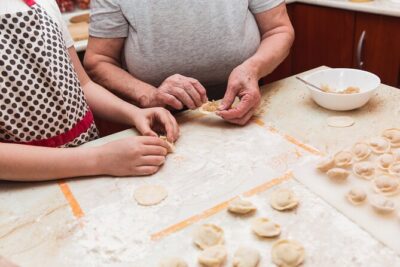
Browse the lists this tour appears in