
REVIEW · STREET FOOD MARKET TOURS
Arusha: Traditional Tanzania Cooking Class & Food Market Tour
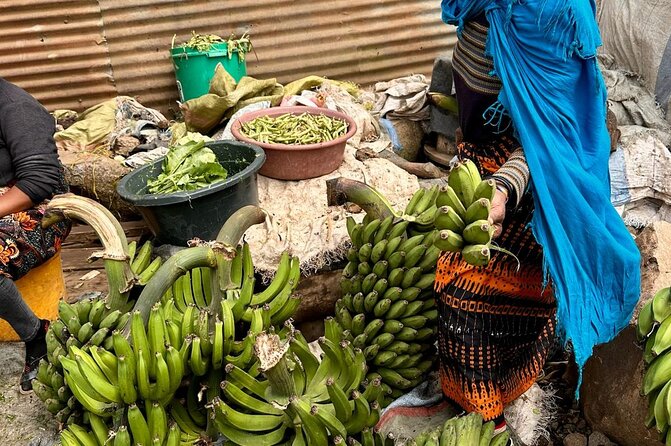
Arusha’s best food lesson begins before anyone turns on a burner. You walk through the central market, inspect produce and other local ingredients, then choose two Tanzanian dishes to cook in a traditional home-style kitchen. The market visit gives the meal a useful sense of place, while the cooking session turns what you see into lunch or dinner.
I like the chance to travel by ordinary local transport from the market to Sanawari. I also like that the ingredients are bought on the day and that your finished meal is included. The main consideration is comfort: this is a basic local kitchen, not a polished cooking studio, and the four-hour schedule can feel long if you want only a quick food tasting.
Key points at a glance
- Arusha’s central market: Spend about 30 to 45 minutes seeing local produce, meat, and everyday food shopping with a guide.
- Two dishes of your choice: The guide explains available local foods, then you select two for the cooking lesson.
- Traditional cooking setup: Expect low tables, charcoal burners, a gas burner, tubs, and simple utensils rather than Western counters.
- Sanawari by local transport: The move from the market is part of the experience, not just a transfer.
- Meal included: Eat what you prepare for lunch or dinner, with takeaway food sometimes available.
- Good practical value: At $42 per person, the price covers pickup near central Arusha, transport, market ingredients, instruction, and the meal.
Why this Arusha food tour feels different
Many food activities begin with a prepared menu and a spotless demonstration kitchen. This one begins where daily meals begin for many local households: at the market. That change matters because you see the ingredients before they are chopped, boiled, or stirred into a finished dish.
You will not simply watch a chef prepare food for you. The guide explains what is being sold, how ingredients are used, and which dishes are available. Then you select two foods for the lesson. The exact choices depend on what is available that day, so the menu has a useful connection to the market rather than being fixed far in advance.
The experience is also social. Guides including Israel, James, Jack, Lameck, Bariki, and Magret have been praised for their warm manner and clear explanations. The guide is your link between the market, the transport, the chef, and the customs behind the meal.
At $42, I see this as a fair price for a half-day activity in Arusha. The cost includes ingredients, the cooking class, the meal, hotel pickup and drop-off near the city center, and local transport used during the outing. Drinks are extra, as are tips and spices you may want to buy from the market.
More Market Food Tours in the world:
- Seoul Street Food Market Tour
★ 5.0 · 1,226 reviews - Venice Street Food Tour with Local Guide with Local Food Market Visit
★ 5.0 · 822 reviews - Cancun Street Food Tour with Food Stalls, Local Market and Murals
★ 5.0 · 723 reviews
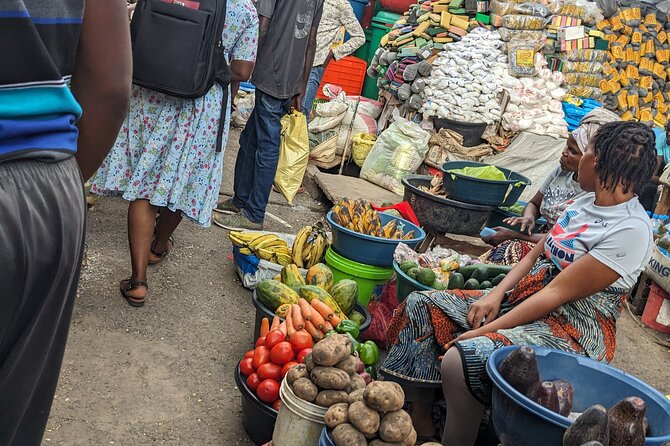
Walking through Arusha’s central food market
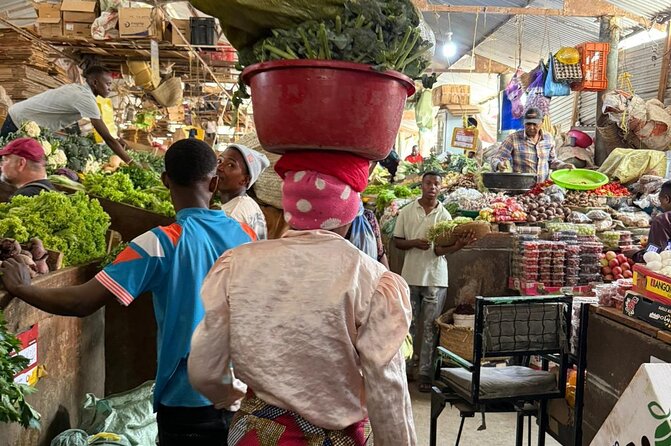
The first main stop lasts roughly 30 minutes, though some descriptions put the market visit closer to 45 minutes. Plan for a short but active walk rather than a formal market lecture. Your guide leads you through the central food market and points out foods sold for local cooking.
This is a useful place to ask questions. You can learn how different ingredients are used, which foods are common in Tanzania, and how market shopping fits into ordinary life. Most of the food is locally sourced, though some goods come from outside the country.
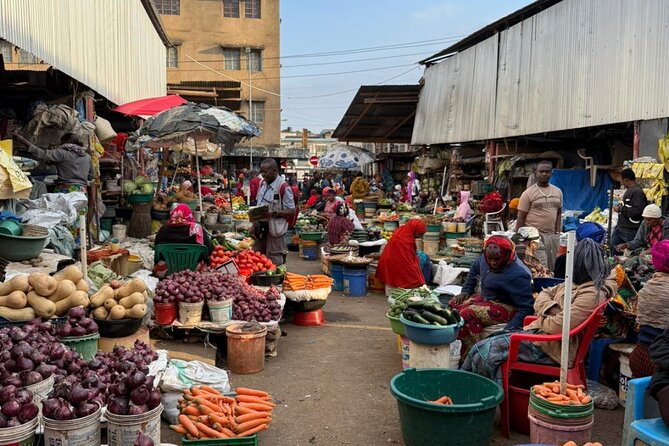
The market is also a chance to see Arusha away from safari lodges and hotel dining rooms. You encounter vendors, shoppers, produce, meat, and the practical rhythm of buying food. The setting may be crowded and noisy, and it will not be arranged for sightseeing. That is part of its value, but it also means you should wear comfortable shoes and expect a working market rather than a staged attraction.
Guides help make the visit more useful. Without one, you might recognize little beyond familiar fruits and vegetables. With an explanation, a pile of ingredients becomes part of a meal and part of Tanzanian food culture.
I especially like that the market is not treated as a quick photo stop. It supplies the ingredients for the next part of the day. After seeing the options, you choose two dishes for the cooking lesson. That choice gives you some control, though you should not expect every possible dish to be available at every departure.
Choosing two Tanzanian dishes
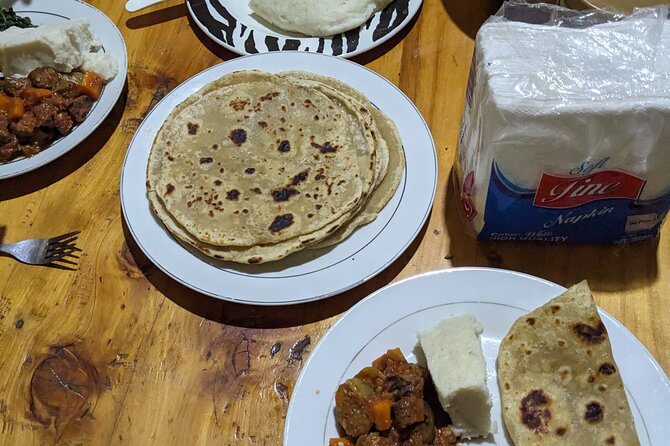
The food selection happens after the guide has explained the local dishes. The available choices are not listed as a fixed menu, but the experience has included foods such as ugali and ndizi. You may find other local dishes depending on the day’s ingredients and the cooking plan.
This flexible approach has two benefits. First, you can choose food that interests you. Second, you see how menus respond to what is fresh and available. That is closer to daily cooking than following a restaurant menu printed weeks earlier.
It also creates one small uncertainty. If you have a strong dietary need or a very specific dish in mind, ask about it when booking or after confirmation. The supplied information does not list vegetarian, vegan, allergy, or gluten-free arrangements, so do not assume substitutions will be possible.
The guide’s explanation is as important as the cooking itself. Food in Tanzania can tell you about household routines, local ingredients, and the difference between a staple and a special dish. You get more from the class if you ask why an ingredient is used, how it is prepared at home, and what people commonly eat it with.
Riding local transport to Sanawari
After the market, you head toward Sanawari, the area used for the cooking lesson. The route includes a form of popular public transport used by local people. This is not simply a private vehicle transfer designed to get you from one attraction to another. The transport is included as a small cultural lesson in its own right.
For some people, this will be one of the most memorable parts of the outing. It gives you a short look at how people move around Arusha and keeps the experience tied to daily life. For others, public transport may feel less comfortable than a private car, especially if you prefer a quiet, controlled transfer.
Pickup and drop-off are offered at hotels near Arusha city center. The description does not promise pickup from every part of the wider Arusha area, so confirm your hotel location before booking. The tour usually takes about four hours, but market activity, traffic, and the cooking pace can affect the exact finish time.
More Cooking Classes in the world:
- Florence: Cooking Class with Local Food Market Tour
★ 4.9 · 407 reviews - Street Food Cooking Class
★ 5.0 · 125 reviews - Busan Local Food Cooking Class with Market Tour
★ 5.0 · 53 reviews - Syracuse: Sicilian Street Food Hands-On Cooking Class
★ 4.9 · 38 reviews
Cooking in a real local kitchen
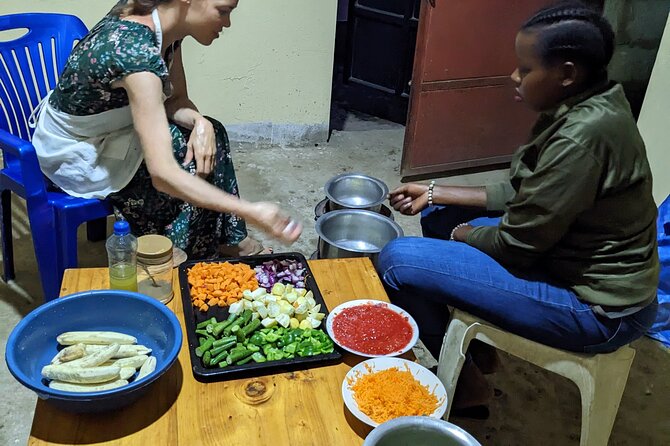
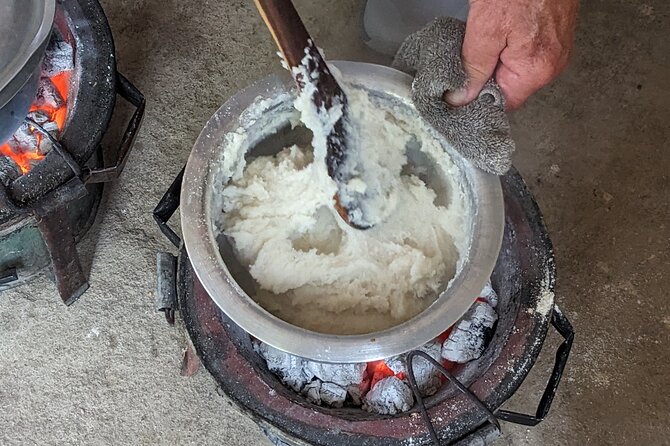
Sanawari is where the cooking lesson takes place. The most important thing to understand is that this is not a modern teaching kitchen. The setup may include a low table, two charcoal burners, a gas burner, large tubs, and basic cooking tools.
I consider that a strength if you want to see how food is prepared in a practical local setting. You are closer to the way many people cook at home, and the equipment gives the lesson a clear cultural purpose. It also makes the process more hands-on and less polished.
If you expect stainless-steel counters, deep sinks, electric appliances, and a separate workstation for every person, adjust your expectations. The kitchen may feel spare by hotel standards. Heat, smoke, low seating, and limited space could be tiring for some people. You may spend time waiting while food cooks, too.
The class is led by a local chef, with the guide helping explain the steps and the wider customs. The exact tasks will depend on the two dishes you choose. You might help prepare ingredients, stir, cook, or assemble the meal, but the supplied details do not promise a particular list of techniques.
This is a good activity for people who care more about understanding the method than collecting a polished recipe card. You see how charcoal and gas can work side by side, how simple tools are used, and how cooking can be shared in a small household space.
Eating the meal you prepared
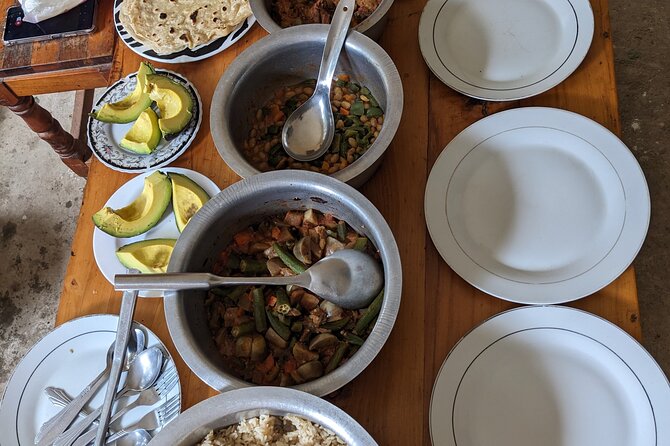
Once the food is ready, you eat it as lunch or dinner. That makes the class feel complete. You have seen the ingredients at the market, helped prepare them, and then sat down with the result.
The meal is included for the people taking part in the class. Drinks are not included, so budget separately for water, soda, or beer. The description indicates that you can buy drinks along the way, but it does not say that a particular brand or beverage will be supplied.
A takeaway option may also be available after the meal. This is useful if you cook more food than you can finish or want to share it later. Since takeaway is described as an option rather than a firm inclusion, ask the guide on the day.
The food may be more satisfying if you arrive hungry. One of the practical pleasures of this format is that the market and cooking lesson lead to a proper meal, rather than a few small samples. Still, the tour is not described as a dedicated tasting crawl, so do not book it expecting many restaurant-style portions from several vendors.
What the $42 price covers
The $42 price is reasonable when you count the individual pieces. You are paying for a guide, a market visit, ingredients, a cooking lesson, local transportation, hotel pickup and drop-off near central Arusha, and the meal you prepare.
The value is strongest if you want an activity that combines food with local life. A cooking class alone might teach you a recipe, while a market walk alone might show you ingredients without explaining how they reach the table. This tour links the two.
The price does not include drinks, tips, or spices from the market. Tips are optional and can reflect your satisfaction with the guide and chef. If you want to take home a spice or other market item, pay for that separately.
The advertised maximum is up to 200 people. That is a very large possible capacity for a hands-on kitchen activity, so I would ask about the expected group size before booking if personal instruction matters to you. The experience will likely feel different with a small group than with a large one.
The guides and the human side
The guide names associated with this activity include Israel, James, Jack, Lameck, Bariki, and Magret. The important point is that your guide is not just handling transport. The guide explains market foods, helps you choose dishes, introduces the cooking setting, and gives context about Tanzanian customs.
Specific praise has focused on warmth, enthusiasm, and explanations that make the food easier to understand. Magret has been noted for holding attention during the class, while Israel has been singled out for positive energy and explanations of Tanzanian cuisine. Jack and James have also been described as friendly and helpful from hotel pickup onward.
You may not receive the same guide on every departure, so treat those names as examples rather than a guarantee. If a particular guide is important to you, ask the operator, Tanzania Songbirds Safaris, before confirming.
The human contact is the main reason to choose this over a standard restaurant meal. You get a chance to meet people at the market and connect food with daily routines. Keep your approach respectful: this is a working market and a local home-style setting, not a performance arranged only for visitors.
Who will enjoy it most
I would recommend this for you if you want a practical cultural activity in Arusha and enjoy asking questions about food. It suits solo visitors, couples, families, and small groups who are happy to share a simple cooking area and take part rather than sit back.
It also fits well before or after a safari, when you want something rooted in the city itself. The four-hour length is long enough to feel substantial without taking an entire day.
You may want a different activity if you need a high-end kitchen, formal culinary instruction, guaranteed menu choices, or a short tasting session. People with mobility concerns should also ask for more details, since the activity includes a market walk, local transport, and a basic kitchen with low equipment. The supplied information says most people can participate, but it does not give detailed accessibility specifications.
Book at least a day ahead if your plans are firm. The experience is often booked well in advance, with an average lead time of about 23 days. Confirmation is provided at booking, and free cancellation is available up to 24 hours before the start time. Cancellations or changes made within 24 hours are not refundable, and poor weather can lead to a new date or a full refund.
Should you book this Arusha cooking class?
Book it if you want food to be your way into Tanzanian daily life. The market, local transport, Sanawari kitchen, and shared meal create a fuller experience than a standard cooking demonstration. At $42, the package offers good value, especially because ingredients, transport, instruction, and the meal are included.
Skip it if you want a polished culinary studio or a fixed menu with restaurant-level comfort. This is a simple, hands-on activity with basic equipment and some uncertainty about the exact dishes and group size.
For most food and culture fans, I would choose it, arrive ready to walk and cook, and bring a little extra money for drinks or market spices. The best reason to book is not the promise of a perfect kitchen. It is the chance to see how a meal starts in Arusha and ends on your own plate.
FAQ
How long does the Arusha cooking class and market tour last?
The experience lasts about four hours. The central food market visit takes roughly 30 minutes, or about 45 minutes according to the detailed timing, and the cooking lesson in Sanawari is listed at about 1 hour and 30 minutes. Transport and meal time make up the remaining period.
Is hotel pickup included?
Yes. Pickup and drop-off are included for hotels near Arusha city center. Confirm that your accommodation falls within the service area before booking.
What food will I cook?
The guide explains the available local dishes, and you choose two for the lesson. Foods such as ugali and ndizi have been included in past classes, but the exact choices can depend on the market ingredients available that day.
Is the cooking kitchen modern?
No. You should expect a traditional local kitchen with simple equipment. The setup may include low tables, charcoal burners, a gas burner, large tubs, and basic utensils.
Are drinks included in the price?
No. Water, soda, and beer are not included. You can buy drinks along the way.
Can I cancel for a full refund?
Yes, if you cancel at least 24 hours before the experience start time. Cancellations or changes made less than 24 hours before the start are not refunded. If poor weather cancels the activity, you are offered another date or a full refund.
More Workshops in the world
- Ao Nang: Hands-on Learn to Cook 3 Popular Thai’s street food
★ 4.8 · 417 reviews - Hungarian Langos Making Class: The No. 1 Street Food in Hungary
★ 5.0 · 55 reviews - Lisbon: Portuguese street food cooking class with Drinks
★ 4.9 · 37 reviews - Hanoi Egg Coffee Class and Street Food Walking Tour
★ 5.0 · 33 reviews
Just added around the world
- 1 Istanbul Tour: Highlights, Street Food & Hidden Pearls★ 5.0 · 9 reviews
- Evening Hyderabad Street Food Walk with Hyderabad Biryani★ 4.5 · 24 reviews
- Hyderabad Street Food Crawl (2 Hours Guided Food Tasting Tour)★ 4.0 · 5 reviews
- Japanese Street Food Class in Beech Grove★ 5.0 · 9 reviews
- Small-group Street food tour in Ischia★ 3.5 · 2 reviews
- Hyderabad : Evening Street Food Tasting with Guided Old City Tour★ 5.0 · 10 reviews
- Hyderabad Street Food Experience with Local Expert★ 4.5 · 2 reviews
- Hue Street Food On Foot (Daily Tour – Group Tour | 12 pax max)★ 5.0 · 15 reviews
Street Food Market Tours, compared.
Tokyo Tsukiji Fish Market Food and Culture Walking Tour
Read our review →
London Bridge & Borough Market Food Tour with 7 Authentic Dishes
Read our review →
Tokyo: Tsukiji Fish Market Food and Walking tour
Read our review →
Small Group Cooking Class & Market Food Tour in Florence
Read our review →
Tokyo: Tsukiji Fish Market Guided Walking Tour
Read our review →
Nishiki Market Brunch Walking Tour (7 Tastings + Brunch)
Read our review →
Food Market Visit and Cooking Class with Wine
Read our review →Browse the lists this tour appears in