
REVIEW · CHINA STREET FOOD TOURS
Hutong Calligraphy Crafts and Dumpling Making in a Local Home
Beijing’s old hutongs come into focus when you sit at a local table, shape dumplings by hand, and listen to stories about life behind the city’s grey courtyard walls. This private home visit combines a craft lesson, tea, and a fresh meal in about three hours.
I like the choice of crafts, especially calligraphy and paper cutting, because you leave with something you made rather than just another photograph. I also like the simple local welcome: you can text the host when you reach the meeting point, and the host comes outside to find you.
The main consideration is the limited review history and the somewhat unusual opening-hours information, which runs from midnight to 11:30 p.m. Confirm your exact start time carefully, and allow extra patience for the meeting-point handoff.
Key points at a glance
- Choose one or two traditional crafts: Try calligraphy, paper cutting, ink painting, opera mask painting, or kite making.
- Make dumplings from scratch: Fold your own dumplings, then eat them fresh with tea.
- Meet at Guo Moruo Residence: The tour begins and ends at 18 Qian Hai Xi Jie in Xicheng District.
- Enjoy a private activity: Only your group participates, giving the visit a more personal feel.
- Hear hutong stories: Your host connects the craft and meal to local traditions and daily life in Beijing.
- Plan for about three hours: The pace allows time for making, eating, talking, and taking your crafts home.
Why a courtyard home changes the Beijing experience
Many first visits to Beijing focus on enormous sights: the Forbidden City, Tiananmen Square, and the Great Wall. Those places matter, but they can leave you seeing Beijing from a distance. This activity gives you a smaller, more ordinary setting where the city is explained through food, art, and neighborhood stories.
You enter a courtyard home rather than a tourist restaurant. That distinction matters. A restaurant class can teach you how to fold a dumpling, but a home visit gives the host room to talk about everyday customs and the hutongs around you.
The experience is designed as a culture exchange, not only as a cooking lesson. You handle the brush, paper, paint, dough, and tea yourself. At the same time, you hear about local traditions and modern Beijing from someone connected to the neighborhood.
I would choose this activity after visiting the major sights, when you want a quieter afternoon or evening. It works well as a change of pace. You trade crowds and grand stone buildings for a table, a courtyard, and a meal shared at close range.
More Dumpling and Dim Sum Tours in China
- Beijing: Dumpling Making Workshop with Meal and Tea
★ 4.7 · 69 reviews - Online Cooking Class Beijing Dumplings and Cuisine by Sunflowerli Renowned Chef
★ 5.0 · 65 reviews - Half-Day Private Beijing Hutong Walking Tour with Dim Sum
★ 5.0 · 48 reviews
Meeting at Guo Moruo Residence
The stated meeting point is Guo Moruo Residence, 18 Qian Hai Xi Jie, Xicheng District, Beijing, 100035. The activity ends at the same place, so you do not need to arrange a separate return transfer at the end.
The meeting instructions deserve attention. You should reach the meeting point and text the host when you are outside. The host then comes to meet you. This is practical for a private home visit, since a residential entrance can be harder to identify than a large hotel lobby.
Give yourself enough time to find the residence and get oriented. Keep your phone charged and make sure you can send messages. The meeting point is near public transportation, but the information provided does not specify a particular subway exit, bus stop, or pickup route.
Pickup is offered, but the exact terms are not detailed. Ask about pickup when you book rather than assuming it is included everywhere in Beijing. If you use the listed meeting point, the clear plan is simple: arrive, text, meet the host, and return there after the meal.
The experience is private, meaning only your own group participates. That does not necessarily mean a one-to-one lesson, since the size of your group is not stated. It does mean you will not be placed with unrelated participants.
Choosing your Beijing craft
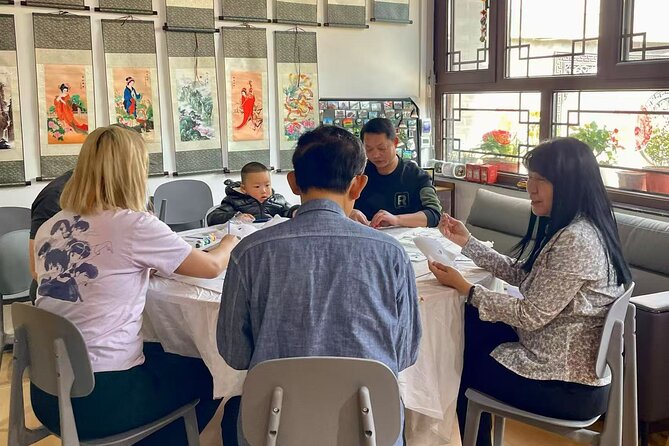
The craft portion is one of the most useful parts of the visit because you have options. You can choose one or two activities from five traditional forms. If you want a direct introduction to Chinese writing, choose calligraphy. You hold the brush, practice your name, and may try a poem.
Calligraphy looks easy until you use the brush yourself. The pressure, angle, and movement all affect the mark. A guided lesson gives you a better sense of why the writing is treated as an art, not simply a way to record words.
Paper cutting is a good pick if you prefer a small project with a clear result. You create red paper symbols connected with luck and take your work with you. It is also a sensible choice for families, though the activity data does not specify a minimum age or child program.
Ink painting lets you work with familiar Chinese subjects such as bamboo, plum blossoms, or traditional scenes. The point is not to produce a museum piece. It is to learn how a few controlled brush movements can suggest a plant or setting.
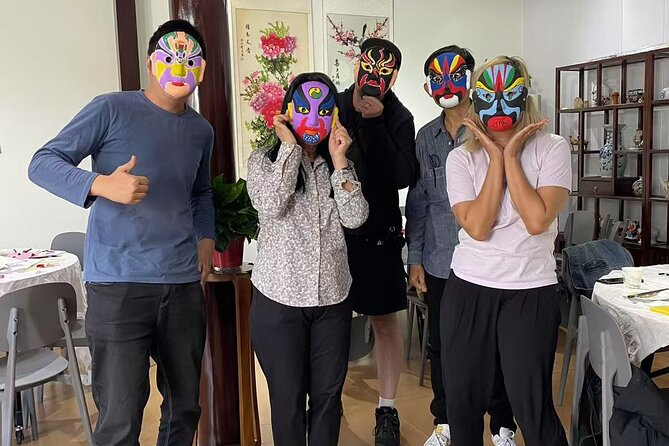
Opera mask painting adds a connection to Chinese performance traditions. You paint a mask and learn the stories behind the characters. This may suit you if you enjoy color and symbolism more than handwriting.
Kite making gives you a decorated traditional kite to take home. The practical question is how easily you can pack it for the rest of your trip. The information does not give the kite’s finished size, so ask if luggage space is a concern.
Your instructor guides you through the selected craft step by step and explains its cultural background. Since you can choose one or two crafts, think about depth versus variety. One craft should allow more time to practice. Two crafts give you a wider sample but may leave less time for each.
Making dumplings from flour to table
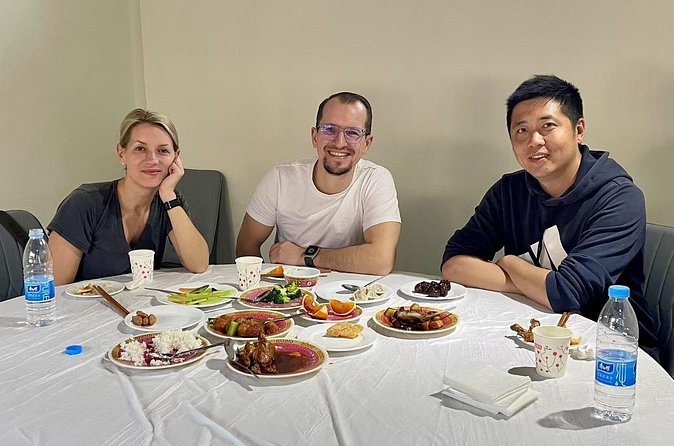
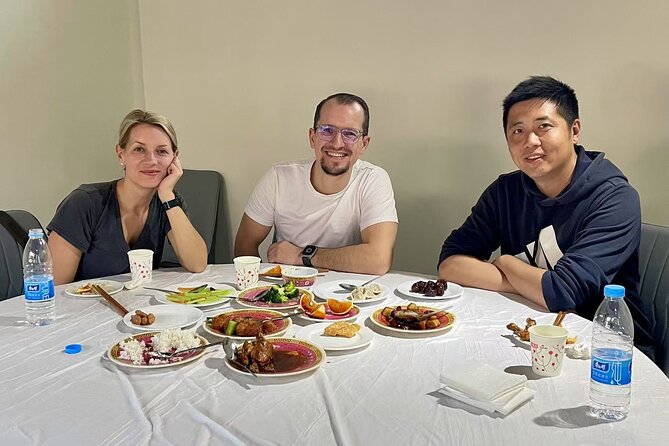
The cooking part teaches you to make Chinese dumplings from scratch. You learn the basic process, fold your own dumplings, and then eat a fresh dumpling meal with tea.
That sequence is important. You are not simply handed a plate of food after a demonstration. Your hands do the work, and the meal becomes a direct result of the lesson. Dumpling folding also gives you an easy activity to share with the host while conversation develops.
The exact filling, dough recipe, cooking method, and number of dumplings are not specified. If you have food allergies, dietary restrictions, or concerns about ingredients, contact the provider before booking. Do not assume that a vegetarian, vegan, halal, or allergy-safe option is available.
The meal is part of the cultural exchange. Food gives the conversation a natural rhythm: make, fold, cook, eat, and talk. Tea is served with the meal, adding another familiar part of Chinese hospitality without turning the visit into a formal tasting session.
You should also expect a hands-on class rather than a polished restaurant presentation. Dumplings may vary in shape, and that is part of the fun. The useful skill is learning how they are assembled and shared, not producing identical folds.
More Dumpling and Dim Sum Tours in Beijing:
- 4-Hour Private Tour: Lama Temple, Confucius Temple, Guozijian Museum with Dim Sum
★ 5.0 · 21 reviews - 4-Hour Private Beijing Hutong Bike Tour with Dumpling Lunch
★ 5.0 · 13 reviews - Beijing Forbidden City, Summer Palace, Hutong and Dumpling Making
★ 5.0 · 10 reviews - 4-Hour Private Tour of Calligraphy Class, Hutong and Dumplings
★ 5.0 · 9 reviews
Tea, stories, and daily hutong life
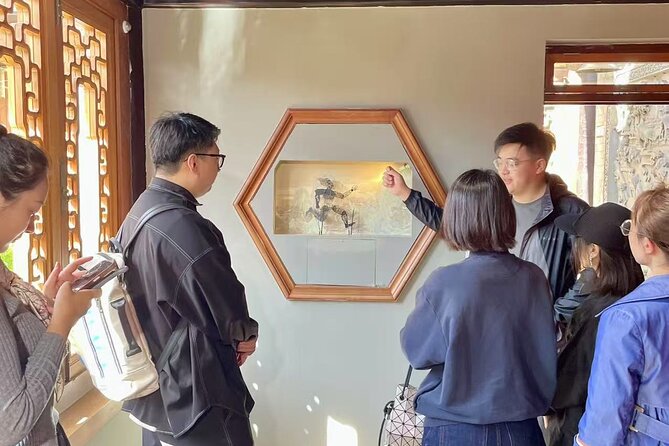
Tea provides time to slow down after the craft and cooking. While you drink, the host talks about the neighborhood, local customs, and modern Beijing.
This part may be the most valuable for you if you want context rather than a checklist of sights. Hutongs are not just scenic lanes. They are tied to courtyard homes, neighborhood routines, changing city life, and the way older parts of Beijing fit into a modern capital.
The description does not promise a formal walking tour through a set number of alleys, so do not book this expecting extensive sightseeing on foot. The hutong connection comes mainly through the home setting and the stories shared during the activity.
Still, that can be more useful than a quick pass through a lane. You have time to ask questions and connect what you hear to the city outside. Ask about the neighborhood, courtyard living, food customs, or how Beijing has changed. The exact discussion will depend on your host and your interests.
The host grew up in the hutongs, according to the experience description. That personal link is central to the activity. You are not only learning a craft in Beijing, you are hearing how local life is understood by someone with roots in the area.
What the three-hour schedule means for you
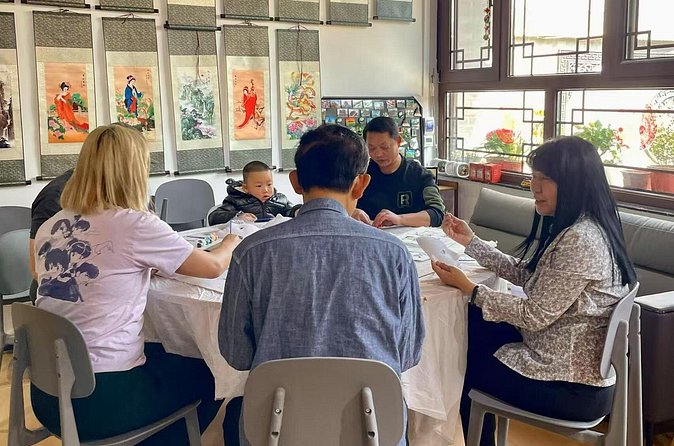
At roughly three hours, this is long enough to feel like a real activity without taking over an entire day. A reasonable flow is arrival and welcome, craft instruction, dumpling preparation, the meal, tea, and conversation. The exact order may vary.
You should not expect a rushed stop. The class needs time for you to practice, and the meal needs time to prepare and eat. Still, if you select two crafts, the schedule may feel fuller than if you choose one.
The listed operating period runs from July 2, 2025, through November 25, 2026. The daily hours are shown as 12:00 a.m. to 11:30 p.m., which is unusually broad for a home-based cultural activity. Treat those hours as a booking window rather than a promise that every start time is available.
Your confirmation should show the actual appointment time. If it does not, contact DragonTrail Service before setting up other plans. This is especially important if you are connecting the activity to a train, flight, show, or timed attraction.
The class ends back at the meeting point. That makes it easier to continue in the Xicheng area, but the supplied details do not specify nearby attractions, restaurants, or a particular transport route afterward.
Is $60 a fair price?

At $60 per person, the value depends on what you want from a Beijing activity. You are paying for about three hours, private participation, instruction in one or two crafts, a dumpling meal, tea, and local conversation. You also take your craft home.
Compared with a short public demonstration, that is a substantial package. The private format matters most if you value time to ask questions, want a quieter setting, or are traveling with family or friends who prefer their own pace.
The price is less compelling if your main goal is simply to eat inexpensive dumplings. Beijing has cheaper meals. It is also less suitable if you want a long guided tour of historic sites, since the focus here is the home visit, craft work, cooking, and conversation.
For a couple or small group, the cost can make sense as a special cultural activity. Group discounts are offered, although the discount amount is not provided. Ask for the current group price if several people are booking together.
The strongest value is the combination of things that are difficult to arrange independently: a local home setting, a guided craft, food preparation, and conversation with a host connected to the hutongs. You are buying access and time, not only a meal.
Who will enjoy this most

I would recommend this activity to you if you enjoy making things with your hands and prefer personal contact to a large organized tour. It is particularly well suited to couples, families, and friends who want a shared activity during a Beijing visit.
It also makes sense after the major sights. One detailed account described the experience as the highlight of a Beijing trip that had already included the Great Wall, Tiananmen Square, and the Forbidden City. That is a useful clue about its role: it can add the human scale that major monuments often lack.
Choose your craft based on your interests. Calligraphy suits you if you want to work with Chinese writing. Paper cutting or kite making gives you a take-home object. Ink painting and opera mask painting are good choices if you like visual art and symbolism.
You may want to skip it if you dislike hands-on classes, have strict food restrictions that cannot be confirmed in advance, or want a sightseeing tour with constant movement. The pace is centered on sitting, making, eating, and talking.
Service animals are allowed, and the activity is near public transportation. The available information does not explain courtyard access, restroom arrangements, or other mobility details, so ask DragonTrail Service about any specific accessibility need before booking.
Booking advice and cancellation rules
Confirmation is received at the time of booking. Because the meeting involves texting the host and being collected outside the residence, read the confirmation closely and save the contact details.
Free cancellation is available if you cancel at least 24 hours before the start time. Cancellations or changes within 24 hours are not accepted for a refund, and the cut-off is based on Beijing local time.
The experience is offered by DragonTrail Service. Since only two ratings are shown, I would treat the perfect score as encouraging but not enough to answer every practical question. Ask ahead about the exact craft choices, food ingredients, pickup, and meeting instructions.
Should you book it?
Book this if you want a small-scale Beijing experience built around making, eating, and talking. The courtyard setting, choice of crafts, dumpling lesson, tea, and personal hutong stories offer more contact with daily life than another quick stop at a formal attraction.
I would especially choose it for a first-time visit that already includes Beijing’s major landmarks, or for a return visit when you want something less predictable. Confirm the start time, pickup details, and dietary options first.
Skip it if you are looking for a full hutong walking tour, a restaurant meal only, or a large number of detailed museum and monument stops. For the right kind of visitor, $60 buys a memorable few hours and a handmade reminder of Beijing.
FAQ
How long does the activity last?
The experience lasts approximately three hours.
Where does the activity begin?
It begins at Guo Moruo Residence, 18 Qian Hai Xi Jie, Xicheng District, Beijing, China, 100035.
Where does the activity end?
The activity ends back at the same meeting point.
Is this a private activity?
Yes. Only your group participates.
Which crafts can I choose?
You can choose one or two crafts from calligraphy, paper cutting, ink painting, opera mask painting, and kite making.
Is a meal included?
Yes. You make dumplings, fold your own, and enjoy a fresh dumpling meal with tea.
Is pickup available?
Pickup is offered, but the provided details do not specify the exact pickup area or terms. Confirm this with DragonTrail Service when booking.
Can I cancel for a full refund?
Yes. You can receive a full refund if you cancel at least 24 hours before the experience start time. Cancellations or changes made within 24 hours are not accepted for a refund.
Just added around Beijing
- Street Food in Beijing Hutongs by Bike★ 5.0 · 11 reviews
- Private Hutong Culture Tour with Dumpling Cooking Class plus Cricket Fighting Game★ 5.0 · 5 reviews
- 4-Hour Private Tour: Lama Temple, Confucius Temple, Guozijian Museum with Dim Sum★ 5.0 · 21 reviews
- Beijing: Private Dumpling Cooking Class in Local Family★ 5.0 · 3 reviews
- Private Customized Beijing Night Tour To Wangfujing Food Street And Pipe Hutong★ 4.0 · 5 reviews
- Private Beijing Night Tour with Mr. Shi’s Dumplings, Great Leap Brewing and Houhai Lake★ 4.5 · 5 reviews
- Private Beijing Tour: Forbidden City, Mutianyu Great Wall, and Dumpling Lunch★ 5.0 · 7 reviews
- Private Day Tour: Lama Temple, Summer Palace and Hutong Dumpling Lunch★ 5.0 · 2 reviews
China Street Food Tours, compared.
Authentic Local Food Tour in Central Shanghai
Read our review →
Xi’an: Great Tang Dynasty Night Show & Dumpling Meal Option
Read our review →
Small Group Kowloon Michelin Rated Street Food and Culture Tour
Read our review →
The 10 Tastings of Hong Kong With Locals: Private Street Food Tour
Read our review →Browse the lists this tour appears in