
REVIEW · STREET FOOD WALKING TOURS
Manila: Street Food and Drinks Walking Tour with Tastings
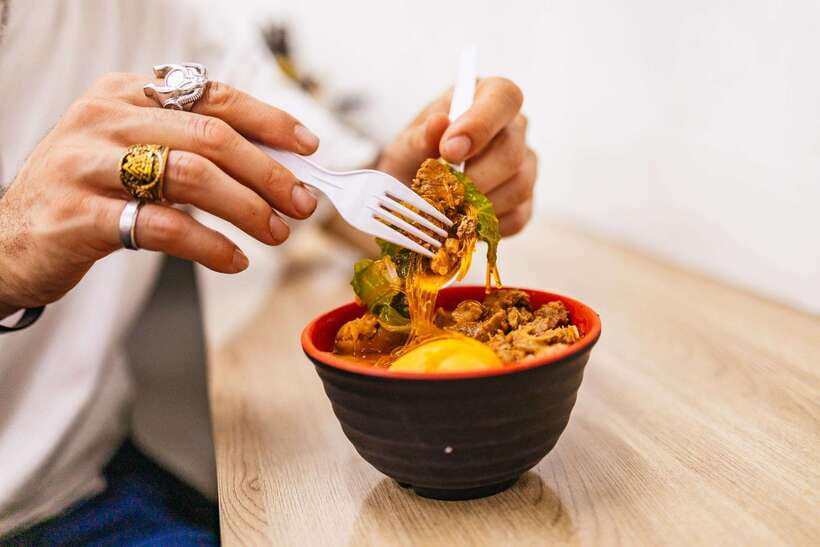
Manila’s best food stories are often served from a cart, stall, or tiny neighborhood counter, not a polished restaurant. This two-hour walk through Binondo and nearby parts of old Manila takes you to local food stops for banana cue, kwek-kwek, pancit, grilled seafood, halo-halo, and more. Guides such as Mari bring the dishes to life with local customs, neighborhood history, and plenty of encouragement for first-time tasters.
I like the generous range of food, which can run from six to ten tastings, and I like the way the tour includes ordinary local transport rather than keeping you in a sightseeing bubble. The jeepney or Lamborghini tricycle ride adds a useful bit of Manila life. The main drawback is clear: this is not a small sampling menu. Several people found the portions abundant, and the tour is a poor fit for vegetarians, vegans, pregnant women, wheelchair users, and anyone wanting a quiet, low-effort outing.
Key points
- Six to ten tastings: Expect banana cue, turon, kwek-kwek, siomai, soup, pancit, seafood, mango with shrimp paste, halo-halo, and drinks, depending on what is available.
- Binondo meeting point: Start at Grand Cafe 1919 on Juan Luna Street, a handy place to meet, have a drink, and use the facilities first.
- Local transport included: The route may use a jeepney or a special tricycle, giving the walk a practical Manila flavor.
- Guides make the difference: Mari is frequently assigned, with Tess, Jessie, and other guides also leading tours.
- Small group format: The advertised limit varies between 10 and 12 people, so check the current booking details.
- Come very hungry: The food is plentiful, and breakfast may be more than you need before this tour.
Starting at Grand Cafe 1919 in Binondo
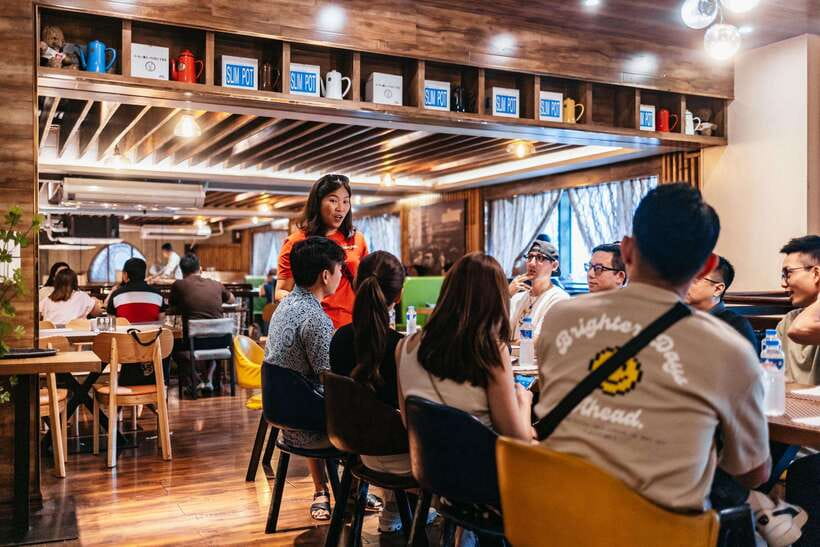
The tour begins at Grand Cafe 1919 in Binondo, at Juan Luna Street. This is more than a pin on a map. It gives you a calmer place to meet your guide, take a restroom break, and have a beverage before stepping into the busy streets.
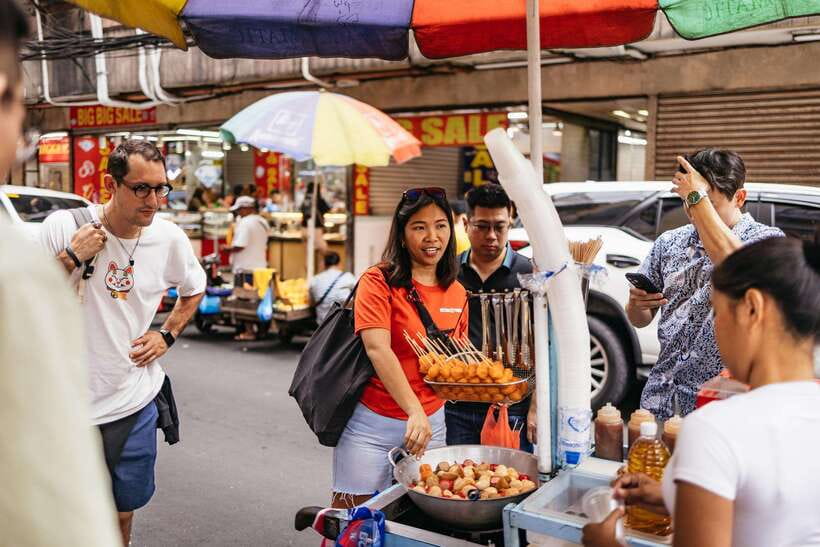
Binondo is Manila’s famous Chinatown district, but this experience is not built around grand sightseeing alone. You move through side streets, market areas, and everyday food quarters where local residents shop, snack, and eat. That difference matters. A guide helps you read the scene, choose the right stall, and understand what you are seeing instead of simply walking past it.
You should allow time to reach the meeting point on your own. The tour does not include hotel pickup, and the meeting location is also the end point for the return ride described in the tour details. The supplied information labels the location as Nueva Vizcaya in one place, but every practical meeting instruction points to Binondo in Manila. Confirm the exact map pin before setting out.
More Street Food and Wine Tastings in Philippines:
- Manila Street Food and Drinks with Tuktuk Experience
★ 5.0 · 4 reviews - Rome: Guided Food Walking Tour with Wine in Trastevere
★ 4.9 · 3,105 reviews - Florence: Street Food Tour with Wine & Local Guide
★ 4.9 · 1,443 reviews
Six to ten stops, with a menu that changes
The food list is long, but it is not a fixed restaurant menu. You can expect six to ten tastings, with the exact selection shaped by what is available at the street stalls that day. That is part of the point. You are tasting the food as it appears in local life, rather than following a rigid sequence designed in a kitchen.
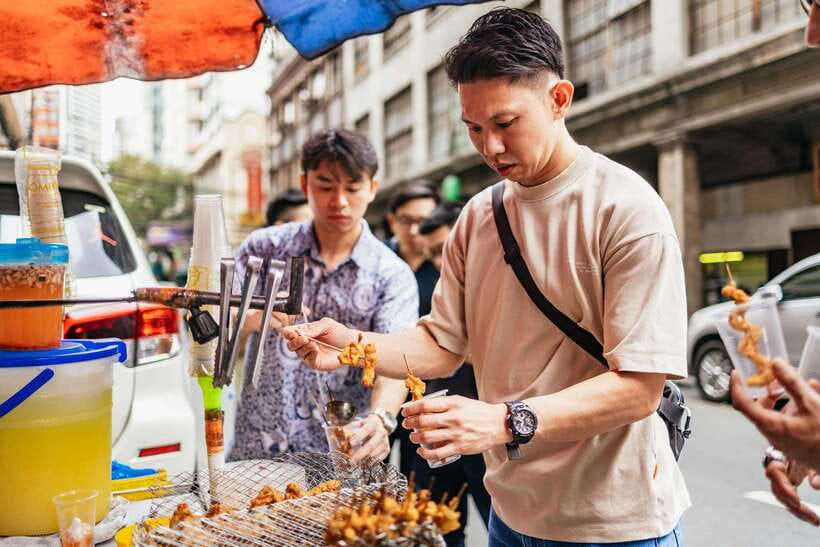
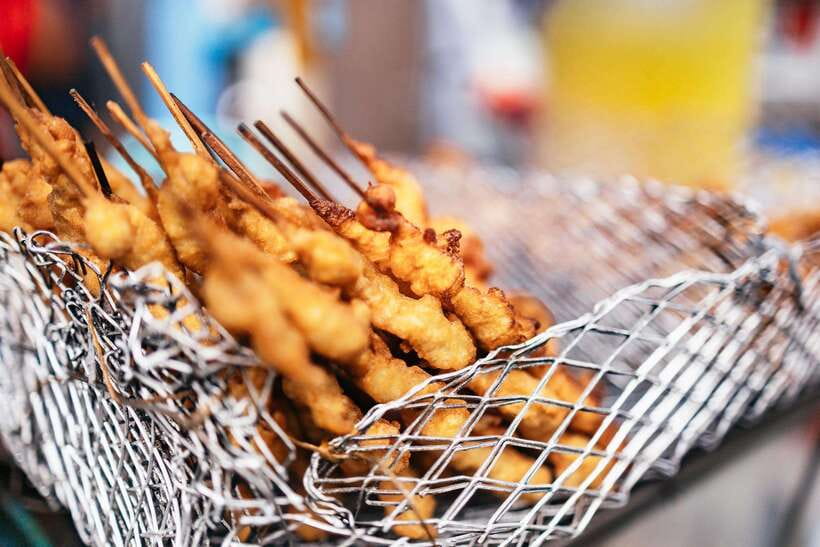
The sweet opening may include banana cue, a fried banana coated in brown sugar, along with kamote fries and turon. Turon is a fried banana roll, often crisp outside and soft inside. These are easy introductions to Filipino street snacks, especially if you are still deciding how adventurous you feel.
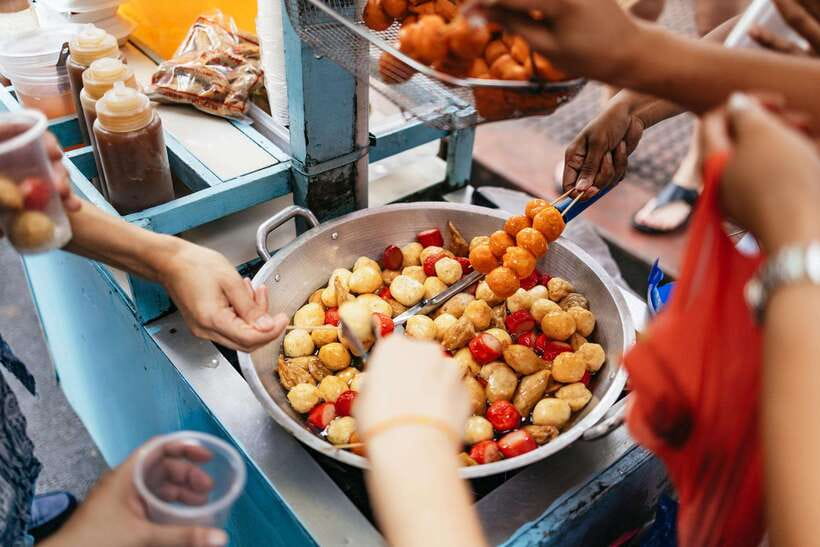
Kwek-kwek is another likely stop. These are quail eggs coated in orange batter and fried, usually eaten with a dipping sauce. The color and texture may catch you off guard, but the dish is approachable and makes a good first step toward the more unusual foods that can appear later.
You may also try siomai, a familiar steamed dumpling with a Filipino street-stall identity. Soup can include sotanghon, a noodle soup that offers a welcome pause from fried foods. Several people particularly enjoyed the soup, and it serves a practical purpose too: it gives your palate something warm, savory, and less oily between snacks.
Pancit, palabok, and the savory heart of the walk
The tour can include Filipino pancit and pancit palabok. These noodle dishes help show that street food is not only about fried bites on sticks. Pancit gives you a filling, savory taste of Filipino home and party cooking, while palabok usually comes with a more pronounced sauce and toppings.
I would pay attention to how your guide explains the dishes, not just how they taste. The value here lies in learning what people order, how food is shared, and how a dish fits into daily life. Gordon, one visitor who grew up with Filipino cuisine, still enjoyed the food stalls, their owners, and the different flavors, especially the palabok and turon. That is a useful reminder that the tour can work for people familiar with Filipino food, not only first-time tasters.
Seafood may appear in the form of grilled squid or fried calamari. A separate tasting may include grilled meat or pork on a stick, and the exact combination can shift. You should see the menu as a broad guide, not a promise that every item will appear.
The bold choices: balut, intestines, and shrimp paste
This is where the tour asks for some nerve. Balut, a fertilized duck egg with a partly developed embryo, can be available. You do not have to pretend every dish sounds appealing. One person tried it with salt and vinegar, while another chose not to. That is a perfectly sensible approach.
The tour may also include chicken intestine, fried or grilled, and mango with shrimp paste. The shrimp paste brings a strong salty, fermented flavor that contrasts sharply with the sweet mango. These are not polished, familiar flavors adapted for cautious eaters. They are chances to test your limits while your guide explains what you are eating.
For me, this is where a guide earns the fee. A good leader can tell you what a food is, how locals eat it, and which stall is suitable for the group. Mari is repeatedly described as energetic, patient, and attentive in crowded streets. One person even noted that she supplied hand sanitizer and helped keep the group together while crossing chaotic areas.
Still, you should listen to your body. The food is prepared at street stalls, and one person reported an upset stomach the next morning. That does not mean the tour is unsafe, but it does mean you should bring a sensible attitude toward unfamiliar food, heat, rich sauces, and a large volume of tasting.
More Street Food Walking Tours in Philippines:
- The Original Cebu City Historical and Food Walking Tour
★ 4.5 · 81 reviews - Manila: Sightseeing and Food Walking Tour with Tastings
★ 4.7 · 68 reviews - Makati Street food walking tour with Dinner
★ 5.0 · 3 reviews - Reykjavik Food Walk – Local Foodie Adventure in Iceland
★ 5.0 · 18,952 reviews
Halo-halo brings the sugar and color
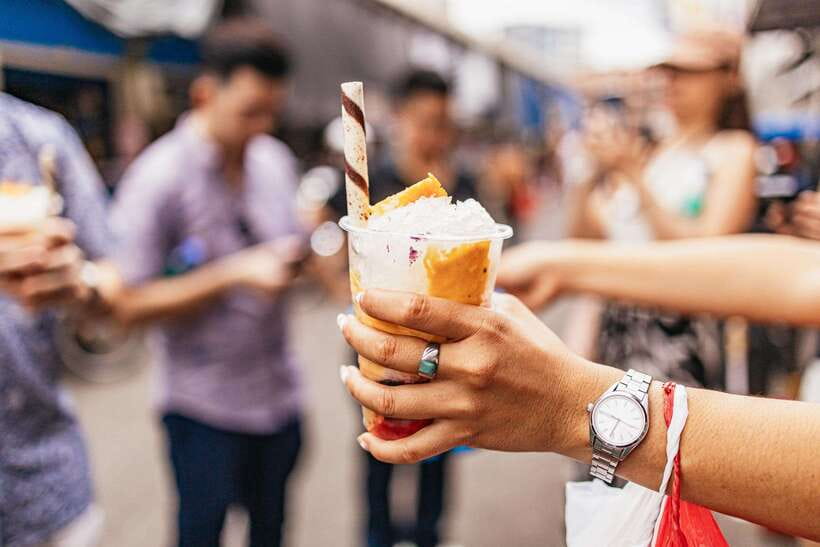
The final treat is often halo-halo, a Filipino dessert made by combining sweet ingredients, crushed ice, and other toppings. It is a fitting ending after fried snacks, noodles, soup, seafood, and meat. The cold dessert also provides relief in Manila’s heat.
Drinks may include water, refreshing juice, or local choices such as buko juice. The list of drinks is not fixed, so treat these as possible tastings rather than guaranteed items. Pacing matters. The guide may space drinks through the walk, which helps when the weather is hot and the food keeps coming.
The final dessert is more than a sweet finish. It gives you a chance to pause and talk with the group before the last part of the route. Several people liked the relaxed pace, saying it felt more like walking with friends than being pushed through a tightly timed schedule.
Walking through the parts of Manila most people miss
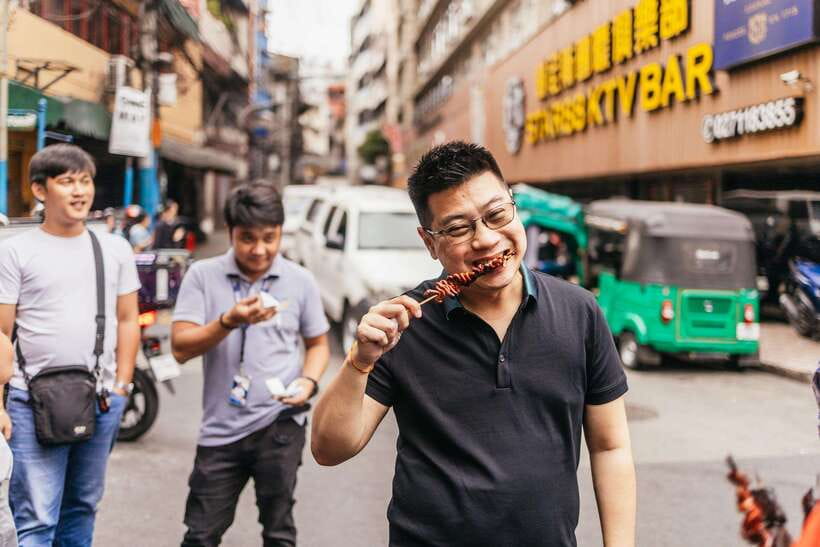
You will spend much of the two hours on foot. The route can pass through Binondo, Santa Cruz, Quiapo, and other local areas, depending on the day’s plan and food availability. Expect crowded lanes, open market areas, traffic, uneven walking conditions, and plenty of street activity.
This is not a polished food hall. You may be standing while eating, squeezing through narrow spaces, and watching vendors work around you. Comfortable shoes are essential. Carrying less is also wise, since your hands may be occupied with food, a drink, or a phone for photos.
The walking is part of the value. Food gives you a reason to enter streets you might otherwise ignore, while the guide explains the neighborhoods and points out details that can be hard to understand on your own. The tour also brings you away from the usual visitor route. One person who had wandered Binondo alone previously found the area much more rewarding with a guide and a clear food purpose.
The timing is short, only two hours, so this is a concentrated introduction rather than a full day in Manila. You will not see every neighborhood or understand the whole city. You will, however, get a lively taste of local food culture without spending hours planning individual stalls.
A jeepney or tricycle ride with real practical value
Local transport is included as part of the experience. Depending on the route, you may ride a jeepney or the tour’s distinctive Lamborghini tricycle. These vehicles are not included as a decorative photo opportunity. They show you how short trips work in Manila and let you experience a form of transport that can be awkward to arrange alone.
A jeepney ride can feel crowded, especially for a first-time visitor. Getting on and off takes care, and the roads are not designed around a quiet sightseeing pace. The tricycle ride is easier to treat as a fun finale, but it is still part of the local rhythm rather than a private luxury transfer.
The transport is not guaranteed in precisely the same form every day. One person specifically noted that the jeepney ride did not happen, while another described a mix of tricycle, bus, and boat on a different food tour. For this experience, think of local transport as an intended feature that can change with the route and conditions, not a promise of one exact vehicle.
The guide is the main reason to book
Food tours live or die by the guide. Mari leads many of the tours and receives especially strong praise for her enthusiasm, humor, organization, and care in crowded streets. She also answers questions about food, local customs, and Manila’s past without turning the walk into a lecture.
Tess and Jessie have also led tours, and the quality of the experience can depend on who is assigned. The guide speaks English and Tagalog. You should bring questions, since the tour is designed for conversation as much as eating.
The best guides do three jobs at once. They explain the food, help you move through busy streets, and choose stalls that feel suitable for visitors. They also make it easier to try something intimidating. If you are a solo visitor, the social side helps. If you are traveling with a partner or family, a guide can keep the group moving without making the experience feel rushed.
Children from ages three to seven may join with guidance. Keep in mind that the heat, walking, crowded streets, and unusual foods may be more demanding for young children than the age policy alone suggests.
Is $68 a fair price for two hours?
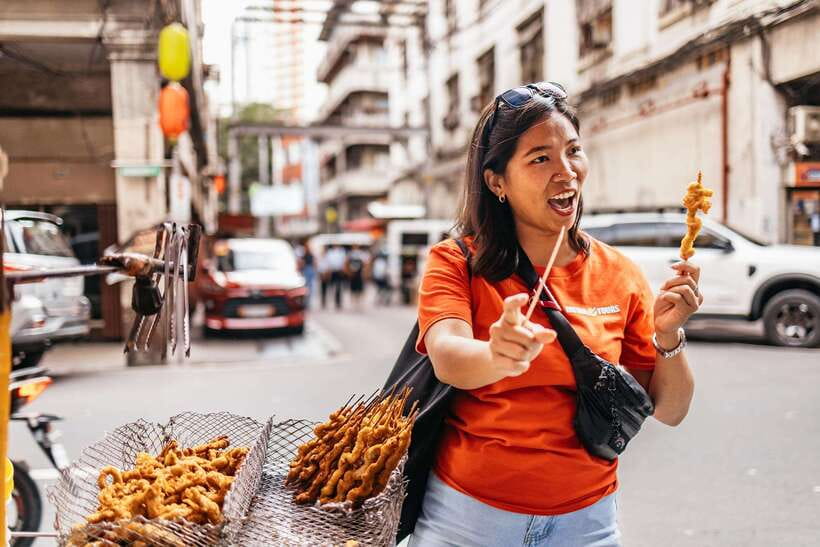
At $68 per person, this is not the cheapest way to buy street food in Manila. If your only goal is to eat banana cue, noodles, or halo-halo, you can spend far less on your own.
The price makes more sense if you count the food quantity, the English-speaking guide, the neighborhood orientation, the help choosing stalls, and the included local transport. You are paying to avoid guesswork and to gain access to foods and streets that may feel hard to approach alone.
I would call the value good for a first visit, especially if you are cautious about street food or have only a short time in Manila. It is less compelling for a confident local-food explorer who already knows Binondo and speaks enough Filipino to order independently.
The generous tastings can also work against the value for some people. If you prefer small, precise samples, the volume may feel excessive. One person suggested that smaller tastings at the same price might be preferable. Plan to skip or keep breakfast light, and do not schedule a major meal immediately afterward.
Who should book this street food walk?
Book it if you want local food with context, not a restaurant crawl. It suits curious eaters who want to try several Filipino staples and some challenging dishes while learning about the neighborhoods around them.
It is also a strong choice for solo visitors. You get a ready-made group, a guide who can take photos, and someone to help you navigate the most crowded stretches. The small-group limit, listed as 10 in one place and 12 in another, should keep the outing more personal than a large coach tour.
You should pass if you are vegetarian or vegan. The tour is specifically not suitable for either, and much of the menu centers on meat, seafood, eggs, or shrimp paste. Pregnant women and wheelchair users should also choose another activity based on the stated restrictions.
Rain does not cancel the walk. The tour operates rain or shine, so bring sensible footwear and prepare for changing street conditions. You should also book at least 24 hours before the start time.
My verdict on the Binondo food tour
I would book this tour if I wanted a fast, friendly introduction to Filipino street food and did not feel ready to approach the stalls alone. The combination of six to ten tastings, neighborhood walking, and a jeepney or tricycle ride gives you more than a list of dishes. It shows how food fits into ordinary Manila life.
I would choose it with three conditions: arrive hungry, wear good shoes, and accept that the menu may include foods you decide not to try. If you want a quiet outing, a vegetarian menu, or exact control over every dish, spend your $68 elsewhere. If you want stories, local transport, generous portions, and a guide such as Mari to make the crowded streets easier, this is a worthwhile first taste of Manila.
FAQ
Where does the Manila street food tour meet?
The meeting point is Grand Cafe 1919 in Binondo, at Juan Luna Street in Manila.
How long does the tour last?
The walking and tasting tour lasts two hours.
How much does the tour cost?
The listed price is $68 per person.
What foods might I taste?
Possible tastings include banana cue, kamote fries, turon, kwek-kwek, siomai, sotanghon soup, palabok, Filipino pancit, grilled squid, mango with shrimp paste, halo-halo, and drinks. The exact selection depends on what is available.
Is a jeepney ride included?
The tour includes an experience using a jeepney or a special tricycle, but the exact transport can vary with the route and conditions.
Who leads the tour?
Mari frequently leads the experience. Tess, Jessie, and other guides may also lead it. The guide speaks English and Tagalog.
How large is the group?
The tour is described as a small-group experience, with limits listed as 10 or 12 participants depending on the booking information.
Is the tour suitable for vegetarians or vegans?
No. The activity states that it is not suitable for vegetarians or vegans because several dishes cannot be eaten on the tour.
What should I bring?
Bring comfortable shoes. You should also arrive hungry and bring questions for the guide.
Can I cancel for a refund?
You can cancel up to 24 hours in advance for a full refund. You can also reserve now and pay later, according to the booking terms.
Just added around Philippines
- The Original Cebu City Historical and Food Walking Tour★ 4.5 · 81 reviews
- Makati: Street Food Experience with a Local Guide★ 4.6 · 14 reviews
- Manila Street food and Night Market Tour★ 4.7 · 21 reviews
- Manila Street Food and Drinks with Tuktuk Experience★ 5.0 · 4 reviews
- Manila Night Market with Local Guide★ 4.7 · 12 reviews
- Manila: Intramuros and Chinatown Food Tour with Food Samples★ 4.8 · 12 reviews
- Manila Chinatown Food Tour with Local Guide★ 5.0 · 6 reviews
- Manila Chinatown Food Tour Experience★ 4.2 · 4 reviews
Street Food Walking Tours, compared.
New Orleans Food Walking Tour of the French Quarter with Small-Group Option
Read our review →
Naples: Street Food Walking Tour with Local Guide
Read our review →
Tokyo Tsukiji Fish Market Food and Culture Walking Tour
Read our review →
Private Street Food Evening Walking Tour in Ho Chi Minh City
Read our review →
SoHo, Little Italy, and Chinatown Walking Tour in New York
Read our review →
Rome: Guided Food Walking Tour with Wine in Trastevere
Read our review →
Browse the lists this tour appears in