
REVIEW · STREET FOOD WALKING TOURS
The Original Cebu City Historical and Food Walking Tour
Cebu’s best introduction may be found away from the island’s beaches. This four-hour walk takes you from old churches and ancestral homes to Carbon Market, with local food and a jeepney ride adding a useful glimpse of everyday city life. Guides such as Kyle, Lorelie, Philip, and Necian bring different personalities, but the strongest reports describe them as friendly, patient, and well informed.
I like the way this tour joins history with eating, rather than treating Cebu’s past and present as separate subjects. I also like the practical route: you meet at Ayala Terraces, finish near Carbon, and let a guide handle the city streets and transport. The main caution is price. At $69.99, it is not cheap for Cebu, and the value depends on how much food you receive, how quickly the group moves, and whether all planned stops are open.
Key points to know before booking
- The tour begins at 4 pm, a useful time for seeing Cebu’s historic center before the evening winds down.
- A jeepney ride may be part of the experience, giving you a simple taste of local transport rather than a private vehicle transfer.
- Food is served at several local stops, with adventurous choices such as balut and tuslob buwa sometimes included.
- The route covers major Cebu landmarks, including Magellan’s Cross, Santo Niño Basilica, Cebu Metropolitan Cathedral, and Yap-Sandiego Ancestral House.
- The end point is different from the start, finishing at Freedom Park in Carbon, so you must arrange your own ride back.
- The pace and food selection can vary, especially on holidays, Sundays, in bad weather, or when markets and churches are busy.
Why this Cebu tour works best on your first evening
I see this as a good first-night activity, especially if you have only a short stay in Cebu City. It gives you a quick sense of the city’s religious history, colonial-era architecture, street food, public transport, and local shopping districts without asking you to plan six separate visits.
The 4 pm start matters. You are not setting off in the heat of midday, and the timing leads naturally into the city’s evening food scene. Still, this is a walking tour in a busy city. Bring water, wear shoes you can walk in, and expect traffic, crowds, uneven streets, and the occasional change of plan.
The group can reach 20 people. That is small enough for a personal guide when the full group is not present, but a group of that size can slow down at crossings, food counters, and narrow market lanes. Some tours have been private or nearly private, while others have included several people.
More Street Food Walking Tours in Philippines:
- Manila: Street Food and Drinks Walking Tour with Tastings
★ 4.8 · 114 reviews - Manila: Sightseeing and Food Walking Tour with Tastings
★ 4.7 · 68 reviews - Makati Street food walking tour with Dinner
★ 5.0 · 3 reviews
Starting at Ayala Terraces at 4 pm
The meeting point is Ayala Terraces on Biliran Road. This is a clear, central starting location, but do not confuse the starting point with the historic district itself. The tour then moves toward Cebu’s older center, where walking and short public transport rides become part of the experience.
Your guide leads the route, which is useful in Cebu City. You do not need to work out which jeepney to take or how to connect the historic sites. That convenience is one reason the price can make sense for a first-time visitor, even though the tour is more expensive than exploring the sights on your own.
The tour is described as lasting about four hours, but timing is not rigid. One group finished in about three and a half hours, while another felt the tour ended after roughly two and a half. The operator explains that the pace depends partly on how quickly the group moves between stops. If you want the full experience, arrive on time and avoid rushing from one place to the next.
Heritage of Cebu Monument sets the historical tone
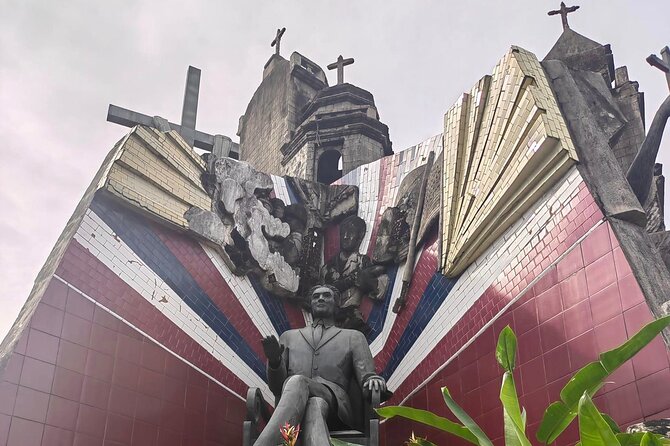
The Heritage of Cebu Monument is an outdoor artwork showing scenes from important moments in Cebu and Philippine history. Its tableau includes the Battle of Mactan, the inauguration of Sergio Osmeña as president, and the canonization of Pedro Calungsod.
This is a smart first historical stop because the monument gives your guide several stories to work with. Rather than looking at one statue and moving on, you get a visual outline of Cebu’s role in national history. The included admission also keeps you from having to sort out small entrance fees during the walk.
Allow about 30 minutes here. The stop is more about explanation and orientation than a long museum visit. If you prefer extensive displays and quiet reading time, you may find this part brief. If you want a clear introduction before seeing the city itself, it does the job well.
Yap-Sandiego Ancestral House brings Cebu’s past indoors
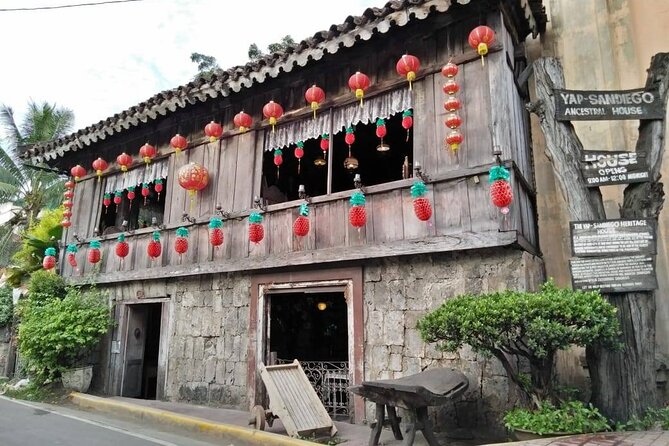
The Yap-Sandiego Ancestral House is one of the most atmospheric stops. Built around 1680 from wood and coral stone, it combines Spanish and Chinese design influences. Its age and domestic character make it different from the larger religious buildings later in the route.
I especially like this stop because it shows how history can be found in a home, not only in monuments and churches. You get a more personal sense of how an old Cebu household was built and maintained. The house also gives the walking route a change of mood after the outdoor monument.
The planned visit lasts around 30 minutes, with admission included. The exact amount of time inside can depend on the group and the conditions on the day. If this house is a major reason for booking, ask your guide early how much time is available rather than assuming the stop will be extended.
More Heritage Tours in Philippines:
- Historic Ybor City Food Walking Tour
★ 5.0 · 2,210 reviews - Palermo: Street Food and History Walking Tour
★ 4.9 · 1,486 reviews - Old Cairo Guided Walk Tour: History, Culture & Street Bites
★ 4.6 · 633 reviews - Walking Tour and street food Tour Palermo / History and Food
★ 5.0 · 386 reviews
Santo Niño Basilica and the heart of Cebu’s faith
The Basilica Minore del Santo Niño de Cebu is tied to the foundation of Cebu’s Spanish-era Christian tradition. It was founded in 1565 by Fray Andrés de Urdaneta, and the Santo Niño devotion remains central to Cebu’s religious life.
This stop has real meaning beyond its architecture. The basilica connects the city’s present-day religious practice with the early Spanish period. Your guide can help place it beside the nearby Magellan’s Cross, rather than treating the two as unrelated photo stops.
The practical detail is important: the basilica can be crowded, and on Sundays it may be difficult to enter in a relaxed way. Some tours have viewed the exterior without going inside. Dress and behave respectfully, and understand that a sightseeing schedule may give you only a short look rather than a full church visit.
Magellan’s Cross tells a complicated story
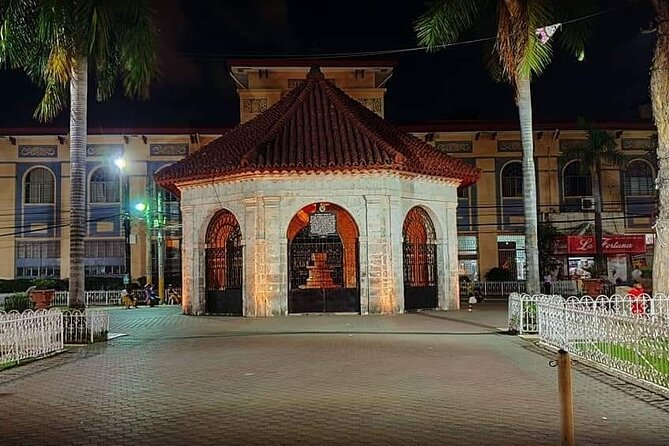
Magellan’s Cross stands in a stone pavilion beside the basilica at Plaza Sugbo. The cross is associated with the arrival of the explorers who brought Christianity to the Philippines, and it remains one of Cebu’s most recognized landmarks.
The attraction itself is small, so do not expect a long visit. Its value comes from the story your guide provides and its place within the wider historic district. This is also a useful point for understanding how Spanish influence, local traditions, and later national identity overlap in Cebu.
You will likely spend about 30 minutes in this part of the route, but the actual time at the pavilion may be shorter. Crowds, religious activity, and the pace of the group all matter. I would treat it as a focused historical stop, not a major museum experience.
Cebu Metropolitan Cathedral adds another layer
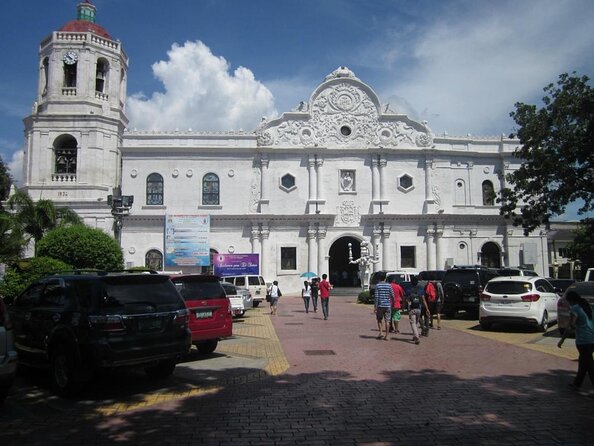
The Cebu Metropolitan Cathedral, officially the Metropolitan Cathedral and Parish of Saint Vitalis and of the Immaculate Conception, has been shaped by war and rebuilding. Much of the cathedral was destroyed during World War II, giving the building a modern layer alongside its older religious role.
The cathedral works well after the basilica because you can compare two important churches close to one another. It also keeps the tour from presenting Cebu’s history as a single Spanish-era story. War, reconstruction, and continuing religious use are part of the city’s more recent past.
Again, entry is not guaranteed. A busy service or packed church may mean that you see the cathedral from outside. This is one of the points I would clarify with the guide as you go, since the tour includes the site but does not promise a full interior visit in every circumstance.
Carbon Market is where the city feels most immediate
The route ends near Carbon Market at Freedom Park, and this is likely to be the most vivid part of the afternoon for many people. Carbon takes its name from carbón, the Spanish word for coal. The area was linked to a coal depot serving the old Cebu Railway, which operated from the nineteenth century.
The market offers a sharp change from formal churches and heritage buildings. Here you can watch local commerce, see the city in motion, and try food in places you might not feel ready to enter alone. It is also the part of the tour most dependent on opening hours, holidays, weather, and the group’s pace.
The market is not polished for sightseeing, and that is part of the point. You may encounter noise, crowds, strong smells, and a rougher urban setting. If you want a tidy food hall, this is not it. If you want a direct look at local city life, the stop gives the tour its strongest sense of place.
The food is local, varied, and not designed for cautious eaters
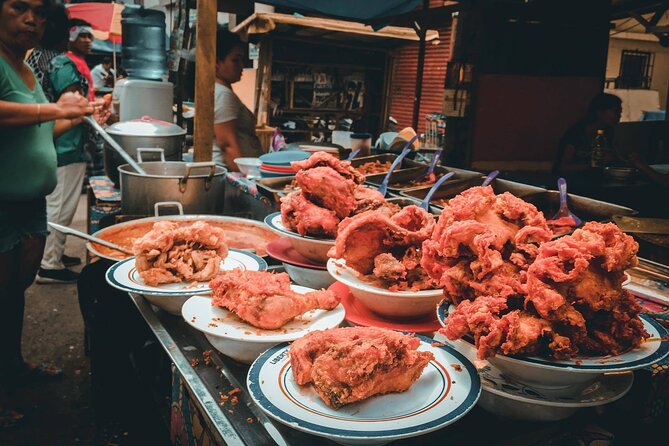
The food portion is more than a token snack. The operator describes three food stops, while some versions of the route have included four places. Expect several tastings rather than one large restaurant meal.
Possible foods mentioned in the experience include balut, lechon, and tuslob buwa. Lechon is often the easiest entry point, while balut and tuslob buwa can challenge anyone who prefers familiar food. The tour works best if you are willing to taste first and ask questions as you go.
Do not expect every dish to suit your taste. One person may find the food excellent, while another may consider some of it mediocre. That is less a contradiction than a reminder that this is a local street-food experience, not a carefully adjusted menu for international palates.
Vegetarians should ask before booking because the food focus is strongly centered on local Filipino dishes, and the provided information does not promise vegetarian alternatives. People with food allergies also need to clarify arrangements directly with the operator before the tour.
The food is one of the strongest reasons to book, but it is also where expectations need care. Some people describe the tour as a history walk with snacks and drink stops rather than a full food tour. If your main goal is a long meal or a detailed culinary class, this may feel light.
Riding a jeepney changes the feel of the afternoon
A jeepney ride is one of the tour’s most useful touches. You get to use a form of public transport that is central to daily life in Cebu rather than simply viewing the city through a private vehicle window.
The ride can also explain why the tour does not feel like a smooth, controlled sightseeing circuit. You may need to board public transport, follow the guide closely, and accept that traffic affects the timing. That is a fair trade for a more local experience, but not everyone will enjoy it.
One negative response focused on the lack of private transport. The operator’s answer is clear: public transportation is part of the design, and the tour covers food and entrances, not a private ride between every stop. Read the experience that way before you book.
Does $69.99 offer good value?
At $69.99 per person, this is a premium-priced Cebu walking tour. You are paying for a guide, the route planning, included admissions, several food tastings, and help using the city’s transport system. You are not paying for a private car, a hotel transfer, or a guaranteed four full hours of constant activity.
I think the price is easier to justify if you are new to Cebu, have only one evening, or want to try food that you would not approach alone. It is harder to justify if you are comfortable navigating cities, already plan to visit the historic district, or mainly want a cheap meal.
The listed admission costs are included, and the group size can be as large as 20. Your value improves when the guide spends time answering questions and the food stops are open. It falls when the group moves quickly, a church cannot be entered, or a market is closed for a holiday.
The end point also affects the real cost. You finish at Freedom Park in Carbon, not back at Ayala Terraces or your hotel. A taxi or Grab ride afterward is your responsibility, so include that in your budget. This detail should not surprise you when planning the evening.
The guides are a major part of the experience
The strongest guide names connected with this tour include Kyle, Lorelie, Lorelei, Philip, and Necian. Guide quality can vary from one departure to another, but the best accounts describe a relaxed, conversational style with clear explanations and attention to the group.
Kyle is repeatedly singled out for helping people feel safe, explaining food and culture well, and encouraging cautious eaters to try unfamiliar dishes. Philip is described as kind, helpful, and especially good for a solo woman who wants support while moving through the city. Lorelie and Lor are associated with enthusiasm for Cebu’s food and a welcoming group atmosphere.
That personal element matters here. The route is not hard to find on a map, but the experience depends on knowing what to notice, what to taste, and how to move through the streets. A good guide turns a collection of stops into a story. If you have a guide preference, you can ask the operator, but a specific guide is not guaranteed.
Who should book this Cebu experience?
I would recommend it to a first-time Cebu visitor who wants a quick cultural orientation and is open to local food. It is also a good fit for solo visitors who want company, families with older children who enjoy trying new dishes, and anyone with just one free evening in the city.
You should think twice if you dislike walking, crowds, public transport, street food, or changing plans. The experience is not a private luxury tour, and it is not built around long, quiet visits inside every attraction.
The non-refundable policy is strict. You can receive a different date or a full refund if the operator cancels because of bad weather or because the minimum number is not reached, but your own cancellation or amendment is not refundable.
Final call: book it for access, not for polish
Book this tour if you want a guided first look at Cebu that combines churches, an old home, public transport, markets, and food you might not try alone. The best payoff comes from the guide’s local explanations and the confidence of having someone lead you through unfamiliar streets.
Skip it if $69.99 feels high for a walking route, or if you expect a private vehicle, a fixed four-hour schedule, a guaranteed interior visit at every church, or a polished restaurant meal. For the right person, this is a lively introduction to Cebu City. Just arrive on time, bring an open appetite, and arrange your own ride home.
FAQ
How long is the Cebu City historical and food tour?
The tour is scheduled for approximately four hours and starts at 4 pm. The actual duration can vary depending on the group’s walking pace and conditions at the stops.
Where does the tour start and finish?
The meeting point is Ayala Terraces at Biliran Road in Cebu City. The tour ends at Freedom Park in Carbon, so you arrange your own transport afterward.
Is transportation included?
The experience can include a jeepney ride, and public transport is part of the local experience. A private vehicle or ride back to your hotel is not included.
What food might I try?
The tour includes several local food stops. Foods mentioned for the experience include lechon, balut, and tuslob buwa, but the exact selection can change.
Are entrance fees included?
Admission is included for the listed stops, including the Heritage of Cebu Monument and Yap-Sandiego Ancestral House. Entry into the basilica or cathedral may depend on services, crowds, or other conditions.
What happens if the tour is canceled because of weather?
If poor weather causes the operator to cancel, you are offered another date or a full refund. The same options apply if the minimum number of participants is not reached.
Just added around Philippines
- Makati: Street Food Experience with a Local Guide★ 4.6 · 14 reviews
- Manila Street food and Night Market Tour★ 4.7 · 21 reviews
- Manila Street Food and Drinks with Tuktuk Experience★ 5.0 · 4 reviews
- Manila Night Market with Local Guide★ 4.7 · 12 reviews
- Manila: Intramuros and Chinatown Food Tour with Food Samples★ 4.8 · 12 reviews
- Manila Chinatown Food Tour with Local Guide★ 5.0 · 6 reviews
- Manila Chinatown Food Tour Experience★ 4.2 · 4 reviews
- Manila: Binondo Chinatown Food Tour with Free Food Samples★ 5.0 · 5 reviews
Street Food Walking Tours, compared.
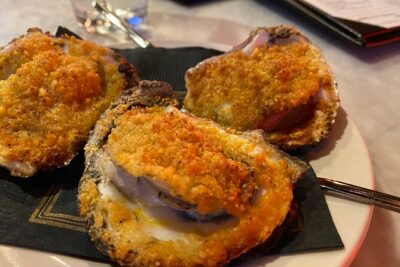
New Orleans Food Walking Tour of the French Quarter with Small-Group Option
Read our review →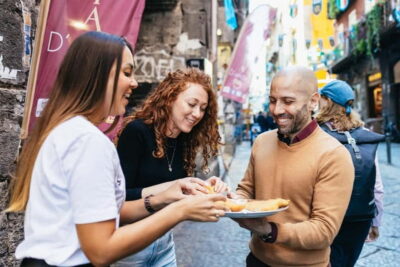
Naples: Street Food Walking Tour with Local Guide
Read our review →
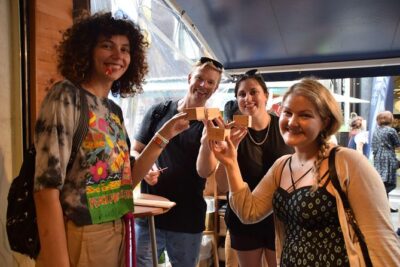
Tokyo Tsukiji Fish Market Food and Culture Walking Tour
Read our review →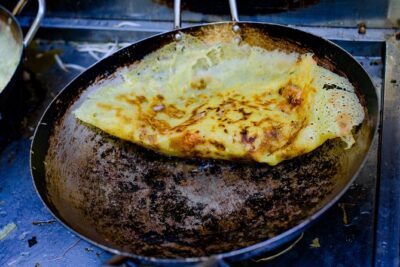
Private Street Food Evening Walking Tour in Ho Chi Minh City
Read our review →
SoHo, Little Italy, and Chinatown Walking Tour in New York
Read our review →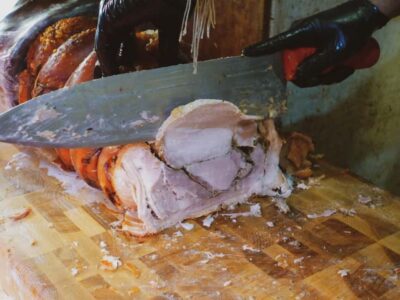
Rome: Guided Food Walking Tour with Wine in Trastevere
Read our review →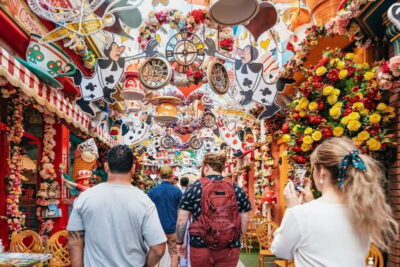
Browse the lists this tour appears in