
REVIEW · SINGAPORE STREET FOOD TOURS
Singapore: UNESCO Street Food & Cultural Experience
Singapore’s food culture makes the most sense when you eat your way through its neighborhoods. This 5.5-hour tour links Chinatown, Kampong Glam, and Little India with generous hawker-center tastings, local history, and guided rides on the MRT or public buses.
I like the small group, capped at eight, and the way guide Gerry adds personal stories rather than handing you a list of dishes. I also like that the food is tied to the neighborhoods where those traditions took root. The main drawback is dietary flexibility: this tour is not recommended for vegetarians, people with food allergies, or anyone with serious dietary restrictions.
Key points
- Three cultural neighborhoods in one morning: Walk through Chinatown, Kampong Glam, and Little India instead of seeing Singapore only from a vehicle.
- Hawker-center meals, not token samples: Expect enough food to replace breakfast, with dishes and drinks from local stalls.
- Gerry is the central asset: His storytelling covers food, customs, Singapore’s past, and changes in modern city life.
- Public transport is part of the lesson: You receive guidance on using the MRT and buses, a useful skill for the rest of your stay.
- A real small-group format: The tour requires at least two people and accepts no more than eight.
- Plan for a hungry, active morning: The tour includes walking, transfers, and many tastings over about five and a half hours.
A food tour that also explains Singapore
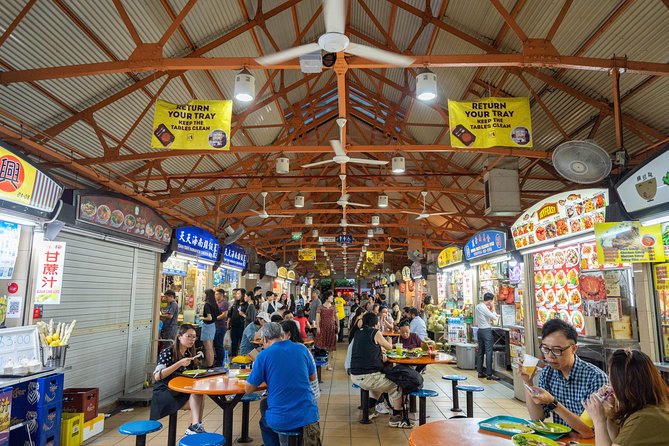
Singapore’s hawker centers are more than cheap places to eat. They are shared dining rooms where Chinese, Malay, Indian, Indonesian, and other food traditions meet in a practical, distinctly Singaporean setting.
This tour uses food as the doorway into that story. You do not simply stop for a bowl of noodles or a plate of rice. You walk through three different ethnic districts, hear how Singapore developed, and connect dishes with the communities that shaped them.
Gerry is the guide named most often in the experience details, and his role goes beyond pointing out stalls. He uses historical photographs, personal stories, and conversations about local customs. He also knows how to keep a long morning comfortable, balancing time on your feet with breaks to sit and eat.
The tour is rated five out of five from 524 ratings, with 99 percent recommending it. Those figures suggest an unusually consistent experience, especially for a food tour where taste, pacing, and dietary needs can vary from person to person.
A few more street food tours around Singapore worth a look
- Small Group: Michelin and Local Hawker Food Tour with 9 tastings
★ 5.0 · 1,890 reviews - Small Group: Singapore Street Food & Night Tour with 9 tastings
★ 5.0 · 1,240 reviews - Small-Group Food Tour With Hawker Center: Eat Like A Local
★ 5.0 · 420 reviews
Why the small group matters
The group limit is eight people, with a minimum of two required for a booking. That size matters in a hawker center, where crowded counters, shared tables, and many unfamiliar dishes can make a large tour awkward.
With a small group, Gerry can explain what is being served, answer questions, and adjust the pace. The format also makes it easier to sit together and share food. Several tastings are ordered for the group, so you get a broader sample than you would by buying one full meal at a single stall.
This is not a private tour by default, so you may share the morning with other people. Still, eight is small enough to feel personal and manageable. It is a good setup for solo bookers who meet the two-person minimum, couples, and families with older children.
Chinatown: the first taste of Singapore’s food culture
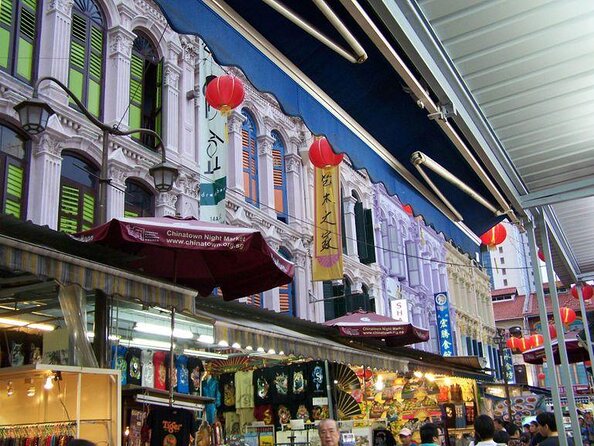
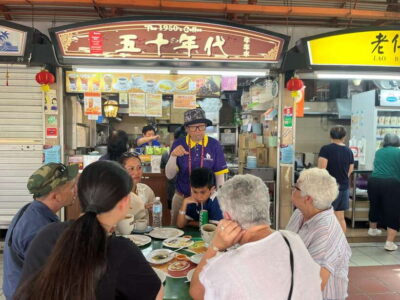
Chinatown is one of the main food stops and the clearest introduction to the hawker-center side of the tour. The district gives Gerry a place to discuss Chinese influence in Singapore, older ways of life, and how food moved from home kitchens and street stalls into organized public food centers.
The Chinatown portion lasts about 1 hour and 10 minutes. That includes walking through the area and learning about its past, along with time for food tasting at a UNESCO-inscribed hawker center.
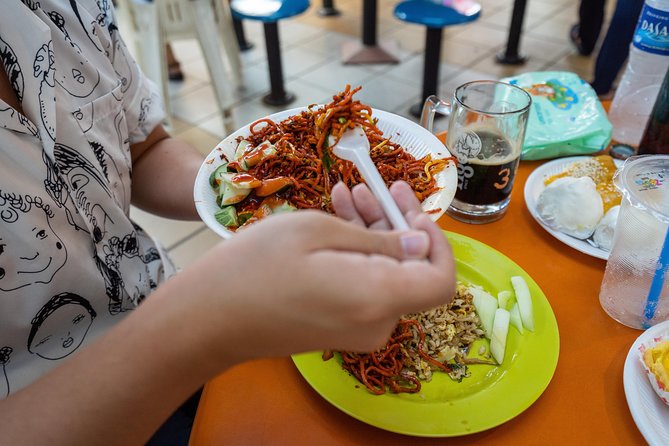
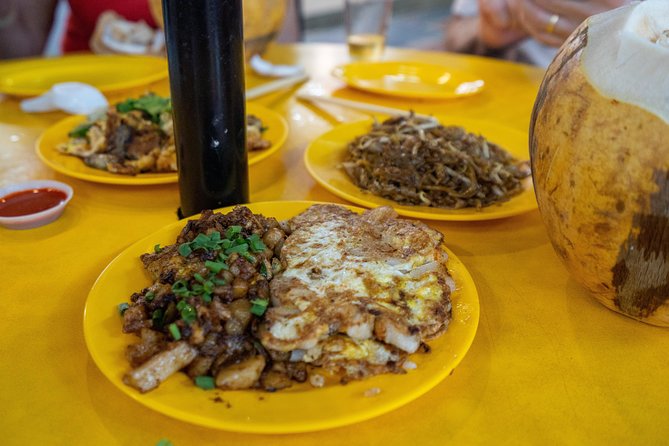
Expect a range of dishes rather than a single signature plate. The exact menu is not fixed in the information provided, but the tour is designed around local favorites influenced by Chinese, Malaysian, and Indonesian cooking. You may find noodles, rice dishes, snacks, drinks, or other hawker staples selected by the guide.
One practical advantage is that Gerry orders enough for you to taste several things. The food portions are described as generous, and some people find there is more than they can finish. If you normally eat lightly in the morning, skip or reduce breakfast before setting out.
Chinatown is also where the value of the tour becomes easiest to see. You could wander through the food center alone, but a guide helps you identify what matters, understand how to order, and place each dish in a wider cultural setting. For a first morning in Singapore, that guidance can save you from defaulting to familiar food.
Kampong Glam: Malay and Muslim Singapore
The second neighborhood is Kampong Glam, also written in the tour details as Kampong Gelam. Its inclusion gives the morning a different tone from Chinatown and helps you see Singapore as a meeting point for several cultural traditions.
The walking portion is listed as about 1 hour and 10 minutes. Gerry discusses the area’s history and local life while introducing food connected with Malay and Indonesian influences. The exact stops and dishes can change, but the focus remains on eating in the neighborhood rather than passing through only for photographs.
This part is useful for understanding why Singaporean food cannot be reduced to one national style. Chinese cooking is important, but so are Malay, Indian, and Indonesian traditions. A plate may reflect migration, trade, religion, family cooking, and adaptation to local ingredients all at once.
The tour also uses the MRT and, in some cases, public buses to move between areas. That is not just a transfer from point A to point B. Gerry provides guidance on how Singapore’s public transport works, giving you a practical skill you can use later in the trip.
If you have only a short stay, this is a smart use of time. You see a neighborhood, eat in a local setting, and learn how to get around without spending the whole day on a sightseeing bus.
Same city, a different plate:
- Singapore: Guided Street Food Tour at Night
★ 4.5 · 393 reviews - Singapore: Local Hawker Food Tour with Tastings
★ 4.7 · 181 reviews - Singapore Street Food Tour with a Local: A Feast for Foodies 100% Personalized
★ 5.0 · 169 reviews - Singapore: Chinatown Hawker Food Tasting Tour
★ 5.0 · 96 reviews
Little India: another layer of Singapore
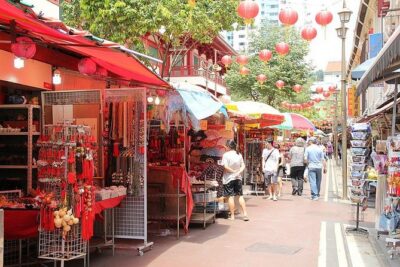
Little India completes the three-neighborhood structure. Like Chinatown and Kampong Glam, it is treated as a living district rather than a quick photo stop.
The listed time is about 1 hour and 10 minutes. Gerry explains the area’s customs, past, and present while introducing food connected with Indian Singapore. The route includes walking and tasting, so expect the morning to keep moving between streets, food counters, and places to sit.
This neighborhood broadens the food story. You are not simply comparing three cuisines. You are seeing how Singapore’s identity formed through different communities living, working, trading, and eating alongside one another.
The three areas also make the tour useful as a first orientation. After the morning, you know where Chinatown, Kampong Glam, and Little India are, how they feel, and which places might deserve a return visit. One person even used the tour to revisit two of the food stops later in the trip.
The walking is not described as strenuous, but you should have moderate physical fitness. You will be on your feet, moving between neighborhoods, and eating over several hours. Comfortable shoes and an appetite will help more than formal sightseeing clothes.
What you will actually eat and drink
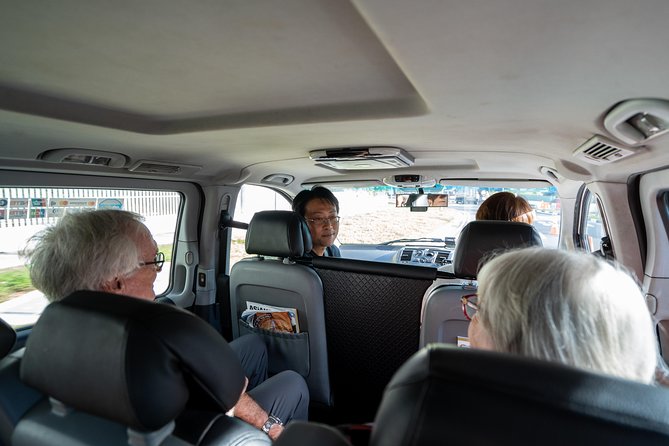
Food tasting is included, along with bottled water, coffee or tea, soda, and beer. The listed alcoholic drink is beer only, so do not book this expecting cocktails, wine, or a tasting of Singapore’s bar scene.
The strongest feature is the amount and variety. This is not a tour that hands you one bite at each stop and sends you away hungry. The food is described as generous, with enough variety that you may not finish everything.
That approach works well in a small group. Several shared dishes let you try foods you might not order alone. Gerry can explain the dish, tell you how it fits into local eating habits, and help you decide what deserves a second visit.
Still, there is a tradeoff. Shared food is less comfortable for people with strict dietary rules, allergies, or concerns about cross-contact. The tour specifically says it is not recommended for vegetarians, people with food allergies, or those with dietary restrictions. One account describes Gerry making adjustments for dietary needs, but you should not assume that every restriction can be handled. Ask before booking and give clear information.
Children must be accompanied by an adult. The experience is not recommended for children in prams, and it is not recommended for people using personal mobility aids or devices. That reflects the walking, public transport, and hawker-center setting.
The guide makes the difference
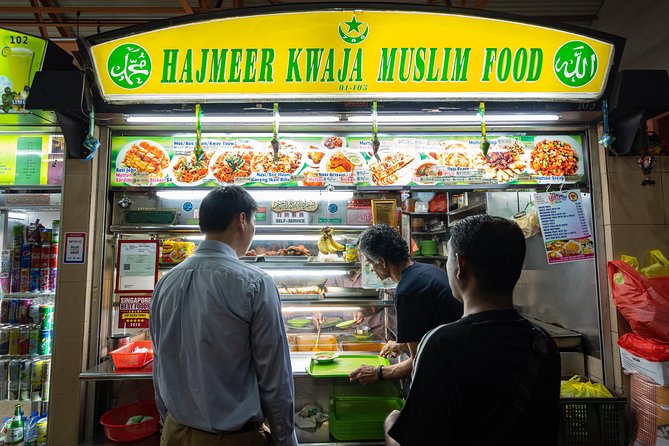
Gerry is repeatedly praised for combining food with stories about Singapore’s past and present. That matters because the tour covers three places in one morning. Without a strong guide, it could become a rushed sequence of meals.
His style appears to be personal and attentive. He communicates before the pickup, explains the transport system, shares old photographs, and keeps an eye on the group’s comfort. He is also described as having friendly relationships with stall owners and local workers, which can make a food stop feel less like a transaction.
I particularly like the reported balance between eating and explanation. Gerry does not simply talk while you stand. He gives you time to sit, taste, and ask questions. He also shares enough context to make the neighborhoods more than colorful backdrops.
A small but telling detail is the handling of extra food. When the group cannot finish the large amount ordered, it may be given to workers who clean the hawker centers. That is a thoughtful touch, though you should still avoid taking more food than you can reasonably eat.
Hotel pickup, public transport, and timing
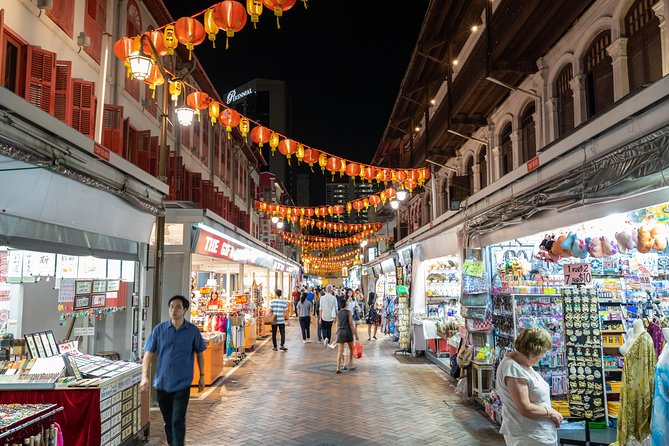
The tour starts at 9:00 a.m. and lasts about 5 hours and 30 minutes. Hotel pickup and drop-off are offered, but they are optional and subject to location. Confirm the pickup details for your hotel before booking, especially if you are staying outside the usual central areas.
The activity ends back at the meeting point according to the supplied details. At least one account describes Gerry taking a participant to a different destination at the end, such as Gardens by the Bay, but that should be treated as a possible courtesy rather than a guaranteed feature.
Public transport is part of the experience. You may use the MRT, public buses, or both, with guidance from the host. This is useful if you are new to Singapore, but it also means the tour is not a fully private vehicle excursion. If you want a quiet, door-to-door sightseeing day, choose a driving tour instead.
The early start is sensible. You avoid the hottest part of the day for much of the walking and arrive hungry enough to enjoy the tastings. It also leaves time afterward for another attraction, though a large food-focused morning may make a light lunch the better plan.
Is $161.62 a fair price?
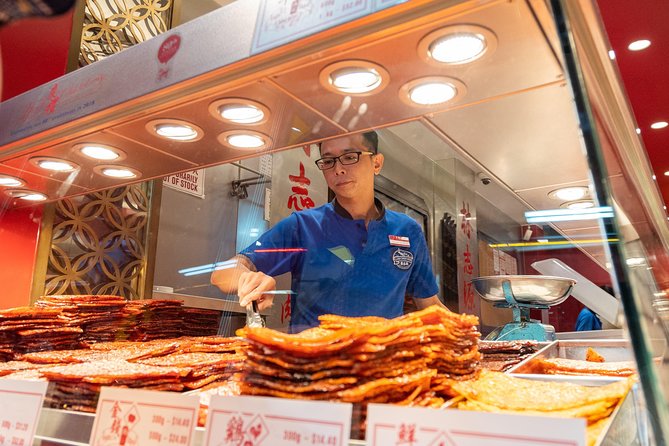
At $161.62 per person, this is not a bargain food crawl. The price includes food, drinks, bottled water, a professional host, public-transport guidance, and optional hotel transfers where available.
The real value comes from the combination. You are paying for a half-day of eating, neighborhood walks, cultural explanation, transport help, and the convenience of having someone organize the food choices. Buying comparable dishes on your own would cost less, but you would need to find the stalls, decide what to order, manage the route, and learn the context separately.
For a first visit, especially a short one, the price is easier to justify. Several people use the tour during a layover or a stay of only one or two days, when an efficient introduction matters more than saving every dollar.
The value is weaker for experienced Singapore visitors who already know the hawker centers, speak comfortably with stall owners, and prefer to explore at their own pace. It is also a poor fit if you cannot eat the included food. A food tour earns its price through eating, so strict restrictions change the calculation.
Who should book this experience?
You should consider it if you want food and history in the same morning, prefer a small group, and are happy to use public transport. It suits first-time visitors, short-stay visitors, couples, and curious eaters who want help making sense of Singapore’s many food traditions.
It is especially useful at the beginning of a trip. Gerry can show you how to move around, point out places worth returning to, and help you recognize dishes on your own later.
You may want another type of tour if you need a fully private vehicle, use a pram or mobility device, have food allergies, or follow a strict vegetarian or restricted diet. You should also think twice if you dislike shared food, long mornings, or walking between several areas.
Should you book the Singapore UNESCO Street Food and Cultural Experience?
For most first-time visitors who eat broadly, yes. The best reason to book is not simply the number of dishes. It is the way Gerry links those dishes to Chinatown, Kampong Glam, Little India, Singapore’s public transport, and the country’s changing identity.
Go hungry, wear comfortable shoes, and treat breakfast as part of the tour. Confirm hotel pickup and explain dietary needs before paying. If those points work for you, this is a useful, filling, and unusually personal introduction to Singapore.
FAQ
How long does the Singapore food tour last?
The tour lasts approximately 5 hours and 30 minutes.
What time does the tour begin?
The stated start time is 9:00 a.m.
Which neighborhoods does the tour visit?
The tour visits Chinatown, Kampong Glam, and Little India.
Is hotel pickup included?
Hotel pickup and drop-off are offered optionally, subject to the location of your hotel.
How many people can join the tour?
A minimum of two people is required per booking, and the maximum group size is eight.
Is public transportation used?
Yes. The experience may use the MRT, public buses, or both, with guidance on how to use Singapore’s public transport.
Is the tour suitable for vegetarians or people with food allergies?
The tour is not recommended for vegetarians, people with food allergies, or those with dietary restrictions. Contact the provider before booking if your diet requires special handling.
What is the cancellation policy?
You can cancel up to 24 hours before the start time for a full refund. Cancellations or changes made less than 24 hours before the start time are not accepted for a refund.
Just added around Singapore
- Street Food, Cultural & Historical Tour of 3 Ethnic Quarters★ 5.0 · 23 reviews
- Singapore: Street Food & Ethnic Quarters Kick Scooter Tour★ 5.0 · 10 reviews
- Singapore: Chinatown Hawker Guided 8-Dish Tasting Tour★ 4.9 · 41 reviews
- Singapore: Local Street Food Tasting Tour★ 4.8 · 36 reviews
- Singapore: Lau Pa Sat Night Street Food with Marina Bay Walk★ 4.4 · 4 reviews
- Singapore Limousine Van Tour: ️ Shopping & Street Food Trail★ 5.0 · 2 reviews
- Singapore: Hawker Culture Food Tour and Sightseeing★ 4.8 · 23 reviews
- Singapore: Katong Local Food and City Highlights Tour★ 5.0 · 18 reviews
Singapore Street Food Tours, compared.
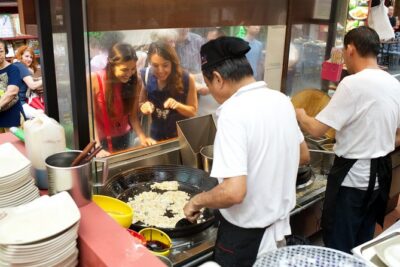
Small Group: Michelin and Local Hawker Food Tour with 9 tastings
Read our review →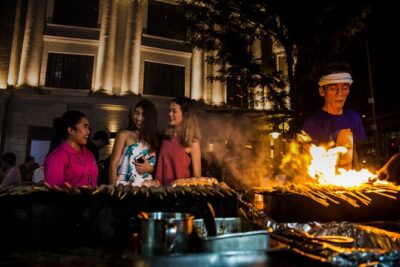
Small Group: Singapore Street Food & Night Tour with 9 tastings
Read our review →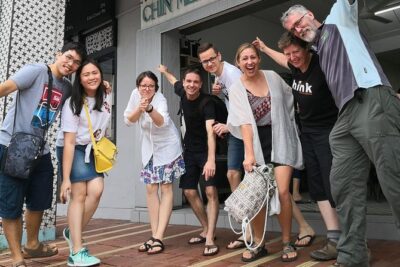
Small-Group Food Tour With Hawker Center: Eat Like A Local
Read our review →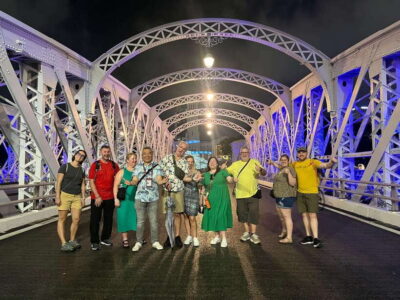
Singapore: Local Hawker Food Tour with Tastings
Read our review →
Singapore Street Food Tour with a Local: A Feast for Foodies 100% Personalized
Read our review →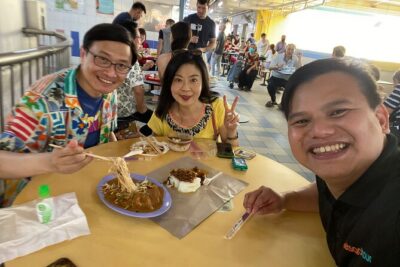
Kampong Glam, Little India & Chinatown with Local Street Food Tastings
Read our review →Browse the lists this tour appears in