
REVIEW · SINGAPORE STREET FOOD TOURS
Street Food, Cultural & Historical Tour of 3 Ethnic Quarters
Singapore’s story is easiest to grasp over a plate of food. This six-hour tour links Chinatown, Little India, and Kampong Glam with market visits, old photographs, hawker-centre meals, and family-run eateries. Gerry, a Singapore-born Chinese Peranakan guide whose great grandparents came from Fujian in 1910, supplies the personal link between the modern city and its immigrant past.
I like the small group, limited to eight people, and the fact that food and public transport are included in the $148 price. I also like the local contact: you meet hawkers, traders, and shopkeepers instead of seeing the neighbourhoods only from the pavement. The main drawback is the pace. You walk about 6,000 steps, eat a large amount, and move between three districts, so this is not a good fit if you need a slow or highly accessible outing.
Key points to know before booking
- Three ethnic quarters in one day: Chinatown, Little India, and Kampong Glam each bring different food, architecture, markets, and stories.
- Gerry’s personal connection: Your guide was born in Singapore six years after independence and traces his family to Fujian arrivals in 1910.
- UNESCO hawker-centre food: You sample local dishes and drinks, including food connected with Michelin-listed stalls.
- Markets beyond the postcard view: Expect produce, seafood, meat, spices, clothing, textiles, and small family businesses.
- A social small-group format: With no more than eight participants, questions and conversation are easier than on a large bus tour.
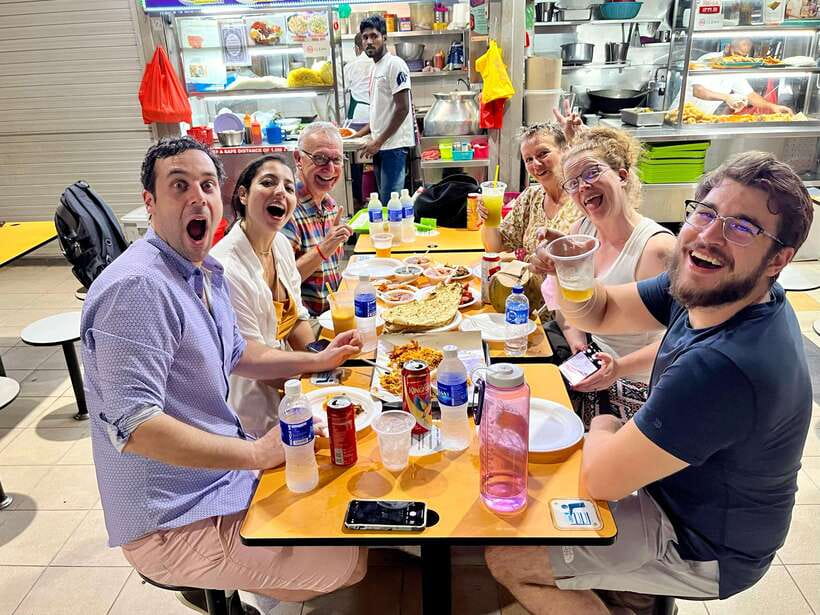
- A filling, active six hours: Food, beer, tea, coffee, dessert, walking, and two public-transport rides are all part of the day.
Why Gerry’s local story gives the tour its shape
Many Singapore tours explain the city through dates and landmarks. This one uses food and neighbourhood life as its guide. Gerry’s family background gives the history a human scale. His great grandparents arrived from Fujian in 1910, and he was born in Singapore in 1971, six years after independence.
That matters because Singapore’s past can look tidy from a modern street. The towers are clean, the trains run on time, and the historic quarters are carefully preserved. Gerry’s old photographs help you see the harder story beneath that polished surface: immigrant families arriving with little, crowded living conditions, difficult work, and the policies that later reshaped the island.
I especially like the use of pictures during the walks. An old image shown beside a present-day street can explain more than a long lecture. You see how places changed, what was retained, and why some lanes and shophouses still matter.
Gerry also brings humour. That is useful during a long food day, since his informal style keeps the tour from feeling like a school lesson. You can ask questions throughout, and the small group makes it easier to talk with him and with the other people in your party.
More Heritage Tours in Singapore:
- Chinatown Heritage Walk & Street Food Tasting (Small Group)
★ 5.0 · 16 reviews - Historic Ybor City Food Walking Tour
★ 5.0 · 2,210 reviews - Palermo: Street Food and History Walking Tour
★ 4.9 · 1,486 reviews
Chinatown: food, faith, and the old immigrant city
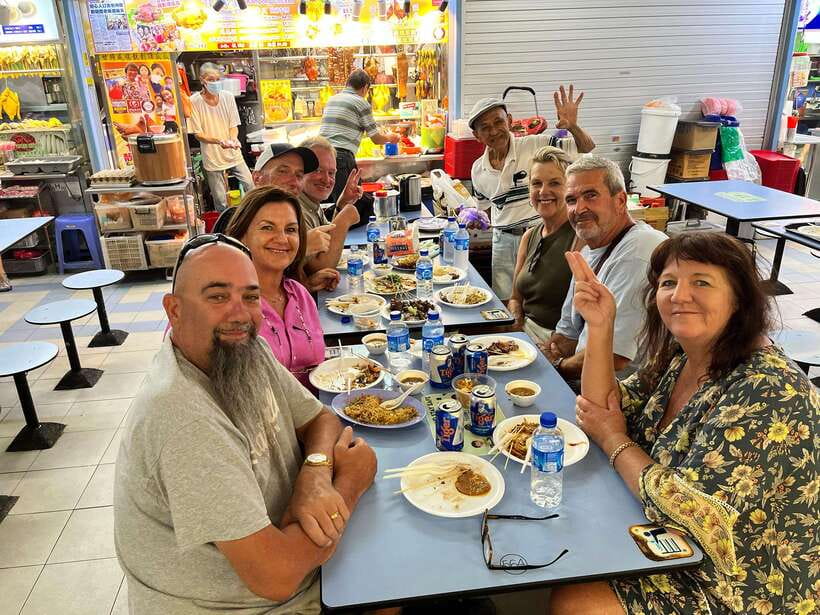
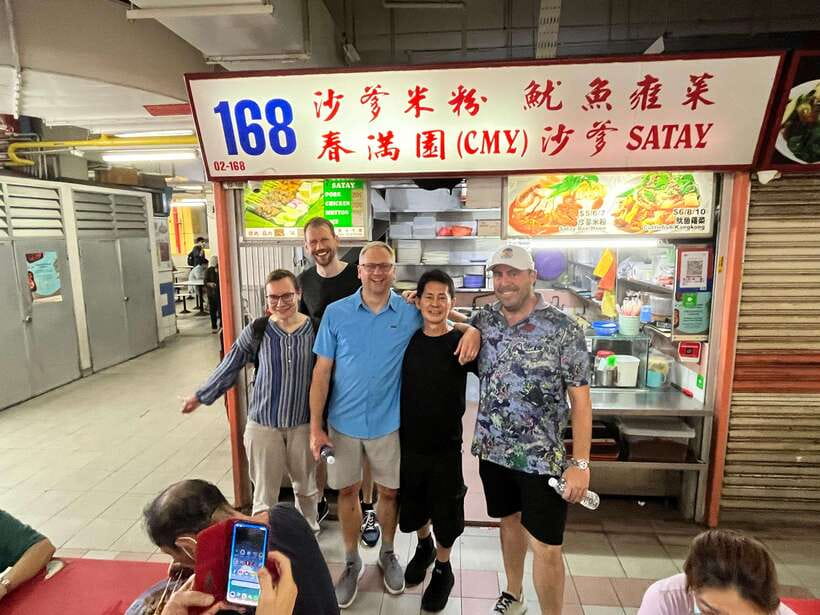
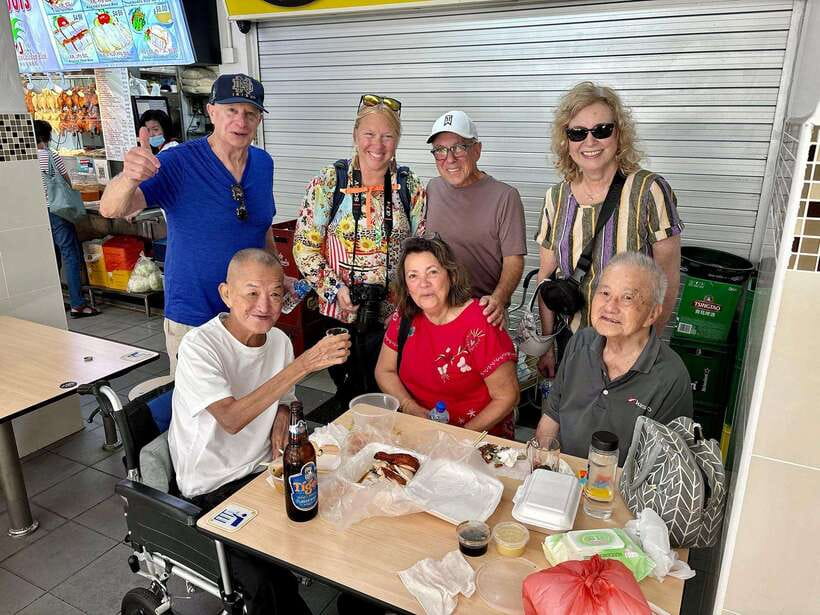
The Chinatown section begins with local Chinese food and drink at a hawker centre. These food halls are central to Singapore’s everyday life, not simply attractions for visitors. You sit among ordinary city life and try several local favourites while Gerry explains how hawker food developed and why these centres matter.
Food is included, including beer, so you do not need to budget for each tasting as you go. The exact dishes can vary, but the point is range: you get a useful first look at Chinese Singaporean flavours rather than committing to one full restaurant meal.
The walking route also includes a Buddhist temple and a street market with plenty of activity. Market stalls make the neighbourhood feel practical and lived in. You may see goods connected with daily cooking, religious life, and local trade rather than just souvenir displays.
Gerry also explains Chinatown’s less comfortable past. The route covers the Street of the Dead, red lanterns and private chambers, and opium dens. These subjects point to the crowded, often harsh world faced by early migrants. The tour does not treat Chinatown as a pretty backdrop only. It shows how work, vice, religion, lodging, and survival once occupied the same small streets.
There is a useful balance here. You get a meal and a pleasant walk, but you also learn why the quarter developed as it did. If you have already visited Chinatown independently, Gerry’s photographs and social history should still add a different layer.
Little India: markets, spices, and a generous lunch stop
After Chinatown, you take public transport to Little India. The ride is about ten minutes, and tickets are included. This is not wasted transfer time. Singapore’s rail and public transport system is part of local life, and moving between districts shows how easily the old quarters connect within the modern city.
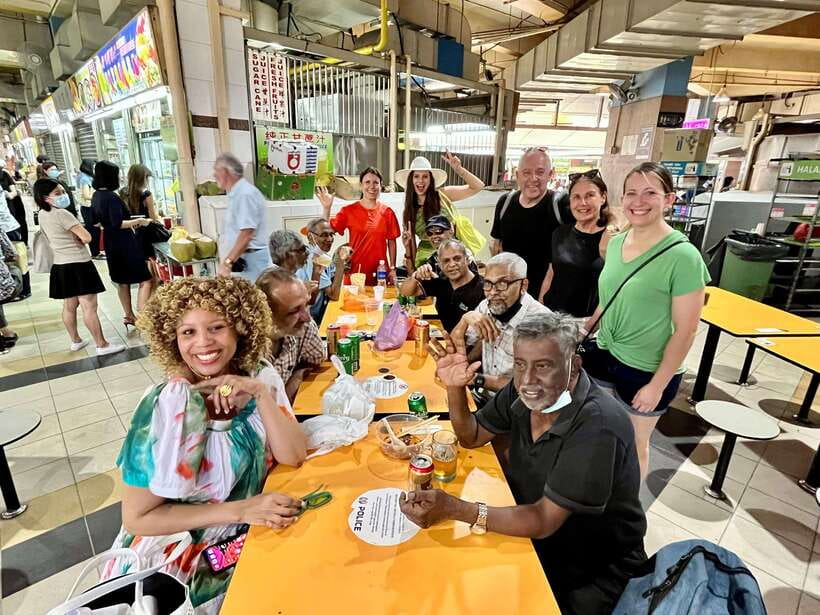
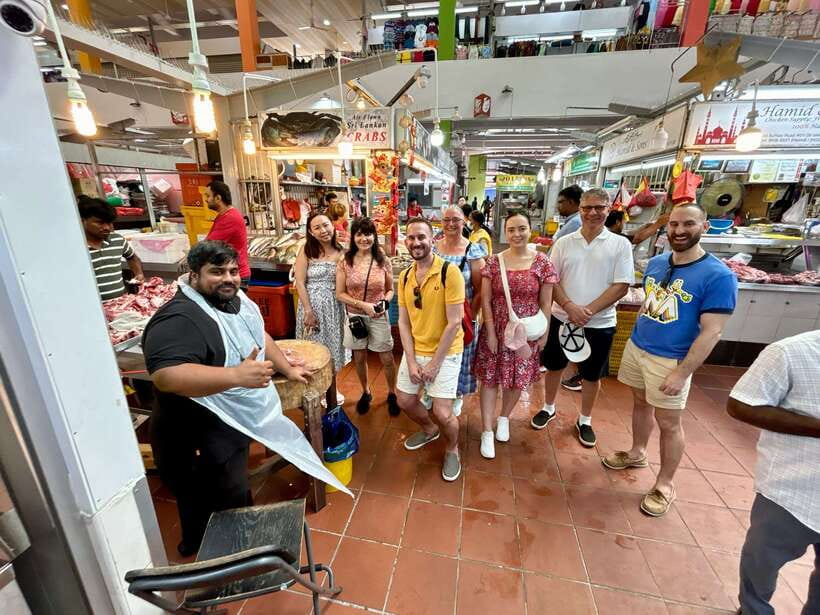
Little India focuses on markets and food. The wet and dry produce market includes seafood, meat, fruit, vegetables, and spices. This is a useful stop if you want to understand where restaurant ingredients begin. The smells, colours, and working trade of the market tell you more about cooking traditions than a display in a museum would.
You also visit an Indian clothing market and other local stalls. These stops broaden the picture beyond food. Textiles and clothing show how the neighbourhood serves its community, while the market walk gives you a chance to ask Gerry about ingredients, customs, and the people who run these shops.
Lunch is at a family eatery serving local Indian and Malay food and drink. Coffee, tea, beer, snacks, and other tastings are part of the day, so this is more than a quick sample. Plan to arrive hungry. Several people who took the tour found the portions generous, and breakfast may be unnecessary if you start early.
The food is also a good reason to book this tour instead of a standard sightseeing walk. You are not only told that Singapore is multicultural. You taste how different culinary traditions have developed side by side. Gerry can also help explain unfamiliar dishes and answer questions as they come up.
One practical note: this tour is not suitable for vegans or people with gluten intolerance. The food forms too much of the day for you to rely on substitutions. If you have other dietary needs, contact the provider before booking rather than assuming the menu can be changed.
Kampong Glam: Arab Street, Haji Lane, and a sweet finish
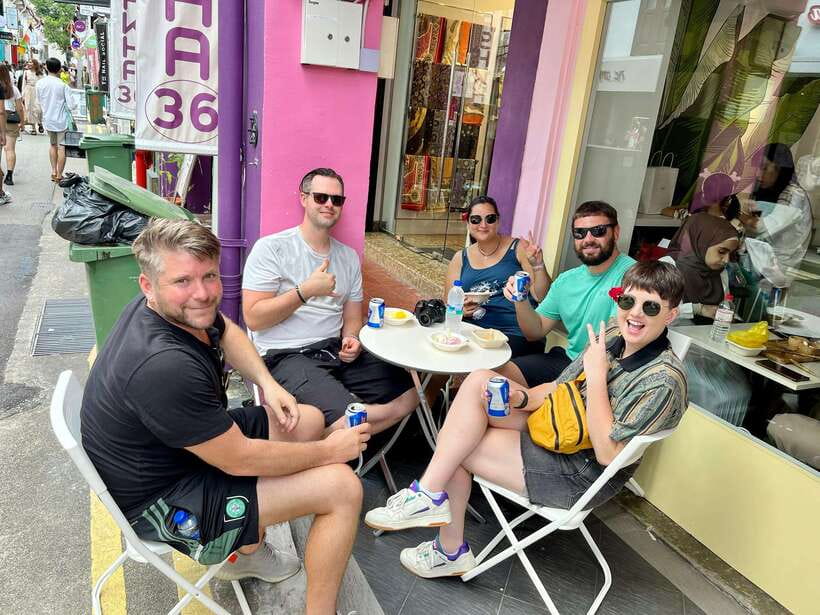
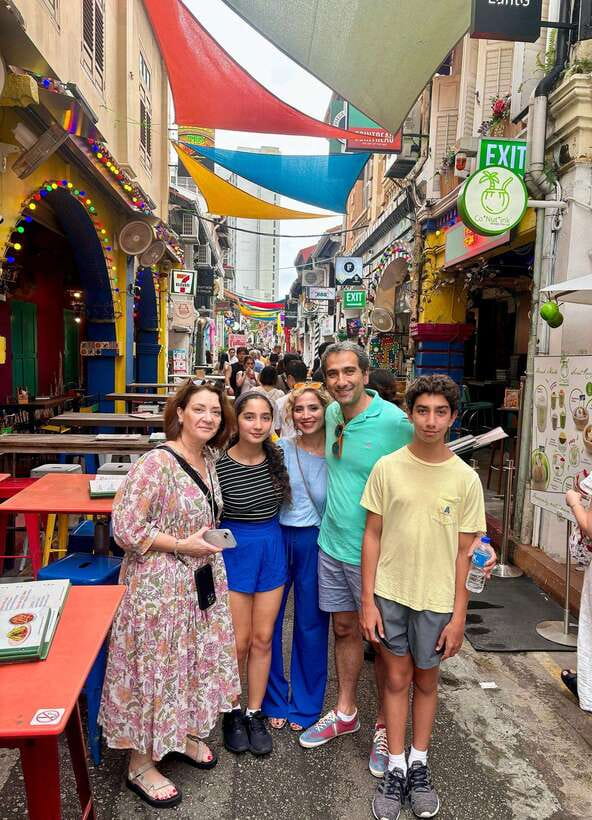
The second public-transport ride takes you to Kampong Glam, the Malay quarter. The walking portion lasts about an hour and a half, making it the longest listed stop.
You see Haji Lane, with its colourful walls and shopfronts, and walk through neighbourhood lanes marked by graffiti. These streets have a younger, more playful feel than the markets of Little India or the food-centred parts of Chinatown. Gerry’s role is useful here because he can connect the current street scene with the district’s older identity.
Arab Street brings a more traditional commercial view. Textile shops show the area’s link to fabric, clothing, and Muslim trade. You are also introduced to Singapore’s first Sultan Mosque, an important landmark for understanding Kampong Glam’s Malay and Muslim roots.
Dessert comes in an old shophouse once used as accommodation by Muslim pilgrims during the nineteenth century. That detail makes the sweet stop more than a final sugar break. It ties food, travel, religion, and the old movement of people through Singapore.
The final stop is lighter than the earlier food sections. If you want another full savoury meal in Kampong Glam, this may feel limited, since dessert is the main focus. One improvement would be more food from the last neighbourhood. Still, the day already includes a great deal of eating, and ending with something sweet may be welcome.
A few more street food tours around Singapore worth a look
- Small Group: Michelin and Local Hawker Food Tour with 9 tastings
★ 5.0 · 1,890 reviews - Small Group: Singapore Street Food & Night Tour with 9 tastings
★ 5.0 · 1,240 reviews - Singapore: UNESCO Street Food & Cultural Experience
★ 5.0 · 524 reviews - Small-Group Food Tour With Hawker Center: Eat Like A Local
★ 5.0 · 420 reviews
What you eat, and why the inclusions matter
The $148 price looks high beside the cost of a single hawker-centre meal. The comparison is not quite fair. You are paying for six hours of guiding, several tastings across three districts, beer and other drinks, dessert, and public-transport tickets. Hotel pickup and drop-off may also be included if your accommodation is in the eligible city area.
The better question is how much you would spend and how much time you would lose arranging the same day alone. You would need to choose food stalls, find the markets, understand the historical context, navigate the train system, and decide which shops and streets deserve attention. The tour packages all of that into one route.
I would still book it for the guiding and access rather than for the quantity of food alone. The strongest part is the link between what you eat and the people who produce, sell, cook, and preserve it. You get to know some hawkers and traders, and you support small family businesses along the way.
The word all-inclusive does not mean every possible purchase is covered. Souvenirs and personal shopping are extra. If a textile, snack, drink, or market item catches your eye, bring a little spending money.
Walking, transport, and group size
The route covers roughly 6,000 steps. That is manageable for many people, but the heat, food stops, market floors, and city pavements can make the day feel more active than the number suggests. Wear comfortable shoes and light, comfortable clothing.
The tour is not suitable for people with mobility impairments, wheelchair users, people with back problems, vertigo, respiratory issues, or a low level of fitness. It also excludes non-folding wheelchairs, mobility scooters, walking frames, large bags, and oversize luggage. Pregnant people and babies under one year are listed as unsuitable as well.
Public transport is a strong part of the design. Singapore’s system is clean, efficient, and well connected, and the two short rides break up the walking. Pickup and drop-off depend on your location. You may instead meet at the first stop or at a nearby MRT station, so confirm the exact arrangement after booking.
With a maximum of eight participants, you should get more conversation than on a large group outing. The setup suits solo visitors, couples, and families with older children. A fifteen-year-old joined one successful outing, but the 6,000-step route and long food schedule may not suit very young children.
Who will get the most from this Singapore tour
I would choose this day if you want food and history in equal measure. It suits first-time visitors who need a clear introduction to Singapore’s main ethnic quarters, but it also works for repeat visitors who want help finding local food and hearing the stories behind familiar streets.
It is especially good for people who enjoy asking questions. Gerry’s style is conversational, and his old photographs provide plenty of openings to discuss migration, colonial planning, independence, markets, religion, and post-colonial change.
I would not choose it if you want a relaxed café crawl, a private tour, or a tightly focused food itinerary. Three districts in six hours means you keep moving. You also need to be comfortable sharing food and transport with a small group.
The food restrictions deserve serious attention. Vegans and people with gluten intolerance should skip this tour. If you dislike eating meat, seafood, or unfamiliar dishes, the menu may be less comfortable than a private custom food tour.
Booking details that affect your day
The experience costs $148 per person and lasts six hours. It is offered in English, with Gerry as the live guide. Starting times vary, so check availability when you book.
You can cancel up to 24 hours before the start for a full refund, and reserve now while paying later. Pickup is available only in certain city areas, so do not assume every hotel qualifies.
Bring comfortable shoes, comfortable clothes, and space for food. Leave large bags and luggage behind. The day has a full schedule, but it does not require you to carry much beyond personal essentials.
Should you book this food and culture tour?
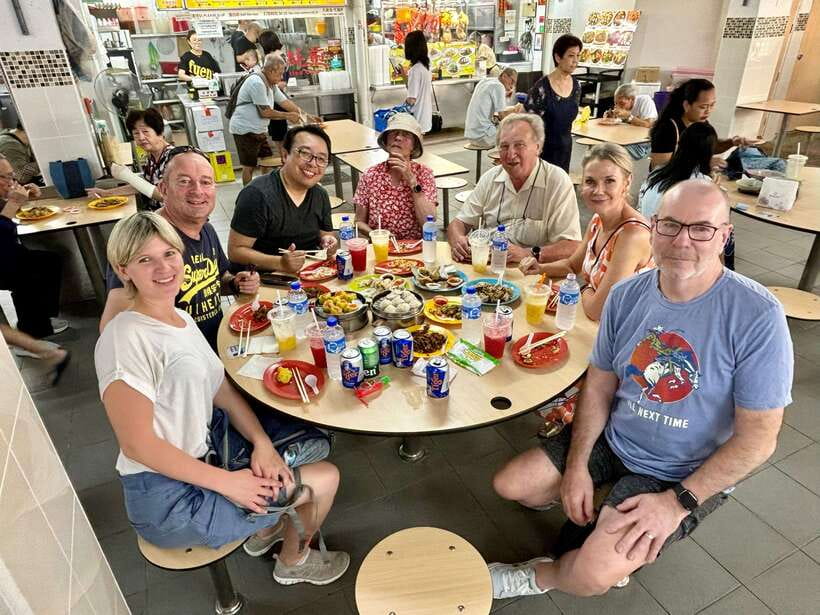
Book it if you want Singapore explained through meals, markets, family businesses, and personal stories. Gerry’s humour, local background, photographs, and care for small businesses give the day more character than a simple checklist of landmarks.
The price is fair if you value included food, drinks, transport, and six hours of focused guiding. The tour is less suitable if you need accessible facilities, avoid common food allergens, dislike group outings, or prefer to explore one neighbourhood slowly.
For most fit food lovers who want a useful first look at Chinatown, Little India, and Kampong Glam, I would make this a strong booking choice. Arrive hungry, wear good shoes, and save your serious shopping for another day.
FAQ
How long does the tour last?
The tour lasts six hours.
Which neighbourhoods does the tour visit?
It visits Chinatown, Little India, and Kampong Glam.
How many people are in the group?
The group is limited to eight participants.
What language is the tour conducted in?
The live tour guide speaks English.
Is food included?
Yes. Food and drinks are included, including beer, local snacks, lunch, and dessert.
Are public-transport tickets included?
Yes. Public-transport tickets for travel between the three quarters are included.
Is hotel pickup available?
Hotel pickup and drop-off are included when the location qualifies. City-area limits apply, and you can instead meet at the first stop or a nearby MRT station.
What should I bring?
Bring comfortable shoes and comfortable clothing.
Can I bring a large suitcase or stroller?
No. Oversize luggage, large bags, baby strollers, non-folding strollers, baby carriages, mobility scooters, non-folding wheelchairs, and walking frames are not allowed.
Is the tour suitable for vegans or people with gluten intolerance?
No. The activity is listed as unsuitable for vegans and people with gluten intolerance.
Just added around Singapore
- Singapore: Street Food & Ethnic Quarters Kick Scooter Tour★ 5.0 · 10 reviews
- Singapore: Chinatown Hawker Guided 8-Dish Tasting Tour★ 4.9 · 41 reviews
- Singapore: Local Street Food Tasting Tour★ 4.8 · 36 reviews
- Singapore: Lau Pa Sat Night Street Food with Marina Bay Walk★ 4.4 · 4 reviews
- Singapore Limousine Van Tour: ️ Shopping & Street Food Trail★ 5.0 · 2 reviews
- Singapore: Hawker Culture Food Tour and Sightseeing★ 4.8 · 23 reviews
- Singapore: Katong Local Food and City Highlights Tour★ 5.0 · 18 reviews
- Singapore: Chinatown Street Food Tour★ 5.0 · 3 reviews
Singapore Street Food Tours, compared.
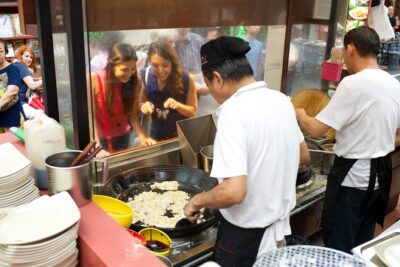
Small Group: Michelin and Local Hawker Food Tour with 9 tastings
Read our review →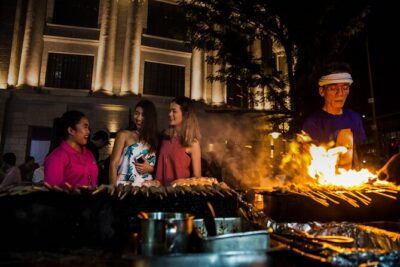
Small Group: Singapore Street Food & Night Tour with 9 tastings
Read our review →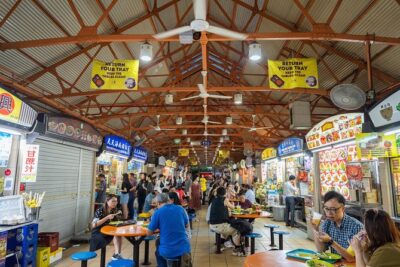
Singapore: UNESCO Street Food & Cultural Experience
Read our review →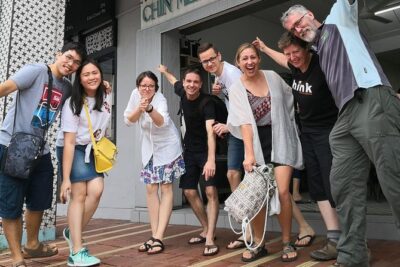
Small-Group Food Tour With Hawker Center: Eat Like A Local
Read our review →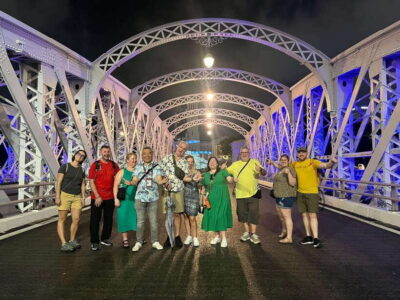
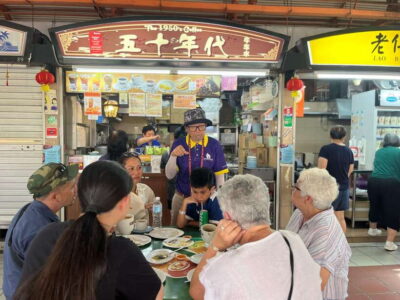
Singapore: Local Hawker Food Tour with Tastings
Read our review →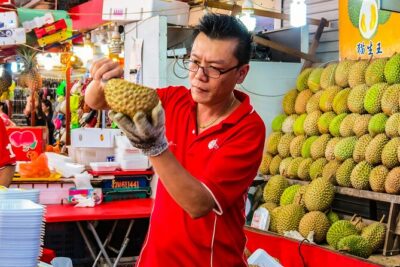
Singapore Street Food Tour with a Local: A Feast for Foodies 100% Personalized
Read our review →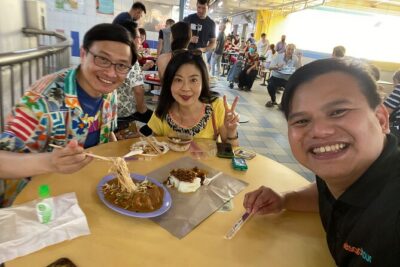
Browse the lists this tour appears in