
REVIEW · TOKYO STREET FOOD TOURS
Awesome Private Tour: Tsukiji, Asakusa, Shinjuku, Shibuya
Tokyo is easiest to enjoy when someone helps you choose between its many districts. This private tour does that well, pairing personal planning with useful stops such as Tsukiji, Asakusa, Shibuya, or Yanaka. I especially like the food advice at Tsukiji and the way guides can adjust the pace, including breaks in hot weather.
I also like that you can use the host for more than sightseeing. Abu helped one visitor find a ramen lunch near Akihabara and offered practical shop advice around Senso-ji. The main caution is value: $116 per person is fair for private attention, but transport, food, and attraction tickets cost extra, and the listed route is far too large for a relaxed four-hour outing.
Key points before you book
- Tsukiji food guidance: Get help choosing what to eat at the Outer Market instead of wandering every lane at random.
- A private route, not a fixed march: Pick two or three areas that match your interests, from Asakusa and Shibuya to Yanaka and Kichijoji.
- Strong guide flexibility: Abu, Maruf, and Ayoub are among the named hosts associated with the experience, with English-language support.
- Tokyo by subway and on foot: You pay your own fares, and the tour involves regular walking between stations, streets, temples, and markets.
- A useful first-day orientation: Your host can suggest food, shops, and plans for the rest of your stay.
- Choose your duration carefully: Four hours works for a compact route. Up to eight hours gives you room for several districts and breaks.
A private Tokyo plan that can change with your mood
The best feature here is not the number of famous stops. It is the ability to decide what kind of Tokyo you want to see.
You might spend a half-day on old neighborhoods and food, linking Tsukiji with Asakusa. You might prefer modern Tokyo, with Ginza, Shibuya, and Harajuku. If you already know the major sights, you can ask for Yanaka, Nakano, or Kichijoji instead.
That flexibility matters in Tokyo. The city is too spread out for a one-size-fits-all walk. A private host can help you avoid spending half the day crossing town for a single photo stop. You can also ask for advice on art, architecture, history, shopping, street food, or nightlife.
The experience is designed for a private group, so you are not trying to keep up with strangers. That makes it easier to pause for photos, stop for a snack, or shorten a visit when the heat or crowds become tiring. The tour is wheelchair accessible, though you should still discuss the exact route and transit needs when booking.
More Fish Market and Seafood Tours in Tokyo
- Tokyo Tsukiji Fish Market Food and Culture Walking Tour
★ 5.0 · 3,184 reviews - Tokyo: Tsukiji Fish Market Food and Walking tour
★ 5.0 · 1,724 reviews - Tokyo: Tsukiji Fish Market Guided Walking Tour
★ 4.9 · 1,397 reviews
Tsukiji Outer Market: start with food and local advice
Tsukiji Outer Market is a smart starting point because it gives you an immediate taste of Tokyo. The market is lined with food stalls and small shops, and the planned visit lasts about 30 minutes. That is enough for a first look and a snack, but not enough for a long food crawl.
This is where a local host adds real value. Abu received especially strong praise for helping with food choices at Tsukiji. If you are unsure what to order, ask for direct suggestions rather than trying to decode every sign yourself. Food purchases are extra, so keep some money available for anything you want to eat.
The market can become a bottleneck if you want to browse slowly. I would not try to pair an extended Tsukiji meal with every other district listed later. For a four-hour tour, Tsukiji plus Ginza and Asakusa makes a much more sensible plan than racing all the way to Shibuya and Shinjuku.
A short walk leads to Tsukiji Hongan-ji, allowing around 15 minutes for a visit and photos. The temple gives the morning a change of pace after the market. It also makes the route feel more rounded: food first, then a place of worship and architecture.
Ginza and Kabukiza: polished Tokyo in a short stretch
From Tsukiji, the route continues on foot toward Kabukiza, the famous kabuki theater. The planned stop is a pass-by rather than a performance, so you should not count on seeing a kabuki show during this tour.
Ginza is nearby and offers a sharp contrast to Tsukiji. Here you find major shopping streets, high-end stores, restaurants, and stylish cafes. The scheduled visit is about 15 minutes, which is enough to get oriented and take photos, but too short for serious shopping.
I like this pairing because it shows two sides of central Tokyo within a manageable distance. Tsukiji feels practical and food-focused. Ginza feels polished and formal. If you care about shopping, coffee, or city design, ask your host to give Ginza more time and remove another stop.
The key is being honest about your priorities. A person interested in luxury retail will get more from 45 minutes in Ginza than a quick dash through several unrelated areas. A person focused on temples and traditional streets should use that time elsewhere.
Asakusa and Senso-ji: Tokyo’s classic first visit
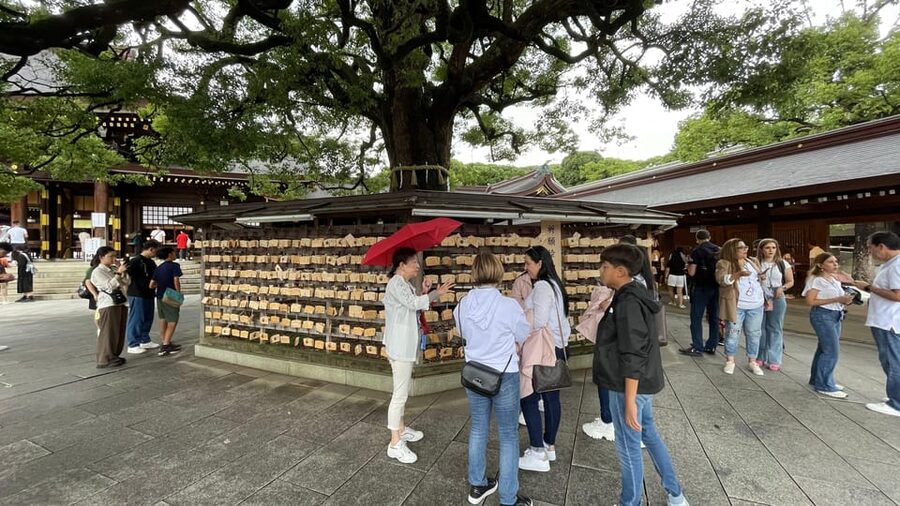
Asakusa is one of the strongest choices for a first Tokyo tour. The area around Senso-ji gives you a clear sense of the city’s older side, while the surrounding streets show how tradition fits into present-day Tokyo.
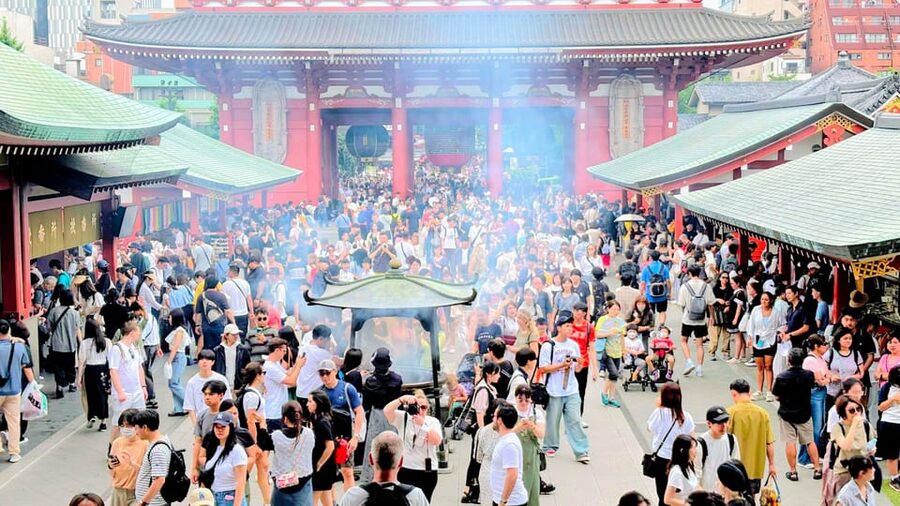
The route includes Nakamise Shopping Street, a lively approach lined with snack stalls and souvenir shops. You get about 20 minutes there, followed by roughly 30 minutes at Senso-ji for sightseeing, photos, free time, and shopping.
Senso-ji is Tokyo’s oldest and most significant Buddhist temple. You do not need to be an expert in Japanese religion to appreciate the scale, ritual, and steady flow of people around it. Your host can explain the setting and point out details you might otherwise walk past.
The shopping street is useful for small gifts and snacks, but it can feel commercial. If you want quieter old Tokyo, ask about Yanaka instead. If you want the most recognizable temple setting, keep Asakusa.
One practical point: the schedule lists Asakusa as a pass-by before Nakamise and Senso-ji, but the real experience is the walking time around the temple district. Wear shoes you can use comfortably for several hours. You will be on foot often, even with subway rides between areas.
Same city, a different plate:
- Tokyo Sushi Making Class in Tsukiji with Professional Chef
★ 5.0 · 1,177 reviews - Tsukiji Fish Market Guided Tour and Sushi Making with Pro Chef
★ 5.0 · 775 reviews - Tokyo: Tsukiji Fish Market Food and Culture Walking Tour
★ 4.7 · 757 reviews - Tsukiji Fish Market: Street Food & Culture Walking Tour
★ 5.0 · 669 reviews
Tokyo Skytree: a major time choice
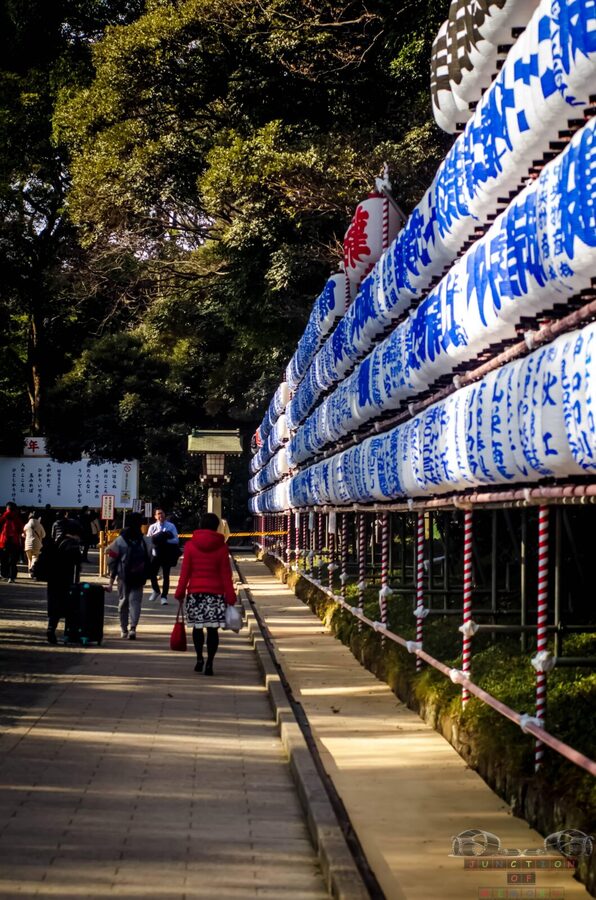
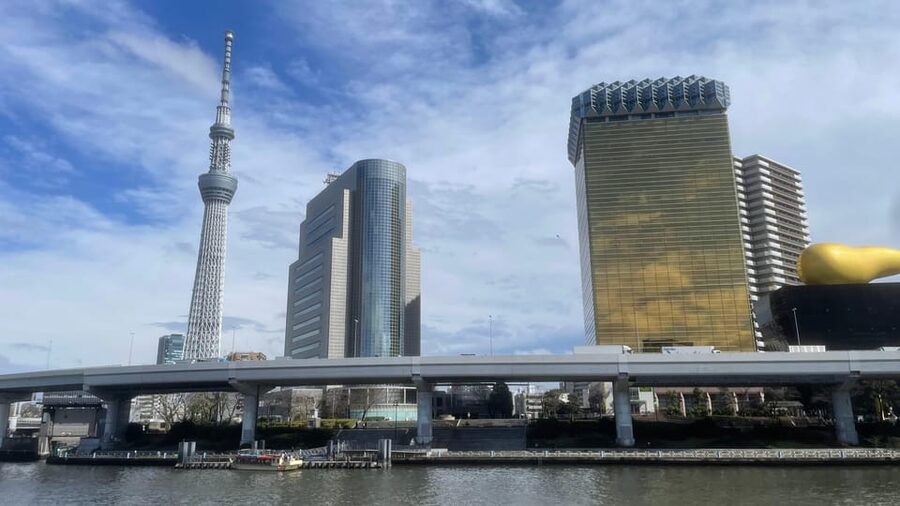
The schedule allows up to two and a half hours for Tokyo Skytree, including free time, photos, shopping, and sightseeing. That is a major commitment on a four-hour tour.
Skytree makes sense if you care about city views, modern Tokyo, or the shopping and dining around the tower. It does not make sense if your main goal is to sample several neighborhoods. You should ask whether the time includes a paid observation deck visit, because attraction tickets are not included.
This is one of the clearest places where customization matters. If you want the tower, let it be the main event and build the rest of the route around it. If you only want a photo from outside, say so and use the saved time in Asakusa, Ueno, or Akihabara.
The price covers the host, not admission. That distinction is important. A private guide can explain the area and help you use your time, but you still pay separately for anything that requires a ticket.
Akihabara and Ueno: pop culture beside old Tokyo
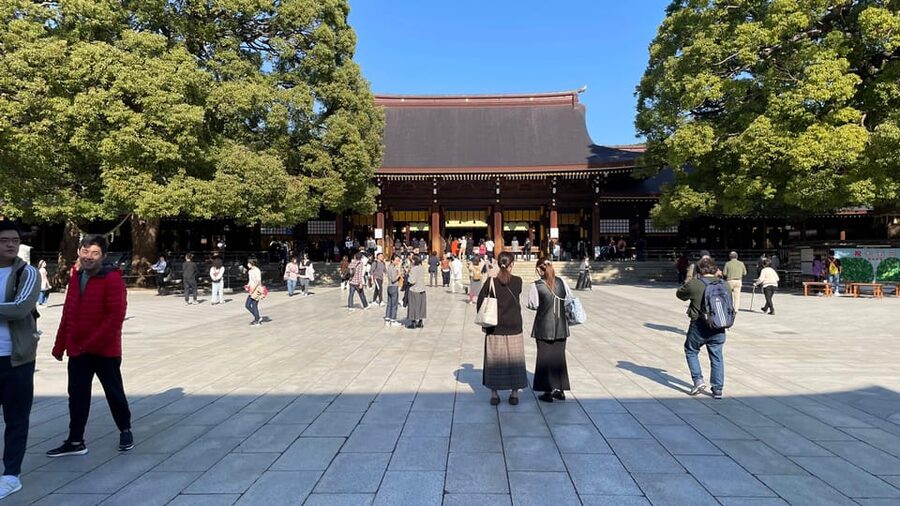
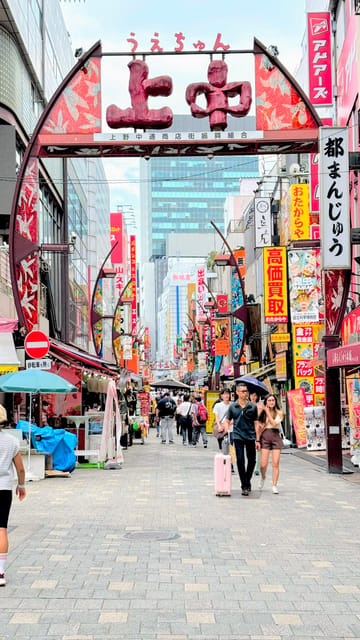
Akihabara gets about 30 minutes in the planned route. That is enough for a quick introduction to its anime, manga, games, and collectible shops. It is not enough for a serious hunt through Nakano Broadway-style stores or for comparing many shops.
If pop culture is your main interest, ask to make Akihabara a full stop. Otherwise, it works as a short taste between larger neighborhoods. The area has a particular visual character, but the best shopping depends heavily on what you collect and how much time you have.
Ueno receives about 20 minutes. It can serve as a short orientation stop, with nearby shopping, food, and cultural sights. The available details do not promise entry to a particular museum or attraction, so treat this as a neighborhood visit unless you arrange something else with the host.
Together, Akihabara and Ueno show why a private tour can be useful. They are close enough to consider in one outing, but they appeal to different interests. You can ask for anime and collectibles, local food, older Tokyo, or a simple introduction to both.
Shibuya Crossing: the famous Tokyo rush
Shibuya Crossing is one of the city’s signature sights, and the planned visit lasts about 30 minutes. You can watch the crossing, take photos, see the Hachiko Statue, and get a quick look at the shops and entertainment around the station.
The Hachiko story gives the area a human detail. The statue honors the dog who waited daily for his owner, and it has become one of Tokyo’s most popular meeting points.
Thirty minutes is enough for a first look, not a full shopping session. Shibuya has plenty of stores, restaurants, and bars, so you should tell your host if you want time for any of those. Otherwise, the stop may feel like a photo checkpoint.
I would pair Shibuya with Harajuku if you want youth culture and fashion. I would pair it with Shinjuku if you want an evening finish. Trying to add Tsukiji, Asakusa, Skytree, Akihabara, and Shibuya in four hours would leave you mostly underground on the subway.
Omoide Yokocho, Kabukicho, and Golden Gai after dark
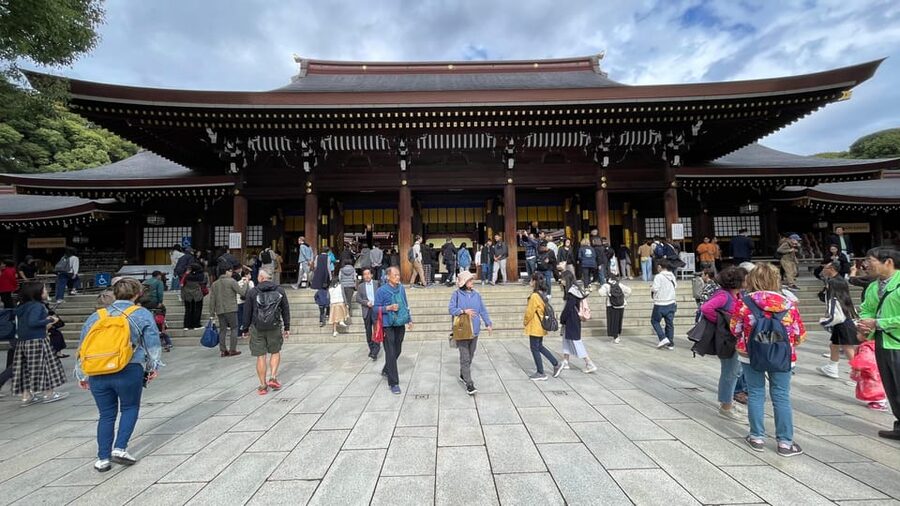
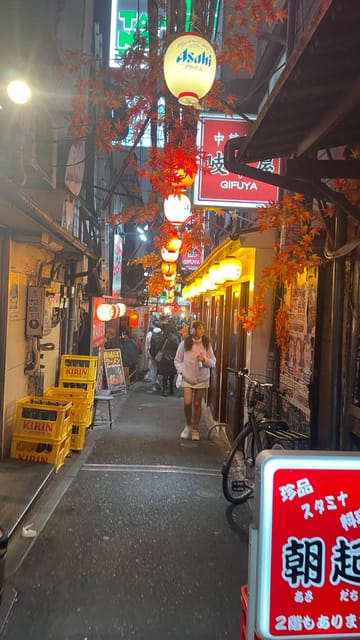
The Shinjuku section includes Omoide Yokocho, Kabukicho, and Golden Gai. Each receives about 20 to 30 minutes, making this a strong choice for a short evening orientation.
Omoide Yokocho is known for narrow lanes and small food spots. It is a place to look around and decide if you want to return for a meal. Food costs extra, and the short scheduled visit does not guarantee a full dining stop.
Kabukicho gives you a look at Shinjuku’s entertainment district. It is a busy urban area with many restaurants, bars, and nightlife businesses. Your host can help you understand the layout and suggest where to continue, but the tour does not include paid drinks or meals.
Golden Gai is made up of compact bar streets and has a distinct nighttime feel. A short visit lets you see the setting, but it is not the same as settling into a bar. If you want to drink, ask about the plan and budget for extra costs.
This Shinjuku route is best later in the day. It is also a good reason to choose the longer option, since rushing through three evening areas after a full day of sightseeing could be tiring.
Yanaka, Nakano, and Kichijoji for a less predictable Tokyo
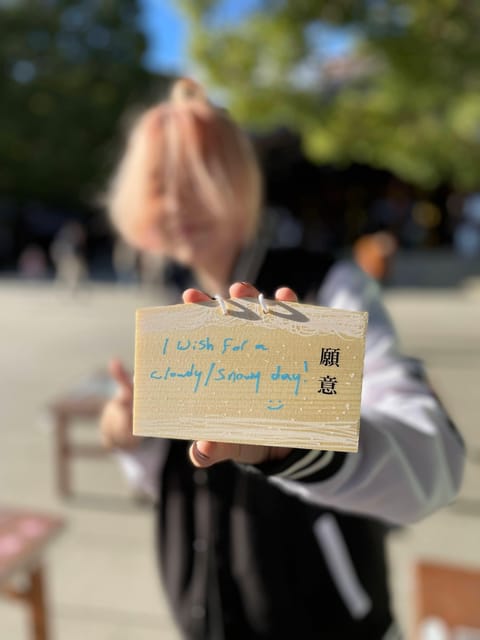
The tour is not limited to the major stops. Yanaka is a strong alternative if you want narrow lanes, temples, local shops, and the old Shitamachi feel. Yanaka Ginza adds small stores and street food without the scale of Ginza’s luxury shopping.
Nakano suits manga, anime, and collectibles. Nakano Broadway is the main draw, with shops focused on pop culture, while the surrounding area has izakayas and local nightlife. Choose this instead of Akihabara if you want a different angle on Tokyo’s hobby scene.
Kichijoji offers a calmer day. Inokashira Park has a boating lake, and the nearby streets include cafes, vintage shops, and food markets. It is a good pick if you want a slower neighborhood rather than a checklist of famous sights.
These areas are not add-ons you should squeeze into an already full route. They work best as the core of a four-hour tour, especially if you have already seen Asakusa or Shibuya.
What $116 buys you, and what it does not
At $116 per person, the value depends on group size and how much planning help you need. You are paying for a private English-speaking host, a flexible route, local context, and advice for the rest of your Tokyo stay.
That can be worthwhile if you have limited time. One person used the tour to see key Tokyo areas during a short visit, while another received help finding a ramen lunch near Akihabara before a later activity. Those are practical benefits, not just sightseeing facts.
The price is less attractive if you want a food tour with a lot of included tastings. Food and drinks are extra, and one recent booking specifically found the walking-tour price high compared with other food experiences. Transportation is also extra, as are attraction tickets.
For the best value, choose two or three connected districts and tell the host exactly what you want. The longer eight-hour option can make the per-hour value stronger, provided you actually want a full day of walking and subway travel.
Timing, comfort, and guide style
The tour is advertised for four to eight hours, with starting times checked at booking. Four hours is a half-day introduction. Eight hours gives you time for longer breaks, meals, and more than two neighborhoods.
Breaks matter in Tokyo. One guide, Abu, was praised for stopping to rest during very hot weather. That kind of adjustment is especially useful in summer, when temple approaches, market streets, and station walks add up quickly.
The named hosts include Abu, Maruf, and Ayoub. Abu is associated with food and shop suggestions, Maruf with a well-planned city route and strong photos, and Ayoub with a pleasant, adaptable neighborhood visit. Your assigned host may differ, so treat those names as examples rather than a guarantee.
The tour is offered in English and for a private group. You pay your own subway fares, so budget for repeated metro rides if you choose a wide route. The host can help with planning, but you should not expect every major attraction to be included in the base price.
Who should book this Tokyo tour?
I would choose this experience if you have only one free day, want personal advice, or feel unsure how to organize Tokyo’s huge number of districts. It is also a good fit for couples, families, and small private groups with different interests.
It works especially well for first-time visitors who want both a famous temple and a taste of modern city life. The host can help you connect food, shopping, history, and neighborhoods instead of treating each stop as an isolated photo opportunity.
I would be more cautious if you want a long food crawl, extensive museum visits, or a fixed itinerary with every admission included. You may also find the price high if you are comfortable planning your own subway route and choosing your own restaurants.
FAQ
How long does the private Tokyo tour last?
The experience lasts between 4 and 8 hours, depending on the option and starting time available.
Which areas can I visit?
Possible areas include Tsukiji, Asakusa, Ginza, Shibuya, Harajuku, Ueno, Yanaka, Nakano, Kichijoji, Akihabara, and Shinjuku. The route is tailored, usually around two or three areas.
Is transportation included?
No. You are responsible for subway and other transportation costs during the tour.
Are food, drinks, and attraction tickets included?
No. Additional food and drinks, as well as entrance fees for attractions, are paid separately.
Is the tour conducted in English?
Yes. The tour has a live English-speaking guide.
Can I cancel the booking?
You can cancel up to 24 hours in advance for a full refund. You can also reserve now and pay later.
Should you book it?
Book this tour if you want a flexible Tokyo introduction and practical help deciding where to eat, shop, and go next. I would choose a focused route, such as Tsukiji, Asakusa, and Ginza, or Shibuya, Harajuku, and Shinjuku, rather than trying to cover every listed stop.
The strongest reason to book is the private planning. The biggest warning is the extra spending and the temptation to overpack the day. Set your priorities before meeting your host, leave room for breaks, and use the tour as a smart orientation to Tokyo rather than a race through the entire city.
Just added around Tokyo
- Tokyo: Tsukiji walk & sushi private tour with Uni Students★ 5.0 · 17 reviews
- Tokyo: Private Tsukiji Street Food & Sake with Local Guide★ 5.0 · 3 reviews
- Tokyo: Tsukiji Market Guided Tour & Sushi-Making Experience★ 4.4 · 11 reviews
- Tokyo: Tsukiji Market and Hama-rikyu Gardens Guided Tour★ 4.8 · 73 reviews
- Tokyo Tsukiji Food & Culture Private Tour Licensed Guide★ 4.9 · 28 reviews
- Tokyo: Tsukiji Fish Market Foodie and Educational Tour★ 5.0 · 4 reviews
- Tokyo: Tsukiji Fish Market Culture Tour with Sashimi Tasting★ 4.6 · 54 reviews
- Tokyo: Tsukiji, Ginza, and Asakusa Japanese Culture Tour★ 5.0 · 2 reviews
Tokyo Street Food Tours, compared.
Tokyo Tsukiji Fish Market Food and Culture Walking Tour
Read our review →
Tokyo: Tsukiji Fish Market Food and Walking tour
Read our review →
Tokyo: Tsukiji Fish Market Guided Walking Tour
Read our review →
Tokyo Sushi Making Class in Tsukiji with Professional Chef
Read our review →
Tsukiji Fish Market Guided Tour and Sushi Making with Pro Chef
Read our review →Tokyo: Tsukiji Fish Market Food and Culture Walking Tour
Read our review →
Tsukiji Fish Market: Street Food & Culture Walking Tour
Read our review →
Tsukiji Fish Market Small-Group Food Walking Tour
Read our review →Browse the lists this tour appears in