REVIEW · TOKYO STREET FOOD TOURS
Tsukiji Fish Market Small-Group Food Walking Tour
Tsukiji is no longer Tokyo’s main wholesale fish market, but it remains one of the city’s best places to eat seafood in narrow lanes packed with fish shops, snack counters, kitchen stores, and food stalls. This small-group walk helps you make sense of it all, with a guide leading you to samples, a sit-down seafood lunch, a Buddhist temple, and a Shinto shrine.
I like the food variety, from tuna nigiri and grilled eel to tamagoyaki, scallops, crab, and small local snacks. I also like the maximum group size of seven, which makes it easier to hear explanations and move through tight lanes without losing your guide. The main drawback is important: the famous inner wholesale market moved to Toyosu in 2018, so this is an Outer Market food tour, not a visit to the old auction and wholesale halls.
Key points
- The Outer Market is the real focus: Expect specialty food shops, seafood stalls, dried goods, seasonings, cooking tools, and tableware rather than the old wholesale floor.
- Lunch is included: The tour finishes with a fresh seafood meal, often at a small local restaurant where you may choose from available options.
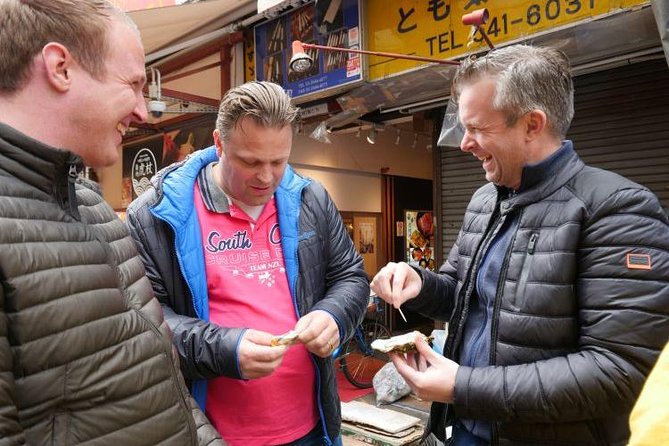
- Sampling is the main event: Possible tastings include sushi, tamagoyaki, grilled eel, scallops, crab, dried seafood, and other local snacks.
- Food and culture share the route: You visit a Japanese Buddhist temple and a Shinto shrine, with explanations of their place in Japanese life.
- The tour is compact and social: It lasts about three hours and accommodates no more than seven people.
- Come prepared for summer heat: Tokyo can be hot and humid, so bring water and wear a hat.
Tsukiji Today: A Food Market, Not the Old Wholesale Floor
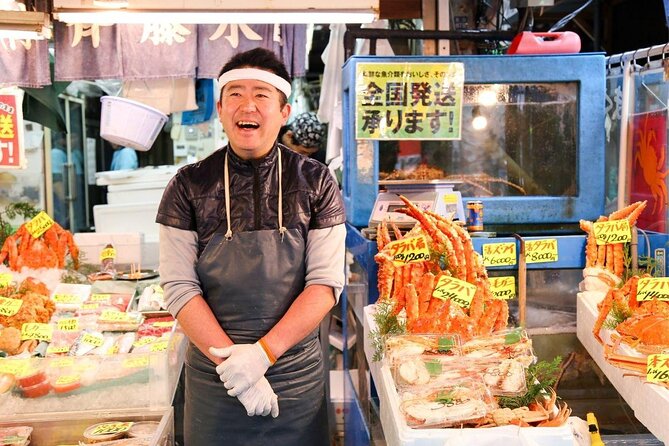
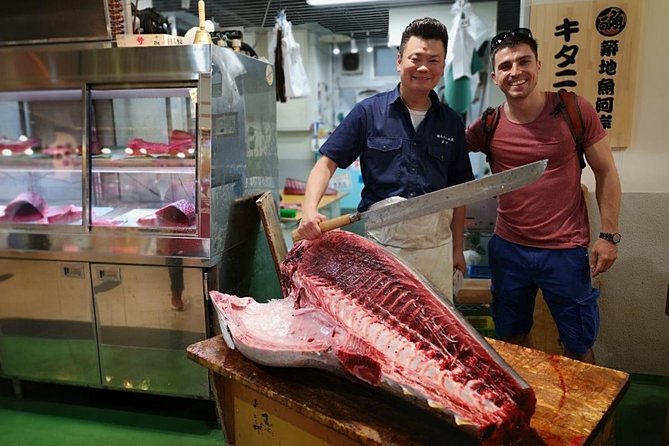
The first thing to understand is the difference between Tsukiji and Toyosu. The inner wholesale market, including the famous tuna auction, moved to Toyosu in 2018. Tsukiji’s Outer Market remains open, active, and full of places to eat, shop, and watch food being prepared.
That distinction matters because the tour description can sound as if you will see the main wholesale trade in action. You will not see the old wholesale market in Tsukiji. Instead, you will explore the surviving retail and food district, where around 460 shops sell seafood, produce, meat, dried foods, seasonings, cooking tools, and tableware.
I think this is still a good setting for a food walk. The Outer Market has more immediate rewards for a visitor: you can taste something, ask what it is, watch it being cooked, and then eat again a few minutes later. The narrow lanes also give you a close look at everyday Japanese food culture, even though the area is now well known among international visitors.
More Fish Market and Seafood Tours in Tokyo
- Tokyo Tsukiji Fish Market Food and Culture Walking Tour
★ 5.0 · 3,184 reviews - Tokyo: Tsukiji Fish Market Food and Walking tour
★ 5.0 · 1,724 reviews - Tokyo: Tsukiji Fish Market Guided Walking Tour
★ 4.9 · 1,397 reviews
Meeting at Tsukiji Station Exit 1
The tour begins at Tsukiji Station, near Exit 1, at 3 Chome-9 Tsukiji. Your guide waits there before leading the group into the market. Arrive a little early and look for other people who appear to be joining a food walk. The meeting area can feel busy, and confirming that you are in the right place saves an awkward start.
The tour uses a mobile ticket, and confirmation is provided when you book. Tsukiji Station is near public transportation, so this is a practical morning activity if you are staying elsewhere in central Tokyo.
The group limit is seven people. That is a useful size here. Tsukiji’s lanes can be tight, and a large group would make it harder to stop at counters or hear the guide. A small group also gives you a better chance to ask about unfamiliar seafood, Japanese food customs, or the market’s past.
Guides have included Kazu, Yuki, Hitomi, Mark, Tiger, Mia, and Mummy. The tone can vary by guide, but the strongest experiences pair food tasting with useful explanations. A good guide can tell you what you are eating, explain how the market changed, and point out places you would likely pass without noticing.
Eating Through the Outer Market
The food is the heart of the experience. Rather than sitting down for one large meal right away, you move through the market and try several items along the way. The exact stops can change, but the food examples associated with this walk include tuna nigiri sushi, unagi, tamagoyaki, scallops on a stick, crab legs, dried seafood, yakitori-style bites, and other local snacks.
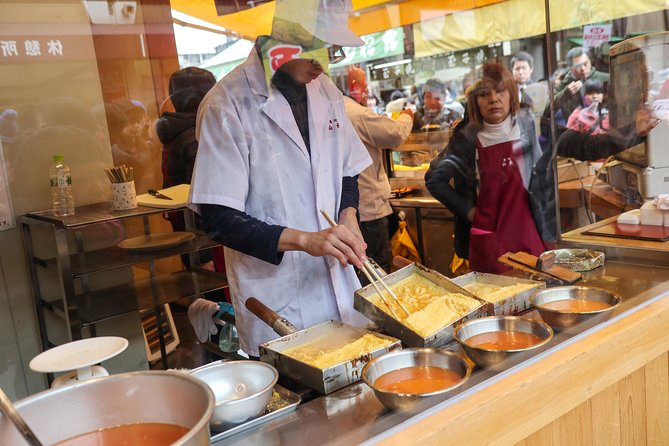
Tamagoyaki is a particularly good market introduction. This Japanese rolled omelet is often slightly sweet and served as a quick snack. It looks simple, but it gives you a useful taste of a familiar Japanese food that you might otherwise overlook while chasing sushi.
You might also try grilled eel, fresh scallops, or large crab pieces. These are more direct seafood experiences, and they show why Tsukiji remains popular even after the wholesale market moved. The market is designed for grazing. You can compare textures, cooking methods, and flavors within a short walk.
One tasting may involve dried seafood or a less familiar item such as dried stingray. If you are open to trying something unusual, this is one of the tour’s better features. If you prefer only familiar foods, tell your guide early so you can understand what is being offered before taking a bite.
The market has signs asking people not to stop and eat in certain places. That can make sampling feel a little rushed, especially when lanes are crowded. Your guide helps manage the timing, but you should expect to eat some items standing up or while moving to the next stop.
The Included Seafood Lunch
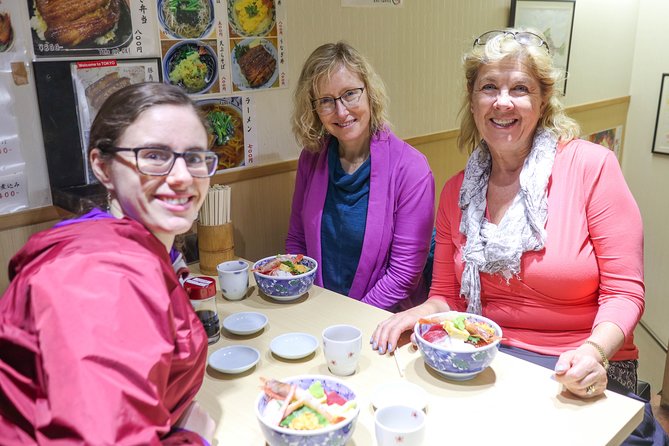
The included lunch gives the walk a proper finish. After several smaller samples, you sit down for a seafood meal at a local restaurant. Some tours use a small booth-style setting, and the meal may allow you to choose from available dishes.
This is where the $87.37 price begins to make more sense. You are not paying only for a guide through the market. You are also getting a full seafood lunch, several tastings, cultural stops, and a short orientation to a place that can be confusing on your own.
Still, the value depends on how much you eat and how much guidance you want. If you already know Tsukiji well, speak Japanese, and are comfortable choosing your own stalls, you could spend less by eating independently. If you want to try several foods without guessing what to order, the tour offers more practical value.
Come hungry. The combination of samples and lunch can be substantial, and the food is spread across the full three hours. This is not the right pick for someone who wants only a quick sushi meal.
More Street Food Market Tours in Japan
- Tsukiji Fish Market Guided Tour and Sushi Making with Pro Chef
★ 5.0 · 775 reviews - Tokyo: Tsukiji Fish Market Food and Culture Walking Tour
★ 4.7 · 757 reviews - Tsukiji Fish Market: Street Food & Culture Walking Tour
★ 5.0 · 669 reviews - Tokyo: Tsukiji Fish Market Sushi Making Class with Pro Chef
★ 4.9 · 506 reviews
A Walk Beyond Fish Shops
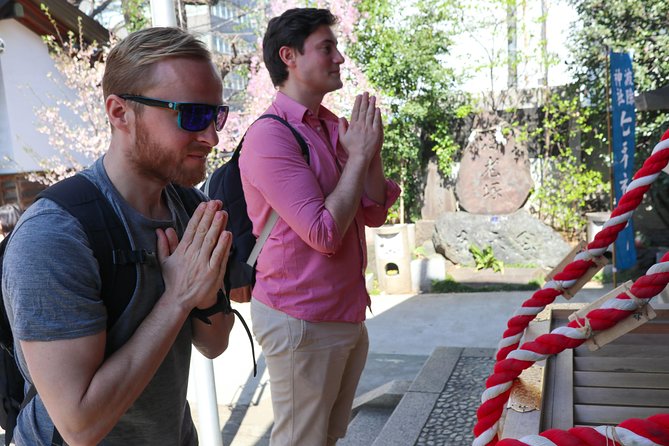
Tsukiji is not only about seafood. The route includes a Japanese Buddhist temple and a Shinto shrine, adding some needed context to the food stops. These visits help explain why the district feels like more than a row of market stalls.
The Buddhist temple gives you a look at one side of Japanese religious life, while the Shinto shrine provides a contrast in setting and custom. The value here depends heavily on the guide. When the guide explains the difference between the two traditions and connects them to local life, the cultural portion gives the tour more shape.
The route also includes a city viewpoint, with views toward Tokyo Bay. This breaks up the close quarters of the market and gives you a chance to look beyond the food lanes. It is not the main reason to book the tour, but it makes the three-hour route feel more varied.
I especially like this combination of food, religion, and city views. You get more than a checklist of snacks, and you learn how a working district fits into Tokyo’s wider culture.
What the Guides Add
The guide can make or break this experience. The best guides do more than point at a fish stall. They identify seafood, explain how it is prepared, describe the market’s past, and help you decide what is worth trying.
Kazu has been particularly useful for visitors who need food substitutions, including a person with coeliac disease. That does not mean the tour can guarantee a safe gluten-free meal. It means a thoughtful guide may try to find an alternative when the kitchen allows it.
Yuki has been praised for knowing where to stop and what to eat. Hitomi has led lively market walks, while Mark has focused on seafood knowledge and food culture. Guides such as Tiger have also been described as generous with information.
The quality may not be identical every time. One poor experience involved little explanation and fewer samples than expected, with a planned takoyaki stop abandoned because the line was too long. That is a useful warning: food stops can change, queues can interfere, and the guide’s communication matters.
The Market’s Crowds, Heat, and Practical Limits
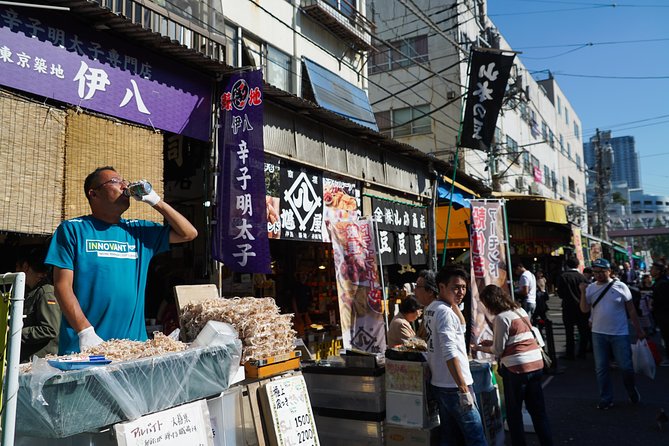
Tsukiji is compact, crowded, and easy to find overwhelming. Storefronts sit close together, signs compete for your attention, and some lanes are too narrow for a group to pause comfortably. You will enjoy the atmosphere more if you accept that this is an active shopping district, not a quiet museum.
Summer requires extra care. Tokyo’s heat and humidity can be hard on anyone walking and eating outdoors. Bring water, wear a hat, and consider choosing a cooler part of the day if your schedule allows.
The tour lasts about three hours, so it is long enough for a proper introduction without consuming half your day. The end point is at Shiodome Tower, 1-6-3 Higashishinbashi. That gives you a useful position for continuing into other parts of central Tokyo, though the tour does not return you to Tsukiji Station.
Food restrictions need careful thought. Vegan options are not available, and the operator cannot guarantee allergy-free food because the kitchens belong to independent businesses. Substitutions may not be possible at every stop, although the guide may try to compensate at another stop. Contact the operator before booking if you have a serious allergy or strict dietary requirement.
Who Gets the Most From This Tour
I would choose this tour for a first visit to Tokyo, especially if you want seafood but feel unsure about ordering at Japanese market stalls. It also suits couples, small groups of friends, and honeymoon visitors who want a guided morning with plenty to taste.
It is a good fit if you want:
- A structured introduction to Tsukiji Outer Market
- Seafood lunch included in the cost
- Several food samples rather than one restaurant meal
- A small group capped at seven people
- Cultural context along with eating
- Help identifying unfamiliar fish and snacks
I would skip it if your main goal is the old wholesale market or tuna auction. Those facilities are in Toyosu, not Tsukiji. I would also think twice if you are vegan, have a serious food allergy, or prefer to explore markets without a fixed route.
Is $87.37 a Fair Price?
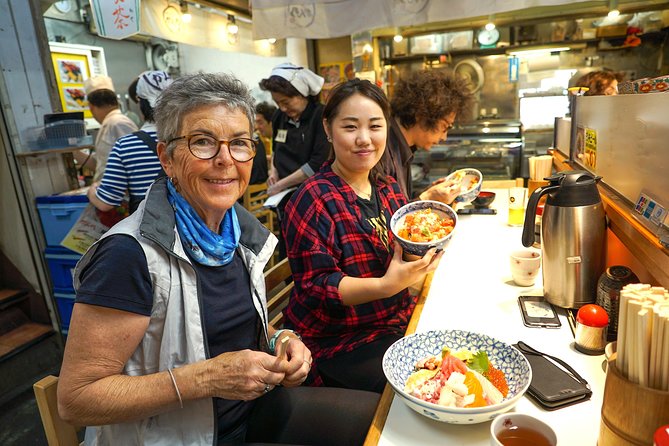
At $87.37 per person, this is not a bargain food crawl, but it can be fair value. The price covers about three hours, a guide, several tastings, a seafood lunch, and visits to cultural sites. It also saves you from spending time deciding which stalls are worth the cost.
The strongest value comes when you are willing to try a range of foods and want explanations along the way. The weakest value comes if you eat very little, already know Tsukiji, or expect a dramatic wholesale-market visit.
Because the tour is often booked around 40 days ahead, planning early is sensible if you have fixed Tokyo dates. Free cancellation is available up to 24 hours before the start time, with a full refund. Changes or cancellations inside that window are not accepted for a refund.
My Take: Book It for Food and Context
I would book this tour if I wanted an easy, tasty introduction to Tsukiji’s Outer Market and did not want to plan every bite myself. The combination of sushi, tamagoyaki, grilled eel, seafood snacks, lunch, shrines, and city views gives the morning a satisfying range.
Just book it with the correct expectation. This is not a wholesale fish auction tour, and the exact food stops can change. If you are comfortable with those limits, the small group, included lunch, and strong guides such as Kazu, Yuki, Hitomi, and Mark make it a practical way to get oriented and eat very well.
FAQ
Where does the tour start?
The tour starts at Tsukiji Station Exit 1, at 3 Chome-9 Tsukiji in Chuo City, Tokyo.
Where does the tour end?
The tour ends at Shiodome Tower, 1-6-3 Higashishinbashi, Minato City, Tokyo.
How long does the experience last?
The tour lasts approximately three hours.
Is lunch included?
Yes. A fresh seafood lunch at the market is included, along with food samples at local shops and stalls.
Does the tour visit the old wholesale fish market?
No. The old inner wholesale market moved to Toyosu in 2018. This experience focuses on Tsukiji Outer Market and nearby food and cultural sites.
How many people can join the tour?
The maximum group size is seven travelers.
Are vegan or allergy-free options available?
Vegan options are not available. Allergy-free meals and dietary substitutions cannot be guaranteed because independent kitchens prepare the food.
Can I cancel for a full refund?
Yes. You can cancel at least 24 hours before the experience starts for a full refund. Cancellations or changes made less than 24 hours before the start time are not accepted for a refund.
More Street Food Walking Tours in Japan
- Tokyo Tsukiji Fish Market Food Tour: 15 Stops & Walk Local Street
★ 5.0 · 139 reviews - Tokyo: Guided Walking Tour of Tsukiji Market with Breakfast
★ 4.4 · 134 reviews - Tokyo: Tsukiji Market Walking Tour & Sushi Cooking Class
★ 4.6 · 122 reviews - Tokyo’s Kitchen: Tsukiji Market Food & Culture Walk
★ 4.7 · 74 reviews
More Street Food Market Tours in Tokyo
- Tokyo Food Tour Taste Fresh Delights at Tsukiji Market
★ 5.0 · 429 reviews - Tokyo Tsukiji Fish Market Tour and Sushi Making Lesson
★ 5.0 · 390 reviews - Tsukiji Fish Market: Street Food & Culture Walking Tour
★ 4.8 · 259 reviews - Private Toyosu & Tsukiji Market Adventure with Tuna Auction
★ 4.8 · 191 reviews
Just added around Tokyo
- Tokyo: Tsukiji walk & sushi private tour with Uni Students★ 5.0 · 17 reviews
- Tokyo: Private Tsukiji Street Food & Sake with Local Guide★ 5.0 · 3 reviews
- Tokyo: Tsukiji Market Guided Tour & Sushi-Making Experience★ 4.4 · 11 reviews
- Tokyo: Tsukiji Market and Hama-rikyu Gardens Guided Tour★ 4.8 · 73 reviews
- Tokyo Tsukiji Food & Culture Private Tour Licensed Guide★ 4.9 · 28 reviews
- Tokyo: Tsukiji Fish Market Foodie and Educational Tour★ 5.0 · 4 reviews
- Tokyo: Tsukiji Fish Market Culture Tour with Sashimi Tasting★ 4.6 · 54 reviews
- Tokyo: Tsukiji, Ginza, and Asakusa Japanese Culture Tour★ 5.0 · 2 reviews
Tokyo Street Food Tours, compared.
Tokyo Tsukiji Fish Market Food and Culture Walking Tour
Read our review →
Tokyo: Tsukiji Fish Market Food and Walking tour
Read our review →
Tokyo: Tsukiji Fish Market Guided Walking Tour
Read our review →
Tokyo Sushi Making Class in Tsukiji with Professional Chef
Read our review →
Tsukiji Fish Market Guided Tour and Sushi Making with Pro Chef
Read our review →Tokyo: Tsukiji Fish Market Food and Culture Walking Tour
Read our review →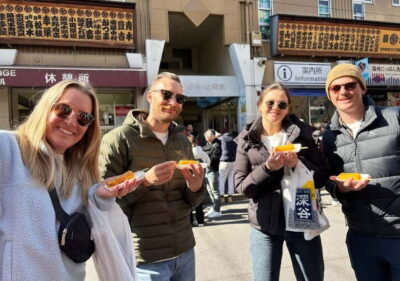
Tsukiji Fish Market: Street Food & Culture Walking Tour
Read our review →