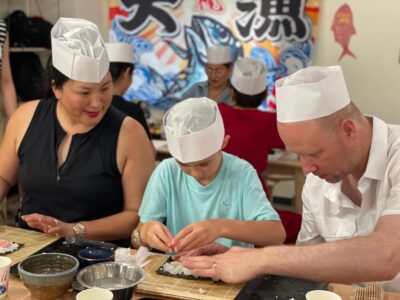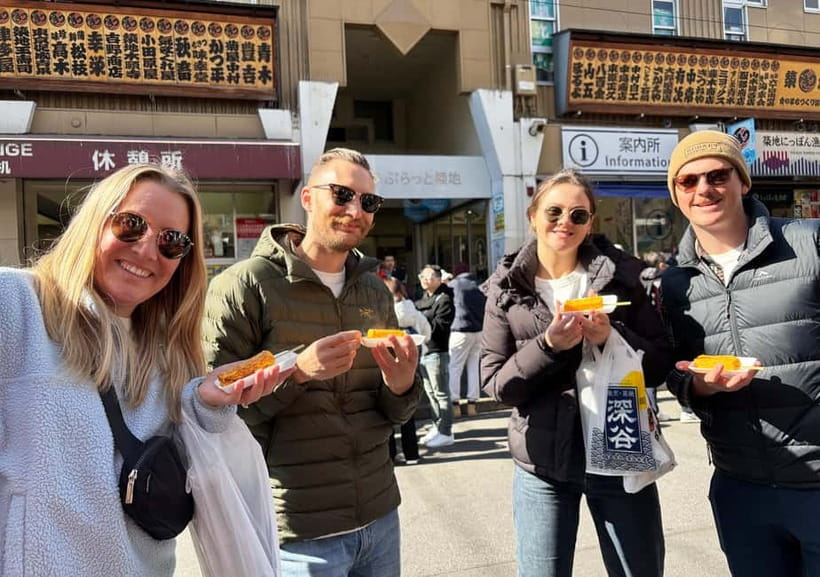
REVIEW · TOKYO STREET FOOD TOURS
Tsukiji Fish Market: Street Food & Culture Walking Tour
Tsukiji is best understood one bite at a time. This two-hour walk takes you through the market’s food stalls, a traditional fish-cutting demonstration, and Tsukiji Hongwanji Temple, with a local guide explaining what you are seeing. The fish-cutting show is the most distinctive part, followed by a fresh seafood bowl that you pay for separately.
I like the easy mix of food and culture, and I like that guides such as George and Tomo have been praised for explaining Japanese ingredients, market customs, and local history in clear English. The $33.16 price is fair if you want help choosing stalls and understanding the scene, though the experience can feel hectic in a crowd, and some people found the guide hard to hear or felt there was too much waiting.
Key points to know before you book
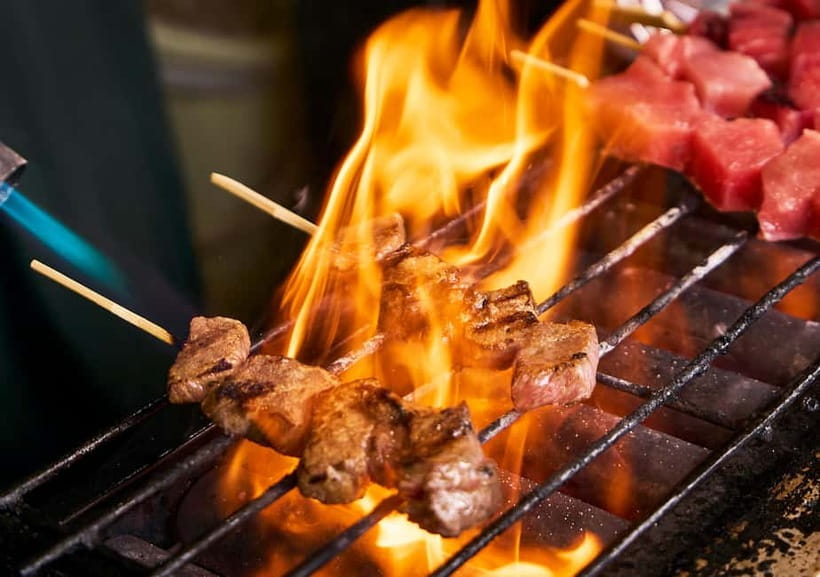
- A two-hour introduction to Tsukiji: You visit the outer market, watch fish preparation, eat a seafood bowl, and step inside Tsukiji Hongwanji Temple.
- Food purchases are extra: The guide leads you to street food and the seafood bowl, but meals are not included in the tour price.
- The fish-cutting show is the standout moment: A chef fillets a whole fish using traditional techniques.
- The group can be as large as 30 people: That may feel intimate at a small size, but less personal when the group fills.
- The route is wheelchair and stroller accessible: The meeting point is near public transportation at Tsukiji Hongwanji Temple.
- Crowds affect the experience: New Year periods and busy market hours can make it harder to stay together or hear a quiet guide.
Why Tsukiji works better with a guide
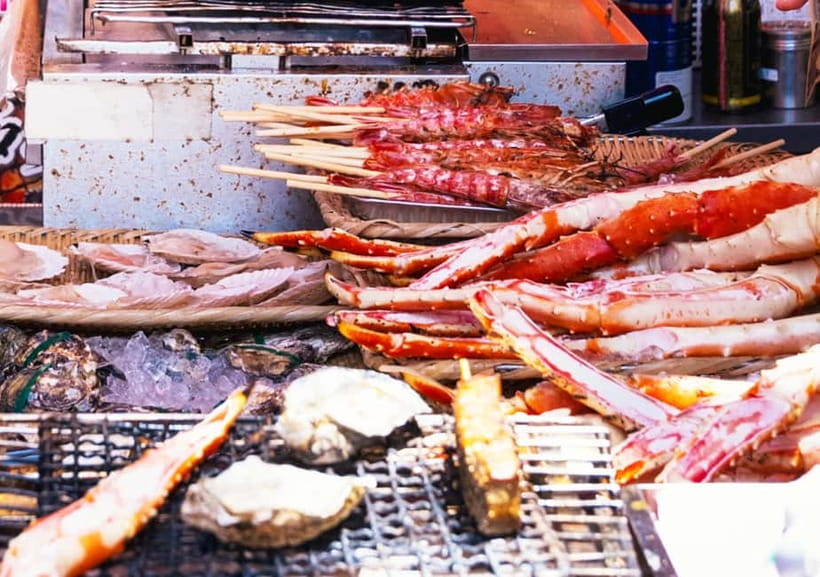
Tsukiji Fish Market is not one enclosed hall with a neat entrance and a numbered route. The modern wholesale market moved to Toyosu, while Tsukiji’s outer market remains a lively food district filled with seafood shops, prepared foods, cooking tools, and small eateries.
That layout is part of the fun, but it can also leave you guessing. A guide helps you understand what you are looking at and points you toward stalls that fit the group. You can learn about Japanese cooking ingredients instead of simply wandering past unfamiliar fish, pickles, grilled foods, and sweets.
I like this approach for a first visit because the market can be visually loud and tightly packed. A local guide gives the food a purpose. You are not only sampling something because it looks good, you are learning how it fits into Japanese food culture.
Still, you should know what this tour is not. It is not a long historical walk or a full cooking class. Much of the time centers on food stalls, eating, and moving between stops. If your main goal is detailed Tokyo history, this tour may feel light.
More Fish Market and Seafood Tours in Tokyo
- Tokyo Tsukiji Fish Market Food and Culture Walking Tour
★ 5.0 · 3,184 reviews - Tokyo: Tsukiji Fish Market Food and Walking tour
★ 5.0 · 1,724 reviews - Tokyo: Tsukiji Fish Market Guided Walking Tour
★ 4.9 · 1,397 reviews
Meeting at Tsukiji Hongwanji Temple
The tour starts at Tsukiji Hongwanji Temple, at 3-chome-15-1 Tsukiji. This is a practical meeting point because it is near public transportation and gives you an immediate cultural stop before the market work begins.
The temple is not just a place to gather. You spend about 15 minutes inside with the guide, learning about Buddhism, the temple’s character, and its place in Tokyo. That short visit adds useful context before you enter the food market.
I appreciate the contrast. You begin in a quiet religious setting, then move into a market where vendors, cooks, and shoppers are focused on food. The shift helps explain why food is such an important part of daily culture in Japan.
Do not expect a long temple lecture. Fifteen minutes is enough for an introduction, not a full study of Buddhist history. One supplied account found the temple stop added little, so your enjoyment will depend on how much you value a brief cultural pause. If you want to reach the food stalls immediately, this part may feel like a delay.
The activity ends back at the same meeting point. That makes the route simple to manage, especially if you have another Tokyo plan afterward.
Sampling Tsukiji street food for 45 minutes
The first main market portion lasts about 45 minutes and focuses on Japanese food culture. Your guide takes you through Tsukiji Jogai Market, the outer market area, and helps you make sense of the food on offer.
This is where a guide can earn the tour price. Tsukiji has plenty of stalls, but a short visit gives you limited time to decide what to eat. A guide can explain ingredients, suggest what to try, and help you avoid spending your whole morning standing in line or choosing at random.
The experience is designed around tasting. You should plan to buy your own food, since meals are not included. The tour price covers the guided activity, not every snack or dish you may want. Bring enough money for food and be ready to make choices as you walk.
I like the freedom this gives you. You can eat only what appeals to you, rather than receive a fixed meal that may not suit your taste. On the other hand, anyone expecting an all-inclusive food tour should read the terms carefully.
The market may be crowded, especially around New Year. A busy setting can make it difficult to stay beside the guide, and one account described the tour as hectic, with some stalls skipped because of the crowd. Keep your eyes on the guide and group, and do not assume everyone will stop at exactly the same pace.
The fish-cutting demonstration
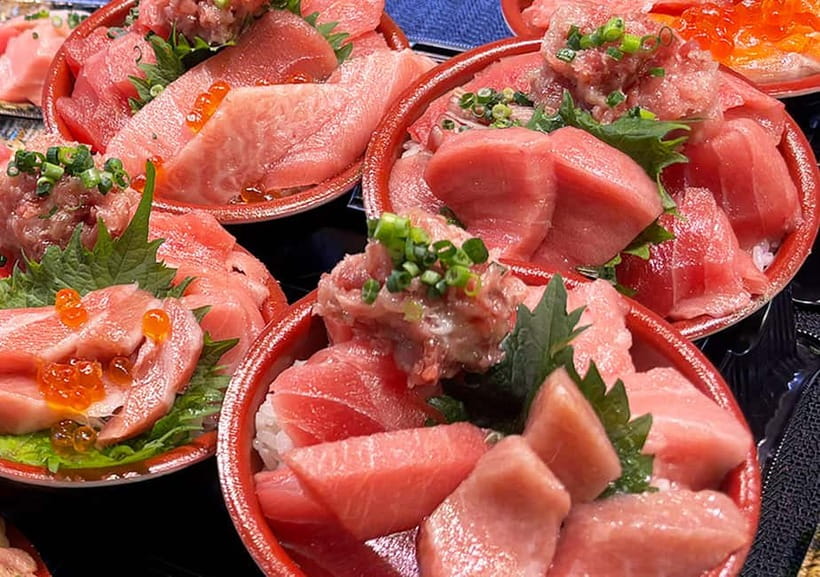
The fish-cutting show is the most unusual scheduled feature. A skilled chef fillets a whole fish with traditional techniques, giving you a close look at the precision behind Japanese seafood preparation.
This is more than a quick demonstration. It shows the care involved in turning a whole fish into clean portions, and it connects the market to the kitchen. You see a practical skill that is easy to miss when seafood arrives already cut and packaged.
The demonstration lasts about 30 minutes. Afterward, you are scheduled to enjoy a fresh seafood bowl. The listing treats the bowl as part of this stop, but the general inclusions clearly state that meals are not included, so you should expect to pay for the food yourself.
That distinction matters when you compare the price with other food tours. At $33.16 per person, the tour remains reasonably priced for a guide, a demonstration, and market orientation. Your final cost rises based on what you choose to eat.
The seafood bowl also gives the demonstration a satisfying finish. You have just watched a fish being prepared, then you get to connect that craft with a finished dish. It is a simple lesson, but an effective one.
The drawback is that not everyone wants to watch a whole fish being cut. If you are sensitive to seafood preparation, ask yourself if this is a feature or an uncomfortable moment before booking.
More Street Food Market Tours in Japan
- Tsukiji Fish Market Guided Tour and Sushi Making with Pro Chef
★ 5.0 · 775 reviews - Tokyo: Tsukiji Fish Market Food and Culture Walking Tour
★ 4.7 · 757 reviews - Tsukiji Fish Market Small-Group Food Walking Tour
★ 5.0 · 621 reviews - Tokyo: Tsukiji Fish Market Sushi Making Class with Pro Chef
★ 4.9 · 506 reviews
Seeing the working side of Tsukiji Fish Market
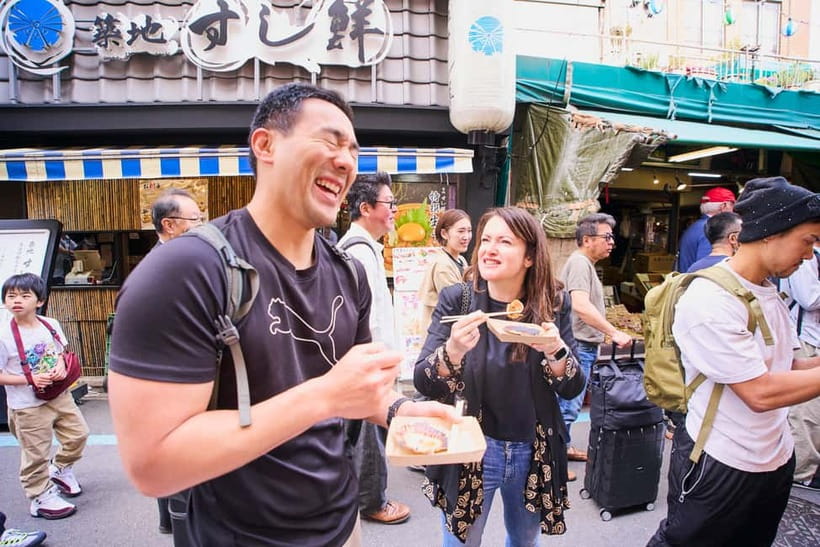
Another 30-minute section takes you through Tsukiji Fish Market and its professional trading atmosphere. This is intended to show you the market as a place of work, not only as a row of snack stands.
That distinction is useful. Tsukiji’s public-facing stalls are easy to enjoy, but the market also serves people who buy and sell seafood for the trade. Seeing that side gives you a clearer sense of how the area functions.
The exact amount of access and explanation may depend on crowd conditions and the guide’s pace. The tour is short, so do not expect an exhaustive look at every corner. Think of this as an introduction to the market’s working character.
This is also the part most affected by timing. Crowds can slow movement, block views, or cause the group to wait. One account described repeated stopping and waiting, while another found the market too busy to visit some stalls. A calm morning will help, but the tour cannot control market traffic.
The guide makes or breaks the morning
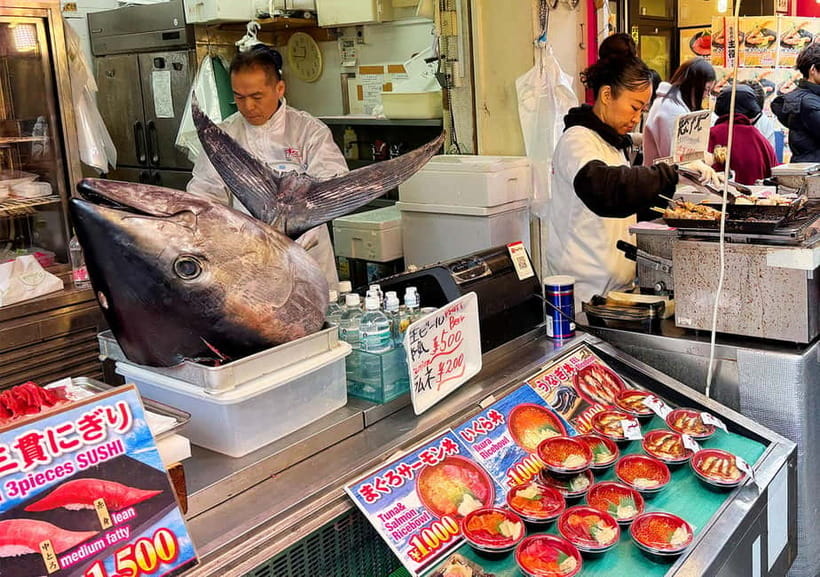
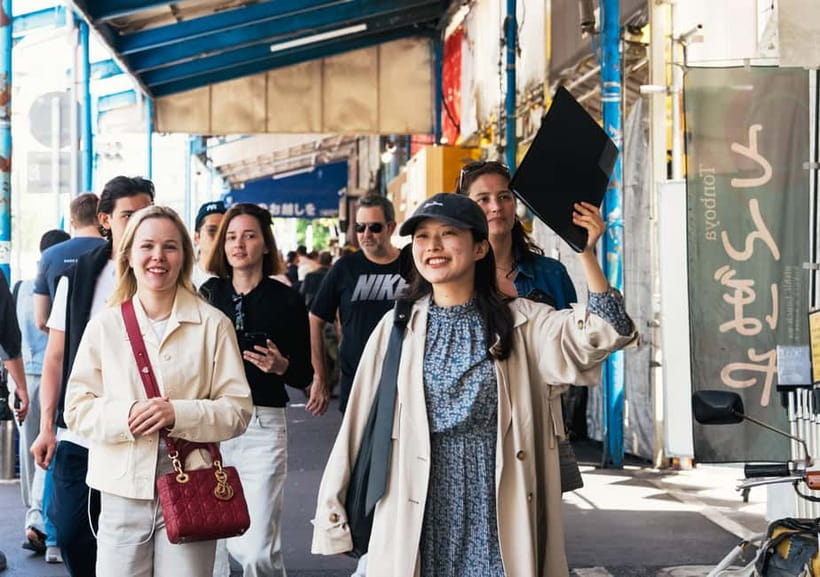
The experience depends heavily on the individual guide. George has been praised for taking people to good food spots, while Tomo has been praised for explaining culture and history in clear English. Those names give you an idea of the kind of guiding that works best here: practical food advice paired with context.
You should also be realistic about group size. The activity is described as small-group, but the maximum is 30 people. A group of 8 or 10 can feel personal. A full group of 30 is a different experience, especially in narrow market lanes.
A good guide needs to keep the group together, speak loudly enough for a noisy market, and explain things without blocking vendors or shoppers. Some participants found a guide difficult to hear, and one person felt the guide did not always wait for the group. These are not minor details in a crowded market.
If hearing clear commentary is important to you, stay near the guide from the beginning. If you use a wheelchair or stroller, the route is advertised as accessible, which is helpful, though crowded spaces can still affect your pace.
The tour allows the guide to spend more time with you when the group is small. That can mean better answers about ingredients, food customs, and Tokyo’s past. It is one reason I would choose this over walking through Tsukiji without any direction.
Is $33.16 good value?
At $33.16 per person, this is a modestly priced guided experience for Tokyo. You are paying for two hours of direction, cultural explanation, the fish-cutting presentation, and help navigating Tsukiji.
The value depends on how you use the guide. If you want to taste several foods, understand what you are buying, and avoid wandering without a plan, the price is sensible. The tour gives structure to a market that can otherwise feel confusing.
The value is weaker if you already know Tsukiji well or are happy to explore on your own. The outer market is open to the public, and you can walk among the stalls without paying for admission. Since food is extra, you may spend more than the tour price once you start eating.
This is not a bargain because it includes a large meal. It is a reasonable fee for orientation and access to a scheduled demonstration. I would judge it by the quality of the guide and the group size, not by the number of food samples.
The 99 percent recommendation rate and five-star overall score suggest that the format works very well for many people. Still, the lower ratings point to practical concerns: weak audio, waiting, crowd stress, limited historical detail, and a temple stop that may not appeal to everyone. The experience is strong when expectations match the format.
Who should book this Tsukiji tour?
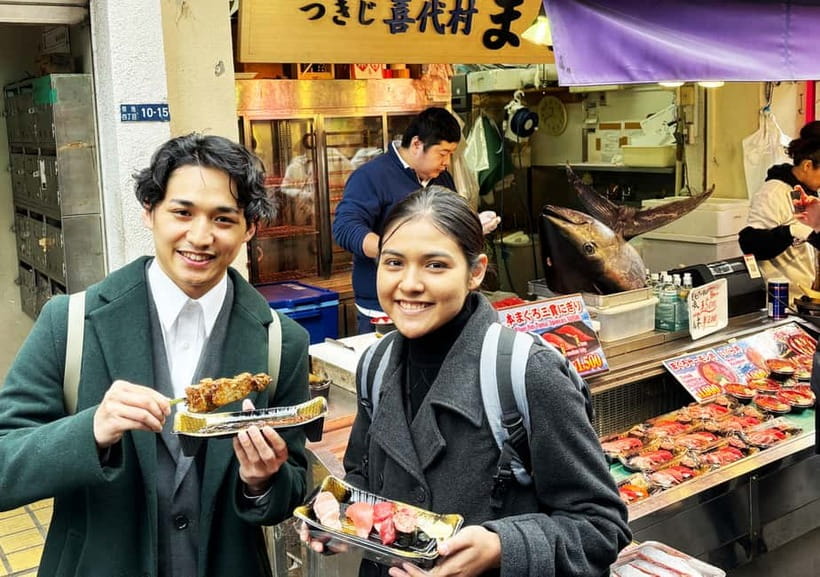
I would recommend it to first-time visitors to Tsukiji who want a short, guided introduction rather than a free-form walk. It suits people who enjoy trying food but want help understanding ingredients and choosing stalls.
It is also a good fit if you like a mix of culture and food. The temple, market, fish preparation, and seafood bowl create more variety than a simple snack crawl.
Families may appreciate the two-hour length and the stated stroller accessibility. Wheelchair users may also find the accessible route useful. Keep in mind that a crowded market can still be tiring, and one account raised concerns about too much time in direct sun. If sun exposure is a serious issue for you, communicate that clearly before the tour and consider the weather forecast.
You may want to skip it if you prefer to explore independently, dislike crowds, or want a serious historical tour. It is also not ideal if you expect every meal and snack to be included or if you need a very quiet, slow-paced experience.
The tour requires good weather. If poor weather cancels it, you are offered another date or a full refund. You can also cancel for a full refund up to 24 hours before the start time. Changes or cancellations inside that 24-hour window are not accepted.
My take: book it for guidance, not for free food
Book this experience if you want an efficient first look at Tsukiji and value having a local explain what you are eating. The fish-cutting show, seafood bowl, street food route, and temple visit give you a clear two-hour outline, and the price is fair for that structure.
I would not book it simply because you expect a large included meal or a detailed history lesson. Food costs extra, the market can be crowded, and the experience changes a lot with the guide and group size.
For most first-time visitors, I think it is a useful introduction. Go in ready to buy your own food, stay close to the guide, and treat the tour as a guided orientation to Tsukiji rather than a complete study of the market. That is where it offers the most value.
FAQ
How long does the Tsukiji Fish Market tour last?
The tour lasts approximately two hours.
Where does the tour start?
It starts at Tsukiji Hongwanji Temple, at 3-chome-15-1 Tsukiji, Chuo City, Tokyo 104-0045, Japan.
Where does the tour end?
The activity ends back at the meeting point.
Is food included in the tour price?
No. Meals are not included. You pay separately for street food and the seafood bowl.
Is the tour wheelchair and stroller accessible?
Yes. The experience is described as wheelchair and stroller accessible.
What happens if the weather is poor?
The experience requires good weather. If it is canceled because of poor weather, you are offered a different date or a full refund.
More Street Food Walking Tours in Japan
- Tokyo Tsukiji Fish Market Food Tour: 15 Stops & Walk Local Street
★ 5.0 · 139 reviews - Tokyo: Guided Walking Tour of Tsukiji Market with Breakfast
★ 4.4 · 134 reviews - Tokyo: Tsukiji Market Walking Tour & Sushi Cooking Class
★ 4.6 · 122 reviews - Tokyo’s Kitchen: Tsukiji Market Food & Culture Walk
★ 4.7 · 74 reviews
More Street Food Market Tours in Tokyo
- Tokyo Food Tour Taste Fresh Delights at Tsukiji Market
★ 5.0 · 429 reviews - Tokyo Tsukiji Fish Market Tour and Sushi Making Lesson
★ 5.0 · 390 reviews - Tsukiji Fish Market: Street Food & Culture Walking Tour
★ 4.8 · 259 reviews - Private Toyosu & Tsukiji Market Adventure with Tuna Auction
★ 4.8 · 191 reviews
Just added around Tokyo
- Tokyo: Tsukiji walk & sushi private tour with Uni Students★ 5.0 · 17 reviews
- Tokyo: Private Tsukiji Street Food & Sake with Local Guide★ 5.0 · 3 reviews
- Tokyo: Tsukiji Market Guided Tour & Sushi-Making Experience★ 4.4 · 11 reviews
- Tokyo: Tsukiji Market and Hama-rikyu Gardens Guided Tour★ 4.8 · 73 reviews
- Tokyo Tsukiji Food & Culture Private Tour Licensed Guide★ 4.9 · 28 reviews
- Tokyo: Tsukiji Fish Market Foodie and Educational Tour★ 5.0 · 4 reviews
- Tokyo: Tsukiji Fish Market Culture Tour with Sashimi Tasting★ 4.6 · 54 reviews
- Tokyo: Tsukiji, Ginza, and Asakusa Japanese Culture Tour★ 5.0 · 2 reviews
Tokyo Street Food Tours, compared.
Tokyo Tsukiji Fish Market Food and Culture Walking Tour
Read our review →
Tokyo: Tsukiji Fish Market Food and Walking tour
Read our review →
Tokyo: Tsukiji Fish Market Guided Walking Tour
Read our review →
Tokyo Sushi Making Class in Tsukiji with Professional Chef
Read our review →
Tsukiji Fish Market Guided Tour and Sushi Making with Pro Chef
Read our review →Tokyo: Tsukiji Fish Market Food and Culture Walking Tour
Read our review →
Tsukiji Fish Market Small-Group Food Walking Tour
Read our review →