
REVIEW · OSAKA STREET FOOD TOURS
Eat Like a Local in Osaka – Private Custom Street Food Tour
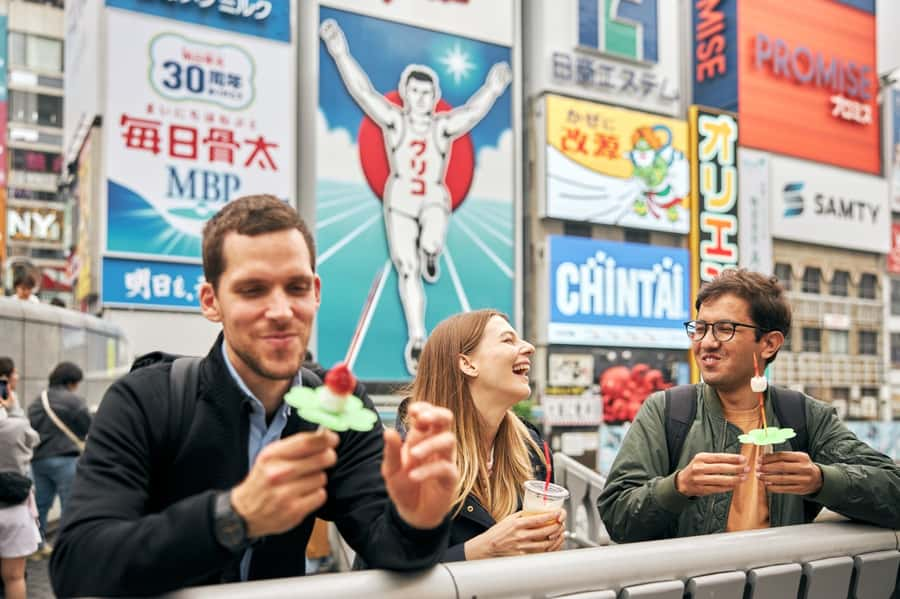
Osaka’s best food lesson may happen one small plate at a time. This private evening tour takes you through Dotonbori and Namba, where neon signs, lantern-lit lanes, hot griddles, and tiny food counters create the right setting for tasting the city’s famous comfort food.
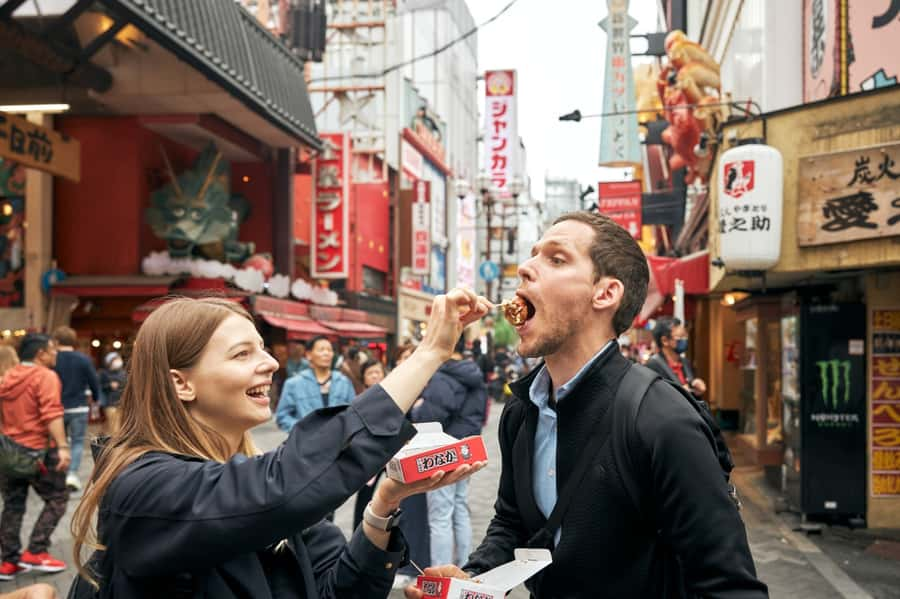
I like the personal matching system, which lets you tell the company about your appetite, dislikes, and interests before meeting your host. I also like the flexible list of 6 to 8 tastings, since you can focus on familiar favorites or try dishes such as oden and kushikatsu that may not be on your usual Japan food list.
The main caution is value. At $169 per person, you are paying for the private guide, conversation, planning, and local advice as much as for the food, and one past booking became disappointing when the group was taken to restaurants instead of getting the street food experience expected.
Key points at a glance
- A private host shapes the food route around you, using a questionnaire sent after booking.
- Six to eight tastings are included, with likely choices such as takoyaki, okonomiyaki, yakisoba, kushikatsu, and oden.
- Dotonbori and Namba provide the setting, from bright canal-side streets to lantern-lined alleys.
- Two local drinks are included, alcoholic or nonalcoholic according to your preference.
- Central hotel pickup can be arranged on foot, though transportation between areas may cost extra.
- The experience suits food-focused visitors who value conversation and advice, but it may not suit anyone seeking a strict restaurant-free street-food crawl.
Why Dotonbori and Namba make a good food route
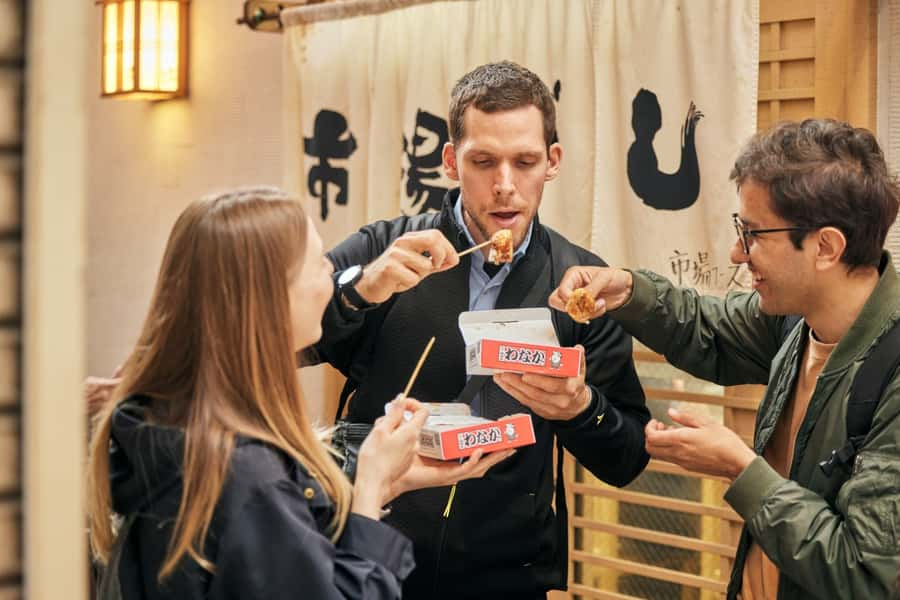
Dotonbori is Osaka’s famous eating district, with oversized signs, packed sidewalks, bright lights, and the canal cutting through the center of it all. It can feel loud and crowded, but that is part of the point. Osaka food culture is not hidden behind formal dining rooms here. It is displayed on signs, cooked in front of you, and eaten quickly before the next stop.
Namba gives the tour a different mood. Its smaller lanes and lantern-lit passages offer a closer look at the neighborhood food scene. Instead of staying only on the most famous stretch, your host can adjust the route around your tastes and the kinds of places that suit your group.
You should not expect a sightseeing tour with a long list of landmarks. The city is the backdrop, while the food and conversation carry the evening. Your host explains where dishes came from, how they fit into Osaka life, and why these foods became local favorites.
That personal context is the strongest reason to book. You can buy takoyaki by yourself, but a local host can help you understand what makes one version different from another, how a dish is normally eaten, and which foods are worth seeking out later.
A few more street food tours around Osaka worth a look
- PRIVATE 6hr, Food tour from Osaka Castle, Kuromon, Dotonbori.
★ 5.0 · 68 reviews - Osaka private Luxury Vehicle Tour:Freely Customized
★ 4.5 · 4 reviews - Private Street Food Tour by Motorbike/Car with Local Students
★ 5.0 · 3,950 reviews
Your first meeting and the custom food plan
After booking, you receive a short online questionnaire. This is more important than it may sound. Use it to explain your favorite foods, allergies or dislikes if relevant to your planning, comfort with unfamiliar dishes, interest in history, and preference for alcoholic or soft drinks.
The host then contacts you to discuss the route. The tour is not a fixed menu with the exact same stops for every group. Instead, the plan can lean toward classic Osaka dishes, quieter local places, food traditions, or more adventurous bites.
You may also be matched with a host based on your personality and food interests. That can make a private tour feel more natural than joining a large group with an assigned script.
One past host named Lay was especially valued for knowing the area and offering food and restaurant suggestions. Lay’s experience as an expatriate living in Japan also added a useful angle, showing how someone from outside Japan found a place in local culture. Host assignments are not guaranteed, so treat that as an example rather than a promise.
The meeting point is Starbucks Coffee at Tsutaya Ebisubashi, at 1 Chome-8-19 Dotonbori, unless a central Osaka hotel pickup has been arranged. If you are staying in central Osaka, the host can meet you at your accommodation on foot. Confirm the meeting details before setting out, especially if your hotel is outside the central area.
Takoyaki, okonomiyaki, and Osaka’s comfort food
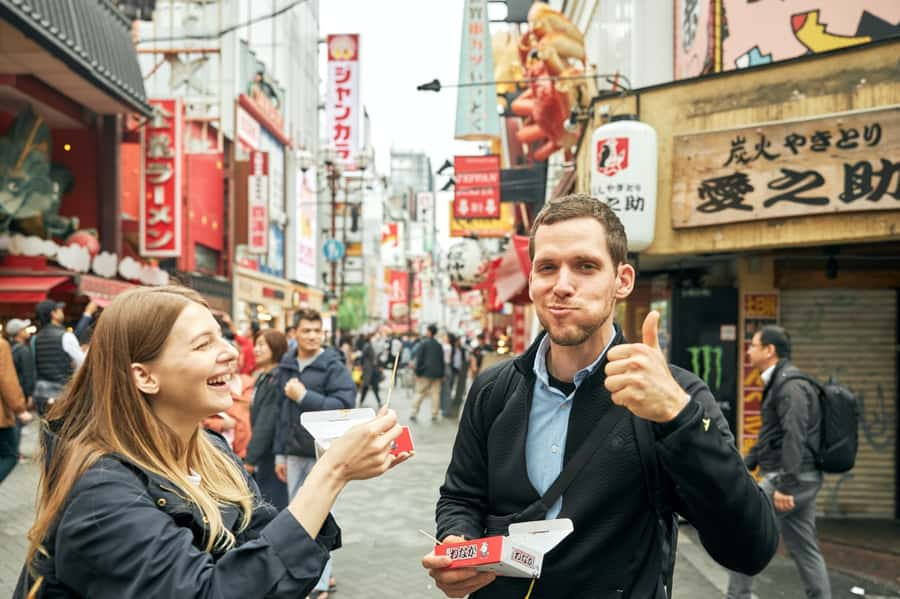
Takoyaki is one of the dishes most closely tied to Osaka. These round batter snacks are cooked in a special molded pan, usually with octopus inside, then topped and served hot. They are easy to eat too quickly, so let them cool before taking a full bite.
Okonomiyaki gives you another classic Osaka taste. It is a savory pancake-style dish with a batter base and additional ingredients, cooked on a hot surface and finished with sauces and toppings. The name is often explained as meaning something like cooked as you like it, which fits the dish’s flexible nature.
Yakisoba may also appear on the route. You can expect smoky noodles cooked on a hotplate, usually with vegetables and other additions. It is simple, filling food, and a good counterpoint to the softer texture of takoyaki and okonomiyaki.
These dishes are not luxury fare. That is part of their appeal. They are warm, direct, affordable in everyday life, and tied to Osaka’s reputation for casual eating. Your host’s explanation can turn a familiar dish into a better way to understand the city.
The experience includes 6 to 8 tastings, but the exact mix depends on your preferences. You may receive small portions at several stops rather than one large meal. That lets you sample more dishes, but you should not assume every tasting will be a full serving or that all food will be eaten outdoors.
Kushikatsu, oden, and the less familiar choices
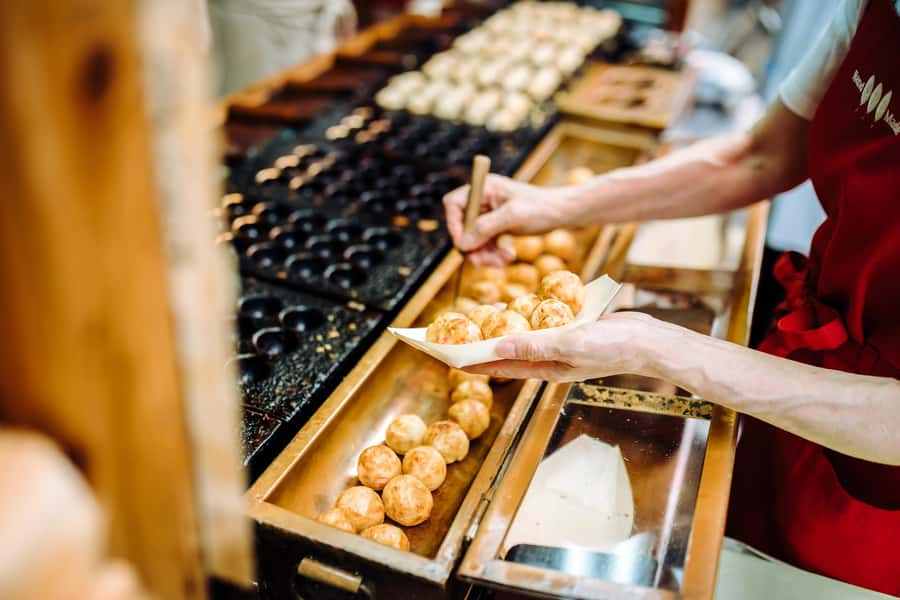
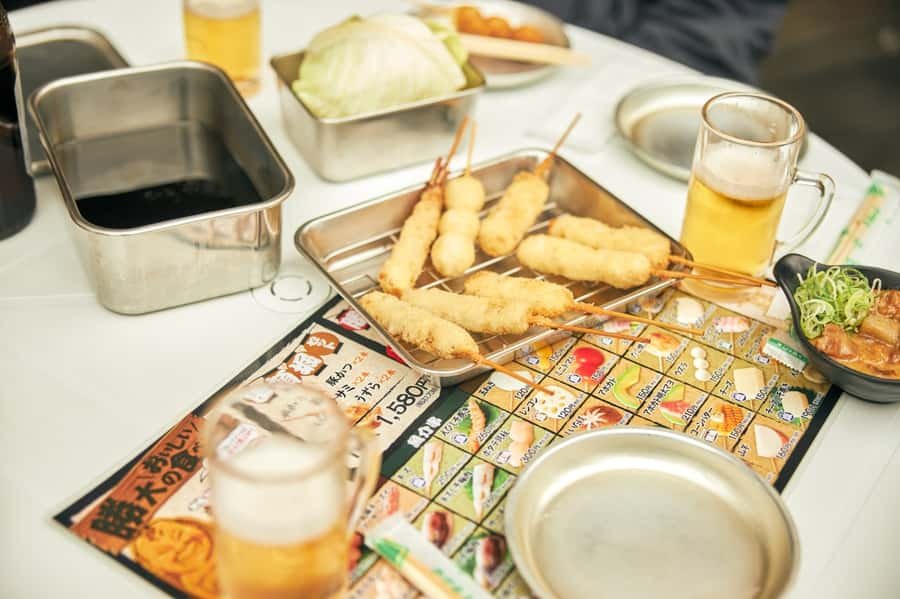
Kushikatsu is another Osaka favorite: skewered ingredients coated and fried. It can include meat, seafood, or vegetables. The dish is associated with casual eating and is a useful choice if you want something crisp and savory after the softer street snacks.
Oden offers a different experience. It is a simmered assortment of ingredients served in a flavorful broth, often valued as warming comfort food. It is less flashy than a mound of takoyaki under neon signs, but it gives you a better sense of the everyday side of Japanese food.
Your host may also select other local specialties based on your appetite. The information provided does not promise a set menu, exact vendors, or a particular number of stops. That flexibility is useful for picky eaters, but it also means you should discuss your expectations clearly before the tour begins.
If you are cautious with food, say so in the questionnaire and again when you meet. One past participant enjoyed the tour partly because the guide respected a preference for less adventurous dishes. You do not need to treat the evening as a test of bravery. Osaka has plenty of familiar options.
If you want to try unusual foods, say that too. The private format makes it easier to ask questions and adjust the plan without holding up a large group.
Same city, a different plate:
- Hungry Osaka Street Food Tour:15 Tastings & 3 Drinks with a Local
★ 5.0 · 1,727 reviews - Osaka Local Foodie Walking Tour in Dotonbori and Shinsekai
★ 5.0 · 985 reviews - Hungry Osaka Street Food Tour: 15 Dishes & 3 Drinks
★ 4.9 · 694 reviews - Kuromon Market Food Walking Tour in Osaka (6 stops, 6 tastes)
★ 5.0 · 550 reviews
What the three hours feel like on foot
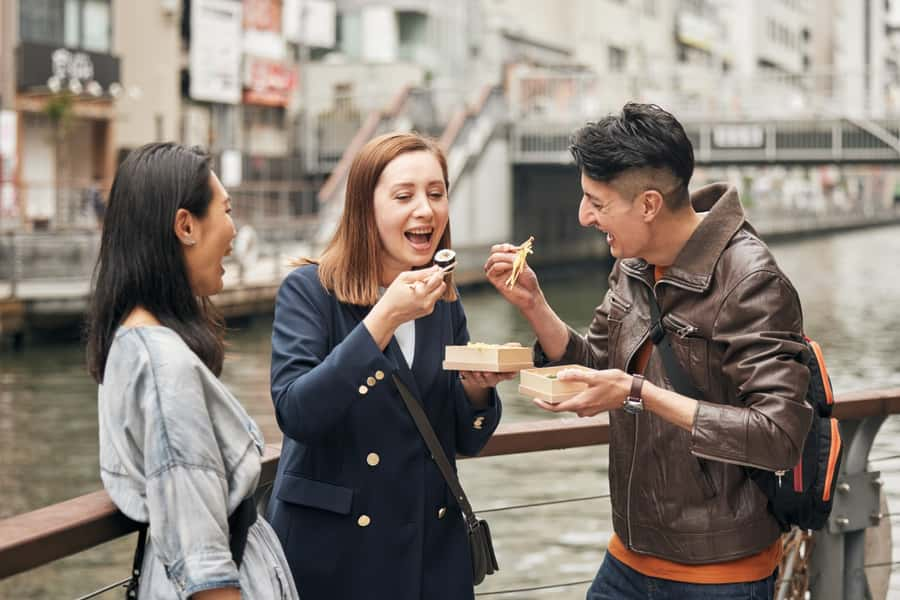
This is primarily a walking tour, not a vehicle-based food trip. You move through Dotonbori and Namba, stopping to eat, talk, and continue to the next place. Wear comfortable shoes and avoid arriving with a large meal already in you.
The route may include public transportation or a local taxi if the host wants to connect areas, but those costs are not included. Ask about any planned transfers when you finalize the itinerary so you know what to budget.
Three hours is enough time for a useful introduction to Osaka food, especially with 6 to 8 tastings. It is not enough time to cover every dish, neighborhood, and market in the city. Think of it as a guided first evening that helps you decide what to eat during the rest of your stay.
The walking format also means the experience can be affected by crowds, weather, and how quickly your group eats. Dotonbori is one of Osaka’s busiest areas, so do not expect a quiet stroll at every point.
Central hotel pickup is convenient, but it does not mean private transport. The host meets you on foot and begins the tour from there. Wheelchair accessibility is listed, though the route is still a city walking experience through busy streets and food areas, so discussing your needs in advance is sensible.
The food is only half the value
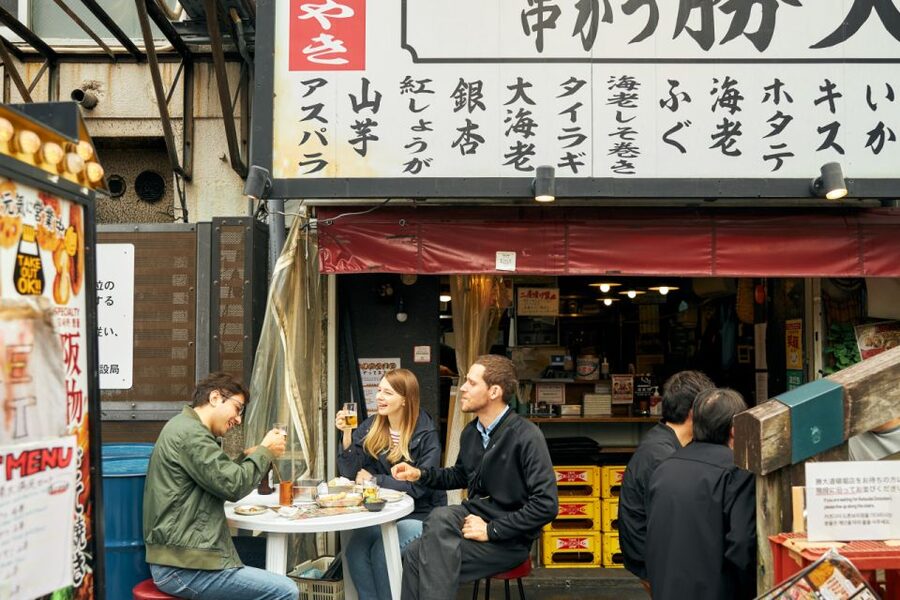
At $169 per person, this is not a cheap way to buy dinner. Two people pay $338 before any extra food, drinks, tickets, or transportation. You are paying for a private three-hour host, a custom plan, 6 to 8 tastings, two drinks, and advice you can use later.
That price can make sense if you are new to Osaka, want a private experience, or care about finding food that matches your tastes. A good host can save you time, explain dishes you might otherwise skip, and point you toward places to revisit after the tour.
The value is weaker if you only want a large meal. You might spend less by choosing food counters yourself, and you may prefer that approach if you enjoy making your own discoveries.
There is also an important expectation to manage: street food does not always mean standing outside with food in hand. One past booking included restaurant stops, which did not match the group’s understanding of the experience. If outdoor stalls, takeout counters, or food stands are essential to you, confirm that with your host before the evening begins.
The included drinks are a useful touch. You receive two local drinks, alcoholic or soft according to your preference. Additional food and drinks cost extra, so tell your host if you want to keep the evening within a set budget.
Language, conversation, and guide quality
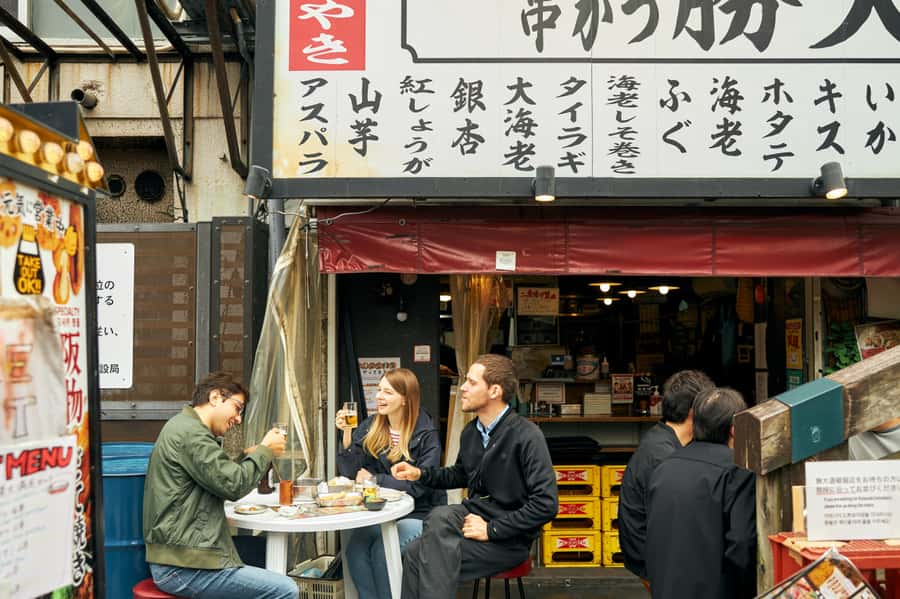
Tours are offered in English or Japanese. The quality of the evening depends heavily on the match between you and your host, especially because the experience is built around conversation and explanation rather than a fixed audio guide.
Use simple, direct questions if you want more detail about a dish, neighborhood, or tradition. Ask where you should eat tomorrow, what to order, and which local specialties fit your preferences. The tour promises direct communication with your host for planning and recommendations, so make use of it.
Clear communication matters. One past participant felt that the guide’s English was difficult to follow and expected more from the price. That does not define every host, but it is a fair reason to clarify what you want to learn and how much explanation you expect.
The strongest experience will likely come from treating the tour as a conversation, not just a meal delivery service. Tell your host what you like, ask why a dish matters, and request practical suggestions for the rest of your trip.
Who should book this Osaka food tour?
I would consider this tour if you meet one or more of these descriptions:
- You are visiting Osaka for the first time and want a food orientation.
- You prefer a private guide instead of a large group.
- You want help choosing between familiar dishes and local specialties.
- You enjoy learning food stories while you eat.
- You want restaurant and snack recommendations for later in your trip.
- You have a mixed group with different comfort levels around food.
It is also a good fit for couples, families, or friends who want to set their own pace. A private group makes it easier to spend more time on a dish, skip something unappealing, or ask questions without worrying about strangers.
I would be more cautious if your main goal is a strict street-stall tour, a large dinner, or the lowest possible food cost. The price is high for three hours, and the exact food stops are not fixed. Discuss the street-food focus clearly before you commit.
Booking details worth knowing
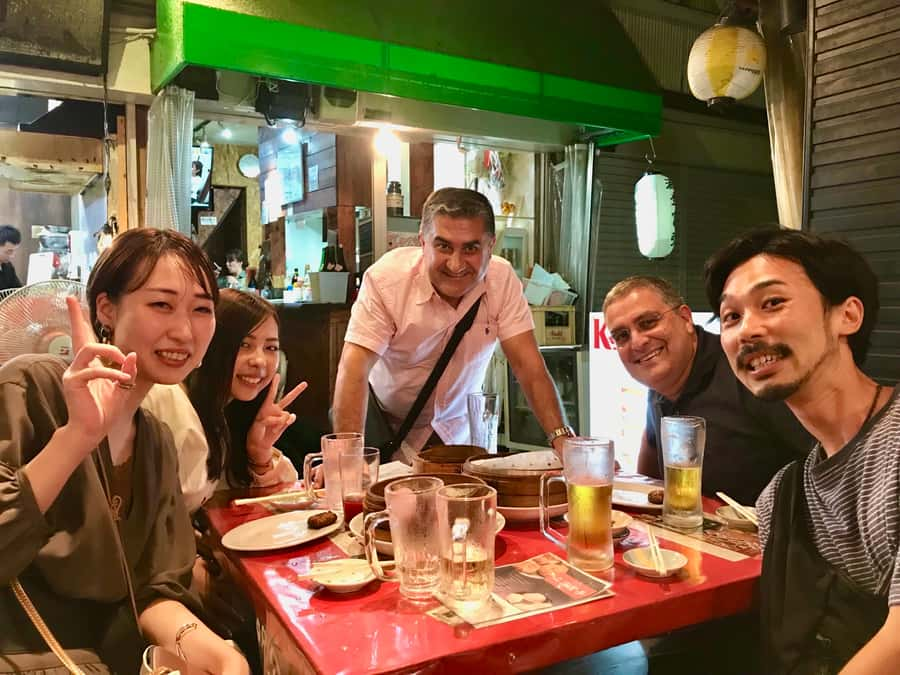
The tour lasts three hours, and starting times depend on availability. English and Japanese are offered, and the booking is for a private group.
Cancellation is free up to 24 hours in advance, and you can reserve without paying immediately. That helps if your Osaka schedule is still changing.
Tickets to attractions are not included because this is a food and neighborhood walk. Extra food, beverages, public transportation, and local taxis are also outside the listed price.
For central Osaka hotels, pickup can be arranged on foot. Otherwise, meet at Starbucks Coffee at Tsutaya Ebisubashi in Dotonbori. Confirm the final meeting point and route with your host after booking.
FAQ
How long is the Eat Like a Local in Osaka tour?
The tour lasts three hours.
How many food tastings are included?
You receive 6 to 8 street food tastings selected around your preferences.
Which foods might I try?
Possible dishes include takoyaki, okonomiyaki, kushikatsu, yakisoba, and oden. The exact selection is customized, so no fixed menu is promised.
Are drinks included?
Yes. Two local drinks are included. You can choose alcoholic or soft drinks based on your preference.
Where does the tour meet?
The standard meeting point is Starbucks Coffee at Tsutaya Ebisubashi, 1 Chome-8-19 Dotonbori, Chuo Ward, Osaka. Pickup on foot can be arranged from a central Osaka hotel.
Is transportation included?
The tour is mainly on foot. Public transportation or local taxis may be used, but those costs are not included.
Is the tour private and wheelchair accessible?
Yes. It is a private group experience and is listed as wheelchair accessible. The tour remains a walking experience, so discuss route needs with your host in advance.
Should you book it?
Book this if you want a private food introduction to Osaka and value local conversation, custom choices, and advice for the rest of your trip. The tastings, two drinks, and flexible route give you a broad first look at Dotonbori and Namba.
Before booking, be clear that the experience may include restaurant stops and that the exact street food route is not fixed. If you accept that flexibility and see the $169 as payment for a personal guide as much as for dinner, this can be a useful and enjoyable start to eating your way through Osaka.
Just added around Osaka
- Same Day OK! Osaka: Local Food, Izakaya & Local Bites Tour!★ 4.8 · 17 reviews
- Osaka Shinsekai Street Food Tour – Evening★ 5.0 · 2 reviews
- Okonomiyaki&Takoyaki for Families:Osaka Street Food Festival★ 5.0 · 4 reviews
- Osaka: Local Foodie Tour in Dotonbori and Shinsekai★ 4.7 · 95 reviews
- Osaka: Takoyaki Keychain and Magnet-Food Replica Workshop★ 5.0 · 2 reviews
- Osaka Okonomiyaki Cooking Experience for Families & Groups★ 4.9 · 8 reviews
- Osaka: Namba Guided Local Food Tour (Taste 15 dishes)★ 5.0 · 6 reviews
- Osaka: Kuromon Market Street Food Tour with Pro Local Guide★ 5.0 · 5 reviews
Osaka Street Food Tours, compared.
Hungry Osaka Street Food Tour:15 Tastings & 3 Drinks with a Local
Read our review →
Osaka Local Foodie Walking Tour in Dotonbori and Shinsekai
Read our review →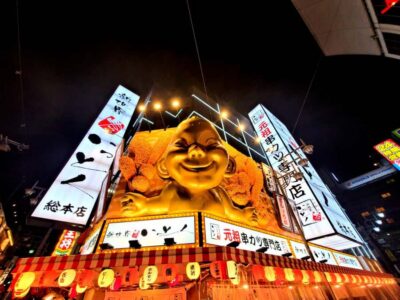
Hungry Osaka Street Food Tour: 15 Dishes & 3 Drinks
Read our review →
Kuromon Market Food Walking Tour in Osaka (6 stops, 6 tastes)
Read our review →
Osaka: Kuromon Market Food Walking Tour (6 stops, 6 tastes)
Read our review →
Osaka Cooking Class: Okonomiyaki &Japanese cuisines experience
Read our review →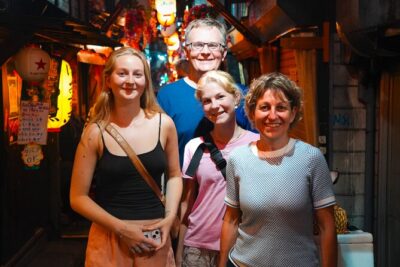
[1 Group Only] Osaka Street Food Tour for Family
Read our review →
Browse the lists this tour appears in