
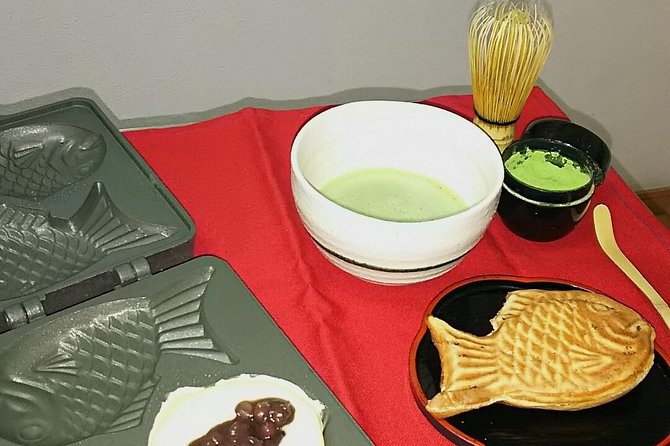
REVIEW · OSAKA STREET FOOD TOURS
Osaka Cooking Class: Okonomiyaki &Japanese cuisines experience
Osaka’s food culture is best understood at the stove, not just from a restaurant table. This small-group class in Yayo’s home puts you to work making okonomiyaki, takoyaki, miso soup, and other Japanese staples, then lets you sit down and eat what you prepared.
I like the hands-on format, where Yayo demonstrates each step but still gives you real jobs to do. I also like the personal scale: eight people is the maximum, and solo participants or couples may find the class even more intimate when numbers are low. The main consideration is that the apartment kitchen is small, so punctuality matters and late arrivals may not be admitted.
Key points
- Cook several Osaka favorites: Make okonomiyaki, takoyaki, miso soup, and other dishes rather than watching a demonstration.
- Meet Yayo in her home: The setting feels more personal than a large commercial cooking studio.
- Expect a very filling meal: You eat the food you prepare, with possible leftovers if you cannot finish everything.
- Add sake and beer: A tasting option is available if you want drinks with the meal.
- Finish with Japanese sweets: Taiyaki and matcha tea provide a pleasant final course.
- Plan carefully: Meet outside Noda Station, arrive on time, and request vegetarian or pescatarian food when booking.
A Home Kitchen Near Noda Station
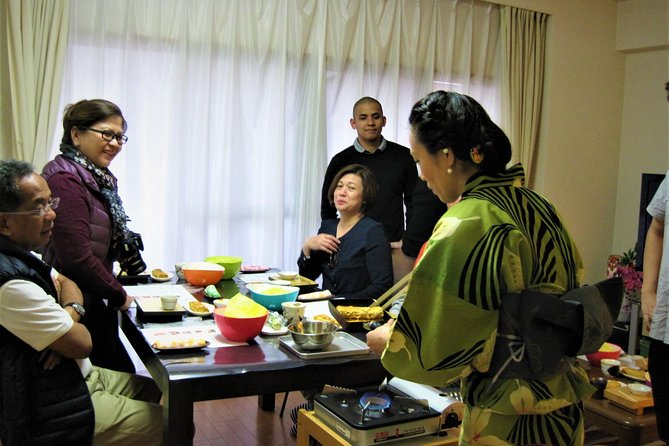
The class begins outside Noda Station in Osaka’s Fukushima Ward. You meet your English-speaking instructor there, then continue to the cooking studio, which is Yayo’s own apartment.
That detail shapes the whole afternoon or evening. This is not a polished culinary school with rows of workstations and a staff member assigned to every table. It is a compact home kitchen, where Yayo welcomes you into her personal space and teaches from the way she actually cooks.
I see that as a major strength if you want a human connection with your meal. Yayo is described as warm, patient, funny, and easy to talk with. Her English is strong enough for detailed instruction and conversation about ingredients, daily life in Japan, and the background of each dish.
The setting does require realistic expectations. A home kitchen has limited room, and the class is capped at eight participants for good reason. Only confirmed participants can enter, so do not plan to bring along a friend who has not booked.
You also need to arrive on time. Participation is not guaranteed after a delay of more than 10 minutes, and late arrivals are not refunded. Since the meeting point is outside the station, allow enough time to find the correct exit and gather before the class moves on.
More Cooking Classes in Osaka:
- Ramen and Gyoza Cooking Class in Osaka
★ 5.0 · 202 reviews - Osaka Sake Tasting with Takoyaki Cooking
★ 5.0 · 156 reviews - Osaka Sake Tasting & Takoyaki Cooking Experience
★ 5.0 · 149 reviews
Miso Soup Shows Why Small Details Matter
Miso soup is often treated as a simple starter, but it is a useful first lesson in Japanese cooking. Yayo begins by showing how small changes in technique affect the finished bowl.
You may learn about the stock, seasoning, and order in which ingredients are handled. One especially useful point from the class is the preparation of dashi, the savory base used in many Japanese dishes. It can seem mysterious when you encounter it in restaurants, but the lesson helps make the process feel practical at home.
This is the kind of instruction that gives the class value beyond lunch. You are not simply handed a recipe. You get an explanation of why a step matters, which makes it easier to repeat the dish later.
The reviews of the class repeatedly praise the printed instructions and clear explanations. One participant returned home and began making different versions of okonomiyaki, while another said the lesson removed some of the mystery from Japanese cooking. That is a good sign for anyone who wants useful kitchen skills instead of a one-time meal.
Takoyaki: Osaka’s Round Little Challenge
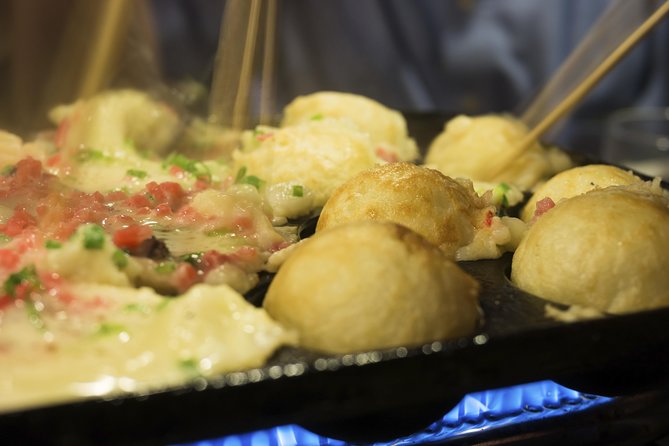
Next comes takoyaki, the famous Osaka snack made from wheat-flour batter and octopus. The mixture is cooked in a special pan with round wells, producing the soft-centered balls sold at food stalls and casual restaurants across the city.
Takoyaki looks easy until you try to turn it. Yayo guides you through the timing and movement needed to shape the batter as it cooks. You get a chance to participate, but her preparation and supervision help keep the process manageable for beginners.
That balance is important. You do not need serious cooking experience, and the class is designed so that you can take part without worrying about ruining the meal. At the same time, you are not standing at the edge of the room while someone else does everything.
The octopus filling means this dish is not suitable for every diet. If you need vegetarian or pescatarian food, request it when you book. The supplied information confirms those options are available, but it does not list every substitute, so give the host clear details in advance.
Okonomiyaki, Osaka’s Main Event
Okonomiyaki is the dish most closely tied to the class title and to Osaka’s reputation as one of Japan’s best food cities. The name refers to cooking ingredients according to your preference, and the version here includes egg, flour, cabbage, pork, and dried bonito flakes.
You learn how the batter and cabbage come together, how the pancake cooks, and how the toppings finish the dish. Dried bonito flakes add a distinctive savory flavor, while the cabbage gives the pancake bulk and texture.
This is also the course most likely to inspire you after returning home. The ingredients are easier to locate than many specialized Japanese foods, and the basic method can be adapted to suit different fillings. One participant even began making several types of okonomiyaki after returning to the United States.
You should arrive hungry. The class serves several dishes, and the portions are generous enough that some people have food left over. That is a pleasant problem, but it means this is not a light snack stop squeezed between lunch and dinner.
A few more street food tours around Osaka worth a look
- Osaka : Cooking Class Okonomiyaki & Takoyaki course in Nanba
★ 4.9 · 25 reviews - Osaka: Okonomiyaki Cooking Class with Beer or Soft Drink
★ 4.9 · 9 reviews - Okonomiyaki or Ramen&Gyoza Class with Local Shop Tour
★ 4.9 · 9 reviews - Osaka: Takoyaki Keychain and Magnet-Food Replica Workshop
★ 5.0 · 2 reviews
More Than the Advertised Three Dishes
The published menu highlights miso soup, takoyaki, and okonomiyaki, but the class can include additional Japanese favorites. Past menus described by participants also included dashimaki tamago, a rolled Japanese omelet, along with taiyaki and matcha tea.
Dashimaki tamago adds another worthwhile technique. The egg is rolled into layers rather than simply fried as an ordinary omelet. Yayo explains the process and lets you try the method, giving the meal more variety than a single-pan pancake class.
The final treat is taiyaki, a fish-shaped cake, served with matcha tea. The fish shape is playful, and the sweet finish helps round out a meal built around savory dishes.
Exact dishes can vary, so do not treat every additional item as a guaranteed part of every session. The core promise is the Japanese cooking lesson with okonomiyaki, takoyaki, and miso soup. The other dishes are a welcome possibility based on the supplied class details and past menus.
Yayo’s Teaching Style and Personal Touches
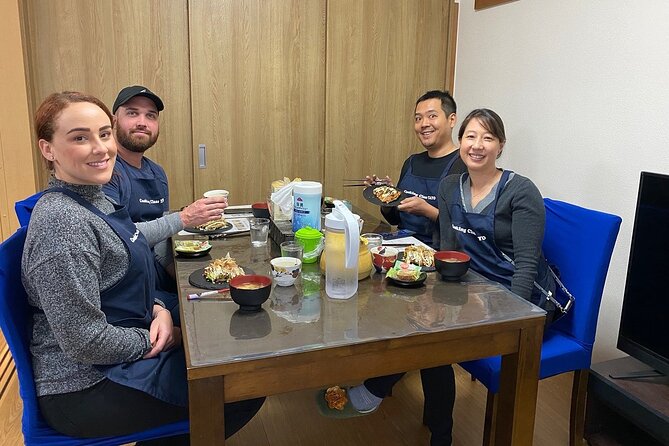
The most consistent strength here is Yayo herself. She explains what ingredients do, gives cultural context, and answers questions without turning the class into a lecture.
That matters in a home setting. You are not only learning how to mix batter or prepare soup. You may hear about how ingredients differ around Japan, how food fits into ordinary Japanese life, and how family cooking traditions influence the recipes.
Yayo also appears to put unusual care into the small details. Participants described printed recipes in their home languages, homemade treats, chopsticks, and paper cranes made from the flags of their countries. These touches are not the main reason to book, but they help explain why the class feels more personal than a standard group lesson.
You may also find the class especially comfortable if you are traveling alone. A solo participant can end up with a private lesson when no one else books that date. Couples have also had one-on-one sessions, while larger parties have met other participants from countries such as Australia.
The trade-off is that the personal setting may feel less formal than a purpose-built school. If you want restaurant-style equipment, a large professional kitchen, or a strict chef-training format, this is not the right choice. If you want conversation and practical home cooking, it is a better match.
The Meal, Optional Drinks, and a Very Full Stomach
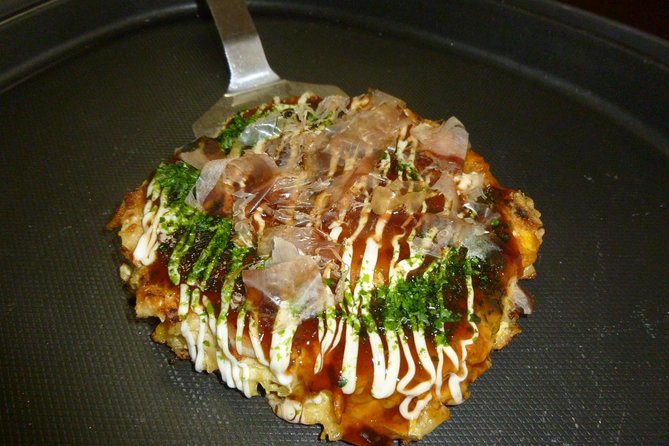
Once the cooking is finished, you sit down and eat what you have made. The meal serves as both lunch or dinner and the final reward for the work in the kitchen.
An optional sake and beer pairing can be added for an extra taste of Japanese drinks. The supplied information does not specify the number or style of pours, so think of this as a tasting addition rather than a full bar experience. Extra food and drinks beyond what is included are not covered.
The amount of food is one of the key value points. You are not paying for a short demonstration followed by a tiny sample. You take part in several preparations and then have enough to make a proper meal. Some people may even leave with leftovers.
That makes the $104.13 price easier to assess. It is not cheap compared with a basic Osaka lunch, but the fee includes about two and a half hours of instruction, all ingredients, utensils, a full meal, an English-speaking instructor, and a home-based cultural exchange. For a couple or family that values a personal activity, the price can be reasonable. For someone who only wants to taste okonomiyaki, a restaurant will cost less.
Group discounts may improve the value for larger bookings. The class maximum is eight people, so ask about the available rate when arranging a group.
Who Will Get the Most From This Class
I would recommend this class most strongly to people who want to recreate Japanese food at home. The techniques are approachable, the recipes are practical, and the class gives you enough explanation to understand what you are doing.
It also suits:
- Solo visitors who want a social activity with a local host
- Couples looking for a relaxed food-focused outing
- Families with children old enough to follow kitchen instructions
- First-time visitors who want more than sightseeing and restaurant meals
- People who enjoy cooking classes but do not have advanced skills
- Anyone curious about Osaka’s everyday food culture
You should think twice if you dislike seafood, pork, or shared meals unless you arrange a dietary adjustment in advance. Vegetarian and pescatarian options are available by request, but you should not wait until you arrive to mention them.
This may also be less suitable for anyone who needs a highly spacious or formal environment. The apartment kitchen is small, and the maximum group size is eight. The intimate setting is the point, but it will not suit every personality.
Timing, Meeting Point, and Cancellation
The listed duration is approximately two hours and 30 minutes. The class starts at the meeting point outside Noda Station, at 1 Chome-1 Ohiraki in Fukushima Ward, Osaka, and finishes back at the meeting point.
Hotel pickup and drop-off are not included. You handle your own transportation to and from Noda Station, which is near public transportation. Confirmation is provided when you book, and mobile tickets are available.
Free cancellation is allowed up to 24 hours before the scheduled start time for a full refund. Cancellations or changes made less than 24 hours before the start are not refunded or accepted. Since the class is held in a small home, that firm policy is understandable, but it makes checking your Osaka schedule important before booking.
Adult pricing applies to all participants except children aged two and under. The supplied information does not give a separate child rate or detailed age guidance, so confirm suitability if you are booking for young children.
Should You Book the Osaka Cooking Class?
Book it if you want to learn useful Japanese recipes while spending time with a welcoming local host. The strongest reasons are the hands-on work, the small group, Yayo’s personal instruction, and the generous meal at the end.
I especially like that the class goes beyond okonomiyaki. Miso soup, takoyaki, dashimaki tamago, taiyaki, and matcha give you a broader view of Japanese home cooking, while the optional sake and beer pairing adds another layer for adults.
The $104.13 price is best viewed as payment for a complete activity rather than a meal alone. You get instruction, food, equipment, conversation, and the unusual chance to enter a local home. Arrive early, request dietary needs in advance, and leave room in your stomach.
If you want a polished cooking school or a quick taste of Osaka street food, choose something else. If you want to learn, cook, eat a lot, and leave with recipes and memories of Yayo’s hospitality, this is a strong choice.
FAQ
Where does the cooking class begin?
You meet outside Noda Station in Osaka, at 1 Chome-1 Ohiraki, Fukushima Ward, Osaka, 553-0007, Japan.
Where does the class finish?
The activity ends back at the meeting point near Noda Station.
How long does the class last?
The class lasts approximately two hours and 30 minutes.
What dishes do you prepare?
The class includes okonomiyaki, takoyaki, and miso soup. Additional dishes may include dashimaki tamago, taiyaki, and matcha tea.
Do I eat the food I cook?
Yes. Lunch or dinner is included, and you eat the dishes prepared during the class.
Is a sake tasting included?
A local sake tasting is available if you select the optional pairing. Beer may also be included as part of that add-on.
Is the class taught in English?
Yes. An English-speaking instructor leads the class.
How many people can join?
The class has a maximum of eight participants.
Are vegetarian or pescatarian choices available?
Yes. Vegetarian and pescatarian options are available if requested at the time of booking.
What happens if I arrive late?
Participation cannot be guaranteed if you arrive more than 10 minutes late, and a refund is not provided in that situation.
Just added around Osaka
- Same Day OK! Osaka: Local Food, Izakaya & Local Bites Tour!★ 4.8 · 17 reviews
- Eat Like a Local in Osaka – Private Custom Street Food Tour★ 4.3 · 33 reviews
- Osaka Shinsekai Street Food Tour – Evening★ 5.0 · 2 reviews
- Okonomiyaki&Takoyaki for Families:Osaka Street Food Festival★ 5.0 · 4 reviews
- Osaka: Local Foodie Tour in Dotonbori and Shinsekai★ 4.7 · 95 reviews
- Osaka: Takoyaki Keychain and Magnet-Food Replica Workshop★ 5.0 · 2 reviews
- Osaka Okonomiyaki Cooking Experience for Families & Groups★ 4.9 · 8 reviews
- Osaka: Namba Guided Local Food Tour (Taste 15 dishes)★ 5.0 · 6 reviews
Osaka Street Food Tours, compared.
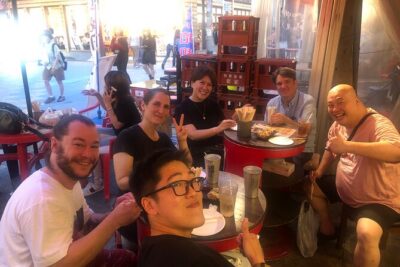
Hungry Osaka Street Food Tour:15 Tastings & 3 Drinks with a Local
Read our review →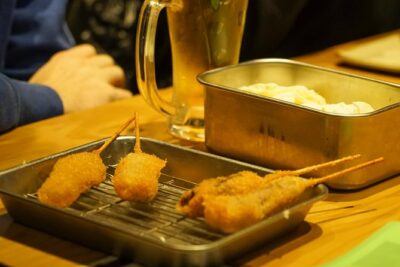
Osaka Local Foodie Walking Tour in Dotonbori and Shinsekai
Read our review →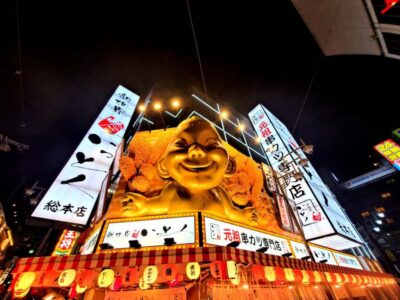
Hungry Osaka Street Food Tour: 15 Dishes & 3 Drinks
Read our review →
Kuromon Market Food Walking Tour in Osaka (6 stops, 6 tastes)
Read our review →
Osaka: Kuromon Market Food Walking Tour (6 stops, 6 tastes)
Read our review →![[1 Group Only] Osaka Street Food Tour for Family](https://4.streetfoodtrips.com/wp-content/uploads/1-group-only-osaka-street-food-tour-for-family-400x267.jpg)
[1 Group Only] Osaka Street Food Tour for Family
Read our review →

Osaka: 2-Hour Nightlife District Walking & Local Food Culture
Read our review →Browse the lists this tour appears in