
REVIEW · OSAKA STREET FOOD TOURS
Kuromon Market Food Walking Tour in Osaka (6 stops, 6 tastes)
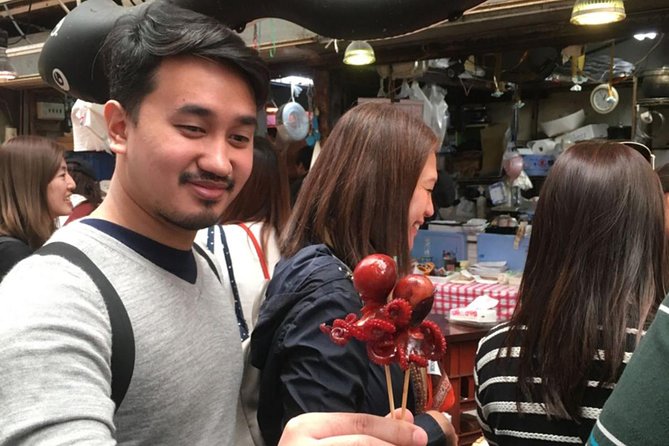
Kuromon Market is the heart of this tour, where you move from stall to stall tasting Osaka specialties instead of trying to decode every menu on your own. I like the small maximum of seven people, and I like that guides such as Nina, Rie, Yuto, and Niko have helped families, solo visitors, and food-loving first-timers find their way.
The tour also adds local context, a walk past Namba and Dotonbori, and a look at Doguyasuji’s kitchen shops. The main caution is food quantity: the budget and tastings may not leave you full, so bring cash and plan another meal afterward.
Key points at a glance
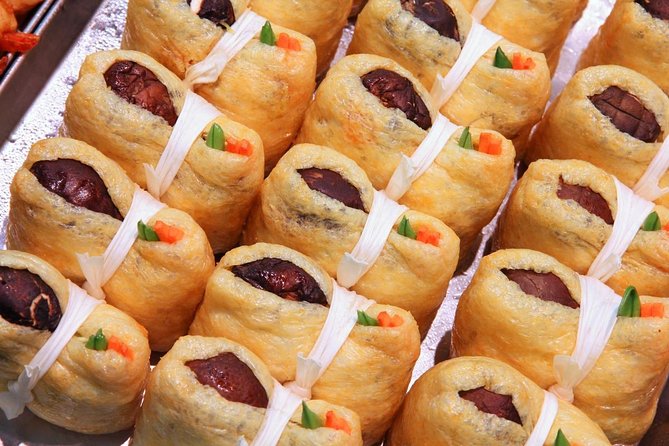
- Six tastes in about two hours: Expect a short introduction to several Osaka foods, with examples including takoyaki, sushi, yakitori, dumplings, gyoza, oden, and sweets.
- A group capped at seven: The small size makes it easier to ask questions, adjust food choices, and get help ordering.
- Kuromon rather than only Dotonbori: You see a food market with a different feel from Osaka’s famous billboard-lined entertainment district.
- Doguyasuji adds a useful shopping stop: Browse knives, dishes, cooking tools, and restaurant supplies along Osaka’s kitchenware street.
- Local help matters: English-speaking guides can explain customs, translate at stalls, and guide you through shrine etiquette when the route includes a shrine visit.
- Plan for a snack afterward: One low-rated experience found the food allowance too small, so consider this a tasting walk rather than a full lunch.
Why Kuromon Market is a smart first food stop
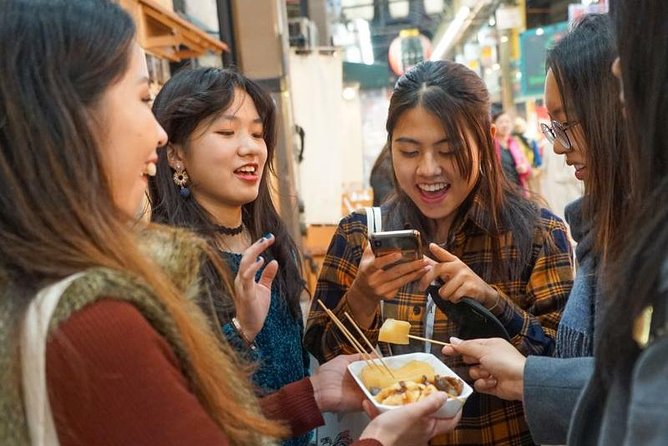
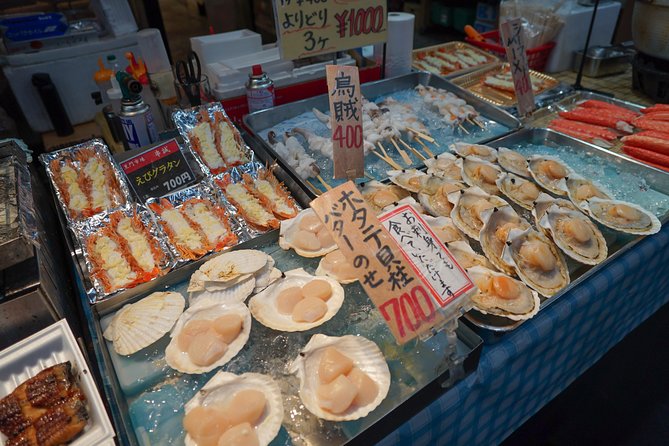
Osaka is often called Japan’s kitchen, and Kuromon Market gives you a practical introduction to that reputation. The market is a shopping street in Minami, central Osaka, named after the black gate of Enmyoji Temple. Its covered passages bring together food shops, prepared dishes, ingredients, and small stores in one compact area.
I like this setting because you can see the connection between what Osaka cooks and what Osaka sells. You are not only sitting down to one dish. You are watching food being chosen, prepared, displayed, and eaten as you walk.
The tour meets in front of the SMBC ATM at Nippon-bashi 1chome, near Kintetsu Nippon-bashi Station Exit 10. This is an important detail. Nipponbashi has several station entrances and busy streets, so you should arrive early and identify the ATM before the start time.
The guide does not wait for late arrivals. Missing the group means no refund or rescheduling, so I would aim to arrive at least 10 to 15 minutes early. The tour ends back at the meeting point, which makes it easier to continue exploring Namba afterward.
More Street Food Market Tours in Japan
- Osaka: Kuromon Market Food Walking Tour (6 stops, 6 tastes)
★ 4.6 · 272 reviews - Kuromon Market Tour: All inclusive 6~8 Dishes & 3~4 samplings
★ 5.0 · 103 reviews - PRIVATE 6hr, Food tour from Osaka Castle, Kuromon, Dotonbori.
★ 5.0 · 68 reviews
Six tastes, with room for local choices
The title promises six stops and six tastes, but the exact food lineup can vary. That is useful rather than disappointing, since market availability and your preferences may shape the route.
Food examples from this experience include takoyaki, sushi, yakitori, dumplings, gyoza, oden, mushrooms, and Japanese sweets. Takoyaki is the obvious Osaka classic: hot octopus balls cooked in a special molded pan. A guide can help you handle the heat and explain how this everyday snack fits into Osaka food culture.
Fresh sushi gives the walk a different texture, while yakitori and grilled mushrooms offer a more savory stop. Gyoza and other dumplings can be especially good for anyone who wants something familiar with a Japanese twist. Oden, when available, brings a softer, broth-based taste to the route.
I would not book this expecting six large meals. The food is divided across several tastings, and the experience is designed to show variety. One particularly important detail is the 1,200-yen food budget described by a dissatisfied participant. That amount may cover only a couple of modest items for two people, depending on what you choose.
The tour description also says you do not pay for the guide’s food or drinks. Bring cash for anything extra, including snacks you spot after the official tastings. If you have a large appetite, eat a light breakfast first or arrange a proper meal after the walk.
What the guide adds to a self-guided market visit
You can walk through Kuromon Market on your own, and the route is easy enough to explore without a guide. The value here comes from having someone help you choose, order, translate, and explain.
A good guide can keep you from buying the first flashy item you see. Guides have helped visitors find gyoza, oden, and other local favorites while avoiding places that feel aimed only at sightseers. They can also ask questions at stalls that you may not know how to phrase in Japanese.
The strongest part of the experience is the human connection. Nina has been praised for her warm approach with children and for answering family questions with patience and humor. Yuto has handled dietary concerns with care, while Niko has adjusted the pace and route to suit the group.
Other guides named for this experience include Rie, Aina, Aya, Peco, Mari, Megumi, Taku, and Anne. The guide you receive will vary, but the pattern is clear: the experience depends heavily on the individual leading it. A strong guide turns a food walk into a conversation about daily life. A less effective guide may simply walk from shop to shop.
To get the most from the tour, tell your guide early what you enjoy, what you cannot eat, and what you hope to see. One useful suggestion is to walk through Kuromon before the tour, note anything that catches your eye, and then ask the guide to include it if possible.
Doguyasuji, Osaka’s kitchenware street
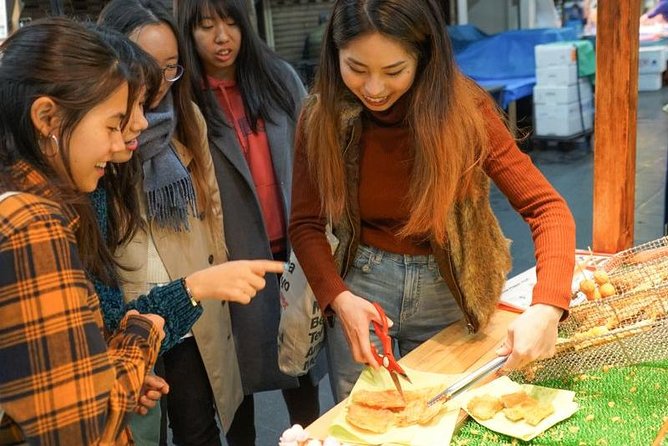
The route includes Doguyasuji, a street known for kitchenware, tableware, cooking equipment, and restaurant supplies. This is a welcome change of pace after the food tastings.
You might see dishes, tools, display items, or equipment that you would not find in an ordinary souvenir shop. Even if you do not plan to buy anything, the street helps explain how Osaka’s restaurants create their visual style. Japanese food presentation depends heavily on bowls, plates, serving trays, and small utensils, so this stop gives you a look at that working side of the food culture.
I especially like this portion for shoppers who want something more useful than a generic souvenir. A guide can help explain what an item is used for and may help with simple communication. Keep in mind that the tour is only about two hours, so this is a browse rather than an extended shopping session.
If kitchen tools are high on your list, tell the guide. If food is your only priority, you may find this section less exciting than the market itself. That flexibility is one reason a small group matters.
More Street Food Market Tours in Osaka
- All Inclusive Kuromon Markets Tour: Flavors Of Osaka
★ 4.7 · 31 reviews - Osaka: Food Tour Kuromon Market & Dotonbori with Guide
★ 4.5 · 15 reviews - Osaka: Kuromon Market 1.5-Hour Seafood & Street Food Tour
★ 5.0 · 8 reviews - Osaka: Kuromon Market Street Food Tour with Pro Local Guide
★ 5.0 · 5 reviews
Namba, comedy, and the route toward Dotonbori
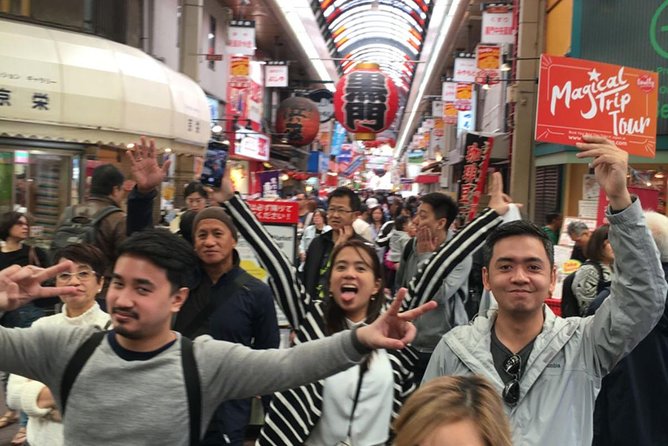
The experience passes through several well-known parts of central Osaka. You pass Namba Grand Kagetsu, a comedy theater operated by Yoshimoto Kogyo. This is a quick cultural marker rather than a theater visit, but it gives you a glimpse of Osaka’s strong comedy tradition.
Namba itself is a major entertainment and transport district. Its busy streets, shopping complexes, restaurants, and connection to several train lines make it a useful place to understand on your first day in Osaka. The Namba Parks complex is also nearby, with shops and restaurants.
The walk continues past Dotonbori, Osaka’s famous entertainment area. You will recognize the giant three-dimensional signs, including the Glico running man and the Kani Douraku crab. Dotonbori is fun, bright, and easy to photograph, but it can also feel highly commercial.
That contrast is one of the tour’s strengths. Kuromon offers a market-focused experience, while Dotonbori is built around spectacle, restaurants, and nightlife. Seeing both helps you decide where to return later. I would use the tour to get oriented, then revisit Dotonbori after dark if you want the full neon effect.
The listed route says these areas are passed by, not explored in depth. Do not expect a guided tour of Namba Grand Kagetsu or a long stop at every Dotonbori sign. The main working time is at Kuromon Market.
How much food do you really get for $50.41?
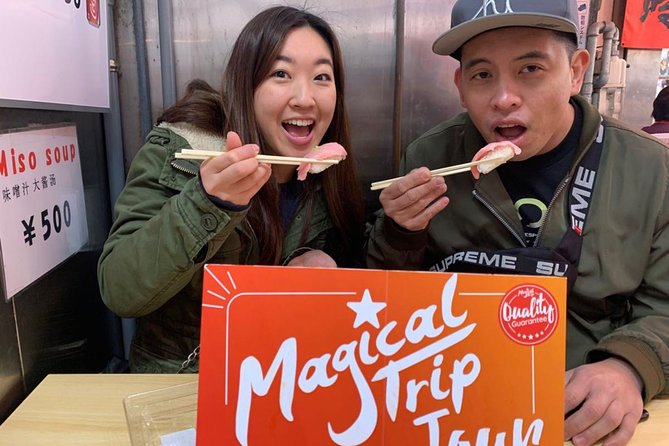
At $50.41 per person, this is not the cheapest way to eat at Kuromon Market. You can buy food yourself for less, especially if you are confident ordering and know which stalls interest you.
The price makes more sense if you value translation, food selection, local explanation, and a small group. For a first morning in Osaka, that guidance can save time and reduce the stress of guessing at menus. It is also useful for families, since a guide can keep the pace manageable and explain unfamiliar foods to children.
Still, you should judge the price as payment for an introduction, not as a fixed-price feast. The tour lasts about two hours, and the tastings are spread across the walk. If your main goal is to eat as much as possible, you may find better value by exploring independently and spending the difference on food.
The strongest value comes when you use the guide’s advice for the rest of your stay. Several guides have shared recommendations for places to eat, foods to seek out, and shops to revisit. Take notes on names and locations before the tour ends.
Group discounts may be available, and the mobile ticket makes access simple. The maximum group size is seven, though a booking may sometimes have fewer people. One family had the tour to itself, while another group had five people. That can make the experience feel much more personal than a large coach-style food walk.
Families, solo visitors, and dietary needs
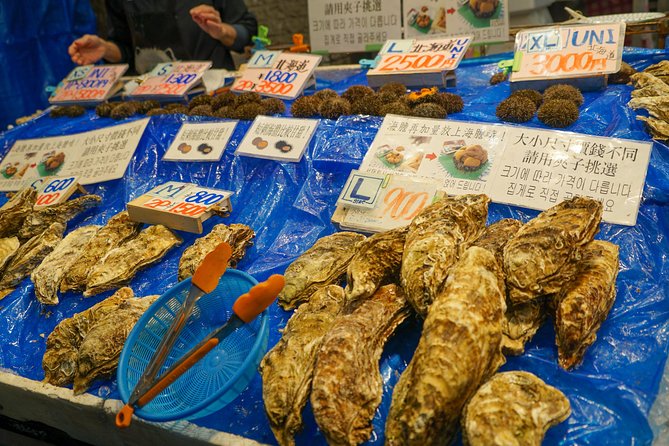
This tour suits families well when children are open to trying small portions. Nina has been praised for answering children’s questions, and Aina’s calm pace and clear navigation have worked well for family groups. An 18-month-old was also taken along in a sling, with the practical note that a stroller may be difficult in the market.
Solo visitors can benefit from the social side of a small group. Taku has helped solo participants ask questions, communicate with vendors, and take photos. You still have independence, but you do not have to make every food decision alone.
The tour is less suitable for strict dietary needs. Send all requests or allergy information at least one day before the tour. Vegetarian and vegan requests may be possible, but options can be limited because many Japanese kitchens are not set up for special diets.
The supplied information gives conflicting signals about gluten-free arrangements, so you should not assume the tour can provide a safe gluten-free meal. It also states that allergy-free meals and substitutions cannot be guaranteed, since the food comes from kitchens the tour operator does not control.
If you have a serious allergy, contact the provider before booking and be ready to skip items. Do not wait until the tour day, since same-day requests cannot be accommodated.
Weather, walking, and practical comfort
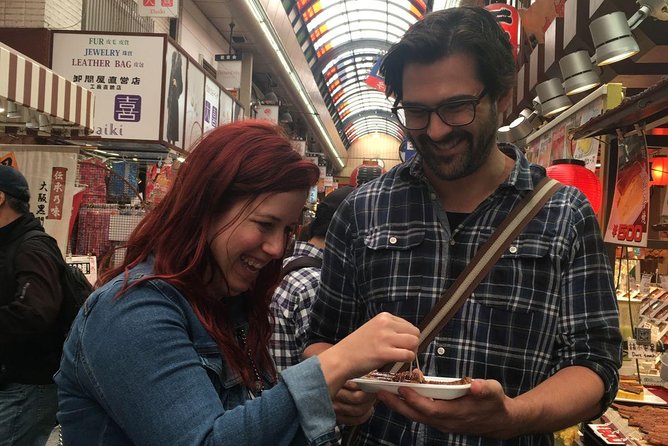
The tour is outdoors and on foot, with food stops and market passages along the way. Osaka summers can reach 40°C, while winter temperatures can fall to -5°C. Dress for the forecast and bring water in hot weather.
Rain does not necessarily end the experience. One route continued through covered market areas during torrential rain, using sheltered passages and narrow lanes. Even so, comfortable shoes and a compact umbrella are sensible choices.
The market can be crowded, and you may eat while standing or moving between shops. A stroller may be awkward. Families with very young children should consider a sling or carrier if possible, based on the practical experience shared about an 18-month-old.
All ages are welcome, and most people can participate. The tour is near public transportation, with the start point close to Kintetsu Nippon-bashi Station. Remember that the walking pace and food setup may be tiring for anyone who needs frequent seating.
How to make the two hours better
Arrive early at the SMBC ATM meeting point. The start location is precise, but Nipponbashi’s streets and station exits can be confusing if you are rushing.
Come with a short wish list. You might want to try takoyaki, find a good souvenir, learn about kitchen knives, or discover a food you would not order alone. Telling the guide this at the start lets the route feel more personal.
Bring cash. The tour covers the guide’s food and drinks, but you need money for extra purchases. Cash is also useful if you want to buy something at a small market stall or Doguyasuji shop.
Do not plan a full meal immediately before the tour, but do not arrive starving either. Six small tastes may be satisfying for some people and insufficient for others. I would schedule lunch afterward, especially if you are traveling with teenagers or have a large appetite.
Finally, treat the tour as an orientation. Write down the names of stalls, dishes, and neighborhoods you want to revisit. The best result is not simply finishing six tastings. It is leaving with a clearer sense of how to eat around Osaka for the rest of your stay.
Should you book the Kuromon Market food walk?
Book it if you want a friendly introduction to Osaka food, prefer a small group, and value help with ordering and local customs. It is particularly useful on your first day in Osaka, for families, solo visitors, and anyone nervous about choosing food at a Japanese market.
Skip it if you are comfortable exploring independently, want large portions, or expect the $50.41 price to cover a substantial meal. Kuromon Market is accessible on your own, and one or two hours of self-guided browsing can cost much less.
For most people, the deciding point is the guide. Nina, Yuto, Rie, Niko, Aina, and the other named guides have each brought different strengths, from working with children to adjusting food choices and helping solo visitors. You cannot choose the guide in advance from the information provided, so book for the structure and local assistance, not a guaranteed personality.
Free cancellation is available if you cancel at least 24 hours before the start time. If you want a relaxed first taste of Osaka, accept small portions, and plan to keep exploring after the tour, this is a useful and enjoyable choice.
FAQ
How long does the Kuromon Market food tour last?
The tour lasts approximately two hours and ends back at the original meeting point.
Where does the tour meet?
Meet in front of the SMBC ATM at Nippon-bashi 1chome, near Kintetsu Nippon-bashi Station Exit 10. The listed address is Japan, 542-0073 Osaka, Chuo Ward, Nipponbashi 1-chōme 17.
How many people can join the tour?
The tour has a maximum of seven participants. Some departures may have fewer people, and one reported family departure had no other participants.
What food might I taste?
The tour includes six tastes, but the exact choices can vary. Foods associated with the experience include takoyaki, sushi, yakitori, mushrooms, dumplings, gyoza, oden, and sweets.
Can the tour accommodate dietary requests?
Send dietary requests or allergy information at least one day before the tour. Vegetarian and vegan options may be limited, gluten-free arrangements are not guaranteed, and substitutions or allergy-free meals cannot be promised.
What happens if I arrive late or need to cancel?
The tour starts on time, and you cannot join later or receive a refund if you miss the group. You can cancel for a full refund up to 24 hours before the experience begins.
More Market Food Tours in Osaka
- Deep Dive: Osaka Food Markets from Local to Luxurious!
★ 5.0 · 2 reviews - Phuket: Full Day City Tour with Night Market
★ 4.5 · 2,888 reviews - London Bridge & Borough Market Food Tour with 7 Authentic Dishes
★ 5.0 · 1,972 reviews - Small Group Cooking Class & Market Food Tour in Florence
★ 5.0 · 1,574 reviews
More Street Food Walking Tours in Japan
- Osaka Local Foodie Walking Tour in Dotonbori and Shinsekai
★ 5.0 · 985 reviews - Osaka: 2-Hour Nightlife District Walking & Local Food Culture
★ 5.0 · 199 reviews - Tokyo Tsukiji Fish Market Food and Culture Walking Tour
★ 5.0 · 3,184 reviews - Tokyo: Tsukiji Fish Market Food and Walking tour
★ 5.0 · 1,724 reviews
Just added around Osaka
- Same Day OK! Osaka: Local Food, Izakaya & Local Bites Tour!★ 4.8 · 17 reviews
- Eat Like a Local in Osaka – Private Custom Street Food Tour★ 4.3 · 33 reviews
- Osaka Shinsekai Street Food Tour – Evening★ 5.0 · 2 reviews
- Okonomiyaki&Takoyaki for Families:Osaka Street Food Festival★ 5.0 · 4 reviews
- Osaka: Local Foodie Tour in Dotonbori and Shinsekai★ 4.7 · 95 reviews
- Osaka: Takoyaki Keychain and Magnet-Food Replica Workshop★ 5.0 · 2 reviews
- Osaka Okonomiyaki Cooking Experience for Families & Groups★ 4.9 · 8 reviews
- Osaka: Namba Guided Local Food Tour (Taste 15 dishes)★ 5.0 · 6 reviews
Osaka Street Food Tours, compared.
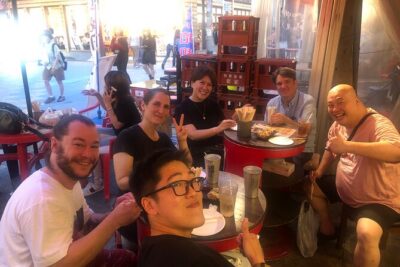
Hungry Osaka Street Food Tour:15 Tastings & 3 Drinks with a Local
Read our review →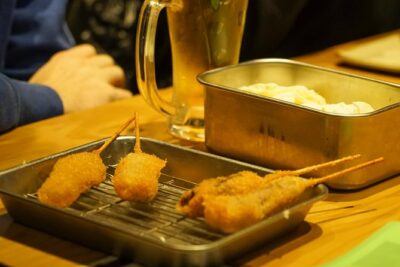
Osaka Local Foodie Walking Tour in Dotonbori and Shinsekai
Read our review →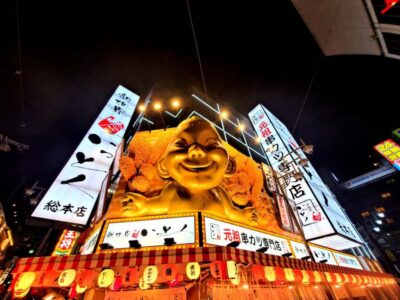
Hungry Osaka Street Food Tour: 15 Dishes & 3 Drinks
Read our review →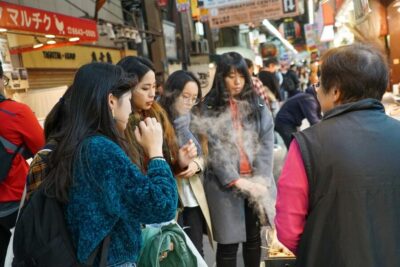
Osaka: Kuromon Market Food Walking Tour (6 stops, 6 tastes)
Read our review →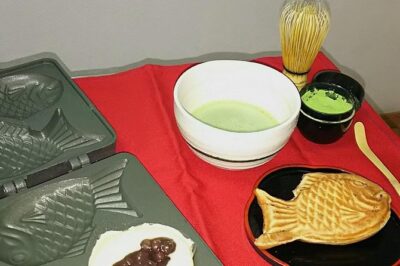
Osaka Cooking Class: Okonomiyaki &Japanese cuisines experience
Read our review →![[1 Group Only] Osaka Street Food Tour for Family](https://4.streetfoodtrips.com/wp-content/uploads/1-group-only-osaka-street-food-tour-for-family-400x267.jpg)
[1 Group Only] Osaka Street Food Tour for Family
Read our review →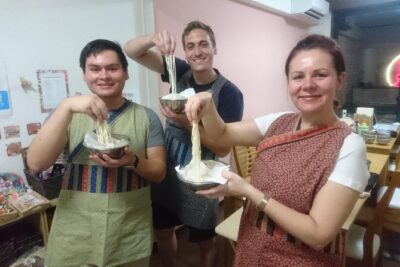

Osaka: 2-Hour Nightlife District Walking & Local Food Culture
Read our review →Browse the lists this tour appears in