

REVIEW · TOKYO STREET FOOD TOURS
NO DIET CLUB – Unique local food tour in Tokyo !
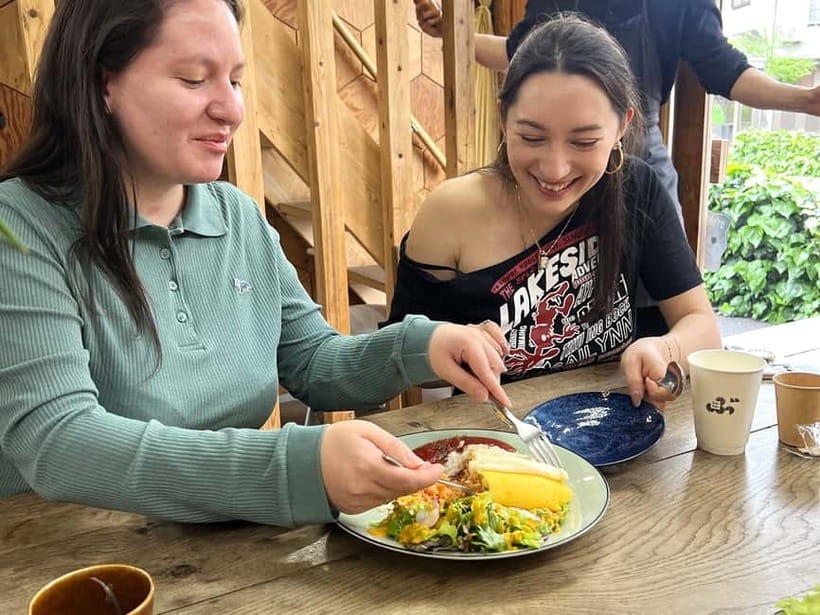
Sangenjaya gives you a very different Tokyo from the neon streets around Shibuya. On this three-hour food walk, you move through old lanes, small shops, and local eateries while sampling Japanese comfort food such as takoyaki, omurice, curry pan, and seasonal specialties. I like the generous food plan and the small group limit of 10. I also like that guides such as Valentin and Marie explain what you are eating instead of simply handing you a plate.
The main consideration is that drinks are not included, apart from water, so budget a little extra if you want tea, beer, or something cold along the way. The stops can also change with the season. That keeps the food fresh and local, but you should not expect a fixed menu.
Key points at a glance
- Sangenjaya near Shibuya: Reach a quieter, older-feeling part of Tokyo only one station from the city’s famous shopping and nightlife district.
- At least five food tastings: Expect a mix of savory and sweet dishes, with all food covered in the $68 price.
- Japanese comfort food: Try familiar favorites such as takoyaki, omurice, and curry pan, along with less familiar local specialties.
- Small groups of 10 or fewer: The group size gives you a better chance to ask questions and keep up in narrow streets and small eateries.
- English and French guides: Tours are offered in both languages, with Valentin and Marie among the guides named by the operator.
- Pescatarians are welcome: Food choices may change by season, but pescatarians can join the experience.
Why Sangenjaya makes a better food setting than central Tokyo
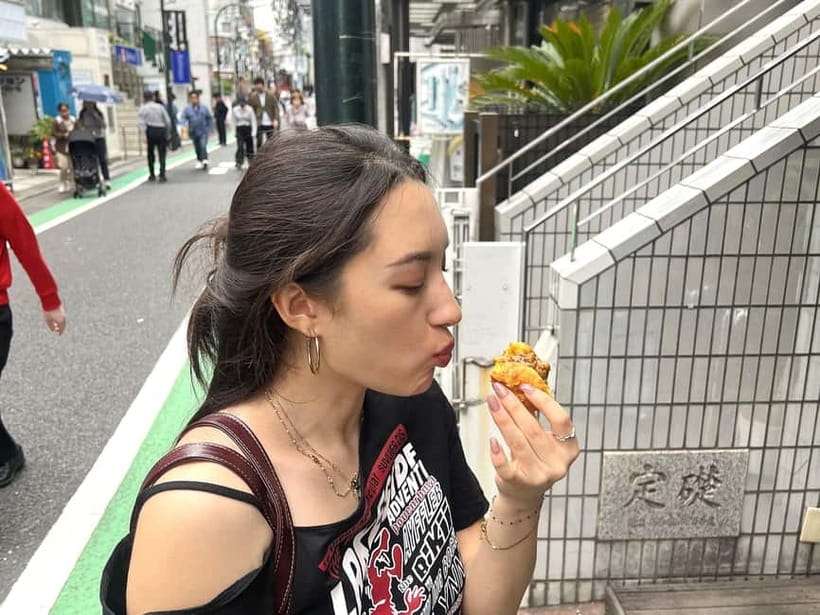
Sangenjaya sits only one station from Shibuya, yet the mood changes quickly. Instead of making your entire food experience about Tokyo’s famous center, this tour takes you into an area with nostalgic shops, narrow alleys, and local places to eat.
That location matters. Shibuya is easy to reach and packed with attractions, but it can also feel like a large entertainment district built for crowds. Sangenjaya gives you a chance to see another side of the city without spending an hour crossing Tokyo. You get the convenience of a central neighborhood with a more local pace.
The walk is not only a route between restaurants. You also spend time moving through the neighborhood, which helps break up the eating. Sarah from the United States specifically appreciated having a little time to walk and let the food settle between stops. That is a small feature, but it makes a difference during a three-hour tasting tour.
I would choose this area early in a Tokyo visit if you want help understanding how food fits into daily life. The tour gives you both a meal and a sense of place. It is not a grand sightseeing circuit, and that is part of its appeal.
More Hidden Gem Food Tours in Japan
- Tsukiji Fish Market Food Tour: Seafood, Street Food & Hidden Gems
★ 5.0 · 85 reviews - Tokyo VIP Hidden Food & Bar Night – Private Local Experience
★ 5.0 · 57 reviews - Tokyo: Secret Food Walking Tour
★ 4.7 · 38 reviews
What you may eat during the three hours
The food is the center of the experience, and the plan is generous. You receive a minimum of five tastings in many spots, with savory and sweet items included. Since every food tasting is covered, you can focus on trying things rather than checking prices at each stop.
The named dishes give you a good idea of the tour’s style:
- Takoyaki: These hot, round snack balls are associated with Osaka but are popular throughout Japan. They offer a classic introduction to Japanese street food.
- Omurice: A comfort-food dish built around omelet and rice. It is familiar enough for cautious eaters, but still gives you a sense of everyday Japanese cooking.
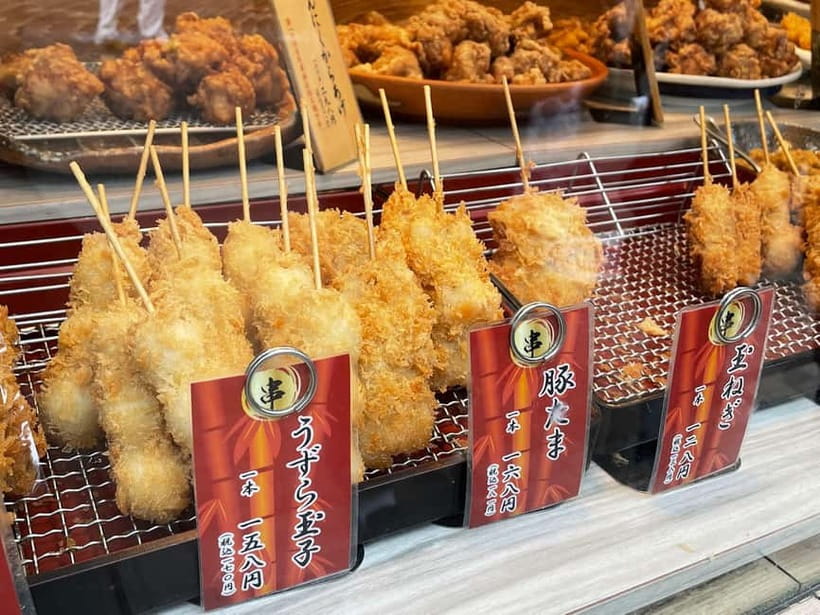
- Curry pan: A fried bread filled with Japanese curry. It is portable, filling, and different from the curry dishes many people first associate with Japan.
- Seasonal specialties: The exact tasting list can change, so you may encounter food that is not on this short list.
The range is useful. A tour based only on famous dishes can feel predictable, while a tour built entirely around unfamiliar food can be hard work for a first-time visitor. This one appears to split the difference. You get recognizable Japanese favorites, then have room for dishes you might not find on your own.
The portions also matter. The operator emphasizes both quality and quantity, and the food plan includes at least five tastings. You should arrive hungry, but not expect one large sit-down meal. The format is closer to a progressive meal, with small stops spread through the neighborhood.
Because the menu follows the seasons, you need to keep an open mind. A particular dish may not appear on your date. That is a fair trade for food that reflects what is available locally, but anyone looking for a strict, published menu may prefer a restaurant reservation.
Local context makes the food easier to understand
Good food tours explain more than ingredients. They show you how a dish fits into the place where you are eating it. This experience includes explanations and context around both new specialties and foods you may already recognize.
That was one of the strongest themes in the feedback. Alicia from France singled out the chance to try dishes outside the usual tourist path. Another French participant appreciated getting more background on specialties that were already familiar. This is the difference between tasting omurice and understanding why it feels like such a well-loved comfort food.
Guides Marie and Valentin are named in the feedback, and their styles sound attentive and conversational. Marie is described as taking time with the tastings and offering helpful advice. Valentin is praised for showing the group small food spots and for listening to what the group wanted.
Those details are useful when choosing a small food tour. A guide who explains dishes and adjusts to questions can make an unfamiliar food feel approachable. You are not simply following a flag from one restaurant to the next. You are getting practical help with what to notice, how to approach the food, and what else might be worth trying during your stay.
The tour is available in English and French. If you are more comfortable asking food questions in French, that option is particularly helpful. English tours make the experience accessible to a broad range of visitors.
The small group size improves the experience

The group is limited to 10 people. That is not a private tour, but it is small enough to keep the pace manageable and make conversation with the guide possible.
Small groups are especially useful in Sangenjaya because the tour includes alleys and compact local eateries. A group of 20 or 30 would be harder to move through tight spaces and could overwhelm the places you visit. With 10 or fewer people, you are more likely to hear the explanations and see what the guide is pointing out.
You should still expect a social outing rather than a private meal. The group size can vary, and the experience depends partly on the mix of people on your date. The limit simply gives the tour a better chance of staying personal.
I would recommend this format for solo visitors, couples, and small groups who want a friendly introduction to Japanese food. It is also a good choice if you are slightly nervous about ordering in small local places on your own. The guide handles the structure, while you concentrate on eating and looking around.
More Hidden Gem Food Tours in Tokyo:
- Hanoi: Street Food Tour with Train Street & Hidden Alleyways
★ 5.0 · 2,831 reviews - Small Group: Michelin and Local Hawker Food Tour with 9 tastings
★ 5.0 · 1,890 reviews - Bangkok: Michelin Guide Street Food Tour by Tuk Tuk
★ 4.4 · 1,274 reviews - NO DIET CLUB – Unique Local Food in Nice !
★ 5.0 · 1,267 reviews
A closer look at the three-hour rhythm
The tour begins with a stroll through Sangenjaya, then combines food stops with time on foot. The exact order and dishes may change, but the rhythm is clear: walk, taste, learn, and move on before the meal becomes too heavy.
At the first stop, you can expect an introduction to the neighborhood and one of its familiar foods. Takoyaki or another snack-style dish would fit naturally here, since small portions are easy to share and provide an immediate sense of the local food culture.
The middle part of the tour is where the variety becomes most useful. A dish such as omurice shows a more filling, home-style side of Japanese food, while curry pan offers a snack you might notice in a bakery but not think to order. Moving between different food types keeps the experience from becoming a string of similar fried snacks.
The walking sections give you time to look at the streets and digest. You may pass nostalgic stores, older facades, and food businesses that have served the neighborhood for generations. The point is not to inspect each building as a formal sight. It is to see how ordinary Tokyo works away from the headline attractions.
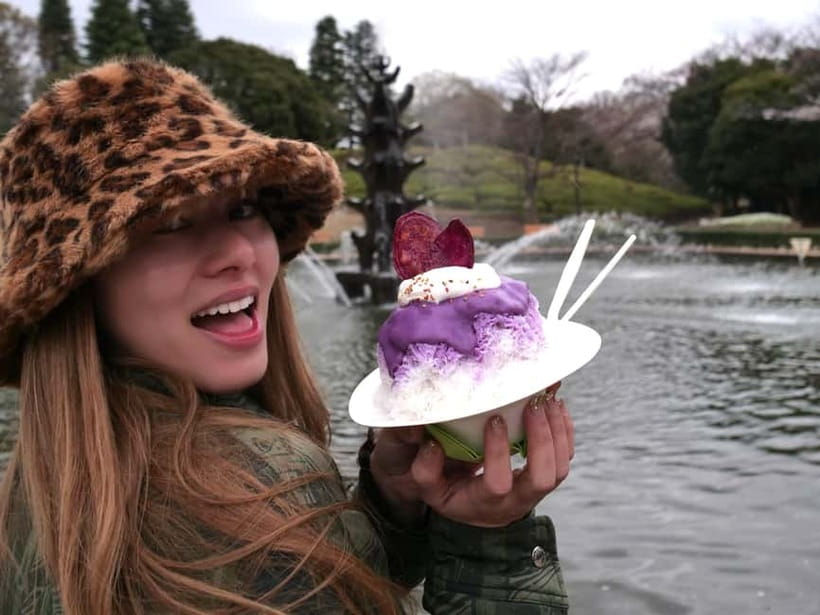
Later tastings may include sweets or seasonal items. That gives the meal a natural finish and keeps the tour from being too heavy on savory dishes. Since the menu changes, I would treat this part as a pleasant surprise rather than plan your day around one specific dessert.
Three hours is a useful length. It is long enough to build a proper meal and explore the neighborhood, but short enough to fit around other Tokyo plans. I would avoid booking it immediately before a major restaurant dinner. Even with walking breaks, five or more tastings can leave you well fed.
Is $68 a fair price?
At $68 per person, the tour is not the cheapest way to eat in Tokyo. You can buy individual snacks for much less. The value comes from combining the food with a guide, a planned route, neighborhood context, and access to places you might not choose by yourself.
All food is included, and the plan offers at least five tastings in many spots. That makes the price easier to judge. If you tried five separate foods on your own, you would still need to find the places, decide what to order, work through any language concerns, and connect the stops into a sensible route.
The value is strongest for a first visit or for anyone who has already seen the major sights and wants a more everyday side of Tokyo. It is less compelling for a confident food explorer who enjoys researching small restaurants and ordering independently.
Drinks are extra, except for water. This is a minor cost, but remember it when comparing the price with other food tours. You may want a drink with fried or spicy foods, so bring a little room in your budget.
The five-star score from 16 reviews is encouraging, and the praise is consistent around the food quality, generous quantity, neighborhood, and guide attention. That does not mean every dish will suit every palate. It does suggest that the tour is delivering the things it promises most clearly.
Who should book this Sangenjaya food walk?
This tour suits you if you want to:
- Try several Japanese foods without planning every stop yourself
- Stay near central Tokyo while seeing a quieter neighborhood
- Learn the background of dishes as you eat them
- Walk between tastings rather than sit in one restaurant for three hours
- Join a small group with an English or French-speaking guide
- Eat generous portions of both savory and sweet food
- Find local places that are not aimed mainly at international tourists
Pescatarians are welcome, which makes the tour more flexible than many food walks. The tastings can vary by season, so it is sensible to tell the operator about your preferences before the tour if you need more guidance. The provided details support pescatarian participation, but they do not promise a fully vegetarian or vegan menu.
This may not be the right pick if you need a fixed menu, want alcoholic drinks included, or prefer a formal sit-down meal. It is also not designed as a broad Tokyo sightseeing tour. Its focus is food, local streets, and the character of Sangenjaya.
Practical details before you reserve
The experience lasts three hours, and you can check available starting times when booking. That makes it easy to place alongside a morning in Shibuya or another afternoon plan, though you should allow extra time before your next meal.
Tours run in English and French, with a maximum group size of 10. All food is included, while drinks are not, apart from water. Pescatarians can join, but tastings may change with the season.
You can cancel up to 24 hours before the activity for a full refund. The reserve-now-and-pay-later option also lets you hold a place without paying immediately, which is useful when your Tokyo schedule is still shifting.
Wear comfortable shoes. The tour is a walking experience through neighborhood streets, not a single restaurant stop. You will enjoy it more if you leave your schedule open enough to walk at an easy pace and give the food time to settle.
Should you book it?
Book this tour if you want a food-first look at Tokyo beyond the main tourist zones. Sangenjaya is close to Shibuya but offers a calmer setting, and the combination of at least five tastings, neighborhood walking, and guide explanations gives you more than a simple snack crawl.
The strongest reasons to reserve are the generous food inclusion, small group size, and guides who appear attentive to questions and preferences. Marie and Valentin are both praised for explaining dishes and helping people discover places they might not find alone.
Skip it if you want a precise menu, a private tour, or drinks built into the price. For most visitors who like trying local comfort food and want a practical introduction to a less obvious Tokyo neighborhood, $68 is a reasonable exchange for three hours of eating, walking, and useful orientation.
FAQ
Where does the food tour take place?
The tour takes place in Sangenjaya, a Tokyo neighborhood located one station from Shibuya.
How long does the experience last?
The food walk lasts three hours.
How many food tastings are included?
The tour includes at least five tastings in many spots, with both savory and sweet food.
Is food included in the price?
Yes. All food tastings are included in the $68 per-person price.
Are drinks included?
Drinks are not included, except for water.
Is the tour available in English?
Yes. The tour is offered in English and French.
Can pescatarians join?
Yes. Pescatarians are welcome, although the tastings may vary with the seasons.
What is the maximum group size?
The tour is a small-group experience limited to 10 participants.
Just added around Tokyo
- Tokyo: Tsukiji walk & sushi private tour with Uni Students★ 5.0 · 17 reviews
- Tokyo: Private Tsukiji Street Food & Sake with Local Guide★ 5.0 · 3 reviews
- Tokyo: Tsukiji Market Guided Tour & Sushi-Making Experience★ 4.4 · 11 reviews
- Tokyo: Tsukiji Market and Hama-rikyu Gardens Guided Tour★ 4.8 · 73 reviews
- Tokyo Tsukiji Food & Culture Private Tour Licensed Guide★ 4.9 · 28 reviews
- Tokyo: Tsukiji Fish Market Foodie and Educational Tour★ 5.0 · 4 reviews
- Tokyo: Tsukiji Fish Market Culture Tour with Sashimi Tasting★ 4.6 · 54 reviews
- Tokyo: Tsukiji, Ginza, and Asakusa Japanese Culture Tour★ 5.0 · 2 reviews
Tokyo Street Food Tours, compared.
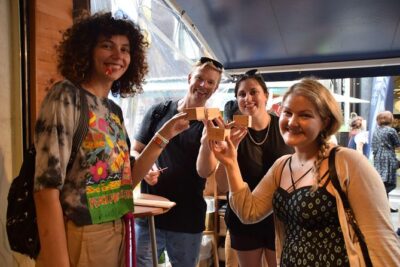
Tokyo Tsukiji Fish Market Food and Culture Walking Tour
Read our review →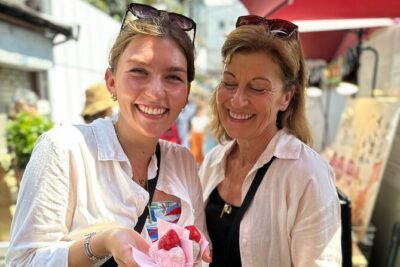
Tokyo: Tsukiji Fish Market Food and Walking tour
Read our review →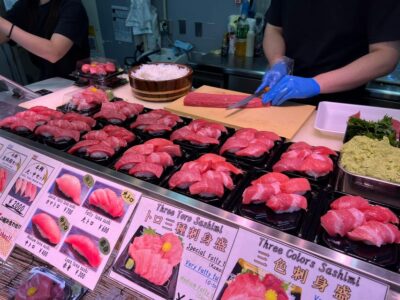
Tokyo: Tsukiji Fish Market Guided Walking Tour
Read our review →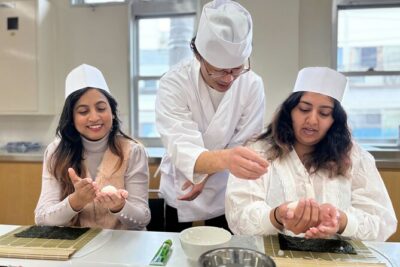
Tokyo Sushi Making Class in Tsukiji with Professional Chef
Read our review →
Tsukiji Fish Market Guided Tour and Sushi Making with Pro Chef
Read our review →Tokyo: Tsukiji Fish Market Food and Culture Walking Tour
Read our review →
Tsukiji Fish Market: Street Food & Culture Walking Tour
Read our review →
Tsukiji Fish Market Small-Group Food Walking Tour
Read our review →Browse the lists this tour appears in