
REVIEW · OSAKA STREET FOOD TOURS
Okonomiyaki&Takoyaki for Families:Osaka Street Food Festival
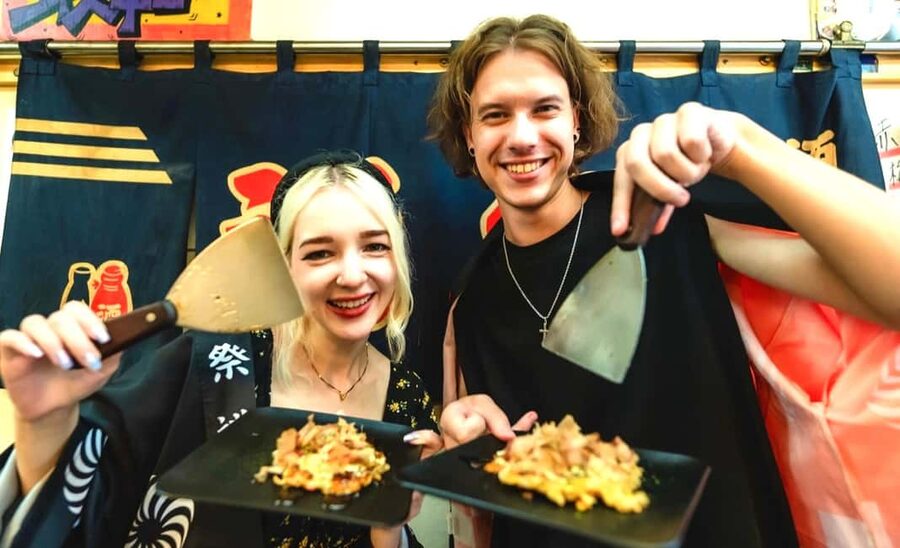
Osaka’s famous street food becomes a group activity here. You cook takoyaki and okonomiyaki on real teppan grills, wear a colorful happi coat, and snack on Japanese dagashi while the food cooks. I like the hands-on format and the way festival games keep children involved between batches. The possible drawback is the 90-minute limit, which may feel short if your group cooks slowly or wants several rounds.
I also like that everyone can take part, from children and parents to grandparents, and that the English-speaking host helps turn an unfamiliar dish into a manageable one. The free drink, unlimited takoyaki, snacks, game, photos, and certificate add real value to the $64 adult price, though extra drinks cost more and children under three cannot join.
Key points to know before booking
- Cook on real teppan grills: You make takoyaki and okonomiyaki beside your group rather than simply watching a demonstration.
- Six changing ingredients: The daily selection gives each session a slightly different food lineup.
- Festival clothes and games: Happi coats, super ball scooping, and Takoyaki Baby photo spots create a playful Osaka setting.
- Food keeps coming: Takoyaki is all-you-can-eat, with unlimited dagashi snacks and one included drink.
- A souvenir with a bit of fun: Each participant receives a Takoyaki Master certificate.
- Good access and flexible booking: The activity is wheelchair accessible, taught in English, and cancellable up to 24 hours before it begins.
Making Osaka street food your own meal
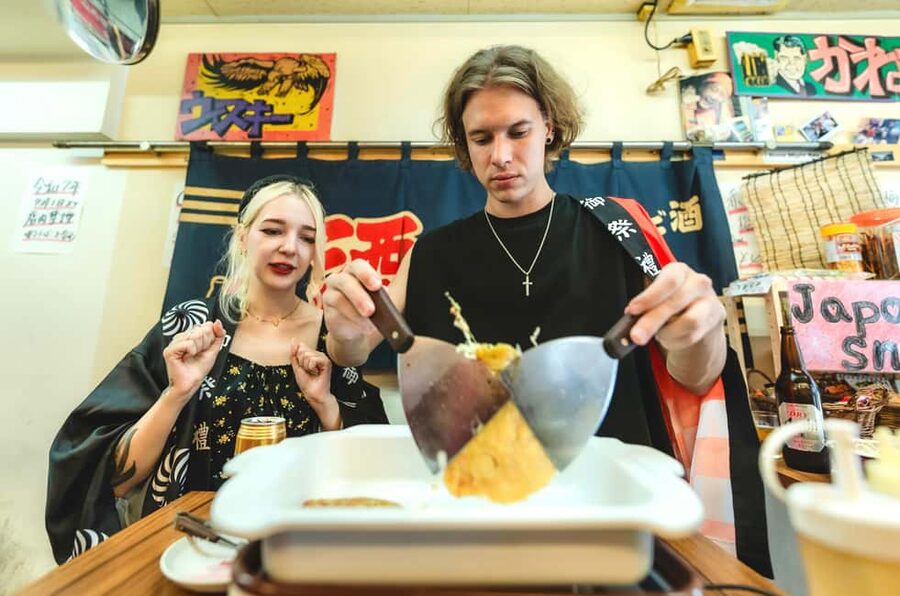
The appeal here is simple: you do not just order Osaka food, you help make it. Takoyaki is cooked in round molds on a hot grill, while okonomiyaki is prepared in the familiar savory pancake style. Both dishes are strongly tied to Osaka’s food culture, and making them yourself gives you a better sense of how the meal comes together.
The session is designed for participation, not a long lesson. You sit or work around the cooking area with your group, follow the host’s guidance, and turn the ingredients into food you can eat right away. That makes it easier for children and first-time cooks to stay interested.
I would not treat this as a serious culinary class. You are not signing up for a technical course in knife skills, regional food history, or advanced Japanese cooking. It is a social food activity with a cooking element, and that is exactly why it works well for families and mixed-age groups.
The food is also served in a way that takes pressure off. The takoyaki is all-you-can-eat, and the activity information promises six unique daily ingredients. Since the exact ingredients change, you get some variety without needing to plan a meal around a fixed menu.
A few more street food tours around Osaka worth a look
- Hungry Osaka Street Food Tour:15 Tastings & 3 Drinks with a Local
★ 5.0 · 1,727 reviews - Osaka Local Foodie Walking Tour in Dotonbori and Shinsekai
★ 5.0 · 985 reviews - Hungry Osaka Street Food Tour: 15 Dishes & 3 Drinks
★ 4.9 · 694 reviews
The first 15 minutes: happi coats, photos, and a festival mood
Part of the fun begins before the cooking. You can put on a colorful festival-style happi coat, a traditional garment often associated with Japanese celebrations and food stalls. It gives the group an easy photo opportunity and helps the activity feel different from a standard restaurant meal.
The Takoyaki Baby characters provide another photo point. These cute figures are made for cheerful group pictures, especially if your children want something to show friends back home. Solo visitors can also take photos, but the costume and character setup make the most sense for a group.
This opening section matters because the activity is not only about eating. The setting is built to make people laugh, take pictures, and feel part of a small Osaka festival. The trade-off is that anyone seeking a quiet, formal meal may find the playful style a little much.
An English-speaking instructor guides the session. J’ayla is one host specifically praised for being entertaining, attentive, and helpful, and the strong 5 out of 5 rating from four bookings suggests the staff are a major part of the experience. Still, host availability can change, so you should not book on the assumption that J’ayla will personally lead your session.
Cooking takoyaki and okonomiyaki on the teppan
The main event is the cooking. You work with your group at real teppan grills, the flat or molded hot plates used for many Japanese cooked dishes. Takoyaki requires a bit of care as the batter sets in its round molds, while okonomiyaki gives you a broader pancake-style dish to prepare.
For children, this is likely the most memorable part. They can see the food change in front of them and take ownership of what they eat. Parents and grandparents can join in rather than waiting at the side, though adults should help younger children around the hot cooking equipment.
You are not left to figure it out alone. The host gives instructions in English, and one of the strongest features of the session is the attentive support while you cook. That is useful for first-time visitors who may not know how Japanese batter behaves or how much food belongs in each mold.
The experience description says you can make and eat unlimited takoyaki and okonomiyaki with six daily ingredients. The included section specifically confirms all-you-can-eat takoyaki, so I would regard takoyaki as the guaranteed bottomless item. Okonomiyaki is clearly part of the cooking activity, but the exact serving arrangement is worth confirming if unlimited portions of it are important to you.
The food is meant to be eaten during the session, not packed up for later. That keeps the pace lively and lets you taste each batch while it is hot. It also means you should arrive ready to participate rather than expecting a long sit-down meal.
Dagashi snacks keep the group moving
While the main food cooks, you can eat unlimited dagashi snacks. Dagashi are inexpensive Japanese treats often associated with children’s shops and casual snacking. They add a small but useful piece of everyday food culture to the activity.
For families, this helps solve a common problem: one child may be waiting while another is cooking. The snacks give everyone something to do between batches, and adults can sample foods they might not notice in a regular convenience store or restaurant.
The snack element also adds value to the price. You are not paying only for a cooking lesson and a plate of food. You receive a food activity, ongoing snacks, a drink, games, costume use, and a certificate in one compact visit.
There is one limit to keep in mind. One drink is included, but extra drinks cost more. You can upgrade to an all-you-can-drink option for an additional fee, so check the final price before booking if your group expects to drink throughout the session.
Same city, a different plate:
- Kuromon Market Food Walking Tour in Osaka (6 stops, 6 tastes)
★ 5.0 · 550 reviews - Osaka: Kuromon Market Food Walking Tour (6 stops, 6 tastes)
★ 4.6 · 272 reviews - Osaka Cooking Class: Okonomiyaki &Japanese cuisines experience
★ 5.0 · 261 reviews - [1 Group Only] Osaka Street Food Tour for Family
★ 5.0 · 208 reviews
Festival games for children and grown-ups
The classic festival game included here is super ball scooping. This kind of game is familiar from Japanese matsuri, where small colored balls are scooped from water using a thin paper scoop. It takes patience and a light touch, and it gives children a break from the cooking.
Games may sound like a small extra, but they change the rhythm of the visit. A 90-minute cooking session can feel long for a young child if the only task is standing near a hot grill. A game gives the activity a second focus and creates a more complete festival-style outing.
Adults can join too, though the game is clearly aimed at playful group participation rather than serious competition. If you are visiting Osaka with friends, it can produce the silly, informal moments that are often more memorable than another carefully staged photograph.
The activity is not designed for children under three. That rule makes sense given the hot grill and the practical demands of the cooking area. Families with toddlers should arrange separate care or choose another food stop for the youngest member of the group.
What the $64 price includes
At $64 per person, this is not the cheapest way to eat takoyaki in Osaka. Street stalls and casual restaurants will cost less, and they require no booking or fixed 90-minute schedule. You are paying for an activity as much as for the food.
The price is easier to justify if you use the full package:
- English-speaking local host
- All-you-can-eat takoyaki
- Unlimited dagashi snacks
- One free drink
- Takoyaki and okonomiyaki cooking
- Festival-style happi coat
- A classic festival game
- Takoyaki Master certificate
For a family, the value comes from combining several small activities in one place. You do not need to arrange a separate food lesson, photo stop, and children’s game. The certificate also gives each participant a physical souvenir, which is more satisfying than leaving with only a few pictures.
The child price is listed as ¥7,000 for elementary school children and younger. Since the adult cost is quoted in dollars while the child cost is in yen, check the booking page for the current conversion and age rules. Children under three are not suitable for the activity.
Solo visitors can still enjoy this, especially if they like Japanese food and want a social activity. Yet the strongest value is for families, friends, and larger groups, where the shared cooking and games give everyone a role.
A practical 90-minute schedule
The exact timing may vary, but you can expect the visit to follow this general rhythm:
- Meet the host and get settled. The meeting point is identified by a Family Mart diagonally ahead to the left. Since no full street address is provided here, check the precise booking details before setting out.
- Put on the happi coat. This gives you time for group photos and helps set the festival tone.
- Learn the cooking process. The English-speaking host explains how to work with the teppan grill and the takoyaki molds.
- Cook and eat. You prepare takoyaki and okonomiyaki with the day’s ingredients, then eat the food as it is ready.
- Snack and play. Dagashi and the festival game fill the gaps between cooking turns.
- Receive the certificate. Each participant gets a Takoyaki Master certificate at the end.
This is a compact schedule, so do not arrive late. A late start could cut into cooking time, games, or photos. The activity does not promise hotel pickup or transport, so you should plan your own route to the meeting point.
Who will enjoy this most
I would recommend this to families with school-age children, groups of friends, and anyone who wants a light introduction to Osaka food. It is especially useful when your group has mixed interests because the cooking, snacks, costumes, pictures, and game offer several ways to participate.
It also suits first-time visitors who feel unsure about ordering or preparing Japanese food. The English support removes much of the guesswork, and the host can help you stay involved even if you have never made takoyaki.
Couples can enjoy it too, especially if they prefer an active date to a quiet dinner. Solo visitors should book if they are comfortable joining a social food activity rather than expecting a private cooking lesson.
I would think twice if you want a calm, refined meal or a detailed cooking course. The costumes, character photos, and festival game make this deliberately playful. It is also less suitable for very young children, anyone who cannot safely work around a hot grill, or anyone who dislikes fixed group activities.
Access, cancellation, and booking advice
The activity is wheelchair accessible, which makes it a more practical choice for mixed-mobility groups than many small food workshops. You should still check the meeting point and any personal access needs when booking, since the available information does not describe the exact interior layout.
The instructor speaks English. That is a useful advantage for cooking directions and for asking questions during the session.
You can cancel up to 24 hours in advance for a full refund. A reserve-now-and-pay-later option is also available, which helps if your Osaka schedule is still shifting. Spots are said to fill quickly, so advance booking is sensible, particularly for families and larger groups.
If you want more than one drink, compare the standard booking with the all-you-can-drink upgrade. The upgrade costs extra, and the better choice depends on how long your group plans to stay and drink.
Should you book the Takoyaki Baby festival experience?
Book it if you want Osaka food to be a shared activity rather than a quick meal. The strongest reasons are the real teppan cooking, all-you-can-eat takoyaki, unlimited dagashi, English guidance, festival games, and the certificate at the end. The consistently positive score and specific praise for J’ayla’s kind, entertaining help support the idea that the hosts are central to the fun.
Skip it if your main goal is the lowest possible price or an advanced cooking lesson. A street stall will cost less, and the 90-minute format leaves limited time for slow cooks. For most families and groups, though, the package gives you enough food, play, and participation to make the $64 price reasonable.
FAQ
How long does the Osaka street food experience last?
The activity lasts 90 minutes.
What food can I make?
You can make takoyaki and okonomiyaki on real teppan grills. The experience includes six unique daily ingredients, and takoyaki is all-you-can-eat.
Is food included in the price?
Yes. All-you-can-eat takoyaki and unlimited dagashi snacks are included, along with one free drink.
Is the activity taught in English?
Yes. The instructor language is English.
Can children participate?
Yes. The experience is designed for families, but children under three are not suitable. The listed price for elementary school children and younger is ¥7,000.
Is the experience wheelchair accessible?
Yes, the activity is wheelchair accessible.
Can I cancel or pay later?
You can cancel up to 24 hours in advance for a full refund. A reserve-now-and-pay-later option is available.
Just added around Osaka
- Same Day OK! Osaka: Local Food, Izakaya & Local Bites Tour!★ 4.8 · 17 reviews
- Eat Like a Local in Osaka – Private Custom Street Food Tour★ 4.3 · 33 reviews
- Osaka Shinsekai Street Food Tour – Evening★ 5.0 · 2 reviews
- Osaka: Local Foodie Tour in Dotonbori and Shinsekai★ 4.7 · 95 reviews
- Osaka: Takoyaki Keychain and Magnet-Food Replica Workshop★ 5.0 · 2 reviews
- Osaka Okonomiyaki Cooking Experience for Families & Groups★ 4.9 · 8 reviews
- Osaka: Namba Guided Local Food Tour (Taste 15 dishes)★ 5.0 · 6 reviews
- Osaka: Kuromon Market Street Food Tour with Pro Local Guide★ 5.0 · 5 reviews
Osaka Street Food Tours, compared.
Hungry Osaka Street Food Tour:15 Tastings & 3 Drinks with a Local
Read our review →
Osaka Local Foodie Walking Tour in Dotonbori and Shinsekai
Read our review →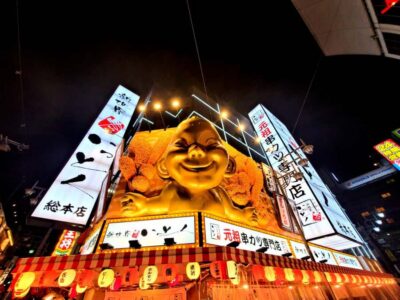
Hungry Osaka Street Food Tour: 15 Dishes & 3 Drinks
Read our review →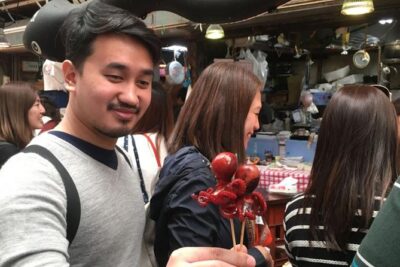
Kuromon Market Food Walking Tour in Osaka (6 stops, 6 tastes)
Read our review →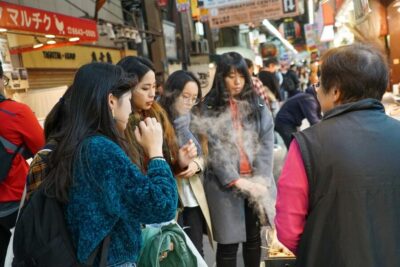
Osaka: Kuromon Market Food Walking Tour (6 stops, 6 tastes)
Read our review →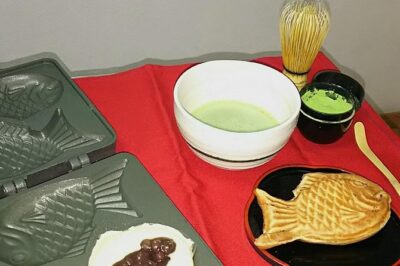
Osaka Cooking Class: Okonomiyaki &Japanese cuisines experience
Read our review →
[1 Group Only] Osaka Street Food Tour for Family
Read our review →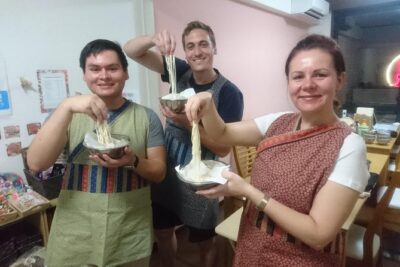
Browse the lists this tour appears in