REVIEW · TOKYO STREET FOOD TOURS
Private Toyosu & Tsukiji Market Adventure with Tuna Auction
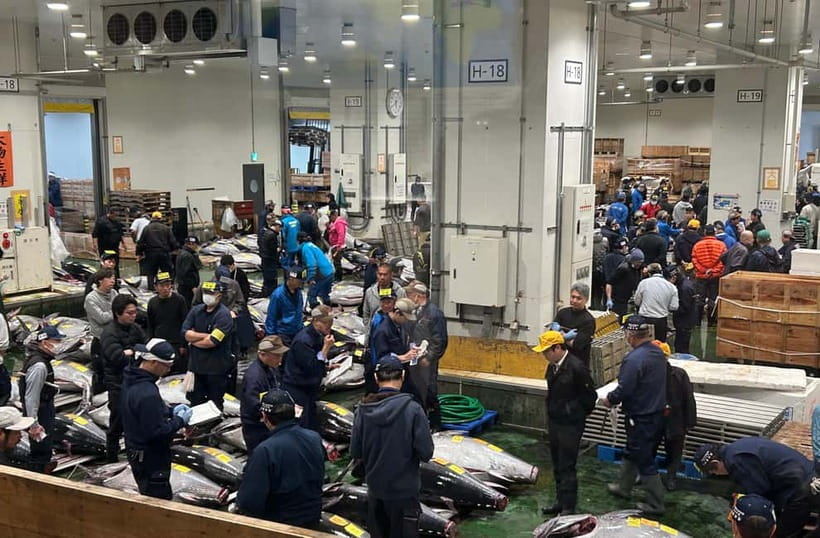
The bluefin tuna auction is the hook here: a pre-dawn ritual of buyers inspecting enormous fish, calling bids, and moving quickly through Toyosu Market. Nobby, Sachiyo, Yumi, Emi, and other English-speaking guides help turn a confusing scene into one you can follow.
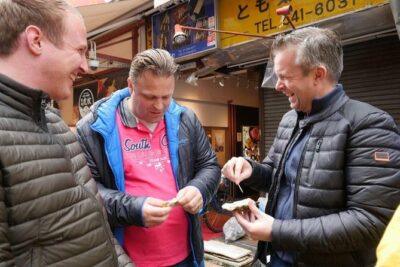
I like two things in particular. First, you see both the modern Toyosu market and the older Tsukiji Outer Market, not just a single viewing platform. Second, the private format lets you pause for sushi, grilled eel, mochi, tea, or a knife shop instead of being pushed along with a large crowd. The main catch is the 5 a.m. start, plus the separate lottery for the closest auction view.
Key points at a glance
- The auction begins before sunrise: Meet your guide around 5 a.m. and watch bluefin tuna buyers at work inside Toyosu.
- The first-floor view is not automatic: You must register for the official lottery by the fifth of the previous month. If you do not win, the auction remains visible from the second floor.
- Two markets, two moods: Toyosu is orderly and modern, while Tsukiji is better for browsing stalls, eating, and shopping.
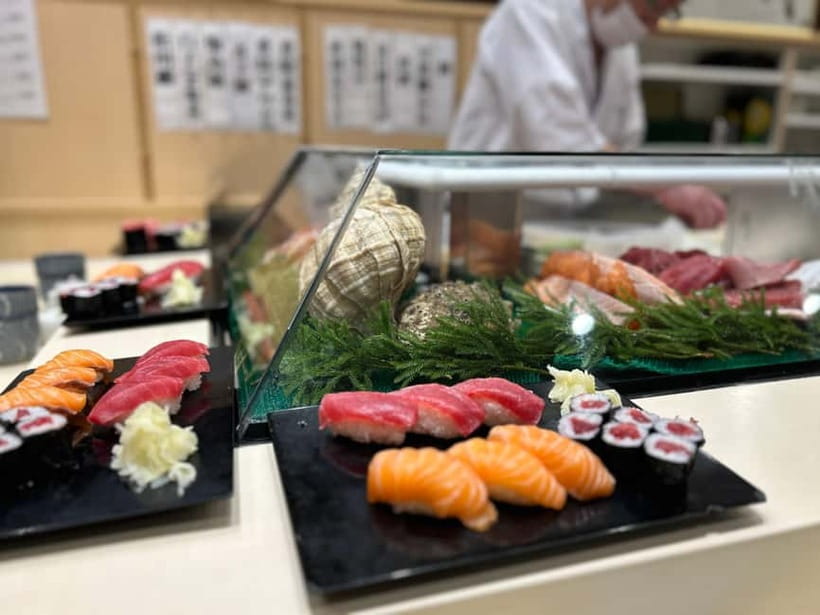
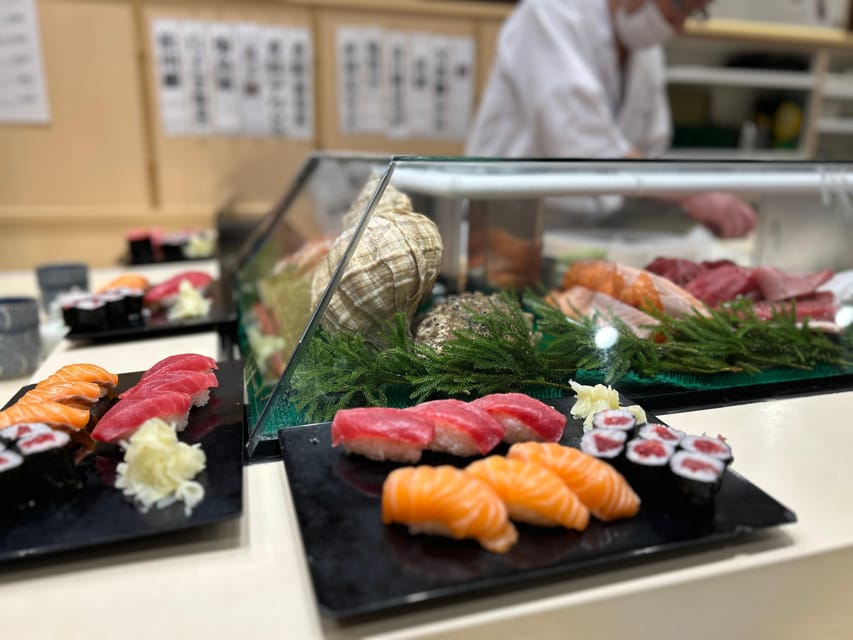
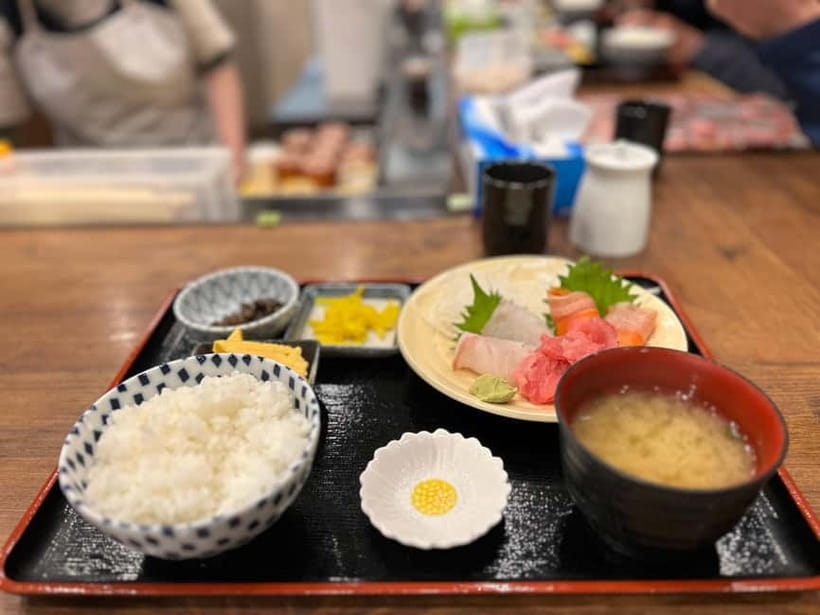
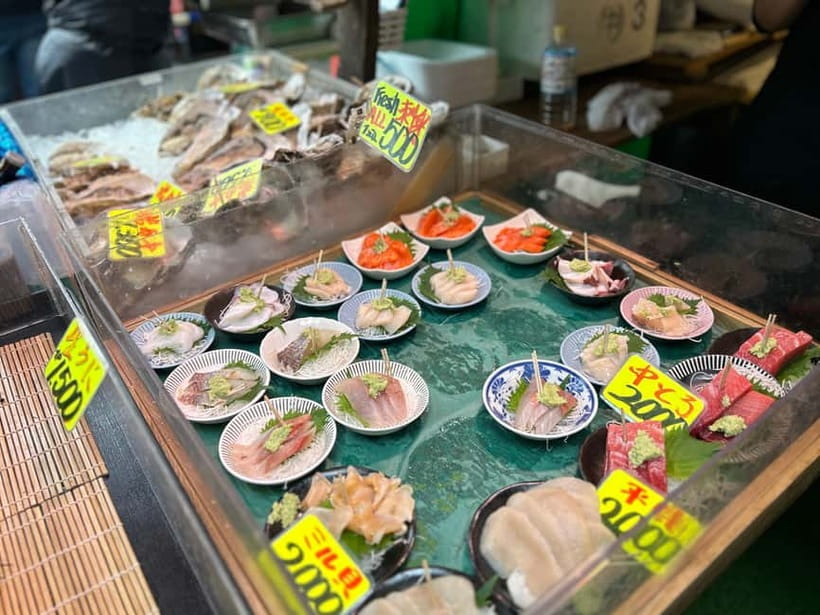
- Food is part of the route: Sushi or seafood breakfast may be taken at Toyosu or Tsukiji, with snacks such as tamago, grilled eel, yakitori, sashimi, and mochi available.
- Private means flexible: Groups of up to 10 can spend more time on food, shopping, or questions that matter to them.
- Bring cash and arrange early transport: A taxi to the market is not included, and public transport is not running early enough for many starting times.
Why the tuna auction is worth the early alarm
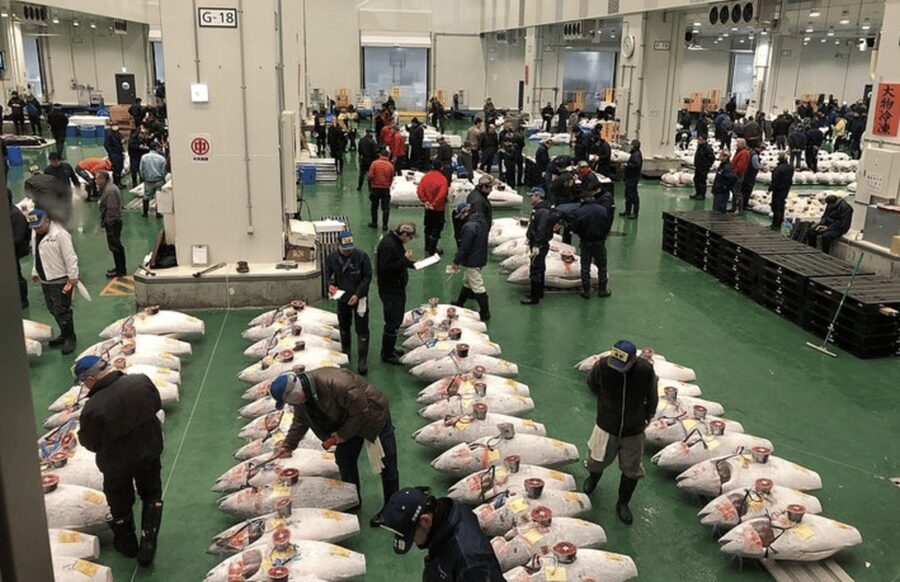
Toyosu’s tuna auction is not a staged show. It is a working wholesale market, and the action is practical rather than theatrical. Professional buyers examine bluefin tuna, assess quality, and bid in a rapid process that can be hard to understand if you arrive alone.
That is where the guide earns the fee. Guides such as Sachiyo have used diagrams and photo binders to explain what buyers are looking for and how the auction fits into Japan’s seafood trade. Other guides, including Emi and Eriko, have used visual aids to explain the fishing and sales process.
From the viewing areas, you can watch the auction without entering the working floor. The second-floor observation area is available even if you do not win the lottery, though the view is less close. The first-floor deck offers a much nearer look, but access depends on the market authority’s lottery, not on the tour company.
This distinction matters. You should book the tour for the market visit and the guide’s explanation, not as a guaranteed first-floor ticket. If you win, bring your passport or another accepted form of identification. At the end of December, the lottery does not take place, so the auction viewing is from the second floor.
The auction itself may vary from day to day. One morning may feel packed with activity, while another may have only a few tuna sales taking place. That uncertainty is part of any working market visit, and it is a good reason to keep your expectations realistic.
More Fish Market and Seafood Tours in Tokyo
- Tokyo Tsukiji Fish Market Food and Culture Walking Tour
★ 5.0 · 3,184 reviews - Tokyo: Tsukiji Fish Market Food and Walking tour
★ 5.0 · 1,724 reviews - Tokyo: Tsukiji Fish Market Guided Walking Tour
★ 4.9 · 1,397 reviews
Toyosu Market beyond the tuna
Toyosu is more than its famous bluefin tuna. The 70-minute visit also takes you through the professional market area, where you can learn about seafood handling and browse businesses connected with Japanese cooking.
The market is known for its cleanliness and controlled layout. Do not expect a strong fish smell simply because you are near a wholesale seafood operation. The market can feel surprisingly tidy, with much of the working activity separated from public viewing areas.
Your guide can explain the role of other auctions and point out products that may be easy to miss. Depending on the day and your interests, you may encounter shops selling dried mushrooms, kombu, pickles, miso, sake, tea, and other pantry goods.
This is also a good place to ask practical food questions. If you want to know how to use kombu, compare Japanese tea tools, or select an item to take home, a private guide can help you make sense of the choices. The tour includes the walking guidance, but food, drinks, and purchases cost extra.
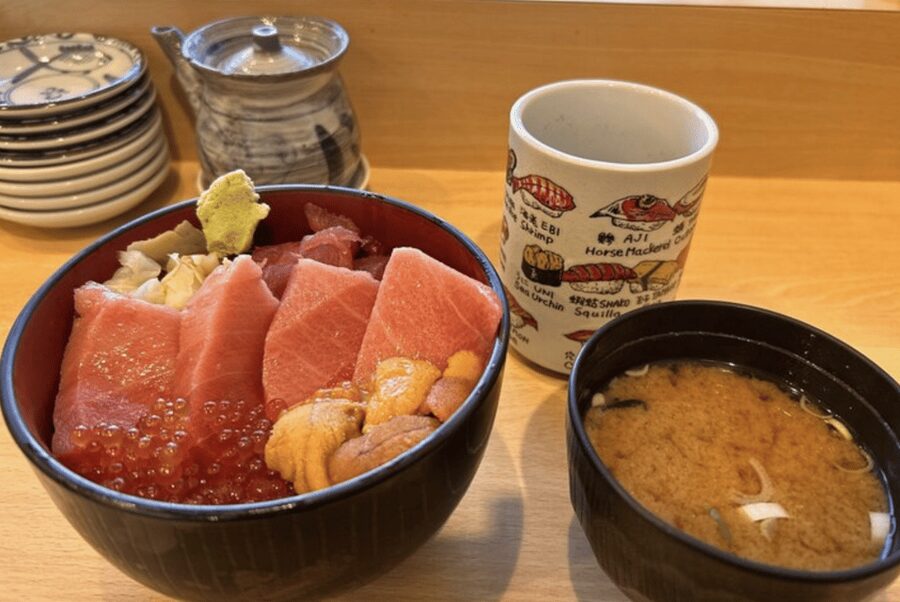
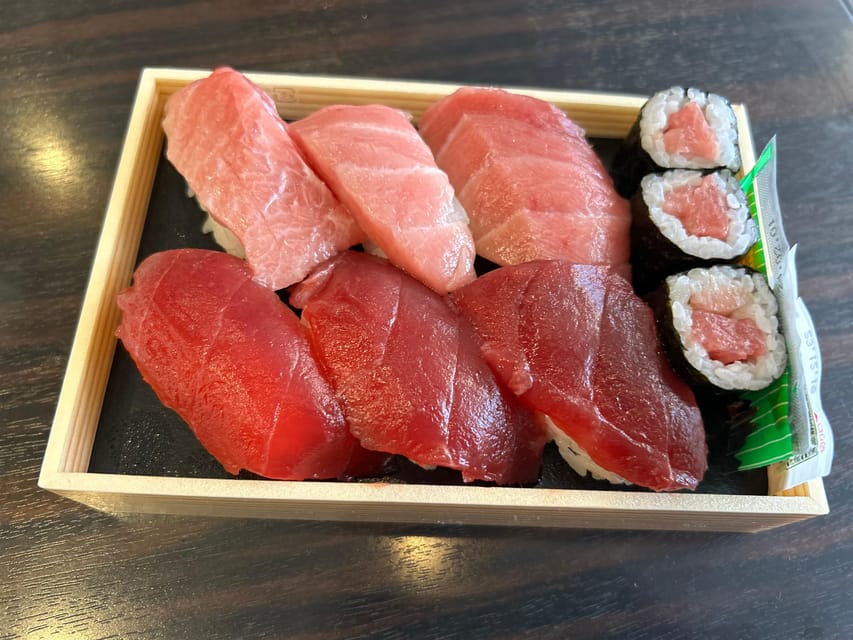
Breakfast may happen at Toyosu or later at Tsukiji. That flexibility is useful because you can choose between sitting down for sushi or continuing through the market before stopping for food. Very early sushi is part of the appeal here. One possible meal time is around 6:30 a.m., which may sound strange at home but makes perfect sense after watching the morning auction.
The bus ride from Toyosu to Tsukiji
After Toyosu, the group takes a local bus toward Tsukiji. The ride is listed at about 15 minutes, and the bus fare is not included.
This short transfer links two different parts of Tokyo’s food story. Toyosu is the newer wholesale center, while Tsukiji remains the older Outer Market, where small shops, food counters, and kitchenware sellers create a more hands-on morning stop.
The bus is also easier than trying to plan the connection yourself after an early start. Still, keep a little cash ready for transit, and remember that the taxi from your hotel to the first market is separate.
Eating your way through Tsukiji Outer Market
Tsukiji is where the tour becomes more relaxed and snack-focused. The 70-minute visit gives you time to walk through food stalls, ask questions, and decide what looks good.
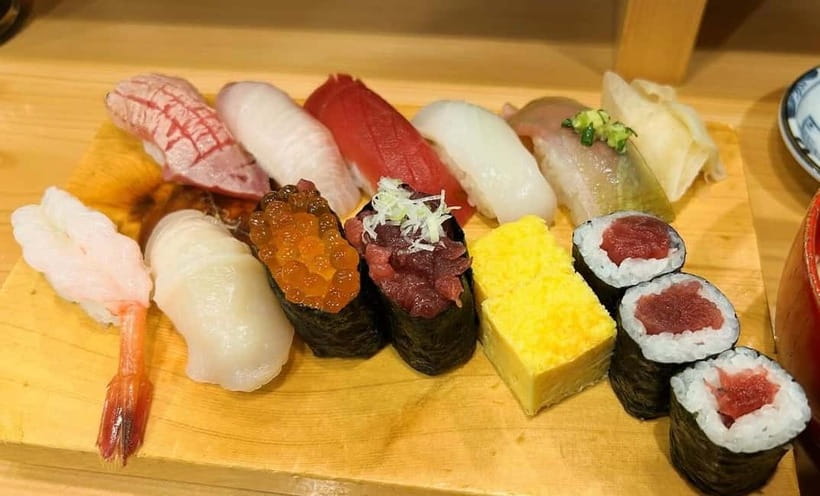
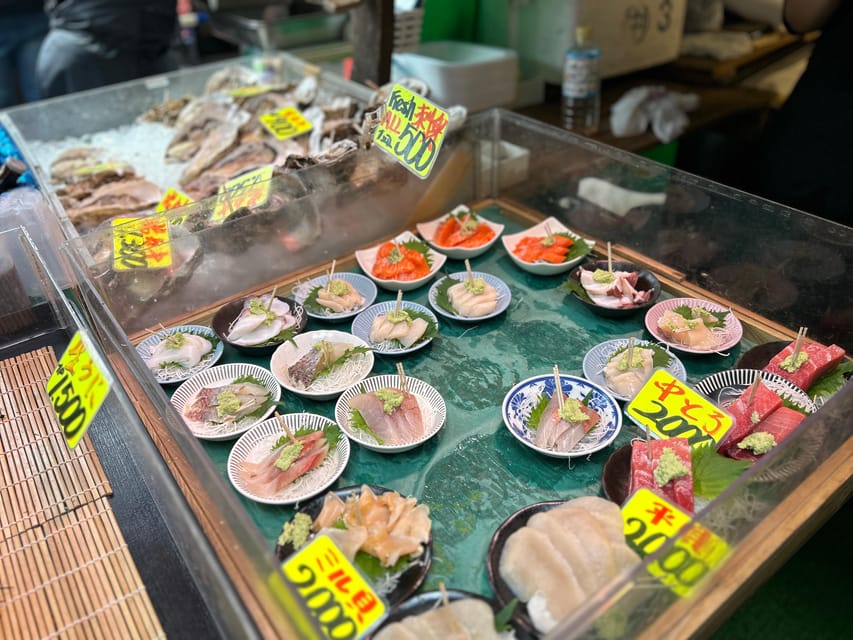
The food list is broad. You might find sushi, sliced sashimi, grilled eel, yakitori, tamago, tuna steak, seasonal produce, mochi, and other Japanese specialties. The guide can help you choose, explain unfamiliar ingredients, and assist with communication when you want to buy something.
You should not treat the food tastings as an all-inclusive meal. Breakfast and drinks are not included, so budget separately for each dish or restaurant. That can be an advantage for picky eaters because you pay only for what you choose, but it also means the final cost depends on how much you eat.
The private format works especially well here. A family with children may want smaller snacks and sweets, while a food-focused couple may prefer sushi and sashimi. Vegetarians and vegans are welcome, and the guide can help you find suitable ingredients together. The food options are not presented as a fixed menu, so tell the guide your needs early.
Some guides can also point you toward less expensive local choices rather than only the most famous counters. That is one of the practical benefits of having someone who knows the market. You can still make your own choices, but you spend less time guessing which shop fits your appetite and budget.
More Street Food Market Tours in Japan
- Tsukiji Fish Market Guided Tour and Sushi Making with Pro Chef
★ 5.0 · 775 reviews - Tokyo: Tsukiji Fish Market Food and Culture Walking Tour
★ 4.7 · 757 reviews - Tsukiji Fish Market: Street Food & Culture Walking Tour
★ 5.0 · 669 reviews - Tsukiji Fish Market Small-Group Food Walking Tour
★ 5.0 · 621 reviews
Shopping for knives, tea tools, and pottery
Tsukiji is a useful stop if you want a Japanese kitchen item that is both practical and easy to pack. Shopping possibilities include Japanese knives, pottery, chopsticks, matcha whisks, wasabi graters, and other utensils.
Knife shopping deserves a little care. A guide can help with translation and explain what you are looking at, but you should still decide what you actually need before buying. Think about blade style, size, weight, maintenance, and how you will carry it home.
Tea shoppers can look for matcha and a whisk, while cooks may prefer a wasabi grater, chopsticks, or ceramics. The market also has stores for pickles, miso, sake, dried mushrooms, and kombu. These smaller purchases can be more useful than a generic souvenir because they bring part of the morning into your own kitchen.
Pottery is another reason not to rush. You may find serving pieces or small bowls, though the exact selection changes from shop to shop. Wrap fragile items carefully and ask about packing before you pay.
The guide is not a shopping service, and purchases are not included. Still, the private setting gives you room to stop at several stores without worrying about holding up a large group.
The optional shrine stop
A local shrine visit may be added if time and interest allow. It is optional, so you should not book this experience expecting a full shrine tour or a separate cultural lecture.
The shrine stop can provide a quiet change of pace after the market. If your priority is food and shopping, you may prefer to use the time for another stall or breakfast. If you enjoy seeing how a neighborhood visit mixes everyday commerce with local tradition, ask your guide if the stop fits the morning’s schedule.
What the private format really adds
This tour is private for up to 10 people. That is small enough for questions and flexible enough for a family or a group of friends, though the experience will feel most personal with fewer people.
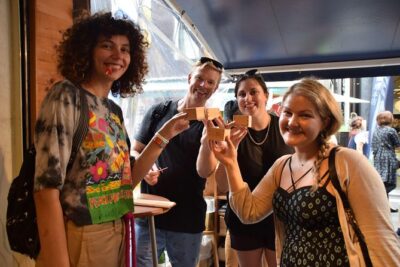
The best guides adjust the morning to the group. Nobby has been praised for keeping the route efficient while explaining the market in clear terms. Yumi, Sachiyo, Emi, Eriko, Mayumi, and others have also helped with restaurant choices, shopping, translation, and navigation.
That personal help matters at 5 a.m. Tokyo’s markets are not difficult because they are dangerous. They are difficult because they are unfamiliar, early, crowded in places, and full of signs and products you may not recognize. A guide gives you context at the moment you need it.
There is one small tradeoff. At such an early hour, you may not want to discuss every breakfast decision in a taxi or while still waking up. If you need a quiet ride, tell your guide. Once you reach the market, the food choices will still be there.
Timing, taxis, and the early-morning reality
Plan this as a true early morning, not a late breakfast outing. The guide can meet you at your hotel around 5 a.m., or you can meet at the ticket gate of Shijo-mae Station on the Yurikamome Line.
The taxi from your hotel to the market is not included. Subways and buses may not be operating early enough, so a taxi is usually the practical choice. Staying in Toyosu, Tsukiji, or Ginza can reduce the fare and make the start easier.
If you meet at Shijo-mae Station, use the stairs or elevator to the second-floor ticket gate. The escalator shutters do not open until 5 a.m., which is worth knowing when you are standing outside before dawn.
The operator asks you to provide an accurate phone number and download WhatsApp because the guide may contact you there. Keep notifications from Japanese numbers enabled. This is especially important if you choose hotel pickup, since the guide needs to confirm where and when to meet.
The tour lasts about three hours, with roughly 70 minutes at Toyosu, 15 minutes by bus, and 70 minutes at Tsukiji. The short schedule gives you a useful overview, but it does not allow unlimited lingering at every stall.
Is $153 per person good value?
At $153 per person, this is not a cheap market walk. You also pay for your taxi, bus fare, breakfast, drinks, and shopping.
The value comes from the private guide, the very early timing, and the ability to combine Toyosu and Tsukiji in one organized morning. You are paying for help with a complicated auction, early navigation, food choices, and market shopping, not simply for entry to a viewing area.
I think the price makes the most sense for first-time visitors who want to understand what they are seeing. It is also easier to justify for a small private group, especially if several people share the guide’s attention and want different food or shopping stops.
The value is weaker if you only want a quick look at tuna and do not care about explanations, food, or shopping. It is also less certain if your only goal is the first-floor auction because the lottery is outside the operator’s control.
The current rating is 4.8 from 191 ratings, and the repeated strengths are clear: guides arrive on time, explain the auction well, speak strong English, and help people get more from both markets. Guides have also helped families, children, vegetarians, and visitors who wanted specific shopping or restaurant advice.
Who should book this morning?
You should consider it if you want a guided introduction to Tokyo’s seafood trade, enjoy trying several small foods, or would rather not work out the markets alone before sunrise.
It suits families because children can watch the auction, try small snacks, and browse colorful food stalls. It suits food-focused visitors who want sushi, sashimi, grilled eel, tamago, or mochi with help choosing where to eat.
It is also a good fit for shoppers looking for knives, ceramics, tea tools, chopsticks, or specialty ingredients. The tour can be adapted for vegetarian and vegan visitors, although you should explain your needs clearly at the start.
You may want to skip it if you dislike early mornings, have no interest in seafood markets, or want a long, slow breakfast. The auction can also be quieter than expected, and the closest viewing deck is never guaranteed.
Final call: book it for the guide, not just the auction
I would book this tour if the idea of seeing Toyosu and Tsukiji in one morning appeals to you. The auction is memorable, but the stronger package is the combination of explanation, food, shopping, and local navigation.
Set your alarm, budget for transport and breakfast, and treat the first-floor auction as a bonus rather than a promise. If you do that, the $153 price buys a useful, personal introduction to two of Tokyo’s most important food markets, with enough flexibility to make the morning your own.
FAQ
How long does the tour last?
The tour lasts about three hours. The planned visit includes around 70 minutes at Toyosu, a 15-minute bus ride, and around 70 minutes at Tsukiji.
What time does the tour start?
The guide generally meets you around 5 a.m., though you should check the available starting time when booking.
Where can I meet the guide?
You can meet at the ticket gate of Shijo-mae Station on the Yurikamome Line, or select hotel pickup when available. The guide will contact you through WhatsApp or the GetYourGuide app.
Is the taxi from my hotel included?
No. The taxi from your hotel to the market is not included, and the fare depends on your hotel’s location. Staying near Toyosu, Tsukiji, or Ginza can help reduce the cost.
Is the tuna auction’s first-floor viewing guaranteed?
No. The first-floor observation deck requires a lottery run by the market authorities. You must book by the fifth of the previous month and register through the official link. If you do not win, you can still watch from the second floor.
What happens to auction viewing in December?
The lottery does not take place at the end of December. During that period, the auction viewing is from the second floor.
Is breakfast included?
No. Breakfast, drinks, bus fare, taxi fare, and personal purchases are not included. You can buy sushi or seafood breakfast at Toyosu or Tsukiji.
Can vegetarians, vegans, children, wheelchair users, and people with strollers join?
Yes. Vegetarian and vegan visitors can receive help finding suitable ingredients. Children are welcome, and the activity is accessible for wheelchair users and people with strollers.
What should I bring?
Bring your passport or another form of identification, especially if you win the first-floor auction lottery, and carry cash for food, transport, and shopping. Download WhatsApp and enable notifications from Japanese phone numbers before the tour.
More Market Food Tours in Tokyo
- Tokyo: Toyosu Tuna Auction &Tsukiji Market Gourmet Adventure
★ 4.8 · 187 reviews - Tokyo: Tsukiji Fish Market Tour with 6 Stops & Seafood Lunch
★ 4.5 · 165 reviews - Inside Tokyo’s Kitchen: Tsukiji Market, Food & Culture Tour
★ 5.0 · 162 reviews - Tsukiji Food and Toyosu Market with Government-Licensed Guide
★ 5.0 · 158 reviews
More Street Food Market Tours in Tokyo
- Tokyo: Tsukiji Fish Market Sushi Making Class with Pro Chef
★ 4.9 · 506 reviews - Tokyo Food Tour Taste Fresh Delights at Tsukiji Market
★ 5.0 · 429 reviews - Tokyo Tsukiji Fish Market Tour and Sushi Making Lesson
★ 5.0 · 390 reviews - Tsukiji Fish Market: Street Food & Culture Walking Tour
★ 4.8 · 259 reviews
Just added around Tokyo
- Tokyo: Tsukiji walk & sushi private tour with Uni Students★ 5.0 · 17 reviews
- Tokyo: Private Tsukiji Street Food & Sake with Local Guide★ 5.0 · 3 reviews
- Tokyo: Tsukiji Market Guided Tour & Sushi-Making Experience★ 4.4 · 11 reviews
- Tokyo: Tsukiji Market and Hama-rikyu Gardens Guided Tour★ 4.8 · 73 reviews
- Tokyo Tsukiji Food & Culture Private Tour Licensed Guide★ 4.9 · 28 reviews
- Tokyo: Tsukiji Fish Market Foodie and Educational Tour★ 5.0 · 4 reviews
- Tokyo: Tsukiji Fish Market Culture Tour with Sashimi Tasting★ 4.6 · 54 reviews
- Tokyo: Tsukiji, Ginza, and Asakusa Japanese Culture Tour★ 5.0 · 2 reviews
Tokyo Street Food Tours, compared.
Tokyo Tsukiji Fish Market Food and Culture Walking Tour
Read our review →
Tokyo: Tsukiji Fish Market Food and Walking tour
Read our review →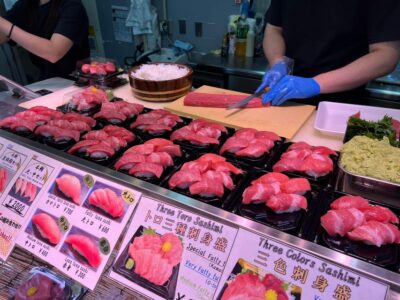
Tokyo: Tsukiji Fish Market Guided Walking Tour
Read our review →
Tokyo Sushi Making Class in Tsukiji with Professional Chef
Read our review →
Tsukiji Fish Market Guided Tour and Sushi Making with Pro Chef
Read our review →Tokyo: Tsukiji Fish Market Food and Culture Walking Tour
Read our review →
Tsukiji Fish Market: Street Food & Culture Walking Tour
Read our review →