REVIEW · TOKYO STREET FOOD TOURS
Tokyo: Tsukiji Fish Market Sushi Making Class with Pro Chef
The best part of this Tsukiji experience is that you do not simply watch a chef work. You handle the rice, fish, knife, and bamboo mat yourself, then sit down to eat what you made. Chef Tanaka, Kate, Koro, Ike, and other rotating sushi masters lead the lesson, while English-speaking hosts such as Yuko, AJ, Satoko, and Micky keep the instructions clear.
I like two things in particular: the use of fresh ingredients and proper utensils sourced from Tsukiji, and the small, friendly teaching style praised by many participants. You also get to watch the chef prepare an additional piece with fresh wasabi, which gives you a quick look at the speed and precision behind a sushi counter. The main consideration is that the room sits on the third floor of a traditional building with stairs only, and the session can run past its planned end time.
Key points to know before booking
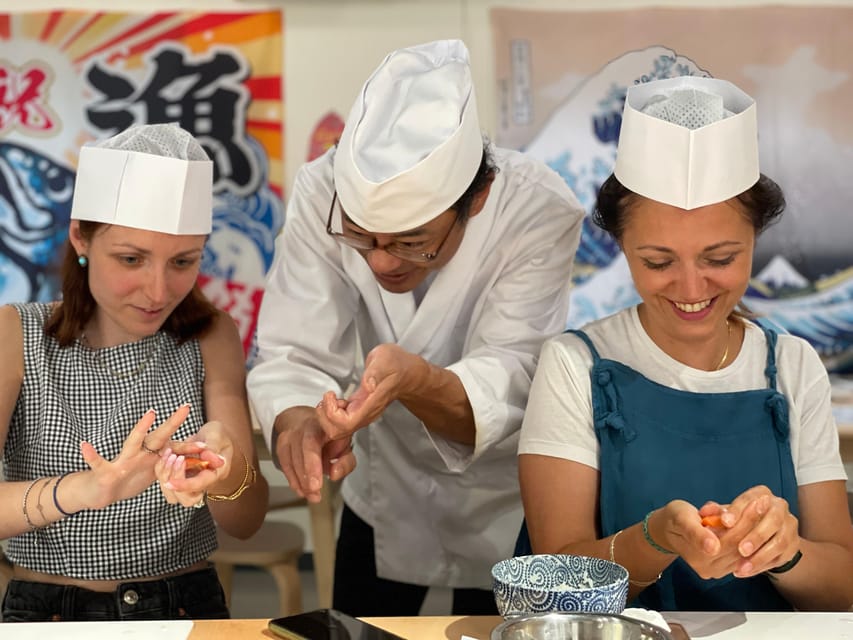
- You make five pieces of sushi: four nigiri and one maki roll, then eat them with tea and dashi soup.
- A professional chef demonstrates fish preparation: you learn about disassembly, sashimi preparation, Japanese knives, and sushi technique.
- The class takes place in Tsukiji: some booking options include a market walk, but market guidance is not included with every option.
- English support is provided throughout: the host interprets the chef’s explanations and helps beginners follow each step.
- The setting is intimate and hands-on: smaller groups make it easier to ask questions and receive help with shaping and cutting.
- The price is $63 per person: that is a fair rate for an instructional meal in central Tokyo, especially if you value participation over sightseeing alone.
Why sushi making works so well in Tsukiji
Tsukiji is no longer Tokyo’s main wholesale fish market, but its outer market remains a major food district with shops, stalls, restaurants, and suppliers. This class puts you in that setting rather than in a generic cooking studio far from the market.
That location matters. Ingredients and tableware come from local Tsukiji shops, so the class connects the food to the neighborhood around you. You are not just making sushi from a supermarket kit. The market setting also makes it easy to plan a food-focused morning, with time to explore before or after the lesson.
The exact meeting point depends on the option you book. Read that information carefully, since the class itself and the market walking portion may be separate choices. Some bookings include a guide such as Tack, Sean, Shoko, or Tadashi showing you around the market and nearby shrines. The core sushi class does not automatically include a market tour or general guidance through the area.
More Fish Market and Seafood Tours in Tokyo
- Tokyo Tsukiji Fish Market Food and Culture Walking Tour
★ 5.0 · 3,184 reviews - Tokyo: Tsukiji Fish Market Food and Walking tour
★ 5.0 · 1,724 reviews - Tokyo: Tsukiji Fish Market Guided Walking Tour
★ 4.9 · 1,397 reviews
Entering the traditional classroom
The classroom is in a Japanese-style building in the center of the Tsukiji outer market. It is on the third floor, and there is no elevator, so you need to be comfortable with stairs.
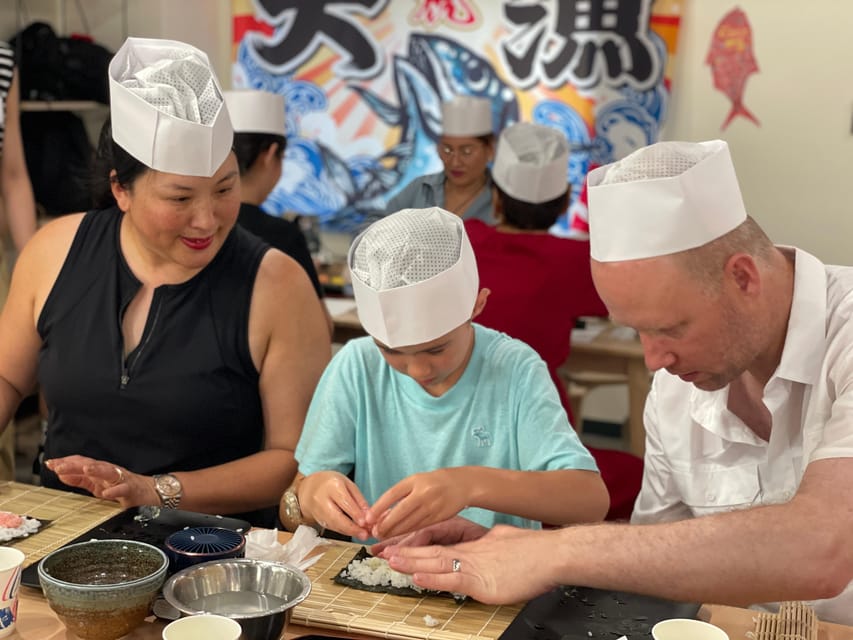
This is not a large demonstration kitchen where you sit at the back and watch a screen. The format is closer to a small workshop. You sit at a prepared table, receive the needed tools and ingredients, and follow the chef’s instructions one stage at a time.
The English-speaking host plays an important role. The chef may focus on technique and demonstration, while the host explains terms, repeats instructions, and checks that everyone is keeping up. Hosts named in the feedback include Yuko, AJ, Satoko, Micky, Ike, Eri, and Tack, although the staff assigned to your session can differ.
That language support is especially useful when the chef is explaining small movements. Sushi making is simple to describe but tricky to perform. The rice must be handled lightly, the fish needs a clean cut, and the finished piece should hold together without being squeezed into a lump.
Watching the fish preparation demonstration
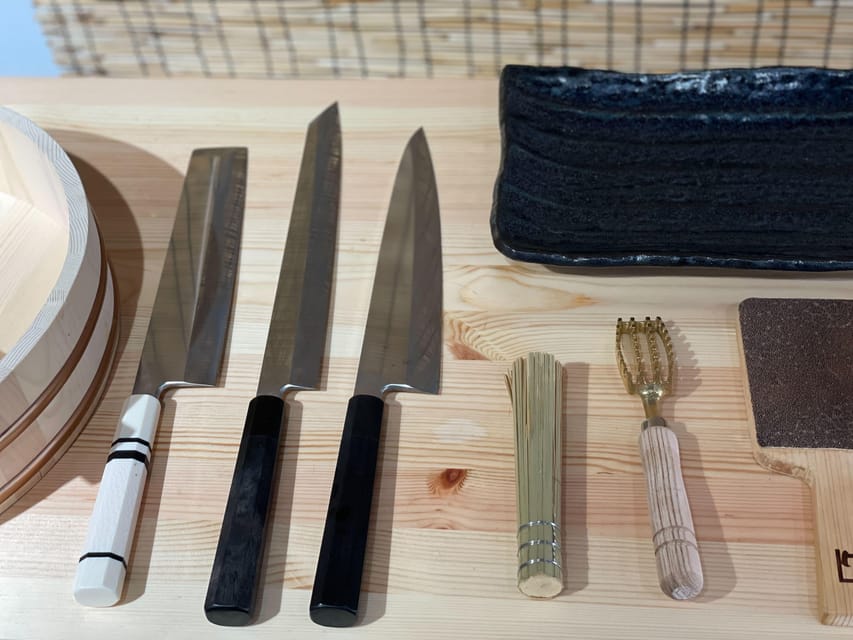
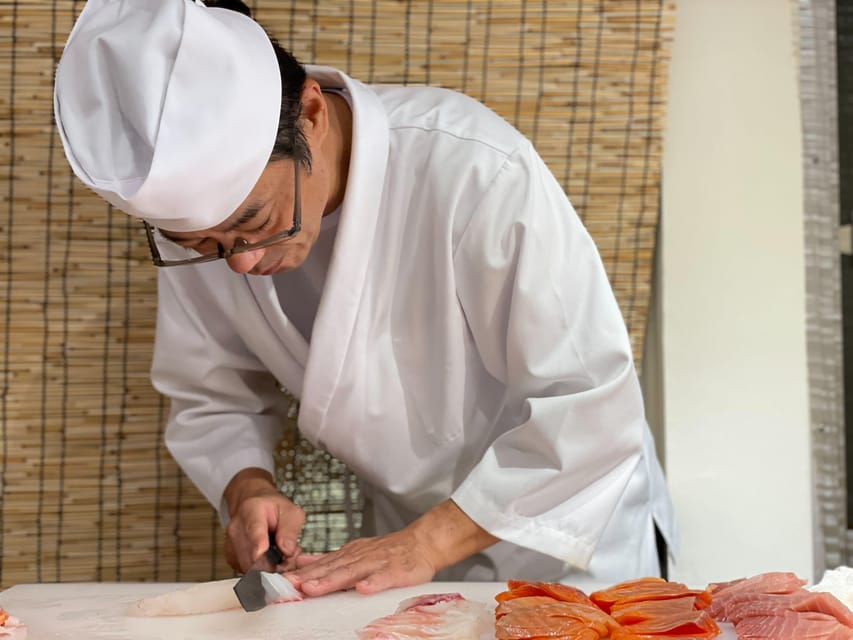
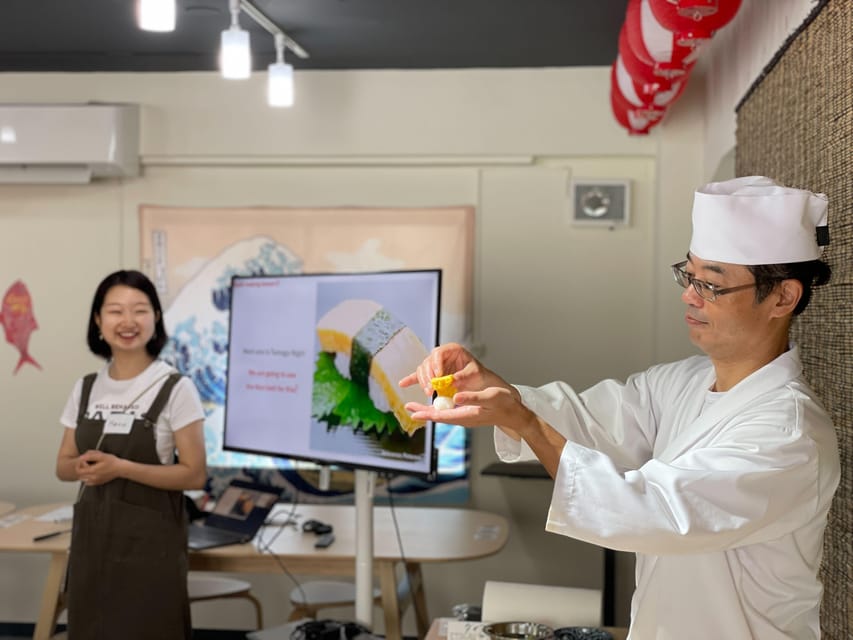
The class begins with a fish disassembly demonstration. The chef explains the steps used to prepare fish for sushi and sashimi, along with the role of Japanese knives.
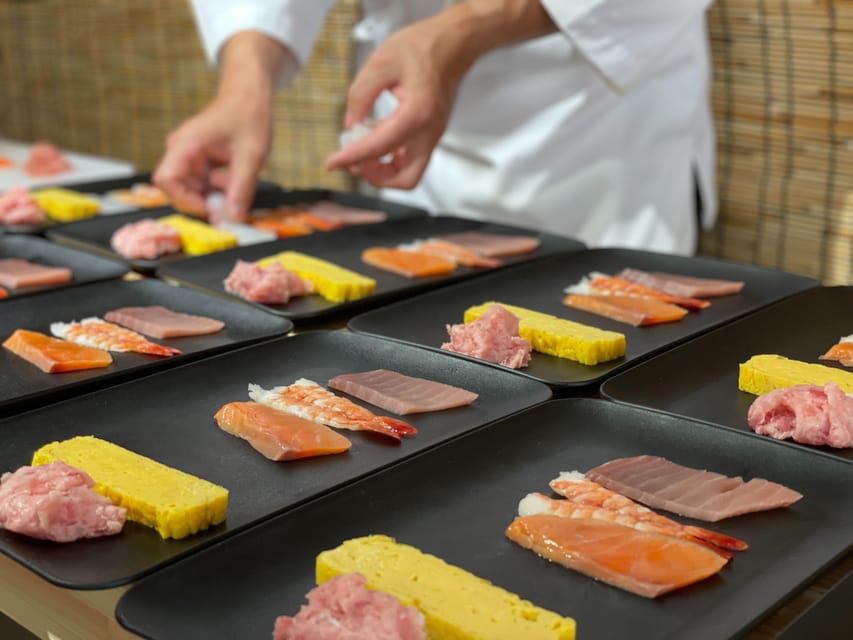
This is one of the more valuable parts for anyone who normally sees sushi only after it reaches the plate. You get to watch how the chef approaches the fish, separates portions, and prepares it for serving. The demonstration also helps explain why knife quality and technique matter so much in Japanese cooking.
The point is not to turn you into a sushi professional in 90 minutes. Instead, you gain a better sense of the work behind a clean slice of sashimi or a neat piece of nigiri. Several classes also include a chance to learn basic sushi and sashimi cutting, which adds useful context before you begin shaping your own pieces.
Pay attention to the chef’s hands. The movement may look fast, but the lesson breaks it into steps. That is where an instructor such as Kate or Tanaka can make the difference. The strongest part of the class is not the recipe itself. It is the explanation of why each movement is done in a certain way.
Making four nigiri and one maki roll
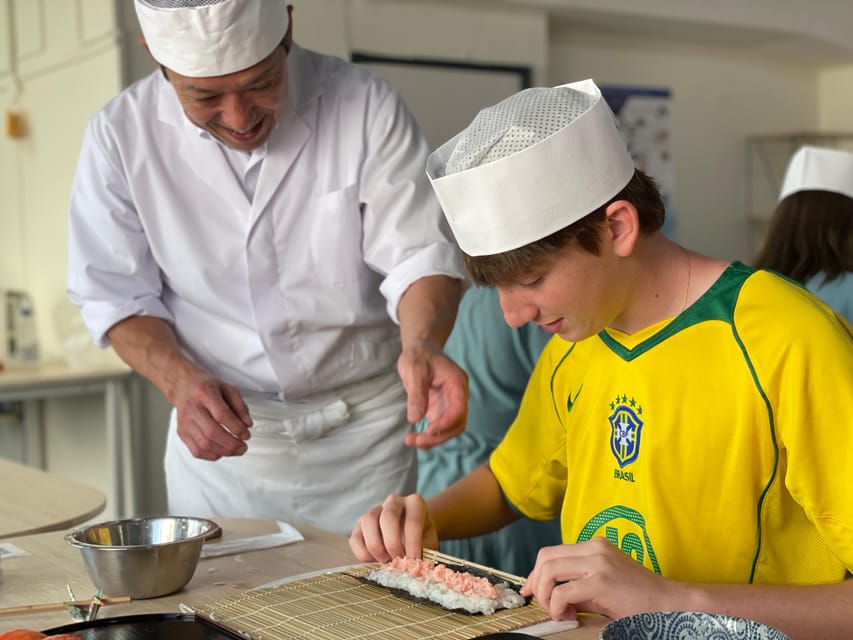
After the demonstration, you learn the difference between nigiri and rolled sushi. Nigiri is the hand-shaped rice topped with fish or another ingredient. Maki is the rolled style, usually formed with seaweed and a bamboo mat.
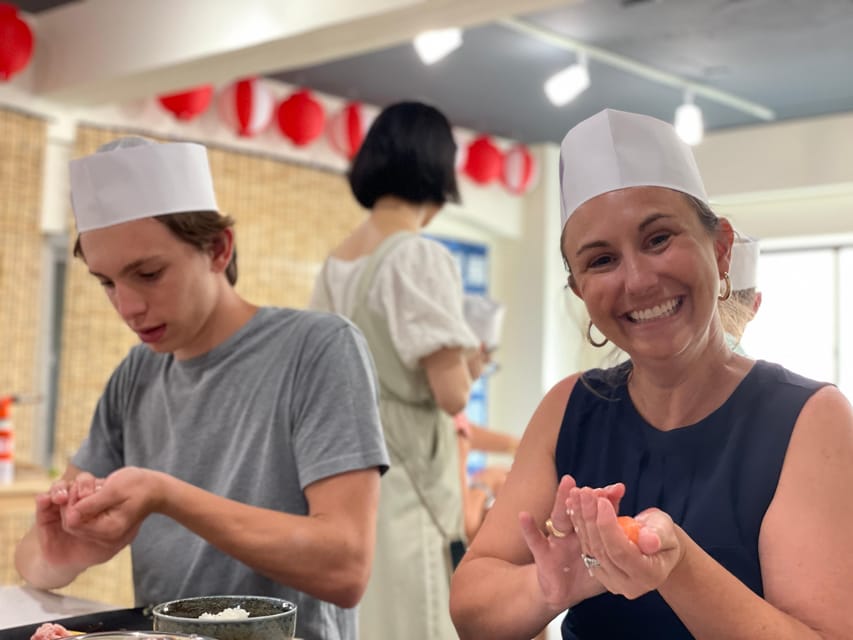
You are scheduled to make four different nigiri sushi and one maki sushi. The host and chef guide you through each step, so beginners do not need previous cooking experience. You receive the proper utensils and tableware, including a hat for the workshop.
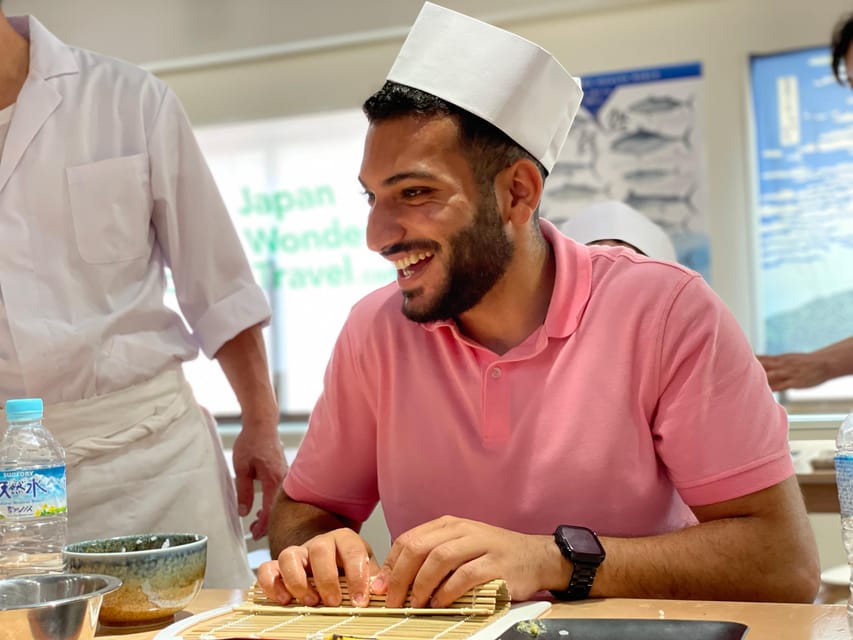
Nigiri is likely to be the harder form at first. You need to portion the rice, shape it without crushing it, and place the topping so the piece looks tidy and stays together. Maki feels more familiar to many first-timers, but rolling evenly takes practice. The chef corrects your technique and offers tips that you can try again at home.
The class is hands-on, but it is still a basic introduction rather than a professional apprenticeship. You will learn the foundations of shaping, rolling, presentation, and eating sushi. You will not cover every kind of sushi or spend hours practicing knife work. That balance suits most people visiting Tokyo, especially if you want a fun food activity without giving up half a day.
More Street Food Market Tours in Japan
- Tsukiji Fish Market Guided Tour and Sushi Making with Pro Chef
★ 5.0 · 775 reviews - Tokyo: Tsukiji Fish Market Food and Culture Walking Tour
★ 4.7 · 757 reviews - Tsukiji Fish Market: Street Food & Culture Walking Tour
★ 5.0 · 669 reviews - Tsukiji Fish Market Small-Group Food Walking Tour
★ 5.0 · 621 reviews
Eating your sushi with the chef’s extra piece
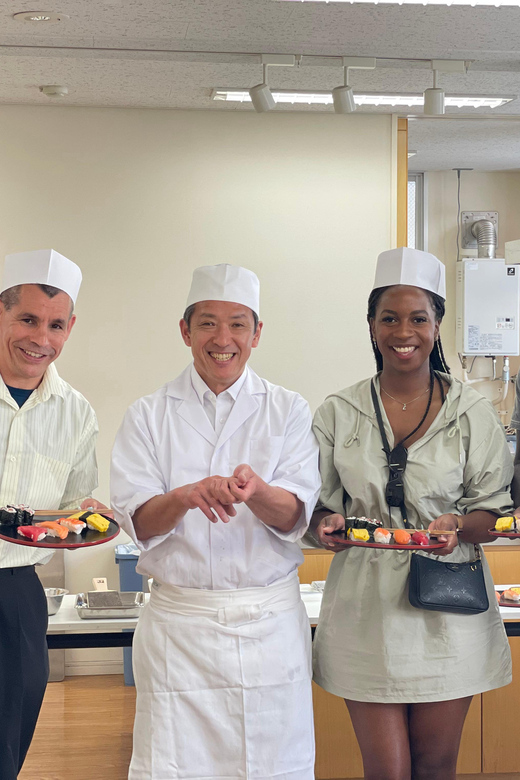
The meal comes after the work. You eat the sushi you made, along with an additional piece prepared by the sushi master.
This extra serving is more than a bonus snack. It gives you a direct comparison between your beginner-level sushi and the chef’s finished version. Watch how quickly the chef forms the rice and handles the fish. You can also taste the difference in texture and balance without needing a lecture about it.
Fresh wasabi is prepared by the chef, and traditional dashi soup and green tea are served with the sushi. These details help turn the workshop into a proper meal rather than a quick cooking exercise.
The food earns especially strong praise because it is fresh, simple, and eaten soon after preparation. One useful detail is that the class has also worked well for people who do not normally eat raw fish. Still, you should tell the operator about allergies when you book. The activity does not accommodate vegan, vegetarian, halal, kosher, or gluten-free diets as standard, though allergy-related requests may sometimes be possible.
How much personal attention you can expect
Group size affects this experience. Smaller sessions make it easier to hear the host, ask questions, and receive help from the chef. One participant described a group of six as comfortable, with enough space for everyone to get feedback.
The format also works for solo visitors. You do not need to bring a large group, and the listed experience is suitable for groups of one to four people. Couples, families, and small friend groups can share the table without turning the lesson into a private event.
The teaching style appears friendly and patient. Hosts and chefs named in the feedback include Yuko with Chef Kana, Micky with Chef Koro, and AJ with different chefs. Staff assignments vary, but the consistent feature is English assistance and step-by-step instruction.
Families can enjoy the class, but age and attention span matter. Children under four are not accepted. Some families brought children around nine and ten, and older children who can listen, remain quiet during demonstrations, and follow instructions should get more from the session. The activity information gives a broader family-friendly description, while one participant found it best for children over eight who can pay attention.
Choosing between 90 minutes and longer options
The listed duration ranges from 90 minutes to four hours. That wide range likely reflects the booking option, with some sessions focused on the classroom and others adding market exploration.
A 90-minute class suits you if the main goal is learning the basics and eating lunch. It fits neatly into a morning or afternoon in Tsukiji. You still receive the fish preparation demonstration, sushi instruction, your own five pieces, the chef’s sushi, tea, and soup.
A longer option may suit you if you want a guided market experience before or after cooking. Several participants describe walks through Tsukiji with explanations of fish, food types, local shops, and nearby shrines. That added context can make the $63 price feel stronger, but you need to confirm which option includes it.
Do not schedule a tight appointment immediately afterward. The activity notes that it may run beyond the planned finishing time, and a few people were accommodated after train delays or arriving late. That flexibility is helpful, but you should still allow extra time rather than relying on it.
Is $63 a good value in Tokyo?
At $63 per person, this is not the cheapest way to eat sushi in Tokyo. You could buy a meal for less, especially at a casual restaurant. The value here comes from the instruction, the chef demonstration, the market location, the tools, and the chance to eat sushi you made yourself.
The price includes the workshop, English-speaking host, professional chef, fresh ingredients, utensils, four nigiri, one maki, extra sushi from the chef, tea, soup, and a hat. For a visitor who wants a memorable activity rather than another restaurant meal, that is a reasonable package.
I would consider it good value for first-time sushi makers, families, and people who want a food experience with a clear beginning and end. It is less compelling if you already make sushi at home or mainly want a long guided tour of Tsukiji. In that case, check the option details and decide if the market walk is included.
Who should book this class
I would recommend it to you if you want a practical introduction to Japanese food culture. You do not need knife skills or cooking experience, and the host helps bridge any language gap.
It is also a good choice for a family itinerary. The work is active enough to keep older children involved, and the meal gives everyone a clear reward at the end. Parents should remember the stairs and the need for children to follow the chef’s instructions.
Sushi lovers will appreciate the fish preparation demonstration and the chance to watch a professional form sushi at close range. People who are nervous about raw fish may still enjoy the lesson, but you should check the ingredients and allergy policy before booking.
This is not the right choice for wheelchair users or people with mobility impairments because of the third-floor stairs. It also is not suitable for vegans or vegetarians, and standard requests for halal, kosher, or gluten-free food cannot be guaranteed.
Practical tips for getting more from the class
Arrive with enough time to locate the meeting point, since it can vary by option. Wear clothes that are comfortable for sitting and working at a table, and keep your schedule open afterward in case the session runs long.
Tell the operator about allergies at the time of reservation. Do not assume that a dietary change can be arranged on the day.
If you want to explore Tsukiji, plan that separately unless your selected option clearly includes a market walk. The neighborhood is the right place for browsing food shops and eating, but the sushi class itself does not promise a full market tour.
Bring your curiosity, not high expectations of professional-level results. Your nigiri may look uneven, and your maki may not be perfectly tight. That is part of the fun. The chef’s corrections and the chance to taste the finished pieces are more useful than leaving with a flawless photograph.
Should you book the Tsukiji sushi class?
Book it if you want to do more than eat sushi in Tokyo. The class gives you a short lesson, a market setting, fresh ingredients, a professional demonstration, and a meal you help prepare. The English-speaking hosts and patient chefs make it approachable for beginners, while the fish and knife demonstration adds substance beyond a simple roll-making activity.
Skip it if you need step-free access, strict vegetarian or vegan food, or a guaranteed short schedule. Also check the exact option if a Tsukiji walking tour is important to you.
For most visitors who enjoy food and hands-on activities, $63 is a fair price for a well-structured introduction to sushi. I would place it high on a Tokyo itinerary, especially before spending time browsing the outer market.
FAQ
Where does the sushi class take place?
The class takes place in a traditional Japanese-style building in the center of Tsukiji’s outer fish market. The classroom is on the third floor.
How long does the activity last?
Available options range from 90 minutes to four hours. Check the booking option for the exact duration and start time.
What sushi will I make?
You will make four different nigiri sushi and one maki sushi under the chef’s guidance.
Is sushi included in the price?
Yes. The sushi you make is included, along with additional sushi prepared by the master, tea, and soup.
Is an English-speaking instructor available?
Yes. An English-speaking host interprets and guides you throughout the class. The listed activity language is English.
Does the experience include a Tsukiji market tour?
Not every option includes market guidance. Some versions include a walk with a guide, while the core sushi class does not include guidance through the market. Check the option details before booking.
Is the class suitable for children?
Children under four are not accepted. Older children can take part, but they need to follow instructions and pay attention during the demonstrations.
Can vegetarians or vegans join?
The activity is not suitable for vegans or vegetarians. Standard halal, kosher, and gluten-free requests cannot be accommodated.
Is the classroom accessible by elevator?
No. The classroom is on the third floor of a traditional building with stairs only. The activity is not suitable for wheelchair users or people with mobility impairments.
Can I cancel the booking?
You can cancel up to 24 hours in advance for a full refund. The reserve-now, pay-later option allows you to hold a place without paying immediately.
More Market Food Tours in Tokyo
- Tokyo: Toyosu Tuna Auction &Tsukiji Market Gourmet Adventure
★ 4.8 · 187 reviews - Tokyo: Tsukiji Fish Market Tour with 6 Stops & Seafood Lunch
★ 4.5 · 165 reviews - Inside Tokyo’s Kitchen: Tsukiji Market, Food & Culture Tour
★ 5.0 · 162 reviews - Tsukiji Food and Toyosu Market with Government-Licensed Guide
★ 5.0 · 158 reviews
More Street Food Market Tours in Tokyo
- Tokyo Food Tour Taste Fresh Delights at Tsukiji Market
★ 5.0 · 429 reviews - Tokyo Tsukiji Fish Market Tour and Sushi Making Lesson
★ 5.0 · 390 reviews - Tsukiji Fish Market: Street Food & Culture Walking Tour
★ 4.8 · 259 reviews - Private Toyosu & Tsukiji Market Adventure with Tuna Auction
★ 4.8 · 191 reviews
Just added around Tokyo
- Tokyo: Tsukiji walk & sushi private tour with Uni Students★ 5.0 · 17 reviews
- Tokyo: Private Tsukiji Street Food & Sake with Local Guide★ 5.0 · 3 reviews
- Tokyo: Tsukiji Market Guided Tour & Sushi-Making Experience★ 4.4 · 11 reviews
- Tokyo: Tsukiji Market and Hama-rikyu Gardens Guided Tour★ 4.8 · 73 reviews
- Tokyo Tsukiji Food & Culture Private Tour Licensed Guide★ 4.9 · 28 reviews
- Tokyo: Tsukiji Fish Market Foodie and Educational Tour★ 5.0 · 4 reviews
- Tokyo: Tsukiji Fish Market Culture Tour with Sashimi Tasting★ 4.6 · 54 reviews
- Tokyo: Tsukiji, Ginza, and Asakusa Japanese Culture Tour★ 5.0 · 2 reviews
Tokyo Street Food Tours, compared.

Tokyo Tsukiji Fish Market Food and Culture Walking Tour
Read our review →
Tokyo: Tsukiji Fish Market Food and Walking tour
Read our review →
Tokyo: Tsukiji Fish Market Guided Walking Tour
Read our review →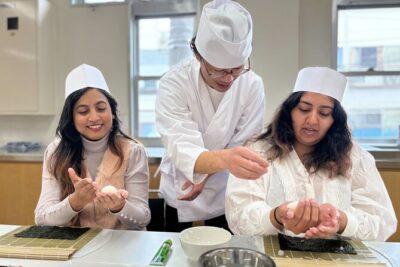
Tokyo Sushi Making Class in Tsukiji with Professional Chef
Read our review →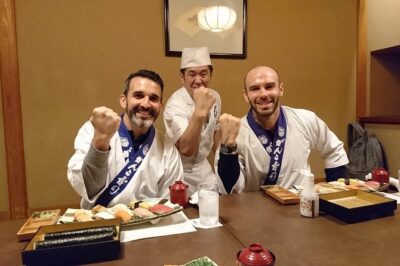
Tsukiji Fish Market Guided Tour and Sushi Making with Pro Chef
Read our review →Tokyo: Tsukiji Fish Market Food and Culture Walking Tour
Read our review →
Tsukiji Fish Market: Street Food & Culture Walking Tour
Read our review →