
REVIEW · OSAKA STREET FOOD TOURS
Osaka: 2-Hour Nightlife District Walking & Local Food Culture
Osaka’s food culture makes the most sense on foot, and this two-hour walk takes you through its best-known eating district without treating it as one giant restaurant stop. You’ll move from the Dotonbori Glico sign to Hozenji Temple, professional kitchen shops, and Kuromon Market.
I like the small-group format, capped at 15 people, and the useful mix of food, local streets, and everyday shopping. I also like that guides such as Kaz, Nako, and Sayaka have tailored the walk to guests’ interests, including sake and even pachinko.
The main catch is simple: food and drinks cost extra, and this is a tasting stroll rather than a sit-down meal. Two hours gives you a good first look at Namba, but not enough time to linger at every stall or market counter.
Key points to know before booking
- Four distinct Osaka stops: Dotonbori, Hozenji Yokocho, Doguyasuji, and Kuromon Market each show a different side of local food culture.
- Street food is not included: Budget separately for takoyaki, gyoza, seafood, fruit, or anything else you choose to buy.
- The group is limited to 15 people: That allows more room for questions than a large coach tour, though it is not a private walk.
- The guide adds the most value: English-speaking guides help you understand what to order and where to look in crowded food areas.
- The route begins and ends near Dotonbori: Meet at Don Quijote Dotonbori Midosuji and return to the same meeting point.
- You can choose from different times: The schedule has options throughout the day, so you can fit the walk around other Osaka plans.
A smart first look at Namba’s food streets
This tour works best as an introduction to Osaka rather than a full food tour. In two hours, you get a guided route through four compact areas, along with pointers that can help you decide where to eat later.
The starting point is Don Quijote Dotonbori Midosuji, at 2-chōme-5-9 Nishishinsaibashi. That puts you close to one of Osaka’s most famous entertainment zones. The area can feel confusing at first, with narrow lanes, bright signs, shops, restaurants, and a steady stream of people moving in every direction.
Your guide gives the walk a clear shape. Instead of simply following the busiest signs, you move through food stalls, a quiet temple lane, cooking-tool shops, and a market known as Osaka’s Kitchen. That range is the real strength of the experience.
The tour runs for about two hours and returns to the meeting point. That makes it easy to schedule before dinner, after checking in, or between other sights in central Osaka. If you choose a later departure, the Dotonbori portion fits the city’s nightlife mood particularly well. Earlier departures may give you a calmer look at the market areas.
More Street Food Walking Tours in Japan
- Osaka Local Foodie Walking Tour in Dotonbori and Shinsekai
★ 5.0 · 985 reviews - Kuromon Market Food Walking Tour in Osaka (6 stops, 6 tastes)
★ 5.0 · 550 reviews - Osaka: Kuromon Market Food Walking Tour (6 stops, 6 tastes)
★ 4.6 · 272 reviews
Dotonbori and the Glico sign
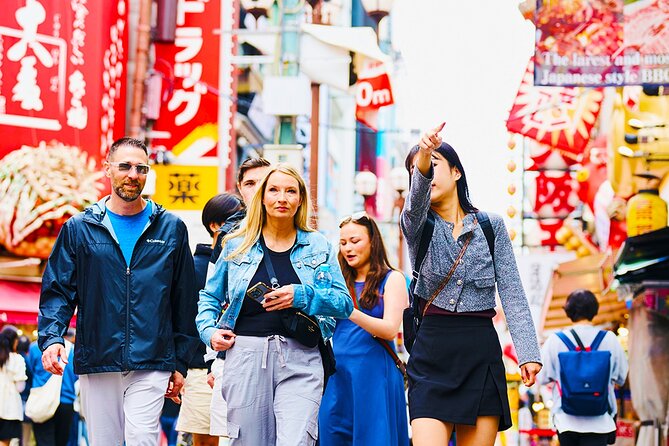
The walk begins around the Dotombori Glico Sign, one of Osaka’s most recognizable photo spots. You get about 30 minutes here, with the guide pointing out street foods and places you might otherwise pass without noticing.
Dotonbori is not a quiet, polished food quarter. It is loud, crowded, commercial, and full of large signs competing for attention. That is part of the appeal. Osaka’s food culture here feels casual and direct, with quick snacks designed to be eaten as you walk or while standing near a stall.
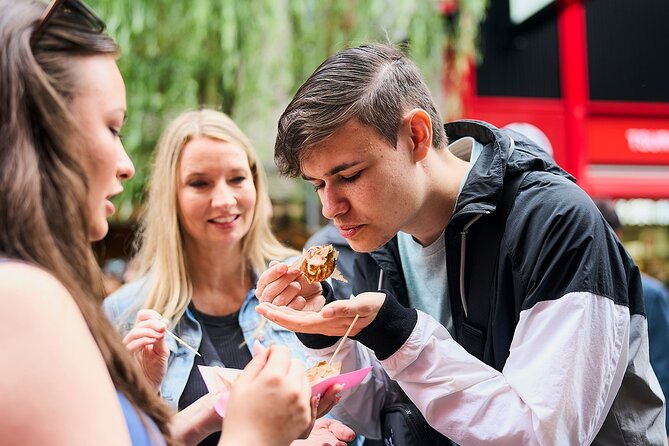
Takoyaki is a natural focus. These small batter balls usually contain octopus and are cooked in special round molds. Gyoza is another familiar choice, especially if you want something savory and easy to share. The tour gives you a chance to try foods such as these, but the cost comes from your own wallet.
That point matters. The advertised price is $31.84 per person, but it covers the English-speaking guided walk, not the food and drinks. You should treat the fee as payment for orientation, local explanation, and help with ordering, then set aside extra money for snacks.
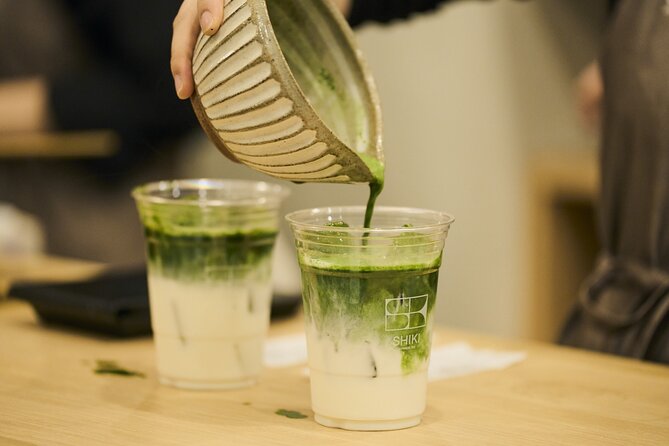
I like this arrangement for a short tour because you are not locked into a fixed menu. If you have dietary preferences, a small appetite, or a strong opinion about what you want to try, you can discuss it with the guide. The tradeoff is that your total cost is less predictable.
Hozenji Yokocho and the moss-covered Fudo Myo-o
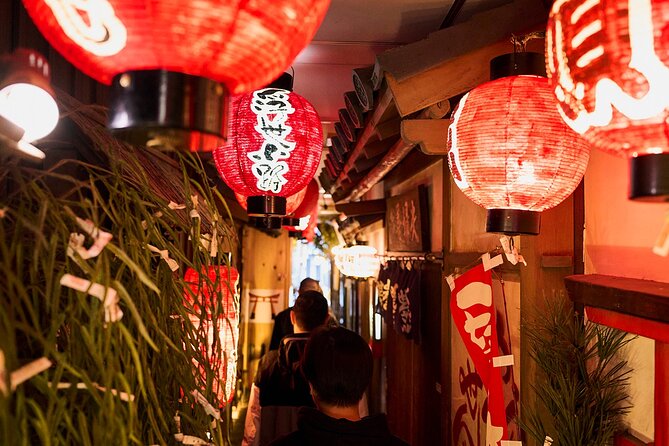
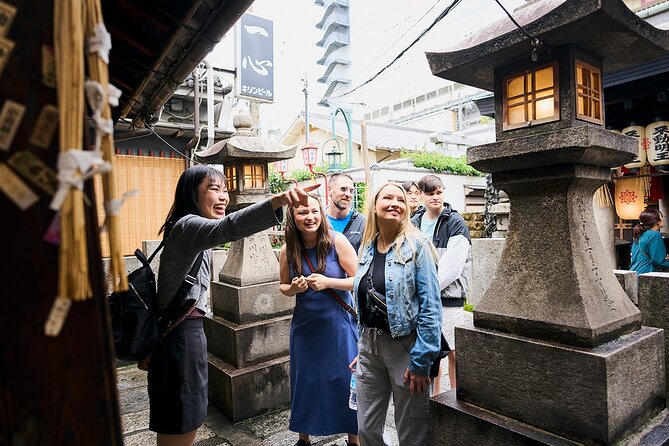
After the bright signs and food stalls, the route shifts to Hozenji Yokocho. The stop lasts about 20 minutes and includes Hozenji Temple, a small place of worship tucked into the city.
The centerpiece is a moss-covered statue of Fudo Myo-o. People splash water on the statue while making a wish, which explains its unusual green appearance. This is a useful pause in the route because it shows that Osaka’s food districts are not only about buying and eating.
Hozenji Yokocho also gives you a change of pace. The lane has an older, more atmospheric feel than the main Dotonbori strip. Your guide can explain the local meaning of the temple and help you notice details that are easy to miss when you are focused on neon signs and restaurant menus.
You should keep your expectations in check. This is a short visit, not a formal temple tour. The stop is valuable because it adds contrast and a bit of local tradition to the food walk, not because it offers a long list of religious sights.
Doguyasuji and the tools behind Osaka’s meals
The next stop is Sennichimae Doguyasuji Shopping Street, where the focus shifts from eating to the equipment used by cooks and restaurants. You get about 20 minutes to see professional kitchen tools and supplies.
This is one of the more unusual parts of the route. Many food tours stay focused on finished dishes. Doguyasuji shows you the working side of the trade: knives, cooking tools, restaurant supplies, and other items associated with Japanese kitchens.
The street is especially useful if you enjoy practical souvenirs. The tour does not promise a shopping session or name specific items you will buy, but the guide can help you understand why the area matters and what you are looking at. Even if you are not shopping, the stop gives context to Osaka’s reputation as a city that takes food seriously.
The short timing is both helpful and limiting. Twenty minutes is enough to get a feel for the street and look at the tools, but not enough for careful comparison shopping. If you find something you want, you may need to return on your own after the tour.
More Street Food Walking Tours in Osaka:
- Reykjavik Food Walk – Local Foodie Adventure in Iceland
★ 5.0 · 18,952 reviews - New Orleans Food Walking Tour of the French Quarter with Small-Group Option
★ 5.0 · 6,118 reviews - Naples: Street Food Walking Tour with Local Guide
★ 4.9 · 4,976 reviews - Greek Food Walking Tour in Athens
★ 5.0 · 4,740 reviews
Kuromon Market, Osaka’s kitchen
The final main stop is Kuromon Market, with about 30 minutes set aside for exploring. This is the largest food-focused part of the walk and likely the place where you will be most tempted to spend extra money.
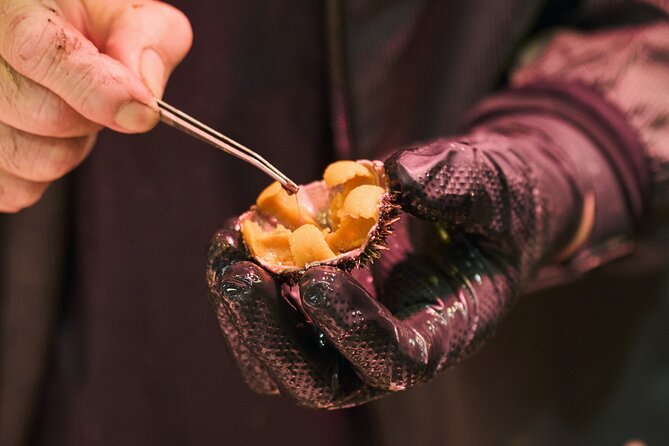
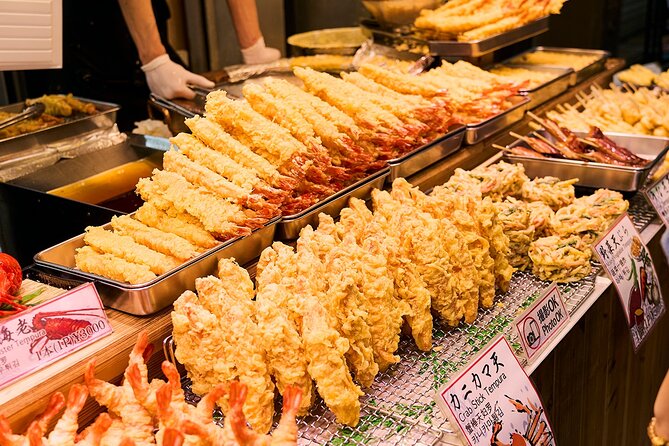
Kuromon is known for fresh seafood, wagyu beef, fruit, sushi, and other foods that can often be eaten on the spot. A guide is useful here because a market can be confusing when you do not know which counters are worth your time, how the food is sold, or where to pause without blocking other people.
You might see seafood being prepared, ready-to-eat portions, and market goods aimed at both local cooks and curious visitors. The tour is not a sit-down meal, so plan for small purchases rather than a long lunch or dinner.
The market is also the place where timing matters most. With only 30 minutes, you cannot inspect every stall. I suggest deciding in advance that you will try one or two things and save a return visit for anything that catches your eye. A guide can help you make those choices quickly.
Kuromon’s fame also means it can feel more visitor-oriented than a neighborhood market. That does not make it uninteresting, but you should see it as a busy food marketplace, not an untouched slice of old Osaka. Its value comes from the range of foods and the chance to understand how the city presents its food culture.
What the guides add to the walk
The guide is the main reason to book this instead of following the same route with a map. The tour includes an English-speaking guide, and the small-group limit is a maximum of 15 people.
That is not a private experience, but it is small enough for questions and quick conversation. A guide can point out a dish, explain a custom, suggest a restaurant for later, or help you choose between unfamiliar options. The experience is designed to give you ideas for the rest of your time in Osaka.
Several guides have received particular praise for making the walk friendly and flexible. Kaz has led guests to classic and less obvious food spots. Nako has been described as warm and interesting while showing people around Namba and its markets. Sayaka has tailored the experience to food preferences, including sake, and has even added pachinko to the conversation or outing when it suited the group.
Those details suggest that the experience can change somewhat depending on your guide and the interests of your group. Do not expect every departure to follow the same personal touches. Still, the format gives you a chance to ask for restaurant ideas and shape the conversation.
If you want a carefully measured tasting menu with exact portions and set dishes, this may feel loose. If you prefer a local introduction with room for questions, the flexibility is a strong point.
Is $31.84 good value?

At $31.84, the tour is reasonably priced for a guided two-hour orientation in central Osaka. The price is easiest to justify if you are new to Namba, unsure how to approach Japanese street food, or keen to hear local suggestions before spending your evenings at restaurants.
You are paying for the guide’s route and explanations, not for a full meal. Add the price of whatever you buy at Dotonbori or Kuromon Market. Since there is no dining-in stop, you should not book this expecting the tour fee to cover lunch or dinner.
The value is also stronger early in your trip. If the guide helps you find foods you want to revisit, explains the market, and points you toward restaurants for later, the walk can shape several meals beyond its two-hour length.
For people who already know Dotonbori and Kuromon Market well, the experience may offer less. The route includes famous areas that you can visit independently. The difference is the local guidance, the food suggestions, and the added stops at Hozenji and Doguyasuji.
Who will enjoy this Osaka food walk?
I would recommend it to first-time visitors who want a gentle introduction to Osaka’s food scene without committing to a long tour. It also suits solo visitors who want company, couples who like to sample several things, and anyone who enjoys markets and practical city walks.
The tour is a good fit if you want to ask questions about food, learn what the signs and stalls mean, and get suggestions for the rest of your stay. The mobile ticket and central meeting point make it easy to add to a day in Namba.
You should think twice if you want a large meal included, a private guide, or a detailed culinary class. You should also leave room in your schedule for your own return to Kuromon Market or Doguyasuji, since the short stops may not satisfy your curiosity.
Most people can participate, and the route is near public transportation. The group can include up to 15 people, so do not assume you will have a one-to-one experience with the guide.
Practical details before you go
Meet at Don Quijote Dotonbori Midosuji, and expect to finish back at the same point. The tour lasts about two hours and offers departure choices throughout the day.
Bring a mobile ticket, since that is how the experience is issued. Food and drinks are not included, and the walk does not stop for a sit-down meal. Plan to pay directly for any takoyaki, gyoza, seafood, fruit, sushi, or other items you choose.
The tour has free cancellation if you cancel at least 24 hours before the local start time. Cancellations or changes made within 24 hours are not refunded or accepted, so keep that deadline in mind when arranging your Osaka schedule.
Should you book it?
Book this walk if you want a well-rounded first look at Namba, with street food, a temple, kitchen tools, and a market in one compact route. The guides’ friendly, flexible approach is the strongest reason to choose it, especially if you ask for restaurant ideas or help deciding what to try.
Skip it if you already know these districts, want a full meal included, or prefer to explore markets at your own speed. For most first-time visitors, though, $31.84 is a fair price for getting your bearings, learning what to eat, and leaving with a better plan for the rest of Osaka.
FAQ
How long does the Osaka walking tour last?
The tour lasts approximately two hours.
Where does the tour start?
It starts at Don Quijote Dotonbori Midosuji, located at 2-chōme-5-9 Nishishinsaibashi, Chuo Ward, Osaka, 542-0086, Japan.
Where does the tour end?
The experience ends back at the meeting point.
Is food included in the tour price?
No. Food and drinks from street vendors are not included, and the tour does not stop for dining in.
Which foods can I try during the walk?
The route includes opportunities to try street foods such as takoyaki and gyoza. Kuromon Market also offers foods such as seafood, wagyu beef, fruit, and sushi, though you pay separately for anything you buy.
How many people can join the tour?
The tour has a maximum group size of 15 people.
Can I cancel for a full refund?
Yes. You can receive a full refund if you cancel at least 24 hours before the experience start time. Cancellations within 24 hours are not refunded.
More 2-Hour Experiences in Osaka
- Osaka: 2-Hour Local Street Food Tour – Dotonbori & Namba
★ 4.6 · 95 reviews - 2 Hour Historic Market Food Tour and Hands-On Biscuit Class
★ 5.0 · 251 reviews - Saigon: City Unseen Highlights 2h Tour | Opt: Ao Dai Riders
★ 5.0 · 69 reviews - Taipei: 2-Hour Raohe Night Market Walking Tour
★ 4.6 · 69 reviews
More Nightlife Tours in Osaka
- Budapest Ruin Bars Evening Walking Tour with Drinks & Street Food
★ 5.0 · 104 reviews - Kuala Lumpur: Nightlife Street Food Tour with 6 Tastings
★ 4.6 · 73 reviews - Kolkata Midtown Madness- A Street Food & Nightlife Tour
★ 4.9 · 49 reviews - Essaouira Guided Tour: 3 on 1 – Nightlife tour, Live like a local & Street food
★ 4.5 · 32 reviews
Just added around Osaka
- Same Day OK! Osaka: Local Food, Izakaya & Local Bites Tour!★ 4.8 · 17 reviews
- Eat Like a Local in Osaka – Private Custom Street Food Tour★ 4.3 · 33 reviews
- Osaka Shinsekai Street Food Tour – Evening★ 5.0 · 2 reviews
- Okonomiyaki&Takoyaki for Families:Osaka Street Food Festival★ 5.0 · 4 reviews
- Osaka: Local Foodie Tour in Dotonbori and Shinsekai★ 4.7 · 95 reviews
- Osaka: Takoyaki Keychain and Magnet-Food Replica Workshop★ 5.0 · 2 reviews
- Osaka Okonomiyaki Cooking Experience for Families & Groups★ 4.9 · 8 reviews
- Osaka: Namba Guided Local Food Tour (Taste 15 dishes)★ 5.0 · 6 reviews
Osaka Street Food Tours, compared.
Hungry Osaka Street Food Tour:15 Tastings & 3 Drinks with a Local
Read our review →
Osaka Local Foodie Walking Tour in Dotonbori and Shinsekai
Read our review →
Hungry Osaka Street Food Tour: 15 Dishes & 3 Drinks
Read our review →
Kuromon Market Food Walking Tour in Osaka (6 stops, 6 tastes)
Read our review →
Osaka: Kuromon Market Food Walking Tour (6 stops, 6 tastes)
Read our review →
Osaka Cooking Class: Okonomiyaki &Japanese cuisines experience
Read our review →![[1 Group Only] Osaka Street Food Tour for Family](https://4.streetfoodtrips.com/wp-content/uploads/1-group-only-osaka-street-food-tour-for-family-400x267.jpg)
[1 Group Only] Osaka Street Food Tour for Family
Read our review →
Browse the lists this tour appears in