
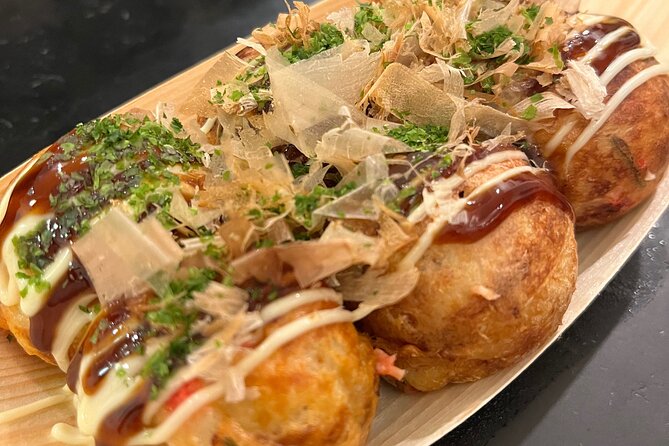
REVIEW · OSAKA STREET FOOD TOURS
Osaka Sake Tasting & Takoyaki Cooking Experience
The clever part of this Osaka outing is the pairing: you learn to cook takoyaki from scratch, then sit down with the finished food and a selection of Japanese sake. Momoko, also called Momo, is a certified sake sommelier who explains how sake is made, how styles differ, and how to order with more confidence at an izakaya or sushi restaurant.
I like the small group limit of six, which gives you real help at the hot plate instead of a quick demonstration from across the room. I also like the choice of fillings, including Wagyu beef and cheese, which gives the familiar octopus balls a playful twist. The main consideration is the alcohol: this is a serious tasting for a two-hour activity, so come ready to eat and pace yourself.
Key points to know before booking
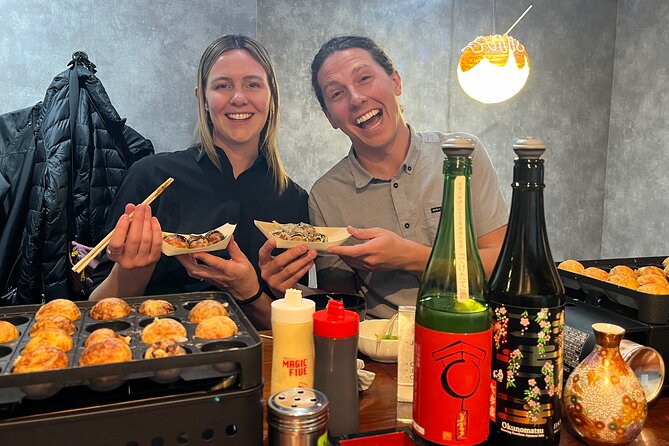
- Seven or more sakes may be tasted: More than 10 varieties are available, with seasonal choices selected by the sake specialist.
- You cook the takoyaki yourself: Learn the batter, fillings, and turning technique, then eat what you make.
- The class is intimate: The official maximum is six people, in a compact second-floor space.
- Momoko leads the class: She combines sake instruction with practical restaurant-ordering advice.
- Afternoon and evening times are offered: You can use it as a daytime food activity or an evening start to your night in Osaka.
- Dietary needs need advance notice: Gluten-free and non-seafood versions have been prepared when requested ahead of time.
A small Osaka kitchen with a big food lesson
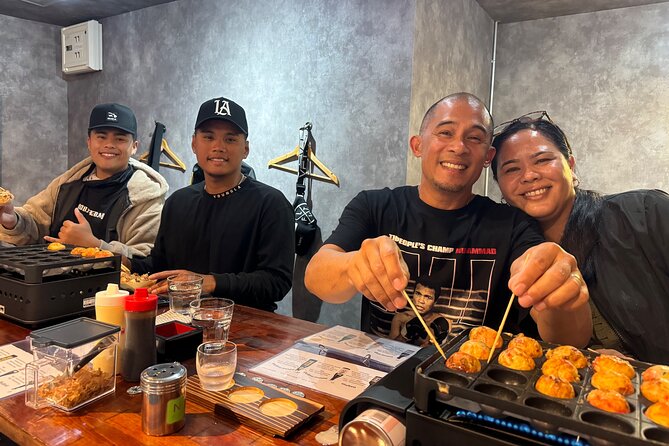
MOMO to SAKE is at 1-chome 6-22 Higashishinsaibashi, in Chuo Ward, on the second floor of Yoshiharu Kaikan. The activity begins and ends at this meeting point, and the area is close to public transportation.
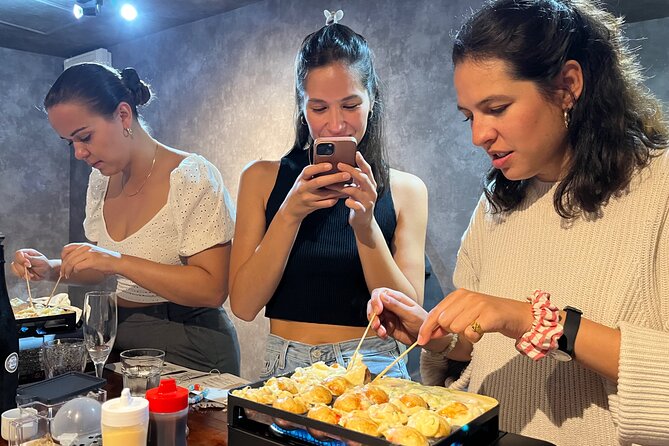
This is not a large cooking school with rows of workstations. It is a compact setting built around conversation, a hot takoyaki grill, and a tasting table. That matters because the class depends on Momoko being able to watch your cooking, answer questions, and adjust the sake choices to your taste.
The official group limit is six. A small group makes the class more personal, but it also means the room can feel close if you prefer lots of space. If you enjoy hands-on instruction and talking with a local host, the setting works in your favor. If you want a polished stage show or a large social event, this may feel too quiet and intimate.
The class lasts about two hours. Afternoon and evening sessions let you fit it around sightseeing, though the evening option may affect your plans for additional drinks afterward. You will have food with the sake, but the tasting can still leave you pleasantly, or seriously, tipsy.
More Cooking Classes in Osaka:
- Osaka Cooking Class: Okonomiyaki &Japanese cuisines experience
★ 5.0 · 261 reviews - Ramen and Gyoza Cooking Class in Osaka
★ 5.0 · 202 reviews - Osaka Sake Tasting with Takoyaki Cooking
★ 5.0 · 156 reviews
First, learn why sake tastes different
Momoko begins with the basics of sake, also called nihonshu. The lesson covers its history, culture, and production process, then moves into the differences among styles and grades.
The useful part is not just learning a few Japanese terms. You get help reading a sake label and understanding what you are choosing. That knowledge can make a restaurant menu less intimidating later in your trip, especially when the list gives you little English guidance.
The tasting menu includes more than 10 Japanese sake varieties to choose from, with seasonal selections picked by the sake expert. You may try several different styles rather than one standard pour. Past sessions included seven sakes, so you should not assume that every class will involve tasting the full selection.
Momoko’s background in sake making adds substance to the talk. She can explain how the drink is produced and how the choices differ, rather than simply handing you glasses and asking which one you prefer.
The tasting is also personal. Once Momoko knows what you like and dislike, she can point you toward a better match. That makes the session useful for beginners, while people who already enjoy sake can ask more specific questions about junmai, daiginjo, labels, and food pairings.
You should still keep your expectations sensible. This is an introductory tasting, not a formal certification course or a visit to a brewery. Its value is practical: you leave with enough background to make better choices at a restaurant.
Then turn batter into Osaka-style takoyaki
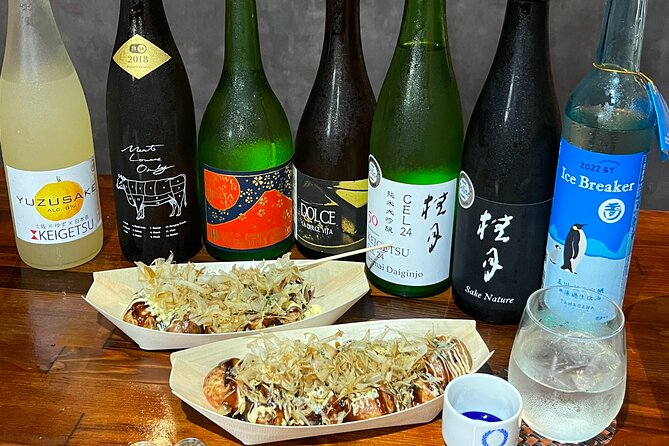
Takoyaki is one of Osaka’s signature street foods, and cooking it gives you a better feel for the dish than simply buying a tray from a stand. You work with the batter, fillings, and hot grill, then learn how to turn the partly cooked pieces into round balls.
The turning is the part that takes practice. It can look easy when someone experienced does it, but the timing and wrist movement are not automatic. Momoko guides you through the process, so a few uneven balls are part of the fun rather than a failure.
The recipe comes from the host, and the ingredient choices go beyond the standard octopus filling. Traditional takoyaki is available, along with versions using Wagyu beef and cheese. The extra fillings make the cooking more varied and help people who are unsure about octopus enjoy the meal.
One useful detail from the cooking sessions is that the batter is made from scratch. You are not simply reheating prepared food or adding toppings to finished takoyaki. You take part in the process from the beginning, which makes the meal feel more like a proper class.
The final portion can be substantial. Several people have described eating around 10 takoyaki balls, though the exact amount may vary with the class and ingredients. Come hungry, especially if you are treating this as dinner.
The best part is eating and tasting together
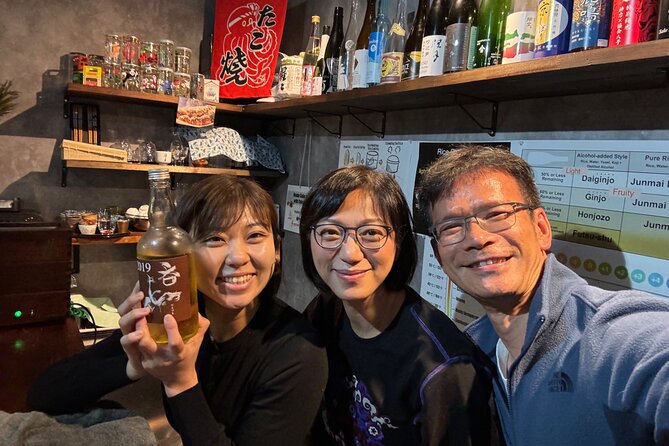
The activity is arranged so you cook the food and then enjoy it with the sake. That order is sensible. You get the busy, hands-on part finished before settling into the tasting, and the food gives you something to eat while drinking.
Takoyaki comes with the familiar contrast of a crisp outside and soft center, though your results will depend on your timing at the grill. The toppings and fillings add plenty of flavor, and making the balls yourself gives you a better sense of how the dish is prepared in Osaka.
The sake also makes more sense with food. You can notice how different styles work with savory fillings, rich Wagyu, or cheese. This is more useful than tasting sake in isolation because it connects the drink to the kind of meal you are likely to order in Japan.
I would not book this as a quick snack between major attractions. The two-hour format gives the class enough time to explain, cook, taste, and eat. Rushing in late would cut into the teaching and make the small room feel more pressured.
More Drinking Tours in Osaka:
- Same Day OK! Osaka: Local Food, Izakaya & Local Bites Tour!
★ 4.8 · 17 reviews - Osaka: Okonomiyaki Cooking Class with Beer or Soft Drink
★ 4.9 · 9 reviews - Lucha Libre Tickets & Tacos & Beer & Mezcal – BEST NIGHT EVER!
★ 5.0 · 1,077 reviews - Cancun Taco Tour, Local Beer and Night Market with Transportation
★ 5.0 · 816 reviews
What makes Momoko’s teaching effective
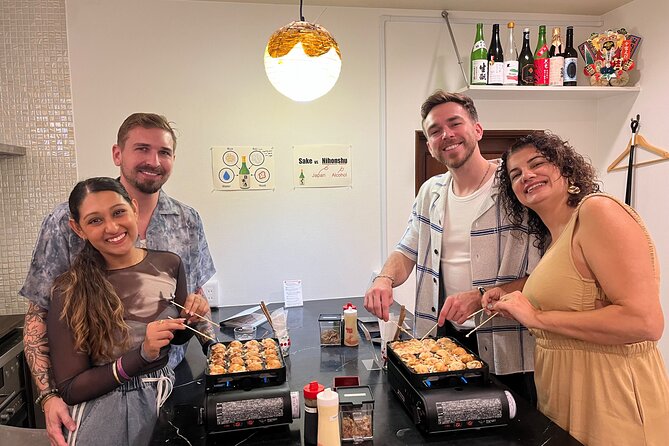
Momoko’s role is central to the activity. She is described as friendly, patient, and comfortable teaching in English, which matters when the class includes both cooking technique and sake vocabulary.
Her approach appears to be conversational rather than rigid. You can ask about the production process, the differences among sake types, or what to order at a restaurant. That flexibility is especially helpful if your group has mixed experience levels.
Solo visitors can fit in well here. The small setting makes it easier to talk with the host and other participants, rather than being left to cook alone at a large shared table. Couples and small groups also get enough direct attention to work through the turning technique.
The class is a good match for food-focused visitors who want more than a photo and a quick sample. It also suits people who have tried sake before but want to understand what is in the glass. If you already have advanced sake training, the introductory section may feel basic, but the seasonal tasting and food pairing can still make the session worthwhile.
Price and value at $72.67
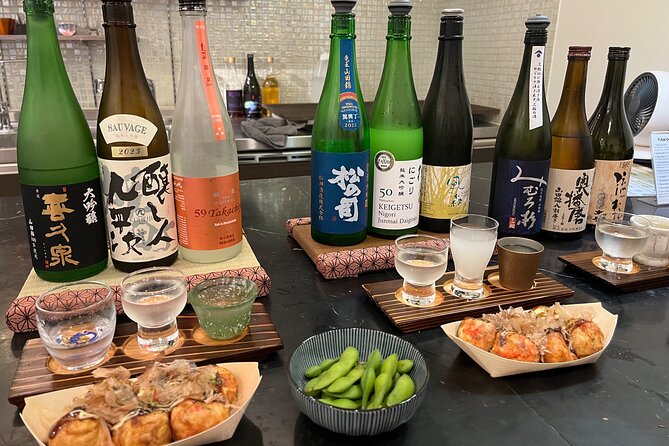
At $72.67 per person, this is not the cheapest way to eat takoyaki in Osaka. You can buy the street food for much less, and a casual sake tasting may also cost less if you choose only one or two drinks.
The price makes more sense when you count what is included: instruction, ingredients, cooking tools, your finished takoyaki, and access to a broad sake selection. You are paying for the host’s time, the small group format, the lesson, and the chance to taste several styles rather than simply ordering a drink.
The practical value continues after the class. Knowing how to read a label and choose a sake at a restaurant can improve the rest of your Japan trip. The food lesson also gives you a cooking memory rather than another meal that disappears as soon as you leave the table.
Alcohol is limited to legal adults. Since the tasting can include several pours, the value depends partly on how much you enjoy sake. If you do not drink alcohol, this is not the right cooking class for you, since sake is one of the two main parts of the activity.
Dietary needs and food choices
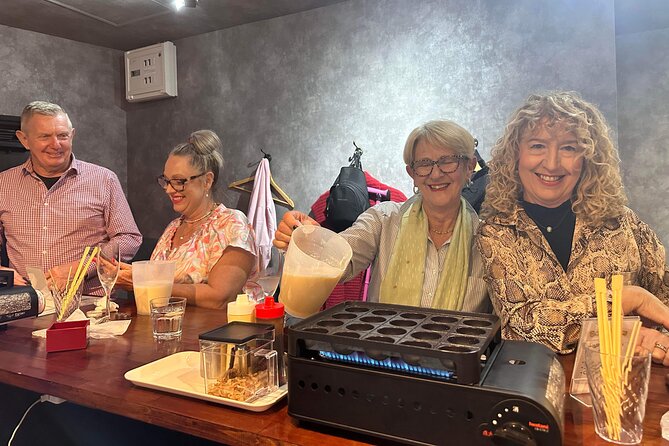
You should contact the operator before booking if you need special ingredients. Gluten-free takoyaki has been arranged when notice was given in advance, and non-seafood versions have also been prepared for people who do not eat octopus or other seafood.
Do not assume every dietary adjustment is automatic. Tell MOMO to SAKE about your needs before the class, not when you arrive. The available food is built around takoyaki, so people with several serious allergies should confirm what can be changed before paying.
The Wagyu and cheese options are useful for mixed groups. One person can enjoy the traditional filling while another chooses beef or cheese. That said, the cooking surface and shared kitchen setting may matter to people with strict cross-contact concerns, so ask specific questions ahead of time.
Getting there and planning your time
Public transportation is not included, and there is no hotel pickup or drop-off. You need to make your own way to the Higashishinsaibashi meeting point and return from the same location when the class ends.
The central location makes the activity easy to combine with a day in Osaka, but allow time to find the building and reach the second-floor room. The address includes the building name and floor, so keep those details available rather than relying only on a general map pin.
An afternoon class can work well as a late lunch or early food stop. An evening class can serve as dinner, since you cook and eat a full portion of takoyaki. If you choose the evening option, remember that the sake tasting comes with the meal and may be enough drinking for the night.
The experience offers mobile tickets, and confirmation is provided when you book. Service animals are allowed. Changes and cancellations are free only when made at least 24 hours before the start time, so check the local cutoff if your Osaka plans are still shifting.
Who should book this Osaka experience
I would choose this for a food lover who wants to understand Osaka through a local dish and a Japanese drink. It is especially good for first-time sake drinkers, couples, solo visitors, and small groups who prefer direct help over a large class.
It also suits a first day in Osaka. The class gives you a friendly introduction to local food, teaches useful ordering skills, and can help you feel more at ease in later restaurants. The central setting also puts you in a good position to continue exploring after the activity, though you should take care with alcohol.
I would think twice if you dislike small rooms, cannot drink alcohol, or want a broad Osaka food tour with several different dishes. This is focused on one dish and sake, not a survey of the city’s cuisine.
Food allergies and dietary restrictions do not automatically rule it out, but you need to ask ahead. The kitchen has made gluten-free and non-seafood versions before, yet the operator must confirm what is possible for your needs.
Should you book MOMO to SAKE?
Book it if you want a hands-on Osaka food lesson with a real sake primer, rather than a standard tasting at a bar. The strongest reasons are the small group, Momoko’s practical instruction, the chance to taste several styles, and the fun of learning to turn your own takoyaki.
The $72.67 price is fair for a two-hour class with ingredients, tools, food, and multiple sake choices, but it is not a bargain meal. You are paying for instruction and access to a specialist, so book only if those parts matter to you.
Tell the host about dietary needs in advance, arrive ready to eat, and pace yourself with the sake. For food-focused visitors, this is one of the more useful ways to spend two hours in Osaka because you take away both a meal and a better idea of what to order next.
FAQ
How long does the Osaka sake and takoyaki experience last?
The activity lasts approximately two hours.
Where does the activity start and finish?
It starts at MOMO to SAKE, at 1-chome 6-22 Higashishinsaibashi, Yoshiharu Kaikan 2F, in Osaka’s Chuo Ward. It ends back at the same meeting point.
How many people can join the class?
The official maximum is six participants.
Are afternoon and evening sessions available?
Yes. The experience offers both afternoon and evening class options.
How many kinds of sake are available?
More than 10 varieties of Japanese sake are available to choose from. The selections are seasonal and chosen by a sake specialist, though you may not taste every variety during one class.
Is the sake tasting included in the price?
Yes. Alcoholic beverages are included for legal adults.
Is the food included?
Yes. Ingredients and cooking tools are included, along with the takoyaki you make during the class.
Can dietary requirements be accommodated?
Gluten-free ingredients and non-seafood takoyaki have been prepared when requested in advance. Contact the operator before booking to confirm what can be provided for your needs.
Can I cancel for a full refund?
Yes, if you cancel at least 24 hours before the experience starts. Cancellations or changes made less than 24 hours before the start time are not accepted for a refund.
More Sake Tastings in Osaka
- Tsukiji: Unlimited Sake Tasting Experience
★ 4.9 · 67 reviews - Nara – Craft Beer, Sake, and Food Walking Tour
★ 3.5 · 9 reviews - Explore Matsumoto: Castle, Sake & Taste of Local Life
★ 4.8 · 6 reviews - Tokyo: Private Tsukiji Street Food & Sake with Local Guide
★ 5.0 · 3 reviews
Just added around Osaka
- Same Day OK! Osaka: Local Food, Izakaya & Local Bites Tour!★ 4.8 · 17 reviews
- Eat Like a Local in Osaka – Private Custom Street Food Tour★ 4.3 · 33 reviews
- Osaka Shinsekai Street Food Tour – Evening★ 5.0 · 2 reviews
- Okonomiyaki&Takoyaki for Families:Osaka Street Food Festival★ 5.0 · 4 reviews
- Osaka: Local Foodie Tour in Dotonbori and Shinsekai★ 4.7 · 95 reviews
- Osaka: Takoyaki Keychain and Magnet-Food Replica Workshop★ 5.0 · 2 reviews
- Osaka Okonomiyaki Cooking Experience for Families & Groups★ 4.9 · 8 reviews
- Osaka: Namba Guided Local Food Tour (Taste 15 dishes)★ 5.0 · 6 reviews
Osaka Street Food Tours, compared.
Hungry Osaka Street Food Tour:15 Tastings & 3 Drinks with a Local
Read our review →
Osaka Local Foodie Walking Tour in Dotonbori and Shinsekai
Read our review →
Hungry Osaka Street Food Tour: 15 Dishes & 3 Drinks
Read our review →
Kuromon Market Food Walking Tour in Osaka (6 stops, 6 tastes)
Read our review →
Osaka: Kuromon Market Food Walking Tour (6 stops, 6 tastes)
Read our review →
Osaka Cooking Class: Okonomiyaki &Japanese cuisines experience
Read our review →![[1 Group Only] Osaka Street Food Tour for Family](https://4.streetfoodtrips.com/wp-content/uploads/1-group-only-osaka-street-food-tour-for-family-400x267.jpg)
[1 Group Only] Osaka Street Food Tour for Family
Read our review →
Browse the lists this tour appears in