REVIEW · TOKYO STREET FOOD TOURS
Tsukiji Fish Market Food Tour: Seafood, Street Food & Hidden Gems
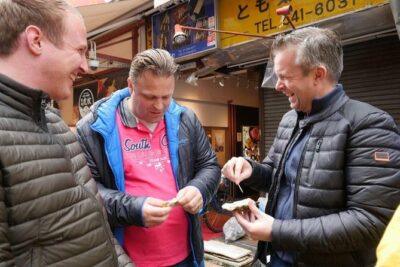
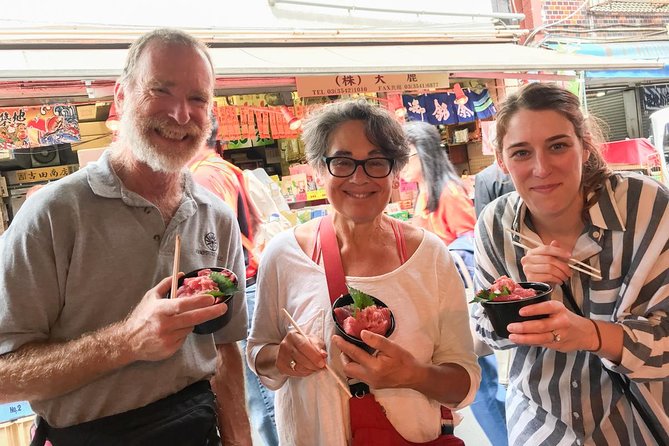
Tsukiji is best approached with an appetite and a plan. This 2.5-hour food walk takes you through the old market area, where more than 250 stalls can make even a confident Tokyo visitor pause. Your guide leads you to more than four local vendors, serving enough sushi, sashimi, snacks, and other tastings to count as a full lunch.
I like the six-person limit, which gives your guide room to explain what you are eating and adjust the stops to your group. I also like the food-first approach: the tour is not just a walk past counters, but a series of generous tastings, including sushi, sashimi, mochi, and an occasional surprise such as market soup. The main consideration is that this is centered on Tsukiji’s surrounding market streets, not the tuna auction or Toyosu Market, and one part of the experience may feel more like an outer-market food walk than a tour of the working wholesale floor.
Key points at a glance
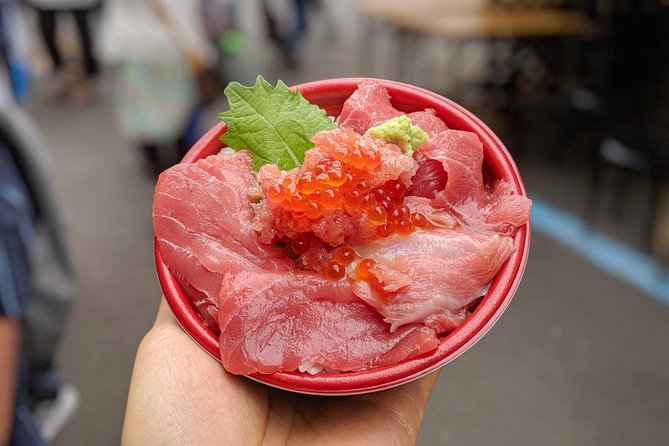
- More than four food stops: Expect full-size tastings from several local vendors, not just tiny samples.
- A small group of six: The format makes it easier to ask questions and keep up in crowded lanes.
- A 9:00 a.m. start: You will see Tsukiji during the morning food trade, when arriving hungry makes the most sense.
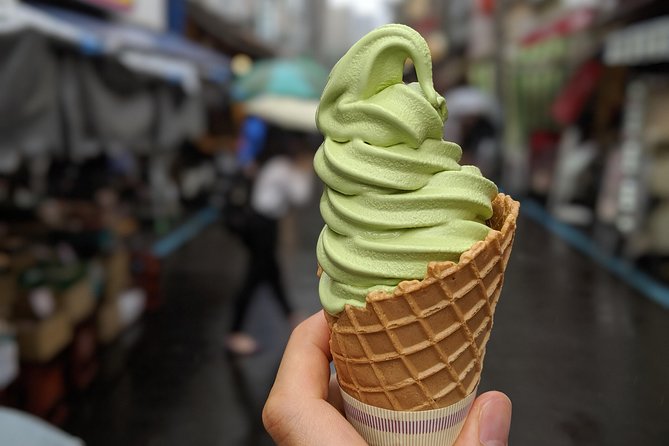
- Seafood with variety: Sushi and sashimi are joined by mochi, soup, and other market foods.
- Good orientation for first-time visitors: Your guide helps you navigate the many stalls and the language barrier.
- No tuna auction or Toyosu: This tour stays in Tsukiji and does not include the newer wholesale market.
What this Tsukiji food tour actually does
Tsukiji is no longer Tokyo’s main wholesale fish market. That role moved to Toyosu, but Tsukiji remains a major food district, with retail seafood stalls, small restaurants, kitchen shops, prepared foods, and street snacks. For a first visit, the challenge is not finding food. It is deciding what is worth your time, what you can order, and how to move through the narrow market streets without missing the good stops.
That is where this tour earns its keep. You meet at 4-chōme-8-1 Tsukiji at 9:00 a.m., then spend the morning moving between local vendors. The advertised market visit is listed at about 1 hour 30 minutes, while the full experience runs approximately 2 hours 30 minutes. The extra time likely allows for walking, ordering, eating, and explanations, but you should treat the timing as approximate.
You are not signing up for a formal cooking class or a historical lecture. You are paying for a guided food route through a confusing part of Tokyo, with the food included.
More Fish Market and Seafood Tours in Tokyo
- Tokyo Tsukiji Fish Market Food and Culture Walking Tour
★ 5.0 · 3,184 reviews - Tokyo: Tsukiji Fish Market Food and Walking tour
★ 5.0 · 1,724 reviews - Tokyo: Tsukiji Fish Market Guided Walking Tour
★ 4.9 · 1,397 reviews
Starting hungry at 9:00 a.m.
The early start works well for Tsukiji. Seafood markets are morning places, and a 9:00 a.m. meeting gives you time to see the area before your appetite fades or your day becomes crowded with other plans. It also leaves much of the afternoon free for Ginza, Hamarikyu Gardens, Asakusa, or another Tokyo neighborhood.
The meeting point is in Tsukiji, close to public transportation. The tour ends near Tsukiji Station at 3 Chome-9 Tsukiji, so you finish with a clear onward route rather than being left somewhere random in the market.
Wear comfortable shoes and avoid arriving after a large breakfast. The food is described as a full lunch, with tastings at five or more vendors. That matters because many food walks use the word tasting for one bite at each stop. Here, you should plan for a substantial meal.
More than four vendors, not just a market stroll
The tour visits more than four local food sellers, with the included meal spread across five or more vendors. The exact menu can change, but the food examples include sushi, sashimi, mochi, and soup. You may also encounter other seafood or market snacks selected by the guide.
The strongest part of this setup is the variety. You are not committing your entire meal to one sushi counter. You can compare different forms of seafood, then finish with something sweet or unexpected. One guide even arranged an impromptu soup tasting that persuaded the guest to return and buy a packet later. That is the sort of small discovery that is hard to plan from a guidebook.
Your guide also helps with the practical side of eating in a Japanese market. You may not know which items are ready to eat, how much to order, or which stalls are mainly aimed at restaurant buyers. A guide can point you toward food that works for a visitor with limited time, rather than leaving you to guess at every counter.
What the guides add
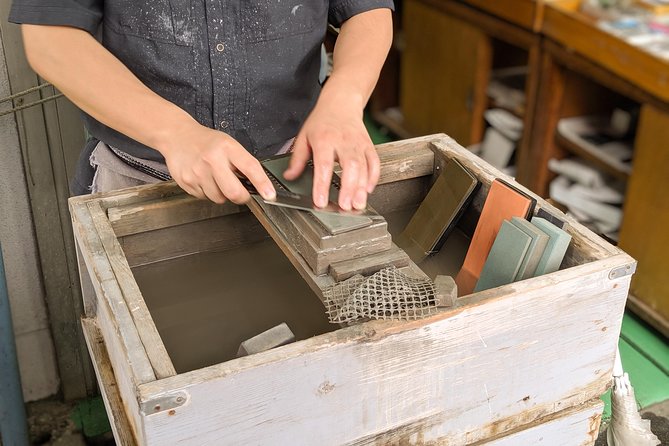
The human side of this experience receives the strongest praise. Guides named Chambliss, Rie, Chihiro, Chi, Kaz, and Shiro have all been singled out for friendly service, clear explanations, and good food choices. Guide assignments can vary, so you should not assume a specific person will lead your group, but the tour clearly depends on guide quality.
Chambliss, for example, was praised for explaining both market history and the food. Chihiro was noted for taking family preferences into account and finding less obvious places. Shiro was appreciated for answering questions and explaining the unusual items. Kaz had a connection with visitors from California, which helped make the conversation relaxed and personal.
That small-group format matters. With no more than six people, the guide can pause to explain a cut of fish, help with a choice, or keep an eye on dietary needs. A large group would be less useful in a market where space is tight and vendors are working quickly.
The tour also has an advantage for English-speaking visitors. Unless you read Japanese, menus and signs may not tell you much. The guide helps bridge that gap without turning every stop into a complicated ordering exercise.
More Hidden Gem Food Tours in Japan
- Tokyo VIP Hidden Food & Bar Night – Private Local Experience
★ 5.0 · 57 reviews - Tokyo: Secret Food Walking Tour
★ 4.7 · 38 reviews - NO DIET CLUB – Unique local food tour in Tokyo !
★ 5.0 · 16 reviews - Same-Day Osaka Food Crawl with local food and Hidden gems
★ 5.0 · 114 reviews
The market atmosphere, and the important limitation
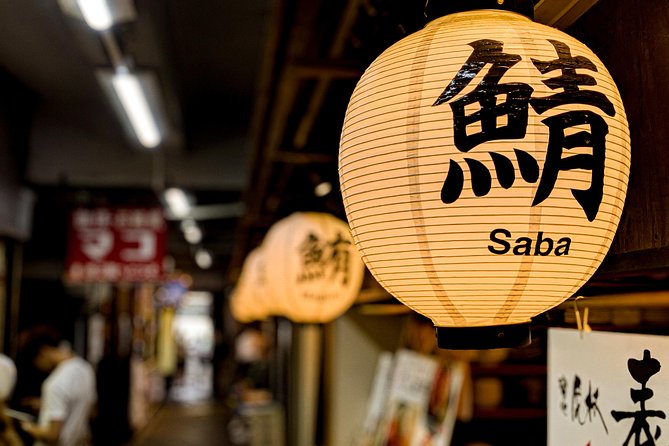
Keep your expectations realistic. This is not a tour of the tuna auction, and it does not visit Toyosu Market. If your main goal is to see wholesale fish trading or the famous auction, choose a different experience.
You will be exploring Tsukiji’s old market area and surrounding streets. One account of the experience described the route as mainly outside the central market, with street vendors and nearby food counters rather than a look at all the working market action. That is not necessarily a flaw, but it changes the picture.
Think of this as a guided food tour through Tsukiji’s retail and street-food district. You will see the market’s public face, taste what makes the neighborhood worth visiting, and learn how the area functions. You will not get a behind-the-scenes wholesale tour.
For me, the distinction is simple. If you want lunch and orientation, this format makes sense. If you want market photography, auction access, or a serious look at commercial fish distribution, it may feel limited.
Is $91.17 a fair price?
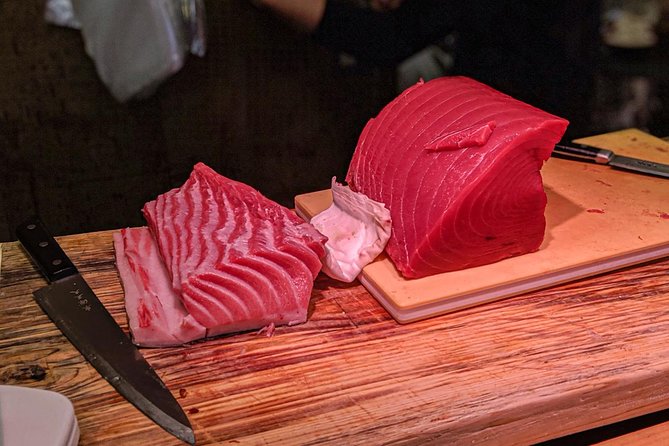
At $91.17 per person, this is not the cheapest way to eat in Tsukiji. You can certainly buy individual snacks or a sushi meal for less if you are comfortable choosing stalls on your own.
The value comes from combining the food with guidance. The tour includes a full lunch at five or more vendors, not just a single dish. You also receive route planning, translation help, local context, and a small group that can move efficiently. Several food stops can add up quickly in Tokyo, especially if you order seafood, sushi, and sweets separately.
The price makes the most sense for a first visit, a short stay, or anyone who feels uneasy about ordering in a crowded market. It is less compelling for confident Tokyo eaters who already know Tsukiji and prefer to browse at their own pace.
One useful detail is that guides have sometimes helped groups avoid waiting around for food. That does not mean every stop will have no queue, but a guide who knows the route can make the morning more efficient than wandering from stall to stall.
Dietary restrictions need advance planning
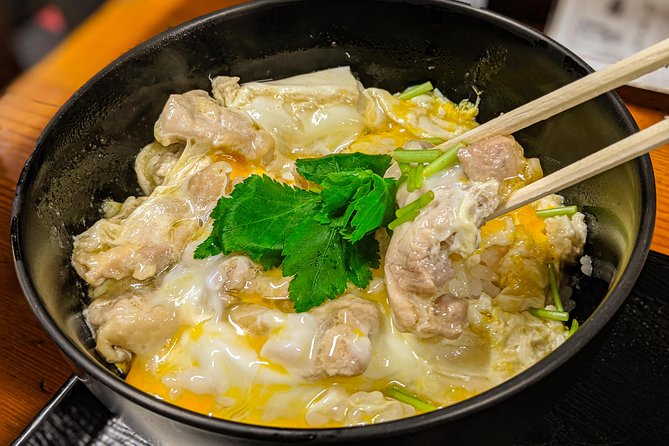
The operator asks you to provide food restrictions at least one week before the tour. Take that deadline seriously. Vegan, vegetarian, and gluten-free choices are limited, and last-minute requests may not be possible.
There is at least some flexibility when the guide has advance notice. For a guest with a gluten allergy, the guide checked suitable food before the meeting and made sure the group had options. That is encouraging, but it does not make the tour a safe choice for every diet.
If you have a serious allergy, explain it clearly when booking and again at the start. Seafood is the central theme, so people who avoid fish, shellfish, or raw food should ask whether enough alternatives are possible before paying.
Who will get the most from this experience?
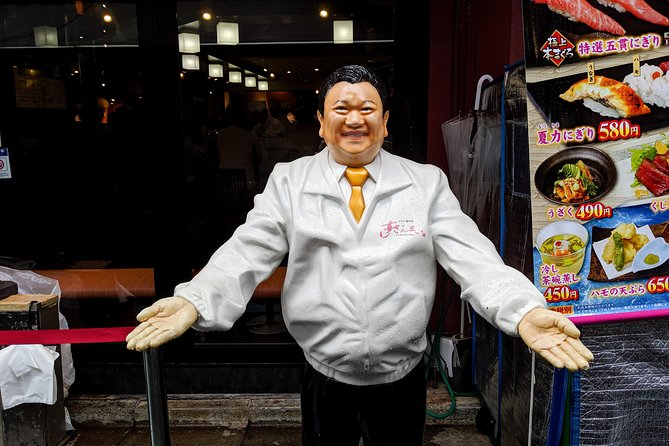
I would recommend this tour most strongly to first-time visitors to Tokyo, especially those who want to eat well without spending their first morning deciphering menus. It also suits couples, families, and small groups who like trying several foods in one sitting.
Food lovers will appreciate the range. You may move from sushi or sashimi to mochi, then encounter a soup or another item you would not have selected alone. The tour is also a good fit for anyone who wants local context without committing to a long cultural lecture.
Families should note that the format is limited to six people, which can make the pace easier to manage. Still, the meal centers on seafood, and dietary needs must be communicated early.
I would hesitate to recommend it to someone who wants an uncrowded, independent market visit. A guided route means less freedom to stop wherever you like. It may also disappoint anyone expecting Toyosu, the tuna auction, or access to the wholesale fish floor.
Timing, meeting point, and cancellation details
The tour starts at 9:00 a.m. at 4-chōme-8-1 Tsukiji and ends near Tsukiji Station at 3 Chome-9 Tsukiji. It is close to public transportation, and a mobile ticket is provided.
The experience is rated for most participants, but you should expect walking and standing in market streets. The maximum group size is six. Confirmation arrives at booking.
Free cancellation is available until 24 hours before the start time. Cancellations or changes made within 24 hours are not accepted for a refund. The tour may also be moved or refunded if poor weather affects the experience or if the minimum number of participants is not reached.
Should you book the Tsukiji food tour?
Book it if you want a generous, guided seafood lunch and need help making sense of Tsukiji. The combination of five or more food stops, a six-person cap, and guides such as Chambliss, Rie, Chihiro, Chi, Kaz, or Shiro gives the experience a personal feel.
Skip it if your main goal is the tuna auction, Toyosu Market, or a detailed look inside the wholesale trade. Also think twice if you are vegan, vegetarian, gluten-free, or managing a serious allergy unless you contact the operator well ahead of time.
For most first-time visitors, the $91.17 price is defensible because you are buying both food and confidence. Arrive hungry, keep the morning free, and treat Tsukiji as a food district rather than a behind-the-scenes fish terminal. That is the experience this tour is built to deliver.
FAQ
Where does the Tsukiji food tour start?
It starts at 4-chōme-8-1 Tsukiji, Chuo City, Tokyo 104-0045, Japan.
What time does the tour begin?
The start time is 9:00 a.m.
Where does the tour end?
The tour ends near Tsukiji Station at 3 Chome-9 Tsukiji, Chuo City, Tokyo 104-0045, Japan.
How long does the experience last?
The full tour lasts approximately 2 hours 30 minutes. The market portion is listed as about 1 hour 30 minutes.
How many people can join the tour?
The tour has a maximum of six participants.
Is food included?
Yes. The tour includes a full lunch with tastings at five or more vendors.
What foods might be included?
Food examples include sushi, sashimi, mochi, soup, and other seafood or market snacks. The exact selection may vary.
Does the tour visit Toyosu Market or the tuna auction?
No. The tuna auction and Toyosu Market are not included.
Can dietary restrictions be accommodated?
You must send food restrictions at least one week before the tour. Vegan, vegetarian, and gluten-free choices are limited, and last-minute requests may not be accepted.
Can I cancel for a refund?
Yes. You can cancel at least 24 hours before the start time for a full refund. Cancellations made less than 24 hours before the tour are not refunded.
More Street Food Market Tours in Tokyo
- Tokyo: Tsukiji Fish Market Sushi Making Class with Pro Chef
★ 4.9 · 506 reviews - Tokyo Food Tour Taste Fresh Delights at Tsukiji Market
★ 5.0 · 429 reviews - Tokyo Tsukiji Fish Market Tour and Sushi Making Lesson
★ 5.0 · 390 reviews - Tsukiji Fish Market: Street Food & Culture Walking Tour
★ 4.8 · 259 reviews
More Street Food Market Tours in Japan
- Tsukiji Fish Market Guided Tour and Sushi Making with Pro Chef
★ 5.0 · 775 reviews - Tokyo: Tsukiji Fish Market Food and Culture Walking Tour
★ 4.7 · 757 reviews - Tsukiji Fish Market: Street Food & Culture Walking Tour
★ 5.0 · 669 reviews - Tsukiji Fish Market Small-Group Food Walking Tour
★ 5.0 · 621 reviews
Just added around Tokyo
- Tokyo: Tsukiji walk & sushi private tour with Uni Students★ 5.0 · 17 reviews
- Tokyo: Private Tsukiji Street Food & Sake with Local Guide★ 5.0 · 3 reviews
- Tokyo: Tsukiji Market Guided Tour & Sushi-Making Experience★ 4.4 · 11 reviews
- Tokyo: Tsukiji Market and Hama-rikyu Gardens Guided Tour★ 4.8 · 73 reviews
- Tokyo Tsukiji Food & Culture Private Tour Licensed Guide★ 4.9 · 28 reviews
- Tokyo: Tsukiji Fish Market Foodie and Educational Tour★ 5.0 · 4 reviews
- Tokyo: Tsukiji Fish Market Culture Tour with Sashimi Tasting★ 4.6 · 54 reviews
- Tokyo: Tsukiji, Ginza, and Asakusa Japanese Culture Tour★ 5.0 · 2 reviews
Tokyo Street Food Tours, compared.
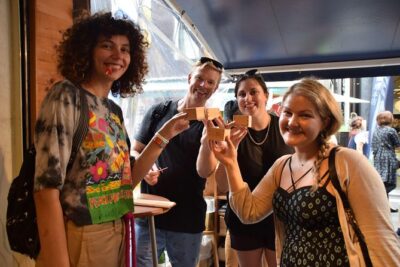
Tokyo Tsukiji Fish Market Food and Culture Walking Tour
Read our review →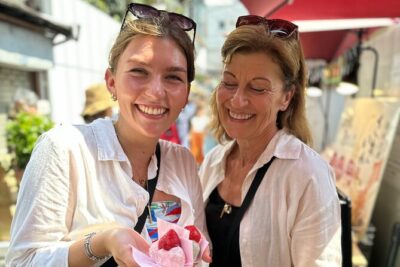
Tokyo: Tsukiji Fish Market Food and Walking tour
Read our review →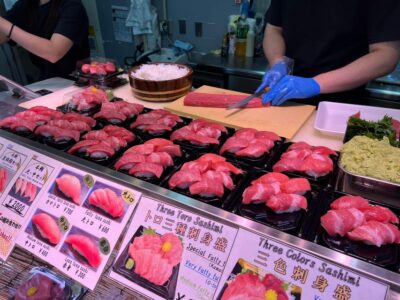
Tokyo: Tsukiji Fish Market Guided Walking Tour
Read our review →
Tokyo Sushi Making Class in Tsukiji with Professional Chef
Read our review →
Tsukiji Fish Market Guided Tour and Sushi Making with Pro Chef
Read our review →Tokyo: Tsukiji Fish Market Food and Culture Walking Tour
Read our review →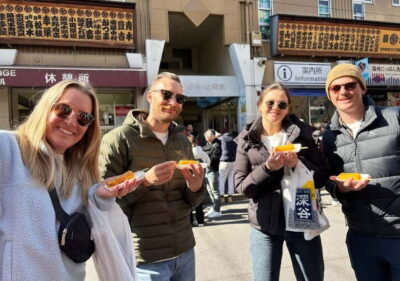
Tsukiji Fish Market: Street Food & Culture Walking Tour
Read our review →