
REVIEW · TOKYO STREET FOOD TOURS
Tokyo Sushi Making Class in Tsukiji with Professional Chef
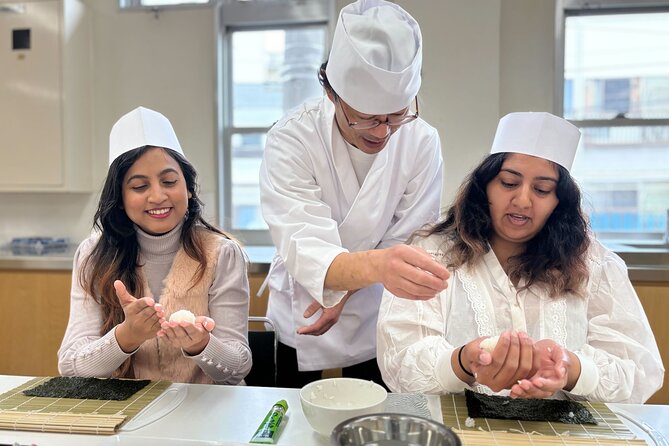
The best part of this Tsukiji sushi class is that you do not simply watch a chef work. You see fish prepared, handle the tools yourself, and make five nigiri plus one rolled sushi before sitting down to eat it. The English-speaking host keeps the lesson clear, while the sushi master focuses on technique.
I like the small, hands-on format and the fact that your lunch is included, not an afterthought. I also like its location: a traditional Japanese building near Tsukiji’s food markets, where you can continue exploring after class. The main drawback is practical: the classroom is on the third floor with stairs only, and the session can run past its advertised 90 minutes.
Key points at a glance
- Watch a fish-cutting demonstration: The chef explains how fish is prepared for sushi and introduces the Japanese knives used for the job.
- Make six pieces of sushi: You prepare five different nigiri and one rolled sushi, with help at each stage.
- Learn in English: Hosts such as Yuko, Yugo, Kanon, Emma, and AJ have helped translate and guide sessions, while chefs including Tanaka and Kate teach the sushi work.
- Eat what you make: The class ends with your own sushi lunch, plus sushi prepared by the chef with fresh wasabi.
- Use Tsukiji well: The meeting point is close to Tsukiji Fish Market, Tsukiji Jogai Market, and Tsukiji Nippon Fish Port Market.
- Allow extra time: The class lasts about 1 hour and 30 minutes, but the end time can slip, so do not book a tight appointment afterward.
Why this short Tsukiji class works so well
Sushi can look simple until you try to shape it. A small pad of rice, one slice of fish, and a dab of wasabi demand more control than most first-timers expect. This class gives you a practical introduction without asking you to spend half a day in a cooking school.
You begin in a classic Japanese-style classroom inside a traditional building near the market. The setting is less polished than a large commercial kitchen, but that is part of the appeal. You are close to the source of the ingredients and in a space designed for a small group rather than a stage show.
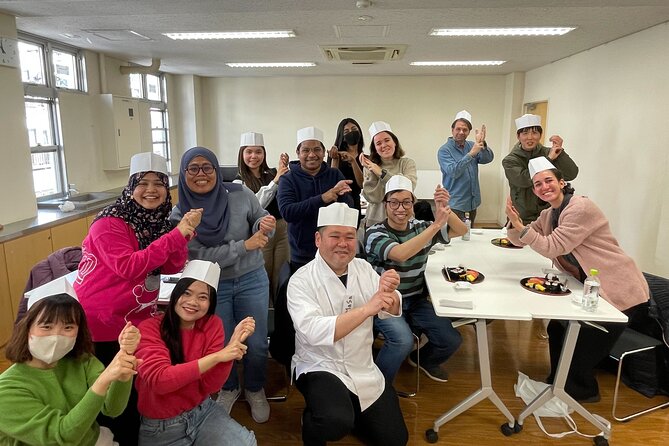
The class size can reach 20 people, so the exact feel depends on the session. Several hosts and staff members help guide the group, and the teaching is broken into clear steps. You should expect a friendly introduction, a chef’s demonstration, hands-on practice, and time to eat your work.
This is not a professional sushi apprenticeship. You will not leave ready to run a counter in Ginza. You will, however, understand the basic difference between nigiri and rolled sushi, learn how the rice and fish come together, and gain enough confidence to try making sushi at home.
More Fish Market and Seafood Tours in Tokyo
- Tokyo Tsukiji Fish Market Food and Culture Walking Tour
★ 5.0 · 3,184 reviews - Tokyo: Tsukiji Fish Market Food and Walking tour
★ 5.0 · 1,724 reviews - Tokyo: Tsukiji Fish Market Guided Walking Tour
★ 4.9 · 1,397 reviews
Entering Tsukiji and finding the local classroom
You make your own way to the meeting point at 千社額棟, 4-chōme-16-2 Tsukiji, Chuo City. Hotel pickup and transportation are not included, but the location is near public transportation and sits in one of Tokyo’s best areas for food browsing.
Give yourself time to get there. Tsukiji’s streets can be confusing, and the market area rewards an early wander. The class itself is held on the third floor of a traditional Japanese building, reached by stairs only. If stairs are difficult for you, this is an important limitation, not a minor footnote.
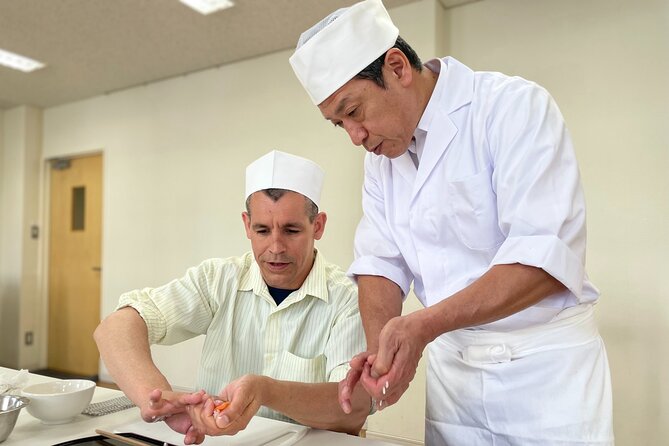
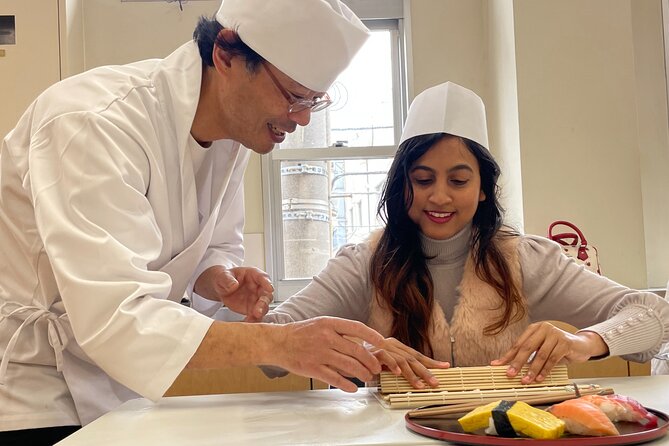
The classroom setting helps the session feel personal. You are not seated in a giant tourist room with a chef far away at the front. The host stays involved, translates the chef’s instructions, and helps participants copy each movement. Names vary by session, but hosts including Yuko, Yugo, Kanon, Emma, and AJ have been praised for clear explanations and warm support.
The chef also varies. Tanaka and Kate are among the instructors associated with the class. The core format remains the same: a professional sushi master handles the technical demonstration, and an English-speaking assistant makes sure you can follow along.
The fish-cutting demonstration comes first
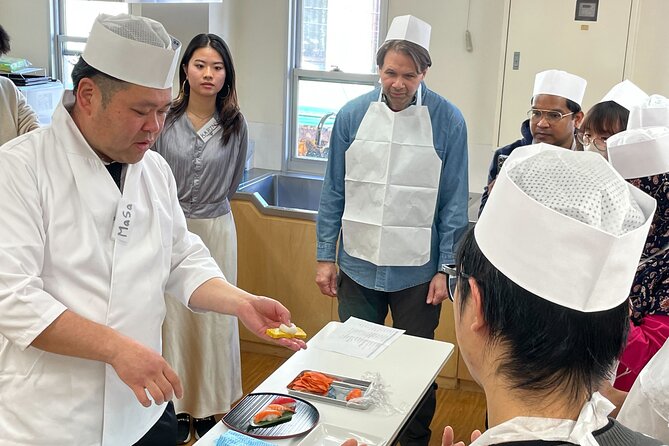
Before you make sushi, you watch the chef prepare fish. This is one of the most useful parts of the experience because it shows the work hidden behind a restaurant plate.
The chef explains the several steps involved in preparing fish for sushi and introduces the Japanese knives used for the job. You see how much care goes into each cut. The demonstration also gives you a better sense of why sushi chefs train for years. The final piece on your plate may look small, but its texture and shape depend on precise preparation.
Pay attention to the knife lesson even if you have no plan to handle a large fish at home. It explains why sushi is not simply raw seafood placed on rice. Cutting direction, thickness, and presentation all affect the bite.
The class also covers the basic idea of what sushi is, along with the different forms you may encounter in Japan. The focus then narrows to two types you will make yourself: nigiri sushi and rolled sushi, often called maki.
This section is part demonstration and part cultural lesson. The class connects sushi to old Edo, the former name for Tokyo, and explains how the food developed in the city. The historical material is brief enough to keep the pace moving, but it adds meaning to the meal you are about to prepare.
Making five nigiri, one roll, and a few mistakes
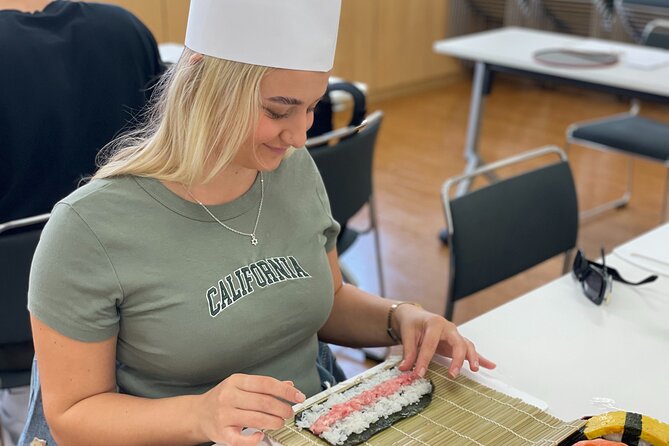
The hands-on portion is the heart of the class. The sushi master demonstrates each step, then you follow along with help when needed. Beginners are welcome, and that matters because shaping rice neatly is harder than it looks.
You make five different nigiri sushi. The usual method is to form a small portion of rice, add the appropriate amount of wasabi, place the fish on top, and shape the piece without pressing too hard. The chef shows the proper movement and corrects your technique as you go.
You also make one rolled sushi. Rolling requires a different rhythm, and it is often the most playful part of the session. You learn how to place the ingredients, control the mat, and cut the finished roll into pieces that look presentable.
Do not worry if your first pieces are uneven. The teaching is designed for people who have never made sushi. Staff help you create a plate that looks good enough for photographs, and several sessions include time to photograph the finished food.
The tools and tableware are supplied through local shops. Fresh ingredients come from the market area, giving the class a direct connection to Tsukiji rather than relying on generic cooking-school supplies.
Same city, a different plate:
- Tsukiji Fish Market Guided Tour and Sushi Making with Pro Chef
★ 5.0 · 775 reviews - Tokyo: Tsukiji Fish Market Food and Culture Walking Tour
★ 4.7 · 757 reviews - Tsukiji Fish Market: Street Food & Culture Walking Tour
★ 5.0 · 669 reviews - Tsukiji Fish Market Small-Group Food Walking Tour
★ 5.0 · 621 reviews
Eating your own sushi for lunch
The class includes five nigiri and one rolled sushi that you make yourself. After all the shaping and cutting, you sit down and eat the results. This is a real meal, not a token taste at the end.
The chef also prepares another piece of sushi for you, using fresh wasabi. That small addition matters. You can compare your own work with the chef’s version and notice the difference in rice shape, fish placement, and overall balance.
Arrive with some appetite. One useful detail is that the sushi comes after the instruction, so eating a large meal immediately before class may leave you too full to enjoy it.
The food is one of the strongest reasons to consider the price. At $49.74 per person, you are paying for instruction, ingredients, market-sourced supplies, a professional demonstration, an English-speaking host, and lunch. You could spend less on a casual sushi meal in Tokyo, but that meal would not teach you how to prepare it. You could also pay much more for a longer cooking course. This class occupies a sensible middle ground.
The value is best if you enjoy learning by doing. If you only want to eat excellent sushi, a good restaurant may suit you better. If you like food, culture, and a practical souvenir skill, the class earns its place in your schedule.
What the three Tsukiji stops add to the experience
The activity is tied to three nearby market areas: Tsukiji Fish Market, Tsukiji Jogai Market, and Tsukiji Nippon Fish Port Market. The class itself is the main event, but the setting adds context.
Tsukiji Fish Market gives you the broadest sense of the district. You are surrounded by a food neighborhood where seafood is central, and the class makes more sense after you have seen the market environment. The fish-cutting demonstration feels less abstract when you know you are learning beside one of Tokyo’s famous food areas.
Tsukiji Jogai Market, also called the Outer Market, is particularly useful before or after the lesson. Its food shops and stalls make it a good place to browse ingredients, snacks, and kitchen items. The class does not provide a guided market walk, so you should treat this as free time rather than part of a formal tour.
Tsukiji Nippon Fish Port Market adds another market reference point and reinforces the connection between the seafood trade and the sushi on your plate. The stop names can sound more organized than the actual experience. You should think of them as nearby Tsukiji locations, not three long guided visits with separate activities.
Because the class ends back at the meeting point, you can continue exploring afterward. That makes the 90-minute format convenient. It fits before another Tokyo activity, though you should leave a buffer in case the lesson runs late.
A good choice for families and first-time sushi eaters
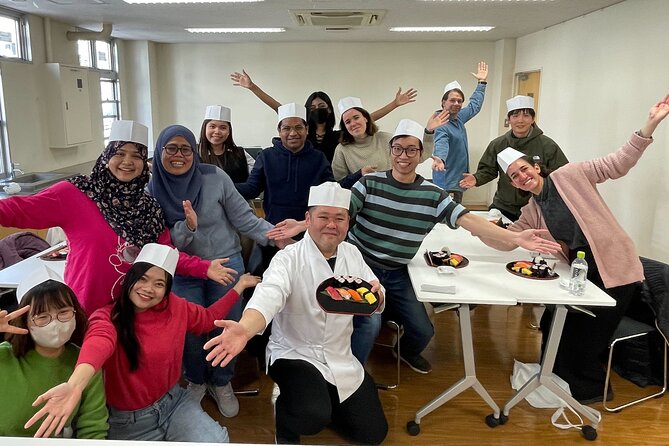
This class works especially well for families. Children from about seven to twelve have taken part, and the act of making their own food can encourage them to try sushi or sashimi for the first time.
The work is tactile and easy to understand. Kids can watch the fish demonstration, shape rice, roll sushi, and then eat what they made. Adults still get useful instruction, so it does not feel like a children’s activity dressed up for parents.
It also suits people who are new to sushi. You do not need a long background in Japanese food. The chef explains the ingredients, the forms of sushi, and the basic methods before asking you to try them.
Dietary needs require care. You should report allergies when booking, and the staff will try to help, but requests cannot always be accommodated. Halal and kosher requirements are not accepted. If food restrictions are central to your trip, contact the provider before paying rather than assuming substitutions will be possible.
The group limit is 20 people. That is small enough for a guided lesson, but it is not a private class. If you want individual attention every second, a smaller cooking session may be better. For most beginners, the staff support and clear translation should make the group format manageable.
What to know before you book
The class is mobile-ticketed, and confirmation is provided when you book. You meet at the specified Tsukiji address and return there at the end. Since there is no hotel pickup, you need to plan your own route.
The stated duration is about 1 hour and 30 minutes. The provider notes that the activity may run beyond the scheduled finish, so avoid placing a reservation or train departure immediately afterward. I would allow at least an extra 30 minutes, and more if you want time to browse the market area.
Wear something comfortable for standing and moving around a work table. The supplied information does not set a dress code, but the classroom is on an upper floor and reached by stairs. Keep your plans simple and arrive ready to take part rather than rushing in from another appointment.
Cancellation is flexible up to 24 hours before the start time, when you can receive a full refund. Cancellations or changes made less than 24 hours ahead are not refunded or accepted. The cut-off follows Tokyo local time.
Should you book this Tsukiji sushi class?
Book it if you want a short, practical food lesson with a real meal at the end. It is especially good for first-time sushi makers, families, couples, and anyone who wants more than another restaurant reservation. The combination of fish preparation, English guidance, market ingredients, and six pieces of handmade sushi gives you a useful taste of Japanese food culture.
Skip it if stairs are a problem, if you need strict halal or kosher arrangements, or if your schedule cannot tolerate a possible delay. You should also choose a different activity if your main goal is a long market tour or an advanced chef course.
For $49.74, the class offers solid value because you receive instruction, ingredients, equipment, a professional demonstration, and lunch in one compact visit. I would book it early in a Tokyo stay, then leave time afterward to explore Tsukiji on your own.
FAQ
How long does the Tokyo sushi-making class last?
The class lasts approximately 1 hour and 30 minutes, though it may run beyond the scheduled ending time.
Where does the class meet?
The meeting point is 千社額棟, 4-chōme-16-2 Tsukiji, Chuo City, Tokyo 104-0045, Japan.
Does the class include hotel pickup?
No. You make your own way to the Tsukiji meeting point, and hotel pickup and drop-off are not included.
What kinds of sushi will I make?
You will make five different nigiri sushi and one rolled sushi.
Is lunch included?
Yes. You eat the sushi you make during the class. The chef also prepares additional sushi with fresh wasabi.
Is the class taught in English?
An English-speaking host assists with the class and translates the professional sushi master’s explanations.
Do I need previous sushi-making experience?
No. The class is suitable for beginners, and the chef guides you through the process step by step.
Can children join the class?
The activity is suitable for families, and children from about seven to twelve have taken part. The information provided does not state a formal minimum age.
Can the class accommodate food allergies?
You should report allergies when booking. The staff will try to accommodate allergy-related requests, but they cannot guarantee that every request will be possible.
Does the class accommodate halal or kosher diets?
No. Halal and kosher requests are not accommodated.
Is the classroom accessible without stairs?
No. The classroom is on the third floor of a traditional building and can only be reached by stairs.
What is the cancellation policy?
You can cancel up to 24 hours before the start time for a full refund. Cancellations or changes made less than 24 hours before the experience are not accepted.
More Workshops in Tokyo
- Tokyo: Tsukiji Fish Market Sushi Making Class with Pro Chef
★ 4.9 · 506 reviews - Tokyo Tsukiji Fish Market Tour and Sushi Making Lesson
★ 5.0 · 390 reviews - Tokyo: Tsukiji Market Walking Tour & Sushi Cooking Class
★ 4.6 · 122 reviews - Small Group Cooking Class & Market Food Tour in Florence
★ 5.0 · 1,574 reviews
Just added around Tokyo
- Tokyo: Tsukiji walk & sushi private tour with Uni Students★ 5.0 · 17 reviews
- Tokyo: Private Tsukiji Street Food & Sake with Local Guide★ 5.0 · 3 reviews
- Tokyo: Tsukiji Market Guided Tour & Sushi-Making Experience★ 4.4 · 11 reviews
- Tokyo: Tsukiji Market and Hama-rikyu Gardens Guided Tour★ 4.8 · 73 reviews
- Tokyo Tsukiji Food & Culture Private Tour Licensed Guide★ 4.9 · 28 reviews
- Tokyo: Tsukiji Fish Market Foodie and Educational Tour★ 5.0 · 4 reviews
- Tokyo: Tsukiji Fish Market Culture Tour with Sashimi Tasting★ 4.6 · 54 reviews
- Tokyo: Tsukiji, Ginza, and Asakusa Japanese Culture Tour★ 5.0 · 2 reviews
Tokyo Street Food Tours, compared.
Tokyo Tsukiji Fish Market Food and Culture Walking Tour
Read our review →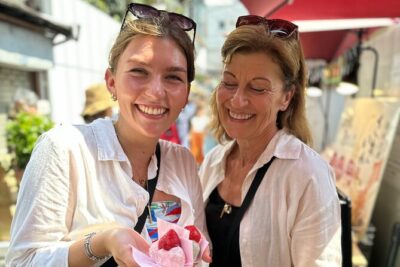
Tokyo: Tsukiji Fish Market Food and Walking tour
Read our review →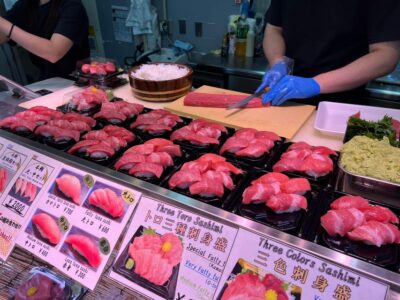
Tokyo: Tsukiji Fish Market Guided Walking Tour
Read our review →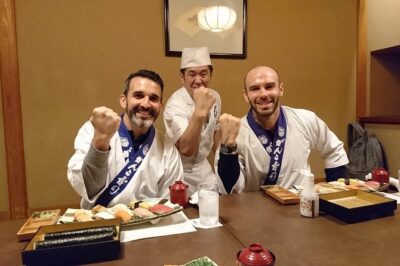
Tsukiji Fish Market Guided Tour and Sushi Making with Pro Chef
Read our review →Tokyo: Tsukiji Fish Market Food and Culture Walking Tour
Read our review →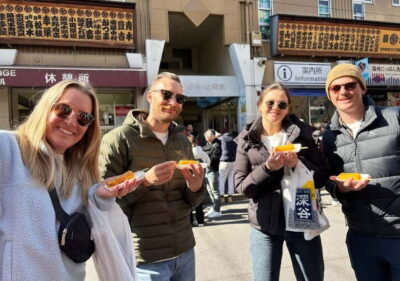
Tsukiji Fish Market: Street Food & Culture Walking Tour
Read our review →
Tsukiji Fish Market Small-Group Food Walking Tour
Read our review →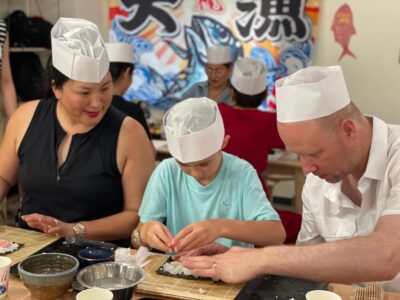
Tokyo: Tsukiji Fish Market Sushi Making Class with Pro Chef
Read our review →Browse the lists this tour appears in