REVIEW · TOKYO STREET FOOD TOURS
Tokyo Morning Tour: Asakusa, Meiji Shrine and Tsukiji Fish Market
Tokyo can feel like three cities at once: sacred woodland, seafood market, and old temple district. This four-hour morning tour links all three, starting at Meiji Jingu Shrine, moving through Tsukiji, and ending at Senso-ji in Asakusa. It is a smart way to cover a lot before lunch without wrestling with a map.
I especially like the small group limit of eight, which should make it easier to hear the guide and ask questions. I also like the early timing, since the tour is built to reach the major sights before the day gets too crowded. The tradeoff is pace: you get about an hour at each stop, so this is an introduction, not a slow study of Tokyo.
Key points to know
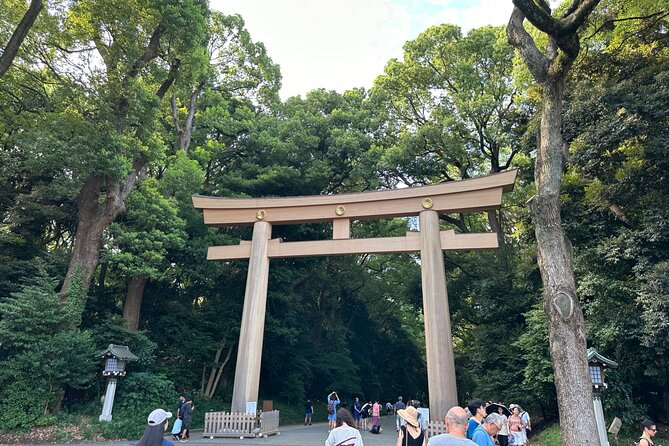
- Meiji Shrine comes first, offering a quiet start among forested paths and large torii gates.
- Tsukiji is a food-focused stop, with seafood, produce, and ingredients used by local cooks and high-end restaurants.
- Senso-ji is the finale, with Kaminarimon Gate, Nakamise shopping street, and Tokyo’s oldest temple.
- The group is capped at eight, a useful middle ground between a private tour and a large bus outing.
- Public transit costs about 600 yen extra, and the route ends in Asakusa rather than returning to Harajuku.
- Guides such as Ryota, Yota, and Andres Burgos have been praised for clear explanations, good timing, and helpful photo stops.
Three Tokyo districts in one well-timed morning
The appeal here is simple: you see three very different sides of Tokyo in half a day. Meiji Shrine gives you ceremony and quiet. Tsukiji gives you food and daily commerce. Senso-ji brings you into old Asakusa, where temple gates and shopping streets provide a strong finish.
You meet at the Starbucks Coffee location inside With Harajuku, near Harajuku Station, and finish in Asakusa. That one-way design matters. You do not waste the final part of the morning retracing your steps, and you can continue exploring Asakusa after the guide leaves.
The guide leads the route and explains the districts in English. That is useful in Tokyo, where the train system is efficient but a multi-stop morning can still eat up time if you are constantly checking signs and platforms. Your public transportation fares are not included, so plan on roughly 600 yen for the journey.
More Fish Market and Seafood Tours in Tokyo
- Tokyo Tsukiji Fish Market Food and Culture Walking Tour
★ 5.0 · 3,184 reviews - Tokyo: Tsukiji Fish Market Food and Walking tour
★ 5.0 · 1,724 reviews - Tokyo: Tsukiji Fish Market Guided Walking Tour
★ 4.9 · 1,397 reviews
Meiji Jingu Shrine starts the day quietly
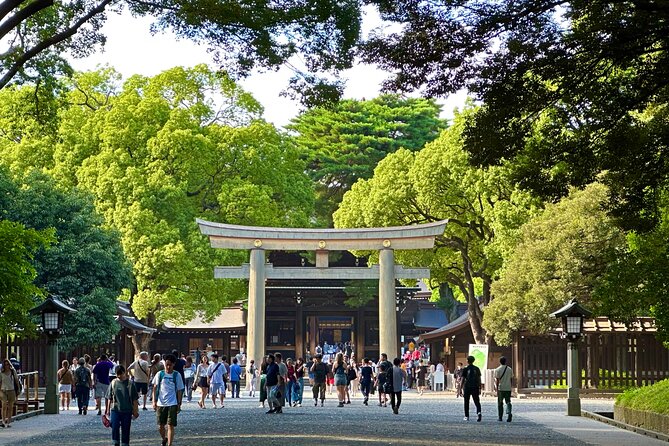
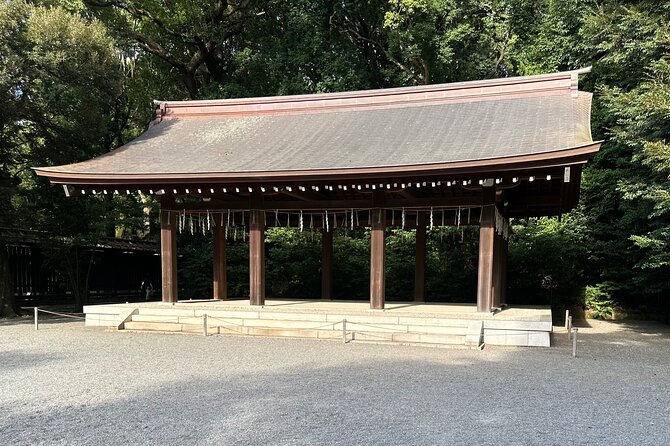
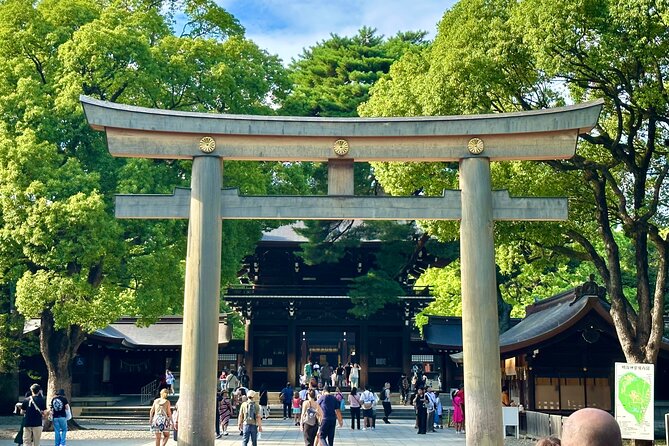
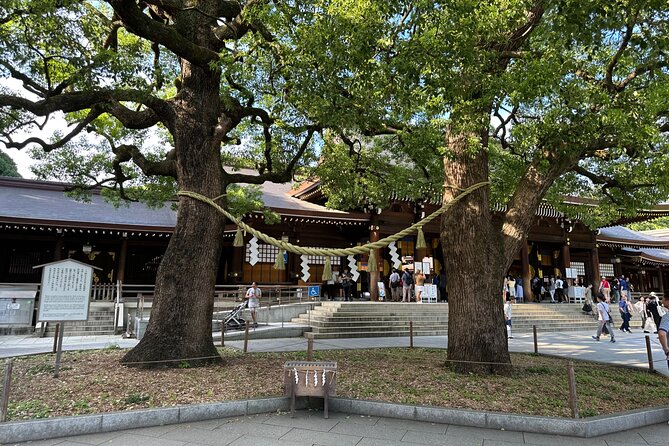
Meiji Jingu is a good first stop because it gives you a calmer introduction to Tokyo. The shrine honors Emperor Meiji and Empress Shoken and sits inside a broad wooded area in the center of the city. You walk along peaceful paths toward the shrine, passing through imposing torii gates.
The guide can explain the customs as you go, which helps you understand what you are seeing rather than treating the shrine as a backdrop for photos. You may learn how to approach the grounds, what the gates signify, and how visitors take part in traditional Shinto practices.
The scheduled time here is about one hour, with admission included. That is enough for an introduction and a few photos, though it is not enough for an unhurried wander through every path. If you want to linger at the shrine, read every sign, or spend time observing ceremonies, you may find the group schedule restrictive.
Still, the timing is sensible. Meiji Shrine is most appealing when it feels calm, and starting in the morning gives you the best chance of enjoying that mood. The large torii gates and tree-lined approaches also give the guide natural places to stop for photos. Photo help is included, so you do not need to rely on hurried self-timers.
Tsukiji shows Tokyo through its food
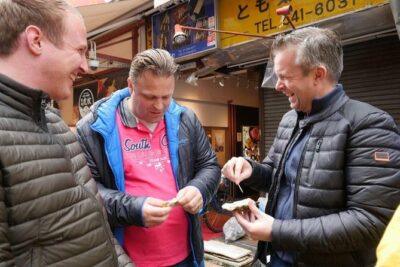
From the shrine, the tour heads toward Tsukiji Fish Market. This is not the former wholesale market experience many people remember from older Tokyo guides. The main wholesale tuna auctions moved away, but Tsukiji remains a major food district with shops and stalls selling seafood, produce, and cooking ingredients.
The tour allows about an hour here. That is enough to get a feel for the market, see products such as tuna and octopus, and hear how Tsukiji fits into Tokyo’s food culture. The guide can point out what you are looking at and explain why the area remains important to cooks and restaurant professionals.
The market is one of the more useful parts of the morning if you like food. You see ingredients in their working setting rather than only encountering them on a restaurant plate. Tsukiji is also a good place to notice the contrast between Tokyo’s formal religious spaces and its practical, everyday food trade.
Food and drinks are not included. That keeps the tour price clear, but you should budget separately if you want to buy a snack or market item. Since the schedule is fixed, you should also avoid assuming you will have unlimited time to browse, eat, and shop. The hour is better treated as a guided introduction than a full market crawl.
For many visitors, Tsukiji will be the most distinctive stop because it connects the city to Japanese cooking. You get context from the guide, then time to look closely at the products and stalls. If your main goal is the tuna auction or a long breakfast, this tour is not designed for that. If you want a useful first look at Tsukiji without planning the market on your own, it fits well.
Senso-ji brings you into old Asakusa
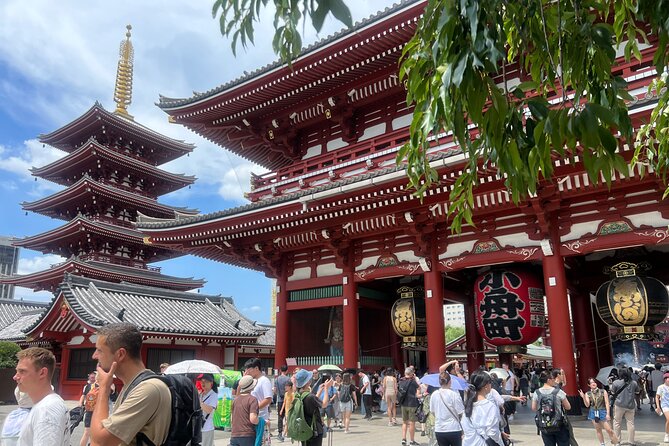
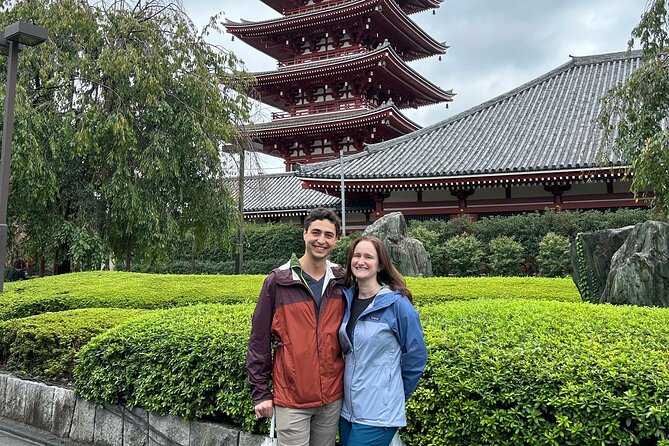
The final stop is Senso-ji in Asakusa, Tokyo’s oldest temple. The approach begins at Kaminarimon Gate, one of the city’s most recognizable entrances, then continues along Nakamise shopping street toward the temple grounds.
This is the most theatrical section of the route. The red gate, rows of shops, and temple architecture give you plenty to look at in a compact area. Your guide can explain the site’s religious role and the meaning behind the main features, while also helping you find good photo angles.
You have about an hour here, and the tour ends in Asakusa. That is a practical finish because you can stay in the district for lunch, continue to other sights, or make your own way elsewhere by train. You are not rushed back to the starting point.
The drawback is that Asakusa can feel crowded, especially around the gate and Nakamise. The early start helps, but Senso-ji is a major Tokyo attraction, and the route cannot guarantee an empty temple complex. The benefit of having a guide is that you can get the basic orientation quickly, then decide if you want to remain after the official tour ends.
More Street Food Market Tours in Japan
- Tsukiji Fish Market Guided Tour and Sushi Making with Pro Chef
★ 5.0 · 775 reviews - Tokyo: Tsukiji Fish Market Food and Culture Walking Tour
★ 4.7 · 757 reviews - Tsukiji Fish Market: Street Food & Culture Walking Tour
★ 5.0 · 669 reviews - Tsukiji Fish Market Small-Group Food Walking Tour
★ 5.0 · 621 reviews
Why the small group matters
The maximum group size is eight. That is not a private tour, but it is small enough to keep the guide’s explanations audible and make movement through busy areas more manageable.
A small group also helps with timing. One highly praised detail from the feedback is that guide Ryota timed the stops so the group arrived before other groups gathered, then moved on as crowds began to build. That kind of judgment is more valuable than a long lecture, especially at popular sites.
Named guides include Ryota, Yota, and Andres Burgos. The strongest praise centers on friendly help, clear explanations, strong organization, and good photo spots. Yota was singled out for an approachable manner, while Andres Burgos was praised for making the route enjoyable and informative. Your guide may differ, but these comments show the level of service the experience aims to provide.
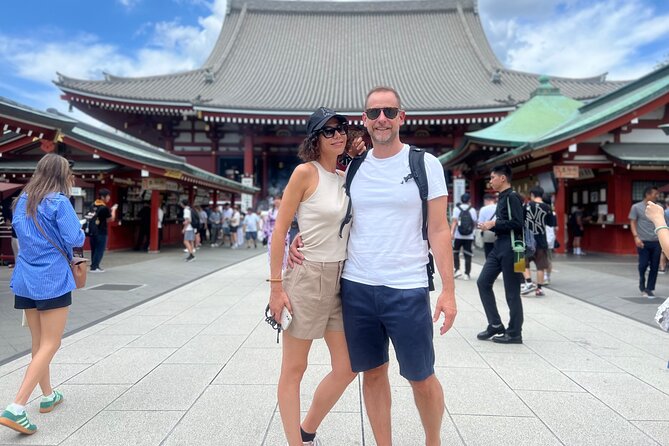
The guide also takes photos during the tour. That is a small but useful extra. You can concentrate on the shrine, market, and temple instead of asking another group member to take every picture. It is particularly handy when you want a photo of the whole group.
Is $157 good value for four hours?
At $157, this is not a cheap sightseeing option. You also pay about 600 yen for public transportation, and food and drinks are extra. The real question is what you are buying.
You are paying for route planning, an English-speaking guide, historical context, a small group, photo help, and a carefully arranged sequence of sights. If you are in Tokyo for only a short stay, that can be worthwhile. Independent visits would cost less, but you would need to plan the route, work out the transfers, research each place, and manage the clock yourself.
The value is strongest for first-time visitors, people with limited time, and anyone who prefers an organized introduction. The value is weaker if you already know Tokyo well, enjoy exploring markets at your own speed, or want to spend several hours at one shrine or temple.
The tour does not include special access, a meal, or a long stop at any one attraction. You should book it for the guide and the efficient combination of districts, not for luxury extras. A 5 out of 5 rating from 128 submitted ratings and a 100 percent recommendation record point to a consistently positive experience, though the fixed pace still deserves attention.
Practical details before you book
The meeting point is Starbucks Coffee at With Harajuku, 1-14-30 Jingumae, Shibuya, Tokyo 150-0001. Check the exact location before setting out, since the tour does not begin at Meiji Shrine itself.
The end point is Asakusa, Taito City, Tokyo 111-0032. Since the route is one-way, think about your plans afterward. This is convenient if you want to stay in Asakusa, but less convenient if you need to return to Harajuku immediately.
Confirmation is provided when you book. The experience is near public transportation, and most people can participate. It requires a minimum number of participants, so a cancellation for that reason may result in another date or experience, or a full refund.
Free cancellation is available until 24 hours before the start time. Within 24 hours, you cannot receive a refund or make changes. The cut-off uses Tokyo local time, so keep that in mind if you are booking from another time zone.
Who will enjoy this morning tour?
I would choose this for a first visit to Tokyo when you want a clear overview rather than a specialist tour. It suits couples, families, solo visitors, and small groups who appreciate having a guide handle the sequence and train connections.
It is also a good match if photos matter to you. The guide takes pictures, knows useful viewpoints, and can help you avoid wasting time looking for the right angle.
You should think twice if you dislike early starts, want a long breakfast at Tsukiji, or prefer to spend an entire morning in one neighborhood. The three-stop format is efficient, but efficiency always means giving up some free time.
The experience is also less suitable for anyone expecting a full market tour or a deep religious study of Meiji Jingu and Senso-ji. You receive historical insights into each district, but the format is designed to introduce several places in one morning.
Should you book it?
Book this tour if you want to cover Meiji Shrine, Tsukiji, and Senso-ji without building the route yourself. The small group, early timing, guide-taken photos, and one-way finish in Asakusa give it practical advantages over simply following a map.
Skip it if you already have a detailed Tokyo plan or want complete freedom at each stop. At $157 plus transit and food, the price only makes sense when the guidance and time savings matter to you.
For a first morning in Tokyo, I think the route works particularly well: quiet shrine first, food market second, historic temple last. You get a clear sense of the city’s different sides before lunch, with enough structure to keep the morning moving and enough context to make each stop mean more.
FAQ
How long does the Tokyo morning tour last?
The tour lasts approximately four hours.
Which places does the tour visit?
It visits Meiji Jingu Shrine, Tsukiji Fish Market, and Senso-ji Temple in Asakusa.
Where does the tour start?
It starts at Starbucks Coffee at With Harajuku, 1-14-30 Jingumae, Shibuya, Tokyo 150-0001.
Where does the tour finish?
The tour ends in Asakusa, Taito City, Tokyo 111-0032.
Is public transportation included?
No. Public transportation is not included. The estimated cost is around 600 yen.
Is food included?
No. Food and drinks are not included in the tour price.
How many people can join the tour?
The tour has a maximum of eight participants.
Can I cancel for a refund?
Yes. You can cancel at least 24 hours before the start time for a full refund. Cancellations and changes made within 24 hours are not accepted for a refund.
More Market Food Tours in Tokyo
- Private Toyosu & Tsukiji Market Adventure with Tuna Auction
★ 4.8 · 191 reviews - Tokyo: Toyosu Tuna Auction &Tsukiji Market Gourmet Adventure
★ 4.8 · 187 reviews - Tokyo: Tsukiji Fish Market Tour with 6 Stops & Seafood Lunch
★ 4.5 · 165 reviews - Inside Tokyo’s Kitchen: Tsukiji Market, Food & Culture Tour
★ 5.0 · 162 reviews
More Street Food Market Tours in Tokyo
- Tokyo: Tsukiji Fish Market Sushi Making Class with Pro Chef
★ 4.9 · 506 reviews - Tokyo Food Tour Taste Fresh Delights at Tsukiji Market
★ 5.0 · 429 reviews - Tokyo Tsukiji Fish Market Tour and Sushi Making Lesson
★ 5.0 · 390 reviews - Tsukiji Fish Market: Street Food & Culture Walking Tour
★ 4.8 · 259 reviews
Just added around Tokyo
- Tokyo: Tsukiji walk & sushi private tour with Uni Students★ 5.0 · 17 reviews
- Tokyo: Private Tsukiji Street Food & Sake with Local Guide★ 5.0 · 3 reviews
- Tokyo: Tsukiji Market Guided Tour & Sushi-Making Experience★ 4.4 · 11 reviews
- Tokyo: Tsukiji Market and Hama-rikyu Gardens Guided Tour★ 4.8 · 73 reviews
- Tokyo Tsukiji Food & Culture Private Tour Licensed Guide★ 4.9 · 28 reviews
- Tokyo: Tsukiji, Ginza, and Asakusa Japanese Culture Tour★ 5.0 · 2 reviews
- Tokyo: Tsukiji Fish Market Foodie and Educational Tour★ 5.0 · 4 reviews
- Tokyo: Tsukiji Fish Market Culture Tour with Sashimi Tasting★ 4.6 · 54 reviews
Tokyo Street Food Tours, compared.
Tokyo Tsukiji Fish Market Food and Culture Walking Tour
Read our review →
Tokyo: Tsukiji Fish Market Food and Walking tour
Read our review →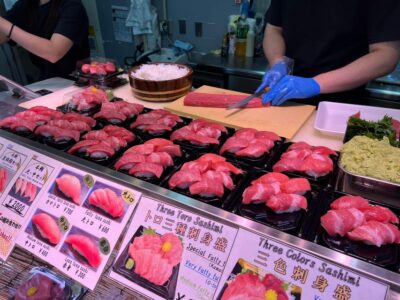
Tokyo: Tsukiji Fish Market Guided Walking Tour
Read our review →
Tokyo Sushi Making Class in Tsukiji with Professional Chef
Read our review →
Tsukiji Fish Market Guided Tour and Sushi Making with Pro Chef
Read our review →Tokyo: Tsukiji Fish Market Food and Culture Walking Tour
Read our review →
Tsukiji Fish Market: Street Food & Culture Walking Tour
Read our review →