REVIEW · TOKYO STREET FOOD TOURS
Tokyo: Tsukiji Fish Market Tour with 6 Stops & Seafood Lunch
Tsukiji is no longer Tokyo’s main wholesale fish market, but its outer market still delivers the smells, narrow lanes, seafood stalls, and food-shop energy that made this district famous. This tour pairs that food stop with Tsukiji Hongan-ji, Namiyoke Inari Shrine, and a high view over Tokyo.
I like the way the guide turns unfamiliar foods into an easy tasting session, and I like the sit-down donburi lunch after an hour on your feet. The small group, limited to seven people, also makes it easier to ask where to buy seasonings, seafood, or snacks. The catch is that the market can be tightly packed, and some people may find the pace too slow in crowds or too quick for careful shopping.
Key points at a glance
- Five or more tastings: Try market foods such as tuna sushi, oysters, grilled eel, rolled omelet, mochi, yakitori, or seasonal specialties, depending on the day.
- Two religious sites: Learn basic Japanese worship customs at the 300-year-old Tsukiji Hongan-ji and nearby Namiyoke Inari Shrine.
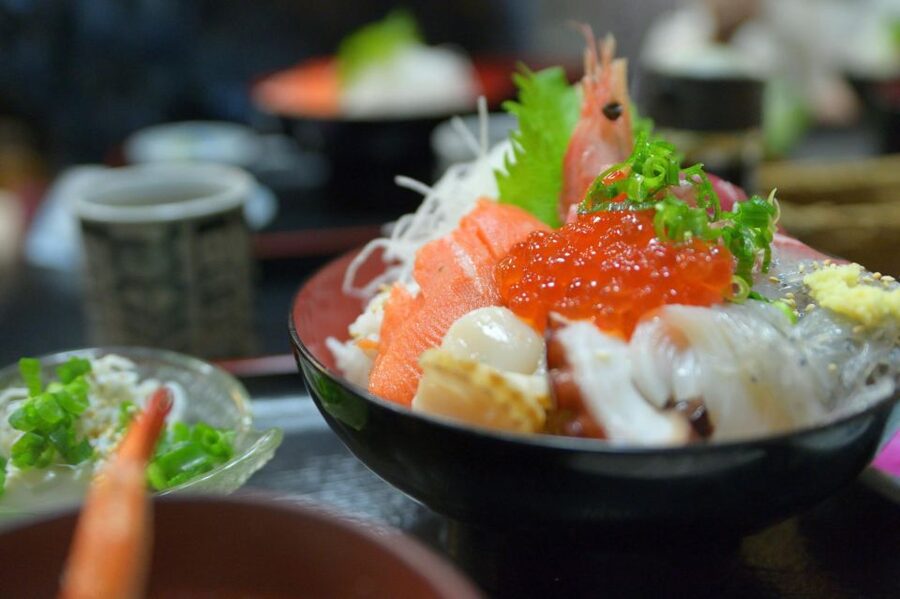
- Donburi lunch included: Finish with a seafood rice bowl, with the included lunch allowance capped at 1,500 yen.
- Shiodome city views: Visit the Caretta Shiodome area, where several groups have enjoyed views from the 46th floor.
- Small English-speaking group: The tour is limited to seven participants, and guides have included Mai, Meg, Kiyo, Ken, Momo, Taka, and Naoki.
- Bring cash: Food tastings are included, but extra street food, shopping, beer, and sake cost more.
Tsukiji after the wholesale market moved
Start at Tsukiji Station, not Tsukijishijo Station. That distinction matters. The meeting point is by the main gate of Tsukiji Hongan-ji, where your guide carries a red or orange MagicalTrip sign.
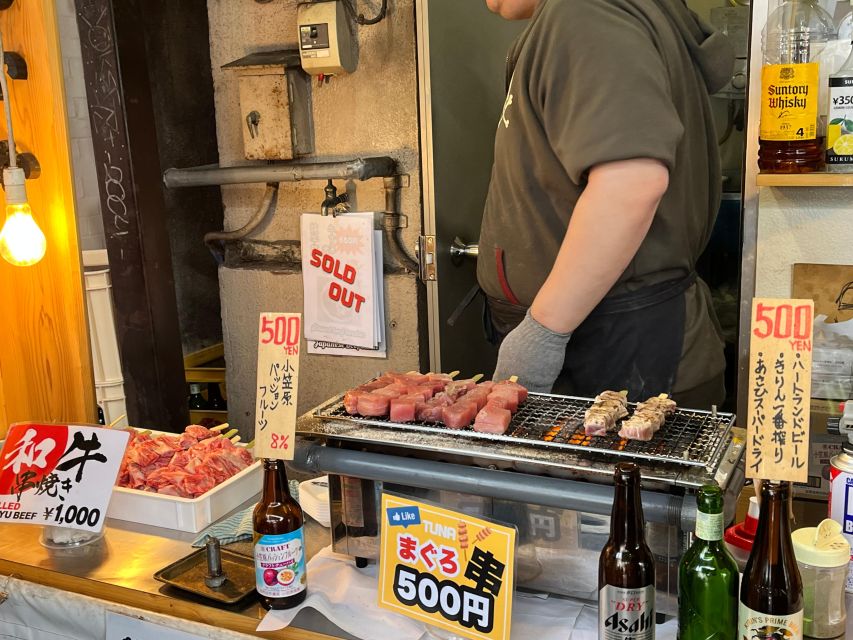
Tsukiji’s wholesale fish operations moved to Toyosu, but the outer market stayed in place. That is the part you see here: a working food district with seafood shops, knives, dried goods, seasonings, produce, small restaurants, and stalls serving ready-to-eat bites.
I would book this experience if you want help making sense of that maze. You can walk through Tsukiji alone, but a guide can point out what is worth tasting, explain unfamiliar dishes, and help you buy something without guessing at every menu or display.
This is not a tour of the current Toyosu wholesale market or its famous tuna auction. The experience is centered on Tsukiji’s outer market and its older food culture. A few people have expected a broader fish-market visit based on the name and photographs, so keep that distinction clear before booking.
More Fish Market and Seafood Tours in Tokyo
- Tokyo Tsukiji Fish Market Food and Culture Walking Tour
★ 5.0 · 3,184 reviews - Tokyo: Tsukiji Fish Market Food and Walking tour
★ 5.0 · 1,724 reviews - Tokyo: Tsukiji Fish Market Guided Walking Tour
★ 4.9 · 1,397 reviews
Tsukiji Hongan-ji starts the morning
The first stop is Tsukiji Hongan-ji, a Buddhist temple with about 300 years of history. You spend roughly 20 minutes here with the guide, learning how Japanese worship works and what to notice when visiting a temple.
This opening gives the food portion some useful context. Japanese eating customs are tied to more than ingredients and technique. They also reflect seasonal habits, respect for food, religious practice, and the careful etiquette you see at temples and shrines.
The temple visit is not a long formal tour. It is a compact introduction before you enter the market. That works well for a first morning in Tokyo, especially if you want a bit of culture rather than three straight hours of eating.
The route may not suit every wheelchair or stroller because some locations are not accessible. All ages can join, but you should check the physical details before reserving if anyone in your party has limited mobility.
Five or more tastings in the outer market
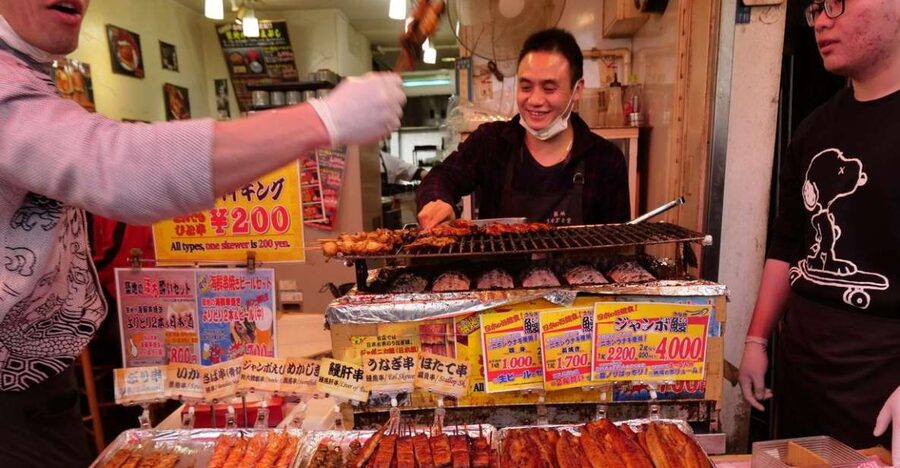
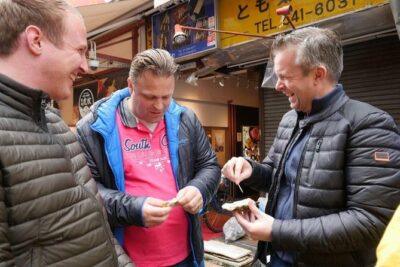
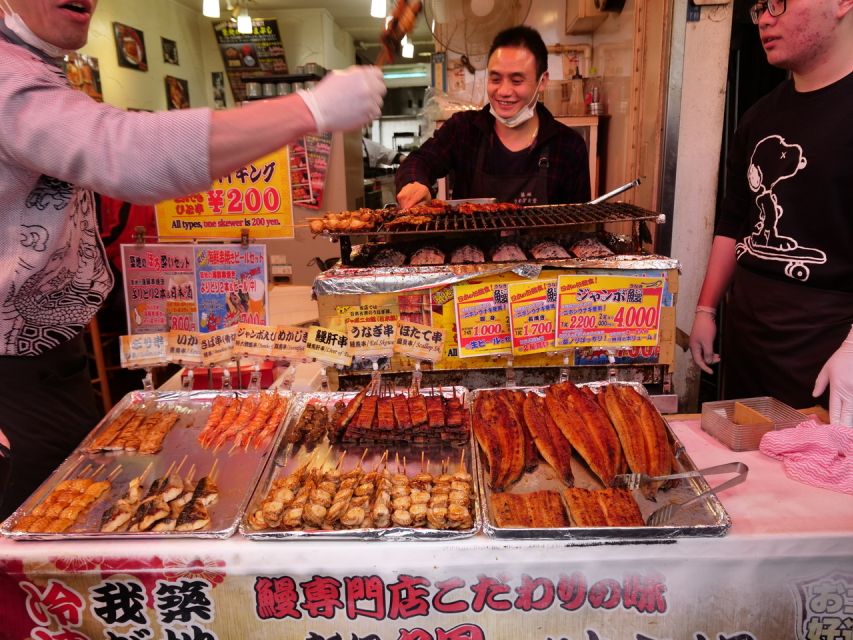
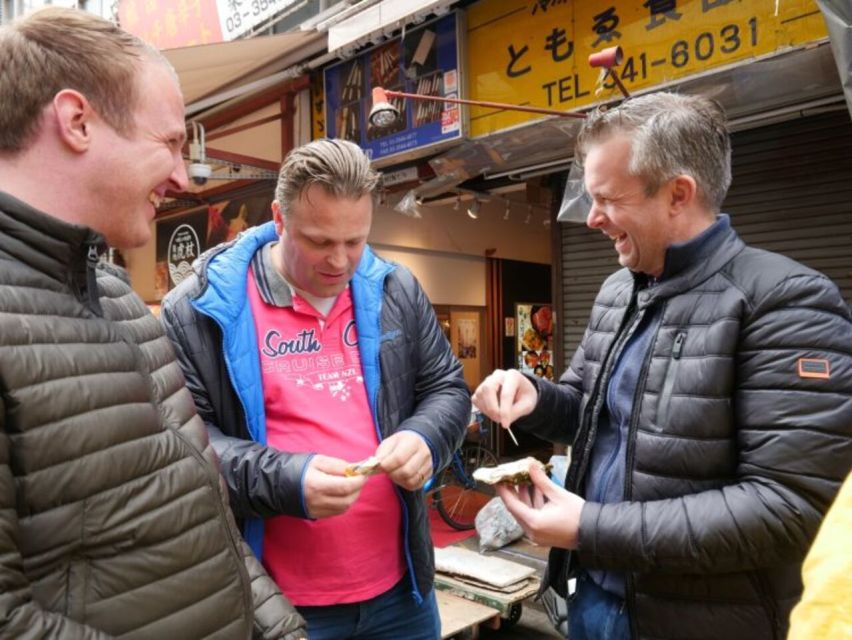
The market portion lasts about an hour, though the full route includes additional stops. Your guide leads you among the shops and helps select tastings. The exact food lineup can change, but the experience has included tuna sushi, oysters, grilled eel skewers, rolled omelet, yakitori, custard-filled mochi, and tuna-shaped taiyaki.
That variety is one of the tour’s best features. You are not simply handed one plate of sushi and sent on your way. You might move from raw seafood to a sweet snack, then to a grilled item or a Japanese egg dish. This lets you compare textures and flavors, and it gives you a better sense of how the market serves local shoppers as well as people looking for lunch.
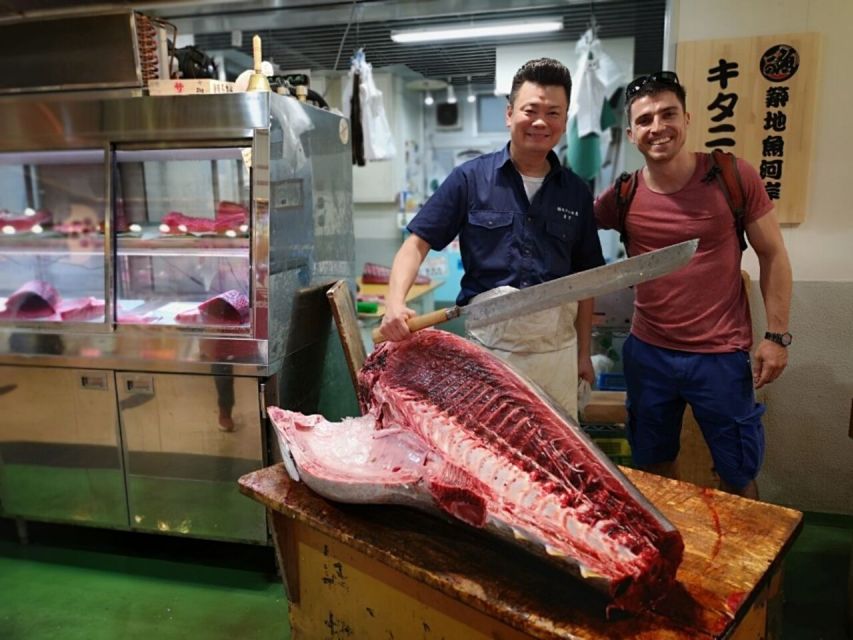
The seafood is the main draw. Fresh oysters, sashimi, ikura, and sushi have been particular favorites, while grilled eel and omelet offer useful alternatives if you are not ready to eat several raw items. Your guide can explain what you are trying and point out stalls that are easier to use if you want to return later.
The market can also be hard work. Narrow passages and heavy foot traffic may force the group to move slowly. If you want time to photograph every stall, inspect each knife shop, or buy several ingredients, an independent visit may give you more freedom.
I see the tour as a guided introduction, not a dedicated shopping expedition. It saves you the trouble of choosing from dozens of stalls, but it cannot pause at every one.
A shrine with a working-market connection
Namiyoke Inari Shrine is the next cultural stop, with about 20 minutes for a visit and explanation. Its location near Tsukiji makes it a natural companion to the market, since the shrine is tied to the district’s working life and local worship.
The contrast is pleasant. A few minutes earlier you may be watching seafood being prepared or choosing a hot snack. Here, the pace drops and the guide explains shrine customs, including the difference between Buddhist and Shinto settings.
Do not expect a large sightseeing complex or a long ceremony. This is a short stop, but it helps connect the market to the people and traditions that shaped the neighborhood.
If you are taking photos, pay attention to the group and the people using the site for worship. The guide can help you avoid the usual mistakes and explain what you are seeing without turning the visit into a lecture.
More Street Food Market Tours in Japan
- Tsukiji Fish Market Guided Tour and Sushi Making with Pro Chef
★ 5.0 · 775 reviews - Tokyo: Tsukiji Fish Market Food and Culture Walking Tour
★ 4.7 · 757 reviews - Tsukiji Fish Market: Street Food & Culture Walking Tour
★ 5.0 · 669 reviews - Tsukiji Fish Market Small-Group Food Walking Tour
★ 5.0 · 621 reviews
Donburi lunch gives you a needed break
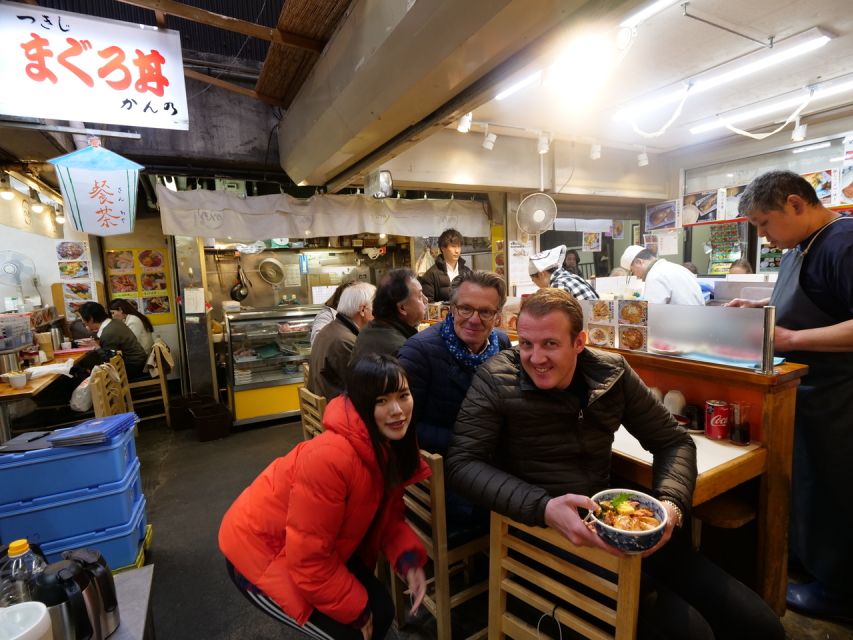
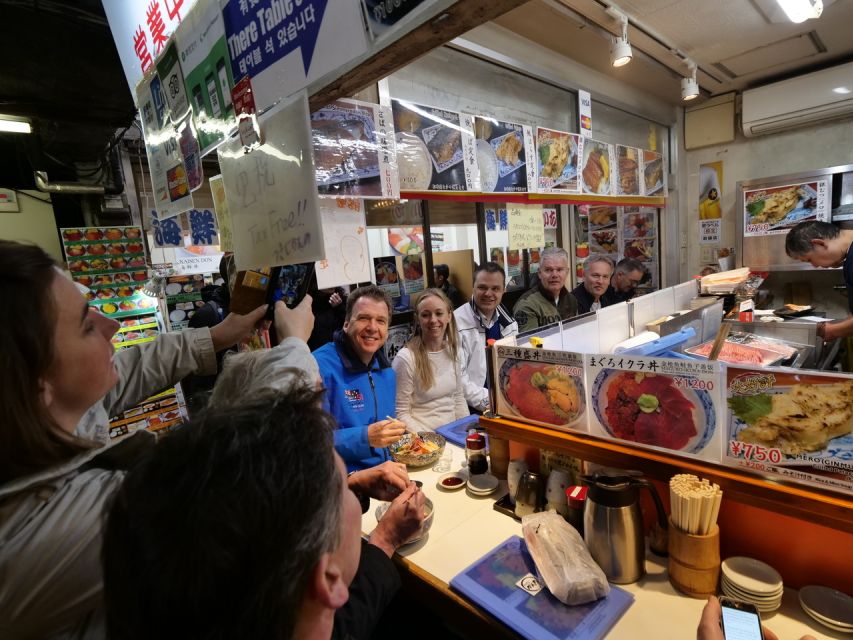
The final food stop in Tsukiji is a seafood restaurant serving donburi, a rice bowl topped with seafood. Lunch is included up to 1,500 yen, and you sit down after the market tastings.
This is smart tour design. Eating small portions at several stalls is fun, but you may still want a proper meal. The bowl gives you time to sit, compare notes, and decide what you may want to buy before leaving the area.
The exact bowl and restaurant can vary. Fresh raw fish, sashimi, and ikura have been part of the experience, and one guide has arranged a restaurant popular with local diners. You can also buy Japanese beer or sake with your food, but drinks are not included in the tour price.
Pay close attention to the dietary information. The description discusses vegetarian meals, but the important conditions say vegan and vegetarian options are not available and that allergy-free food cannot be guaranteed. Kitchens are operated by independent businesses, substitutions may not be possible, and the tour asks you to disclose restrictions in advance. If you cannot eat seafood or need strict allergy control, this is not a safe choice to make casually.
The 46th-floor finish in Shiodome
After lunch, the route continues to Shiodome Media Tower or the nearby Caretta Shiodome observation area. The visit lasts about 20 minutes and gives you a look over Tokyo, the market district, and the harbor area from above.
Several people have especially enjoyed this ending. It changes the scale of the morning. At street level, Tsukiji is all close views, shop signs, trays, and crowded lanes. From the tower, you can see how the district fits into the larger city.
The observation stop also makes the tour feel like more than a food crawl. You get market culture, religious sites, lunch, and a city view within three hours. It is a useful finish for a first visit to Tokyo because you leave with both street-level details and a broad sense of the area.
The route returns to Tsukiji Hongan-ji. Some guides have also helped people find the right train afterward. That assistance is not the main service, but it can be useful if you are still learning Tokyo’s rail system.
How good is the $94 value?
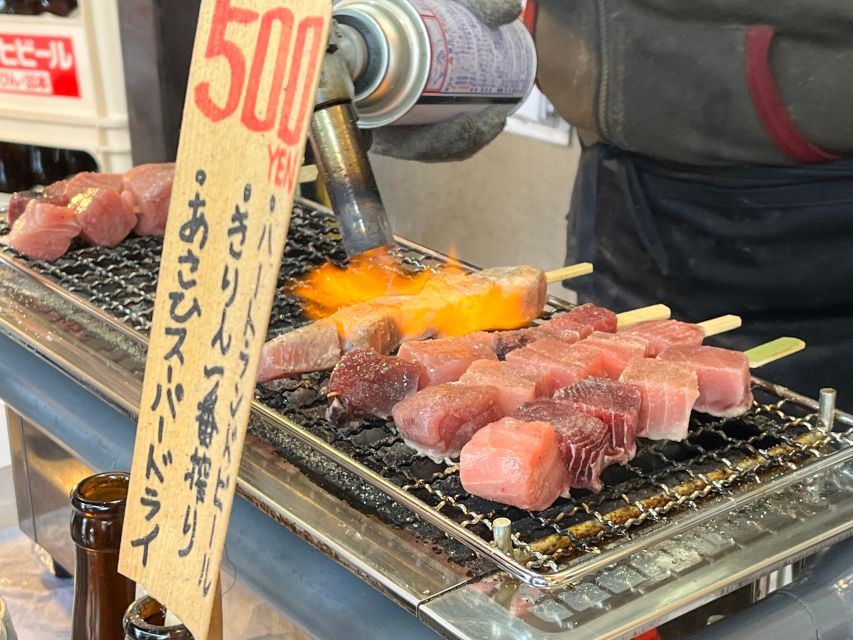
At $94 per person, this is not the cheapest way to eat at Tsukiji. You can enter the outer market without a tour and pay for individual snacks as you go. If you already know what you want, speak some Japanese, and enjoy making your own route, independent exploring may cost less.
The price makes more sense if you value interpretation and decision-making help. You receive a certified English-speaking guide, five or more food tastings, a seafood lunch, the temple and shrine visits, the Shiodome viewpoint, and tour photos. Lunch alone is covered up to 1,500 yen, but the larger value is having someone explain unfamiliar dishes and lead you through a crowded district.
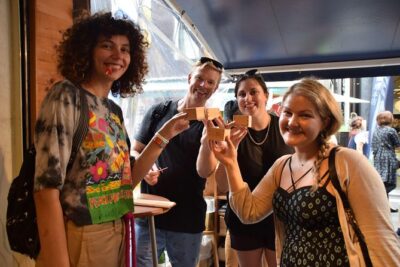
The group limit of seven is another plus. You are not part of a large procession, and guides can usually answer questions about ingredients, customs, nearby restaurants, and shopping. The experience has sometimes operated with only two people when others did not attend, though you should not book expecting a private tour.
I would call the price fair for a first visit, particularly for couples, families, and solo visitors who want an organized introduction. It is less attractive for repeat visitors focused mainly on buying seafood or spending a long time at one stall.
What the guides add
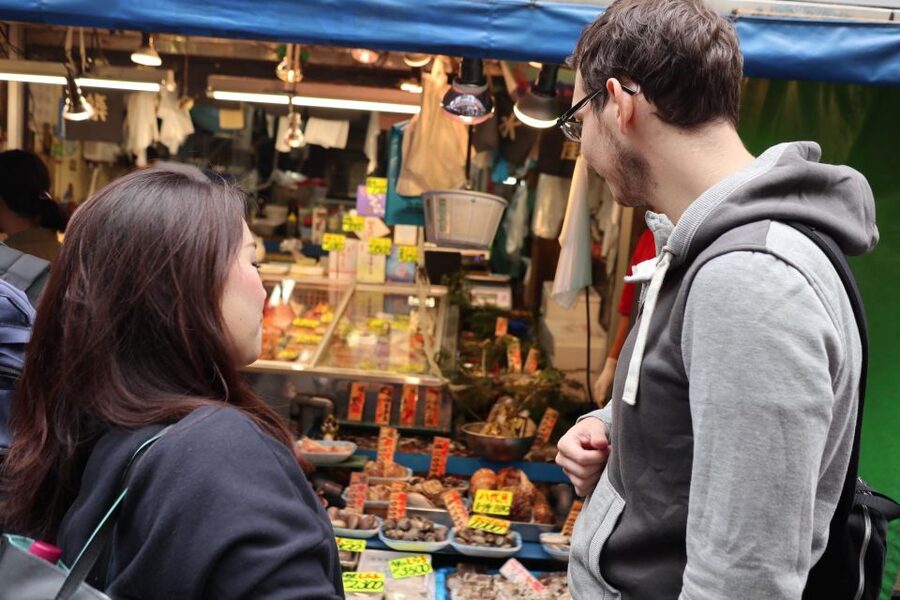
The quality of the experience depends heavily on the guide. The strongest guide reports describe clear English, friendly help, food explanations, and practical advice beyond the advertised route.
Mai has led several highly praised outings, including one where a couple received a private-style experience after no other participants arrived. Meg helped a group find local food spots and arranged lunch. Kiyo explained the market, shrine, and observation view while keeping the pace comfortable.
Other named guides include Ken, Ken Take, Maiko, Max, Momo, Nao, Naoki, Taka, Hina, Lily, Yoko, Yoichi, Jiji, and Tsubasa. Assignment is not guaranteed, but the range of names gives you a sense that this is a guide-led experience rather than an audio tour.
A good guide matters most at the market. Food stalls can be crowded, menus may be brief, and some items are not self-explanatory. Your guide can tell you what you are eating, help with purchases, and keep the group together.
Still, the guide cannot control the crowd. One person found the market section too slow because of congestion, while another wanted more time to browse and interact with vendors. Expect help with choices, not a private conversation with every shopkeeper.
Timing, meeting point, and practical details
The tour lasts three hours, with several possible starting times depending on availability. Arrive early at the main gate of Tsukiji Hongan-ji. The operator is strict about starting on time, and you may not be able to join, reschedule, or receive a refund if you miss the group.
Bring cash for extra street food and purchases. The included tastings and lunch cover the planned food, but you may want to buy seasonings, flavorings, seafood, or another snack after discovering something you like.
Wear comfortable shoes. You will walk through crowded market lanes, stand for tastings, visit two religious sites, and continue to Shiodome. Some parts of the route are not suitable for wheelchairs or strollers.
The tour is conducted in English and accepts all ages. Its small size suits solo visitors, couples, friends, and families who want direct access to a guide without joining a large bus group.
Free cancellation is available up to 24 hours before the start, and you can reserve now and pay later. Those policies help if your Tokyo schedule is still shifting, but they do not soften the late-arrival rule.
Who should book this Tsukiji tour?
I would choose this tour for a first-time Tokyo visitor who wants a friendly introduction to Japanese food and local customs without spending a full day on a formal sightseeing route. It also works well on your first morning, when a guide can help you get comfortable with food names, temple etiquette, and the rail area around Tsukiji.
Families may like the changing format. Children can see, smell, and taste their way through the market rather than stand through a long museum visit. The tour also gives adults a proper lunch and a city view.
Solo visitors get clear value from the small group and guide support. A guide can make the market easier to approach, especially when you are unsure which stall welcomes casual sampling.
I would skip it if you want the Toyosu wholesale market, the tuna auction, a long shopping session, or strict vegetarian or allergy-safe food. I would also skip it if you prefer to eat at your own pace. But if you want seafood, cultural context, and a compact route with several distinct stops, this is a well-shaped half-day experience.
FAQ
Is this a tour of Toyosu Fish Market?
No. The tour visits Tsukiji’s outer market. Tokyo’s wholesale fish market moved to Toyosu, while Tsukiji retained its food stalls, shops, and older market atmosphere.
Where does the tour meet?
Meet at the main gate of Tsukiji Hongan-ji. The broader meeting point is Tsukiji Station, not Tsukijishijo Station. Look for a guide holding a red or orange MagicalTrip sign.
How long does the tour last?
The experience lasts three hours. It includes the temple, market tastings, shrine, seafood lunch, and the Shiodome viewpoint before returning to Tsukiji Hongan-ji.
What food is included?
You receive five or more market tastings and a seafood donburi lunch. Possible tastings include sushi, oysters, grilled eel, rolled omelet, yakitori, mochi, and taiyaki, but the exact foods can vary.
Are drinks included?
No. Japanese beer and sake can be purchased separately with the food.
Can vegetarians or vegans join?
The important tour information says vegan and vegetarian options are not available. The food is prepared in independent kitchens, and substitutions cannot be guaranteed, so you should not rely on this tour if you require vegetarian, vegan, or allergy-safe meals.
What happens if I arrive late?
The tour starts on time. If you miss the group, you may not be able to join, reschedule, or receive a refund, so arrive early at the Tsukiji Hongan-ji meeting point.
Should you book it?
Book this Tsukiji tour if you want more than a quick market snack. The combination of five or more tastings, donburi lunch, temple and shrine visits, and the Shiodome view gives you a useful three-hour introduction to this corner of Tokyo.
At $94, you are paying for guidance, food, and structure rather than simply market access. That is a fair trade for first-time visitors, families, and solo visitors who want help choosing what to eat. Just remember that this is Tsukiji’s outer market, not Toyosu, and confirm the food situation carefully if you have dietary restrictions.
More Market Food Tours in Tokyo
- Private Toyosu & Tsukiji Market Adventure with Tuna Auction
★ 4.8 · 191 reviews - Tokyo: Toyosu Tuna Auction &Tsukiji Market Gourmet Adventure
★ 4.8 · 187 reviews - Inside Tokyo’s Kitchen: Tsukiji Market, Food & Culture Tour
★ 5.0 · 162 reviews - Tsukiji Food and Toyosu Market with Government-Licensed Guide
★ 5.0 · 158 reviews
More Street Food Market Tours in Tokyo
- Tokyo: Tsukiji Fish Market Sushi Making Class with Pro Chef
★ 4.9 · 506 reviews - Tokyo Food Tour Taste Fresh Delights at Tsukiji Market
★ 5.0 · 429 reviews - Tokyo Tsukiji Fish Market Tour and Sushi Making Lesson
★ 5.0 · 390 reviews - Tsukiji Fish Market: Street Food & Culture Walking Tour
★ 4.8 · 259 reviews
Just added around Tokyo
- Tokyo: Tsukiji walk & sushi private tour with Uni Students★ 5.0 · 17 reviews
- Tokyo: Private Tsukiji Street Food & Sake with Local Guide★ 5.0 · 3 reviews
- Tokyo: Tsukiji Market Guided Tour & Sushi-Making Experience★ 4.4 · 11 reviews
- Tokyo: Tsukiji Market and Hama-rikyu Gardens Guided Tour★ 4.8 · 73 reviews
- Tokyo Tsukiji Food & Culture Private Tour Licensed Guide★ 4.9 · 28 reviews
- Tokyo: Tsukiji Fish Market Culture Tour with Sashimi Tasting★ 4.6 · 54 reviews
- Tokyo: Tsukiji, Ginza, and Asakusa Japanese Culture Tour★ 5.0 · 2 reviews
- Tokyo: Tsukiji Fish Market Foodie and Educational Tour★ 5.0 · 4 reviews
Tokyo Street Food Tours, compared.
Tokyo Tsukiji Fish Market Food and Culture Walking Tour
Read our review →
Tokyo: Tsukiji Fish Market Food and Walking tour
Read our review →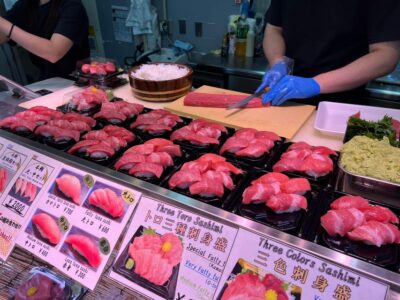
Tokyo: Tsukiji Fish Market Guided Walking Tour
Read our review →
Tokyo Sushi Making Class in Tsukiji with Professional Chef
Read our review →
Tsukiji Fish Market Guided Tour and Sushi Making with Pro Chef
Read our review →Tokyo: Tsukiji Fish Market Food and Culture Walking Tour
Read our review →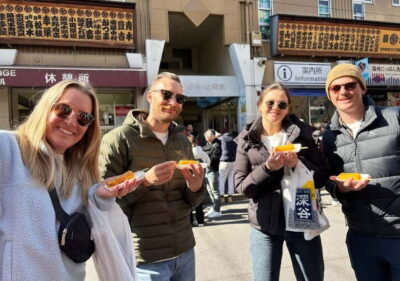
Tsukiji Fish Market: Street Food & Culture Walking Tour
Read our review →