
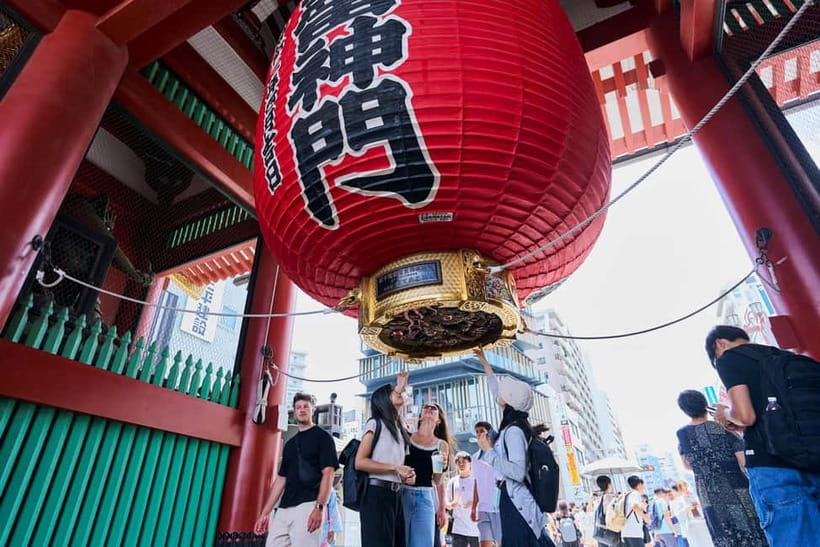
REVIEW · TOKYO STREET FOOD TOURS
Asakusa: 2-Hour History Walking Tour & Local Food Tasting
Asakusa’s best feature is how much old Tokyo fits into a short walk. In two hours, you’ll visit Senso-ji, founded in 628, learn how the nearby Asakusa Shrine connects Buddhism and Shinto, and stop for traditional local snacks. It is a compact introduction to a neighborhood shaped by more than 1,400 years of worship and daily life.
I like the mix of food and useful shopping. You are not only looking at temple buildings, you are also seeing the knife shops professionals use, a samurai and ninja goods store, and a Japanese tableware shop. The main consideration is pace: two hours is enough for an introduction, but not enough for a slow temple visit, a full meal, and serious shopping.
- Senso-ji and Asakusa Shrine: See Tokyo’s oldest temple and its nearby Shinto shrine in one stop.
- Local food tasting: Try sweet or savory traditional treats, with food and drinks purchased separately.
- Practical shopping: Browse a renowned knife shop, a samurai and ninja goods store, and a Japanese tableware shop.
- Easy meeting point: Meet at the Kaminarimon Police Box by Asakusa Station and finish in the same place.
- Low-cost introduction: At $16 per person, the tour gives you a guided orientation without committing half a day.
- Small cash tip: Bring yen for temple offerings, fortune papers, and any snacks you want to buy.
Why Asakusa works so well in two hours

Tokyo can feel enormous. Asakusa gives you a more manageable starting point, with major religious sites, shopping streets, and traditional food close together. This tour makes sense if you want someone to point out the meaning behind what you are seeing instead of simply walking past a temple gate and taking a photo.
The route focuses on the parts of Asakusa that give the area its character. You get religious history, local food, and shops tied to Japanese craft and popular culture. That combination is useful on a first visit because it gives you several ways into the neighborhood.
You should think of the tour as an introduction rather than a complete Asakusa day. The schedule is only two hours, and the food tasting is not a meal. If you want long shopping stops, detailed temple study, or several full dishes, plan extra time after the tour.
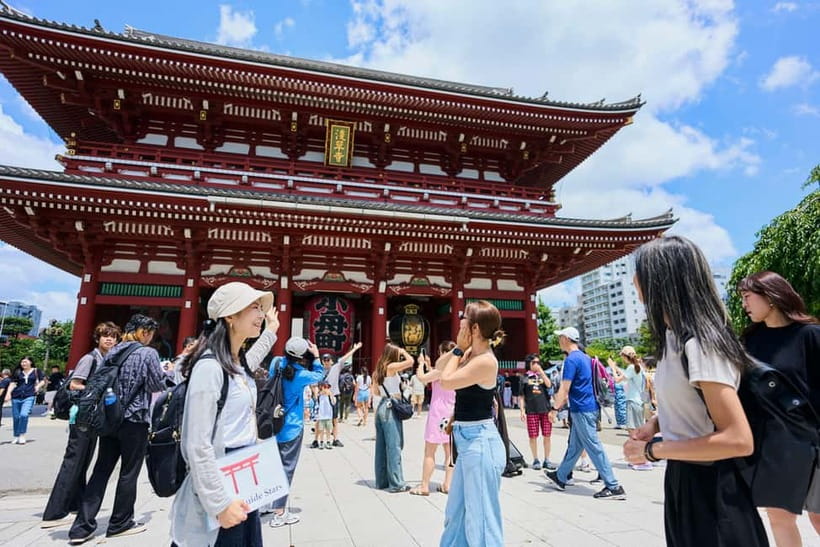
The experience is offered in English. The guide meets you at the Kaminarimon Police Box outside Asakusa Station, holding a sign marked Local Guide Stars. The activity returns to that same meeting point, so you do not need to arrange a separate pickup or figure out where the walk ends.
Starting at Kaminarimon Police Box
The meeting point is practical, but you need to arrive at the correct spot. Look for the police box near Kaminarimon and find the guide holding the Local Guide Stars sign. Hotel pickup and drop-off are not included, so you are responsible for reaching Asakusa Station.
This setup suits independent visitors who are already moving around Tokyo by train. It also keeps the price down. At $16 per person, the tour does not try to bundle in transportation or a large meal. You pay for a focused guided walk and then decide how much more you want to spend.
Wear comfortable shoes. The route lasts two hours and involves walking through temple grounds and shopping streets. The tour runs in changing weather, so bring clothing that suits the conditions rather than assuming the day will stay cool and dry.
More Street Food Walking Tours in Japan
- Tokyo Tsukiji Fish Market Food and Culture Walking Tour
★ 5.0 · 3,184 reviews - Tokyo: Tsukiji Fish Market Food and Walking tour
★ 5.0 · 1,724 reviews - Tokyo: Tsukiji Fish Market Guided Walking Tour
★ 4.9 · 1,397 reviews
Senso-ji, Tokyo’s oldest temple
Senso-ji is the main reason many people come to Asakusa. The temple was built in 628 and has been loved for more than 1,400 years. Those numbers matter because they place the site far beyond the modern Tokyo most visitors first picture.
The tour gives you a chance to understand Senso-ji as more than an attractive religious building. It was once protected by samurai, and its long connection with the neighborhood helps explain why Asakusa still feels tied to older Japanese customs. Your guide can frame the site as part of daily life, not just as a historic stop on a sightseeing route.
A short guided visit is especially useful here because temple spaces can seem confusing at first. You may see worshippers, visitors, incense, gates, and religious symbols all sharing the same area. The guide helps you make sense of what you are seeing while keeping the walk moving.
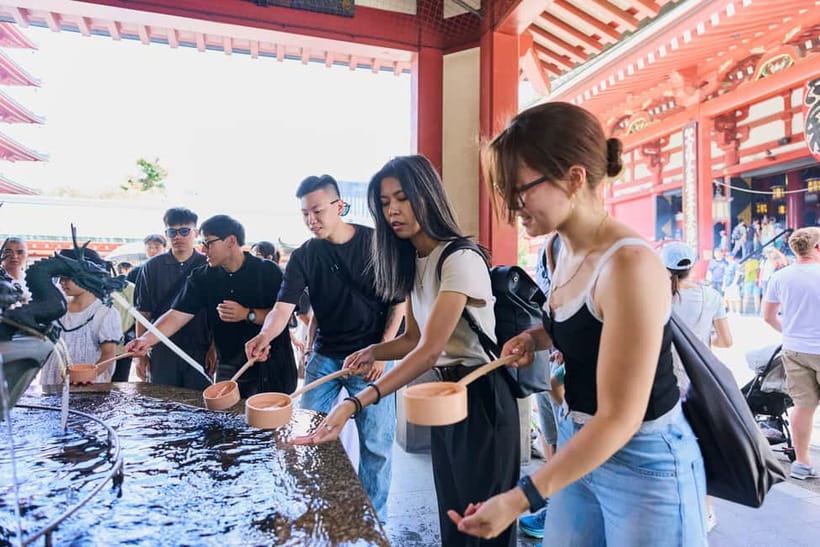
You might want to make a small offering or draw an omikuji, a fortune-telling paper. Those activities are not included, and cashless payment is not accepted for them, so bring some yen. You do not have to spend anything extra, but having cash gives you the choice.
Because the temple is a major attraction, this part of the walk may feel more public and active than the smaller shops later on. The benefit is the famous setting and its long story. The tradeoff is that you will not have unlimited quiet time for photographs or personal prayer.
Asakusa Shrine and two traditions side by side
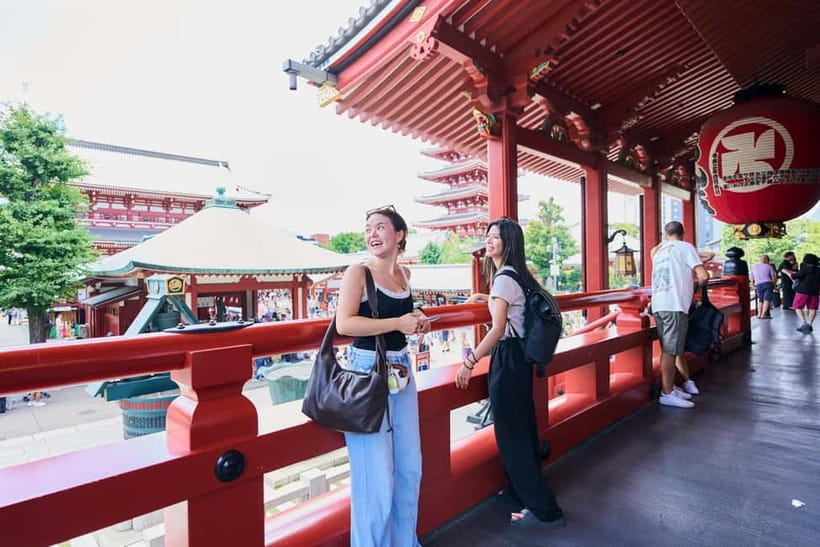
Right next to Senso-ji is Asakusa Shrine. The tour uses these neighboring sites to explain how Buddhism and Shinto coexist in Japan. For a first-time visitor, this is one of the most useful parts of the walk because the two traditions can appear blended together at first glance.
You are not being sent across Tokyo to compare separate religious sites. You can see the relationship in one compact area. That makes the lesson easy to follow, especially if you have limited time or this is your first visit to Japan.
The guide’s role is important here. A building can be beautiful without making its purpose clear. A local explanation can help you notice why the shrine and temple are both part of the same Asakusa visit, while still representing different traditions.
Keep your expectations in check. This is a short introduction, not a formal religious lecture. You will get a practical understanding of the setting, then continue into the streets where people shop and eat.
Tasting Asakusa through sweet and savory snacks
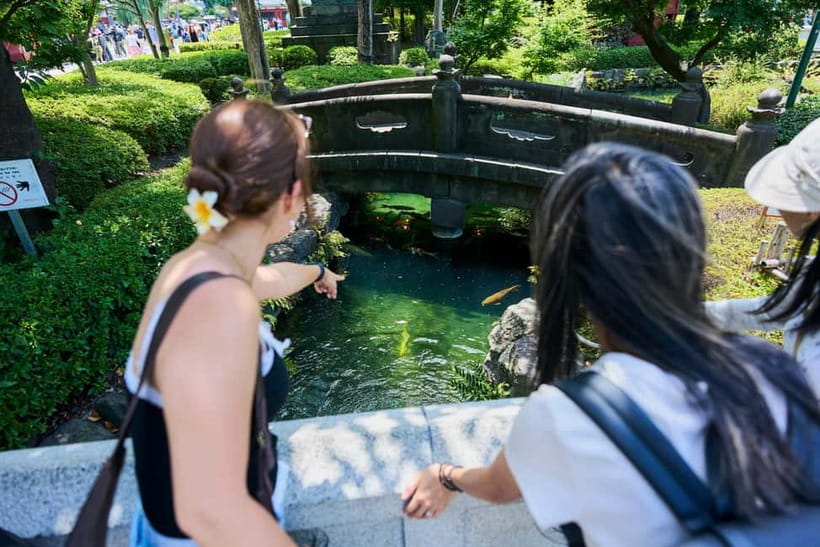
Food is one of the strongest reasons to choose this walk. The guide points you toward local favorites and includes a tasting of traditional street food. The choices may be sweet or savory, giving the food stop a broad appeal.
Meals and drinks are not included in the $16 price. That is worth noting before you arrive. The tasting is best viewed as a chance to sample and learn, not as lunch or dinner. If you have a large appetite, you should plan another meal before or after the activity.
The separate payment also lets you control your spending. You can keep the cost close to the tour price, or buy extra snacks if something catches your eye. Bring cash as a precaution, since the temple’s small offerings and omikuji do not accept cashless payment. The information provided does not specify which food items are served or how many samples you receive, so do not book this expecting a fixed multi-course menu.
I like this part because it links food with place. You are not simply stopping at a random restaurant. You are walking through streets where traditional treats have been enjoyed for generations, then using the guide’s local picks to decide what deserves your attention.
Food stops can take time, though. If you are keen to inspect every shop or take careful photographs, the schedule may feel brisk. The best approach is to arrive ready to try a small local bite and save serious eating for later.
More Street Food Walking Tours in Tokyo
- Tokyo: Tsukiji Fish Market Food and Culture Walking Tour
★ 4.7 · 757 reviews - Tsukiji Fish Market: Street Food & Culture Walking Tour
★ 5.0 · 669 reviews - Tsukiji Fish Market Small-Group Food Walking Tour
★ 5.0 · 621 reviews - Tsukiji Fish Market: Street Food & Culture Walking Tour
★ 4.8 · 259 reviews
A professional knife shop with a useful purpose
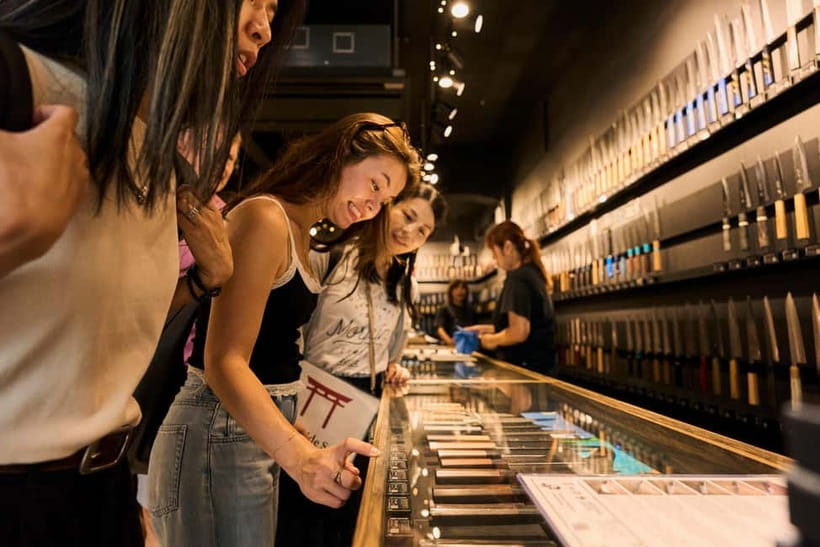
The knife shop adds a practical side to the tour. Rather than limiting the walk to temples and souvenirs, the route includes renowned shops associated with professional-level knives. This is a good stop for cooks, food lovers, or anyone curious about Japanese craftsmanship.
You may find the shop more useful than a standard souvenir store because the objects have a clear purpose. A Japanese kitchen knife can be a memorable purchase, but you should remember that the tour only includes a visit. Purchases are extra, and the supplied details do not promise a demonstration, customization, or help with shipping.
The short visit lets you browse without turning the activity into a dedicated shopping trip. If knives are a major interest, you may want to return afterward with more time and a clear idea of what you need. If they are not your thing, the stop still shows how Asakusa connects traditional skills with modern daily use.
This is also where the tour feels aimed at curious adults, not only first-time sightseers. The guide’s shop choices add texture to the neighborhood. You see products people value for their function, not just objects made to look old.
Samurai and ninja goods, with a lighter stop
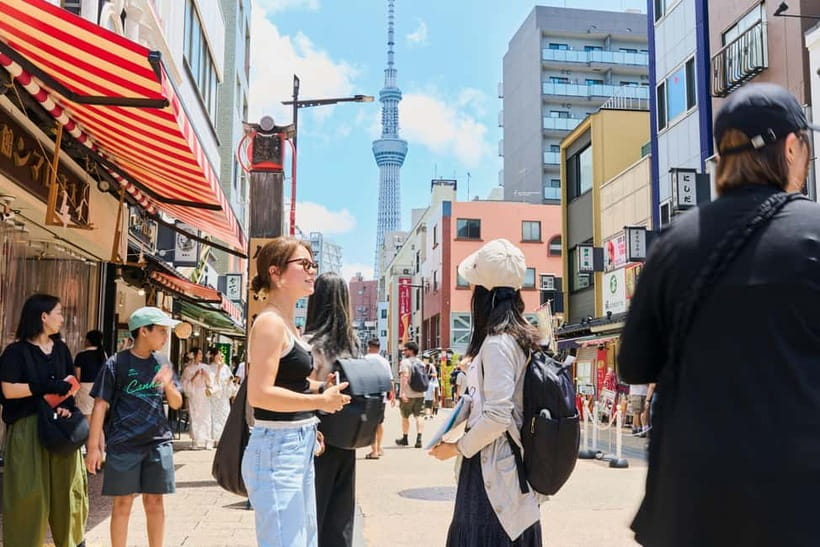
The samurai sword and ninja gear store brings a playful change of mood. After the serious religious sites and the practical knife shop, this stop lets you browse popular images of Japan in a more casual setting.
The store may appeal most to families, fans of Japanese history, and anyone looking for a distinctive gift. The tour does not promise a sword lesson or a ninja performance, so think of it as a shopping visit. You can look at the goods, ask questions, and decide if anything belongs in your luggage.
This stop is useful because it acknowledges both sides of Japanese culture that many first-time visitors seek. Senso-ji and Asakusa Shrine give you religious and historical context. The samurai and ninja store offers the colorful, widely recognized side of Japanese tradition.
There is also a practical limit. A shop devoted to themed goods will not satisfy someone hoping for a detailed account of samurai warfare or martial arts. The guide can connect the stop to the area’s older atmosphere, but the experience remains a browse, not a museum visit.
Japanese tableware for a more useful souvenir
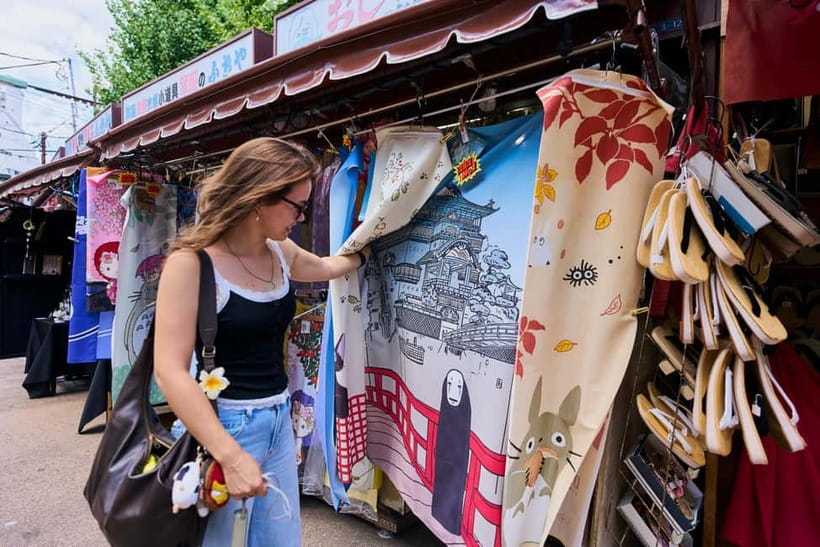
The tableware shop may be the most appealing stop if you want a souvenir you can use at home. Cute Japanese dishes and serving pieces offer a quieter alternative to shirts, keychains, or novelty items.
The tour describes this as a shop for attractive tableware, but it does not specify the exact products, prices, or packing service. If you find something fragile, ask about handling before buying. Keep enough room in your bag, and remember that purchases are not part of the tour cost.
I like that this stop rounds out the shopping. You get one store connected to professional cooking, one focused on samurai and ninja goods, and one offering everyday Japanese design. Together, they give you a better feel for what local shopping can look like than a single souvenir stop would.
The tableware shop may also be a good place for a gift. Still, the two-hour schedule means you may have only a short browsing window. Make a note of anything you want to revisit after the walk ends at the meeting point.
What the $16 price really covers
At $16 per person, this is a strong value if you want a guided orientation to Asakusa. The price covers an English-speaking local guide, the historical walk through Senso-ji, an explanation of Buddhism and Shinto, food recommendations, and visits to several distinctive shops.
It does not cover meals, drinks, shopping, temple offerings, or omikuji. That is not a problem if you understand the price correctly. You are buying access to local direction and context, not an all-inclusive afternoon.
The value is highest for first-time visitors who might otherwise wander through Asakusa without knowing what they are seeing. It is also useful for people who want a short activity before a larger Tokyo itinerary. The experience gives you a starting point, then leaves you free to return to the places that interest you most.
The price is less compelling for someone who already knows Senso-ji and Asakusa well. You could visit the main sites independently, and the tour does not include transportation or a full meal. Its advantage is the guide’s selection of stops and the efficient connection between them.
The recorded rating is 5 out of 5 from four ratings, with Oscar’s only written reaction being a positive hand gesture. That is a small sample, so I would not treat it as proof of a perfect experience for everyone. It does fit the tour’s simple promise: a short, upbeat introduction with several appealing stops.
Who should book this walk
I would recommend it to first-time Tokyo visitors, families, food-minded sightseers, and anyone who wants a manageable introduction to traditional Japan. The route has enough variety to keep the two hours moving, and the meeting point is easy to understand once you reach Asakusa Station.
It also suits you if you prefer local guidance but do not want a long group excursion. The activity begins and ends in the same place, so you can continue exploring Asakusa on your own afterward.
You may want to skip it if you need a full meal, a detailed temple study, or a specialist knife-shopping session. The tour gives you a taste of each interest, not hours devoted to one. People with mobility concerns should also consider the walking requirement and ask the provider for more details if needed, since no accessibility information is provided.
Reserve up to 24 hours ahead for a full refund, and the reserve-now, pay-later option keeps your plans flexible. Still, the practical basics matter most: meet at the Kaminarimon Police Box, wear comfortable shoes, and bring cash.
My call on this Asakusa experience
Book this tour if you want to understand Asakusa quickly and enjoy a little food and shopping along the way. Its best feature is the mix: Senso-ji and Asakusa Shrine provide the setting, the snacks make the neighborhood tangible, and the knife, samurai, ninja, and tableware shops give you several ways to connect with modern local life.
Do not book it expecting a full day, a substantial meal, or an in-depth specialist tour. For $16, it offers a sensible first look at one of Tokyo’s oldest neighborhoods. I would use it early in a Tokyo stay, then return on my own to Senso-ji, the shops, or the food stops that caught my attention.
FAQ
How long does the Asakusa walking tour last?
The activity lasts two hours.
Where does the tour meet?
Meet in front of the Kaminarimon Police Box at Asakusa Station. The guide will hold a Local Guide Stars sign.
Where does the tour finish?
The tour ends back at the meeting point.
What language is the tour offered in?
The tour is offered in English.
Is food included in the tour price?
Meals and drinks are not included. The tour includes local food tasting and guidance toward local food picks, but you should plan to pay separately for food and drinks.
What should I bring?
Bring comfortable walking shoes and clothing suited to the weather. Cash is also recommended for a temple offering or omikuji, since cashless payment is not accepted for those activities.
Can I cancel for a full refund?
Yes. You can cancel up to 24 hours in advance for a full refund.
More 2-Hour Experiences in Tokyo
- 2 Hour Historic Market Food Tour and Hands-On Biscuit Class
★ 5.0 · 251 reviews - Osaka: 2-Hour Nightlife District Walking & Local Food Culture
★ 5.0 · 199 reviews - Osaka: 2-Hour Local Street Food Tour – Dotonbori & Namba
★ 4.6 · 95 reviews - Saigon: City Unseen Highlights 2h Tour | Opt: Ao Dai Riders
★ 5.0 · 69 reviews
More Heritage Tours in Tokyo
- Historic Ybor City Food Walking Tour
★ 5.0 · 2,210 reviews - Palermo: Street Food and History Walking Tour
★ 4.9 · 1,486 reviews - Old Cairo Guided Walk Tour: History, Culture & Street Bites
★ 4.6 · 633 reviews - Walking Tour and street food Tour Palermo / History and Food
★ 5.0 · 386 reviews
Just added around Tokyo
- Tokyo: Tsukiji walk & sushi private tour with Uni Students★ 5.0 · 17 reviews
- Tokyo: Private Tsukiji Street Food & Sake with Local Guide★ 5.0 · 3 reviews
- Tokyo: Tsukiji Market Guided Tour & Sushi-Making Experience★ 4.4 · 11 reviews
- Tokyo: Tsukiji Market and Hama-rikyu Gardens Guided Tour★ 4.8 · 73 reviews
- Tokyo Tsukiji Food & Culture Private Tour Licensed Guide★ 4.9 · 28 reviews
- Tokyo: Tsukiji Fish Market Foodie and Educational Tour★ 5.0 · 4 reviews
- Tokyo: Tsukiji Fish Market Culture Tour with Sashimi Tasting★ 4.6 · 54 reviews
- Tokyo: Tsukiji, Ginza, and Asakusa Japanese Culture Tour★ 5.0 · 2 reviews
Tokyo Street Food Tours, compared.
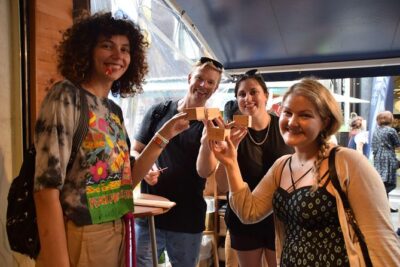
Tokyo Tsukiji Fish Market Food and Culture Walking Tour
Read our review →
Tokyo: Tsukiji Fish Market Food and Walking tour
Read our review →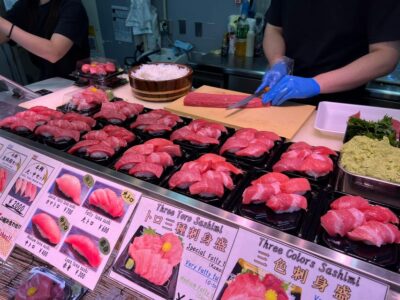
Tokyo: Tsukiji Fish Market Guided Walking Tour
Read our review →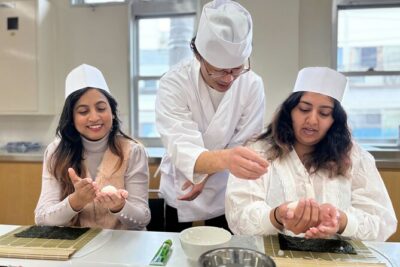
Tokyo Sushi Making Class in Tsukiji with Professional Chef
Read our review →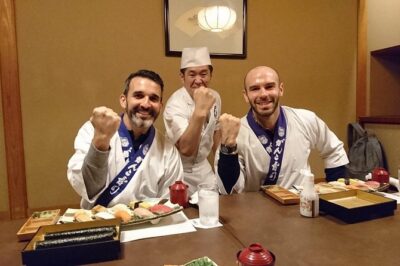
Tsukiji Fish Market Guided Tour and Sushi Making with Pro Chef
Read our review →Tokyo: Tsukiji Fish Market Food and Culture Walking Tour
Read our review →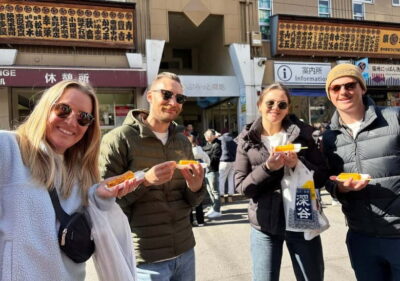
Tsukiji Fish Market: Street Food & Culture Walking Tour
Read our review →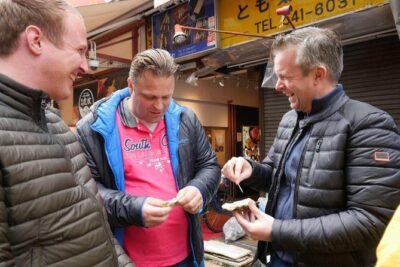
Tsukiji Fish Market Small-Group Food Walking Tour
Read our review →Browse the lists this tour appears in