
REVIEW · OSAKA STREET FOOD TOURS
Deep Dive: Osaka Food Markets from Local to Luxurious!
Osaka’s food culture makes the most sense when you see its full range, from polished department-store displays to local produce stalls, Korean specialties, fresh fish, and the kitchen-supply shops that serve the city’s restaurants. This four-hour walk links four very different food districts, so you get more than one famous market.
I like the small group of up to eight and the chance to ask questions as you go. I also like the cultural context: Ferdinand, a French guide living in Japan, has explained local customs, market life, and his own experience in Japan in a way that adds a personal layer to the food stops.
The main consideration is cost once the tour begins. The $59 price covers the guide, but food, drinks, souvenirs, and 330 yen of transport are extra. Bring spending money, and wear comfortable shoes because this is a walking tour with several stops.
Key points at a glance
- Four contrasting food worlds: See an upscale department-store market, Tenma’s local shopping areas, Tsuruhashi’s Japanese-Korean food culture, and Osaka’s famous central markets.
- Kuromon is only one part: You also visit Tenjinbashisuji, Tsuruhashi, Doguyasuji, and Namba, giving the tour more range than a single-market visit.
- Ferdinand brings personal context: On at least one departure, this French guide has explained customs, history, Japanese and Korean markets, and daily life in Japan.
- Small groups keep questions easy: With no more than eight participants, you should have a better chance to ask about unfamiliar ingredients and shopping customs.
- Plan to buy your own snacks: Samples, meals, refreshments, and souvenirs are not included, so the final cost depends on how much you eat and shop.
- Expect a brisk four hours: Each listed stop receives about 25 minutes, with walking and transport connecting the districts.
Osaka’s food story begins at Tenma Station
Meet your guide at the McDonald’s directly in front of Tenma Station. This is a practical starting point, though you should allow a moment to find the correct entrance and meeting spot. The tour is built around movement, not a long sit-down meal, so arrive ready to walk and browse.
Osaka has a reputation for taking food seriously, and this route shows why in a useful way. You are not limited to one polished market aimed at sightseers. Instead, you move between places with different customers and different purposes.
That difference matters. A department-store food hall may show carefully prepared luxury items and gift-ready presentation. A neighborhood market gives you more of the ingredients and daily shopping habits that support local cooking. A kitchen-supply arcade shows the working side of the food business.
The guide’s role is important here. Market signs and food names can be hard to interpret, especially when you are looking at unfamiliar cuts of meat, seafood, vegetables, or prepared dishes. A native or near-native speaker of your chosen language can help explain what you are seeing and answer questions as they arise.
More Street Food Market Tours in Japan
- Kuromon Market Food Walking Tour in Osaka (6 stops, 6 tastes)
★ 5.0 · 550 reviews - Osaka: Kuromon Market Food Walking Tour (6 stops, 6 tastes)
★ 4.6 · 272 reviews - Kuromon Market Tour: All inclusive 6~8 Dishes & 3~4 samplings
★ 5.0 · 103 reviews
Takashimaya: Osaka food at its polished end
The first listed shopping stop is the Takashimaya Osaka Store, with about 25 minutes for a guided visit and sightseeing. The location is associated with an upscale department-store marketplace, giving you a look at food presentation at the more luxurious end of Osaka shopping.
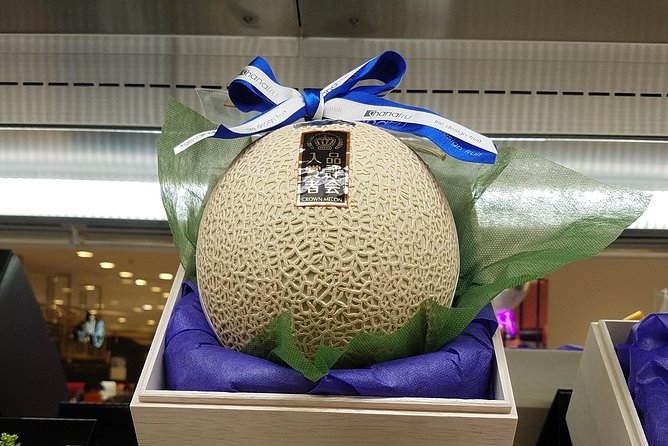
Think of this as a contrast lesson. You may see carefully arranged meats, fish, produce, and delicacies presented for shoppers who care about quality, appearance, and gift giving. The point is not simply to grab a snack. It is to see how Japanese department stores turn food shopping into a highly organized retail experience.
This stop is useful early in the tour because it gives you a reference point. Later, when you enter smaller or more local markets, you can compare the price, presentation, setting, and likely customer. I like that the route does not treat Japanese food culture as one single thing.
The drawback is time. Twenty-five minutes is enough for an introduction, but not for a leisurely shop, meal, and photo session. Since purchases are not included, you need to decide quickly if something catches your eye.
Tenma Ichiba and Tenjinbashisuji show daily Osaka
The route continues to Pulala Tenma, also called the Tenma Ichiba Market Building, for another guided 25-minute visit. This stop shifts the focus toward a more local market setting, with food and staples intended for regular shopping rather than only for sightseeing.
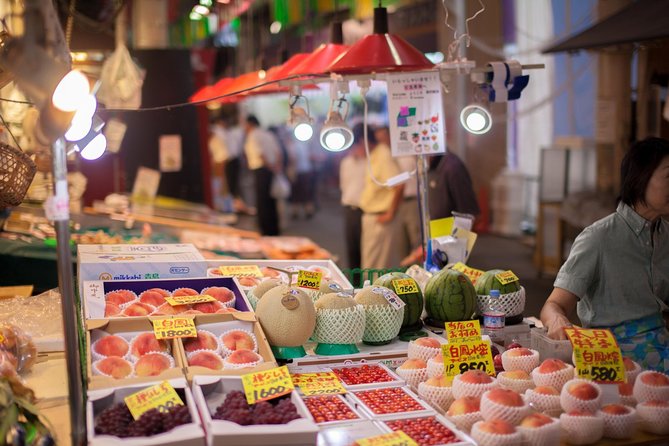
You can expect the guide to point out meats, fish, vegetables, and other everyday items. The value here is in learning how to read the market as a resident might. What is sold fresh? What is prepared? Which items are practical staples, and which are treats? The supplied details do not promise specific tastings, so treat this as a browsing and explanation stop unless you choose to buy something yourself.
After that comes Tenjinbashisuji Shopping Street. The tour allows about 25 minutes for guided sightseeing and walking. This is one of the places where the route’s food focus meets a broader neighborhood shopping experience.
A shopping street gives you a different view from a covered market building. You can see how food shops fit into a longer commercial area, alongside the ordinary rhythm of local retail. I would pay attention to the transition between specialist food sellers and other shops. It helps you understand that Osaka’s food culture is part of daily city life, not a separate attraction reserved for visitors.
These two Tenma-area stops also make the meeting point logical. You start near Tenma Station, then begin with districts that feel connected to local shopping. Be prepared for a walking pace that keeps the group moving. You will not have unlimited time at each stall.
Tsuruhashi brings Japanese and Korean food together
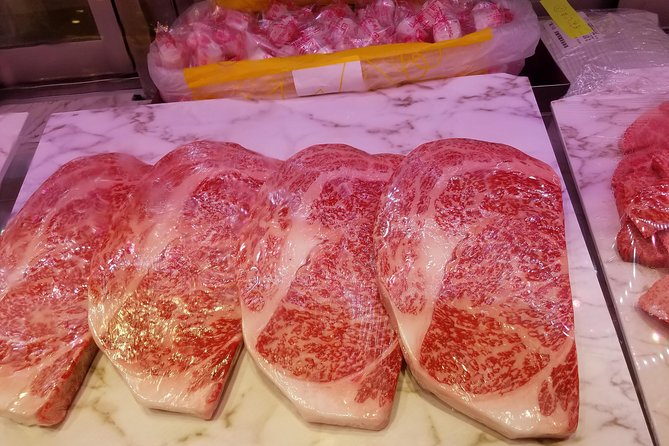
Tsuruhashi is one of the most distinctive stops on this route. The experience describes it as a Japanese-infused Korea Town where relatively few tourists go. That gives the tour a welcome change of pace, especially if your Osaka plans focus mainly on Dotonbori, Osaka Castle, and the usual central sights.
Here, the guide can explain the connection between Japanese and Korean food culture as you look at meats, prepared foods, produce, and other market goods. The supplied information does not list individual shops or guaranteed dishes, so I would not arrive expecting a fixed tasting menu. Instead, think of Tsuruhashi as a place to ask questions and use your own budget selectively.
This is also where a guide’s personal story can add real value. Ferdinand, identified as a French person living in Japan, has discussed his life in Japan as well as local customs and history. That perspective can help you understand the area without reducing it to a quick photo stop.
If you are curious about the overlap between Japanese and Korean food traditions, Tsuruhashi may be the most rewarding part of the route. If you want a long, unhurried meal, however, the 25-minute stop may feel short. You will need to choose between browsing, asking questions, and buying food.
More Street Food Market Tours in Osaka
- PRIVATE 6hr, Food tour from Osaka Castle, Kuromon, Dotonbori.
★ 5.0 · 68 reviews - All Inclusive Kuromon Markets Tour: Flavors Of Osaka
★ 4.7 · 31 reviews - Osaka: Food Tour Kuromon Market & Dotonbori with Guide
★ 4.5 · 15 reviews - Osaka: Kuromon Market 1.5-Hour Seafood & Street Food Tour
★ 5.0 · 8 reviews
Kuromon Ichiba is famous, but not the whole experience
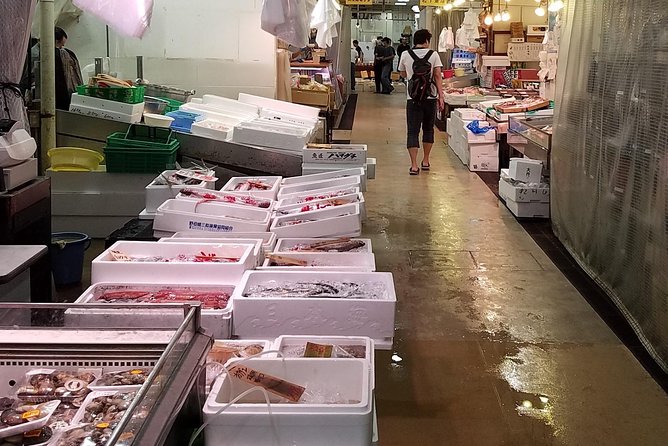
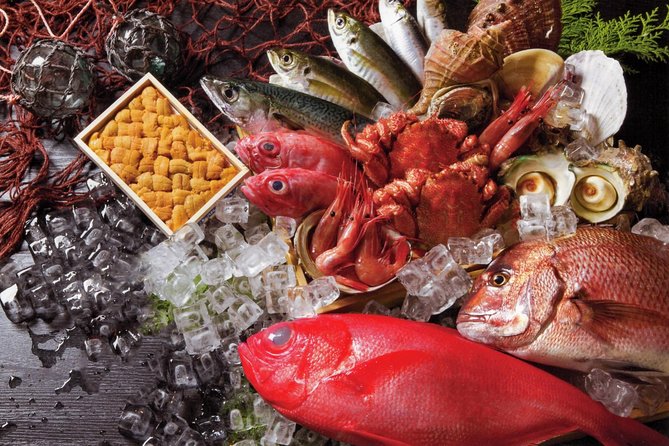
Kuromon Ichiba Market is the best-known market on the tour. It is often associated with fresh seafood, meats, produce, and ready-to-eat delicacies. The route presents it as a place where raw and cooked foods compete for your attention, which is a fair warning: there will be plenty to look at, but you must pay for anything you eat.
The guide can help you make sense of the displays and explain how the market works. That is useful when you are faced with seafood or ingredients you do not recognize. You can ask what something is, how it is usually eaten, and whether it is intended for cooking or immediate consumption.
I like that Kuromon comes after several other types of markets. On its own, it can be easy to treat the market as a colorful food street and move on. After visiting Takashimaya, Tenma, and Tsuruhashi, you have more context for comparing the polished, neighborhood, Japanese-Korean, and tourist-facing sides of food shopping.
Still, do not confuse a guided market walk with an included food tour. Samples, snacks, drinks, and other food purchases are your responsibility. If you want to try several items, budget extra. The advertised price gives you access to the guided experience, not a package of tastings.
Doguyasuji explains the tools behind the food
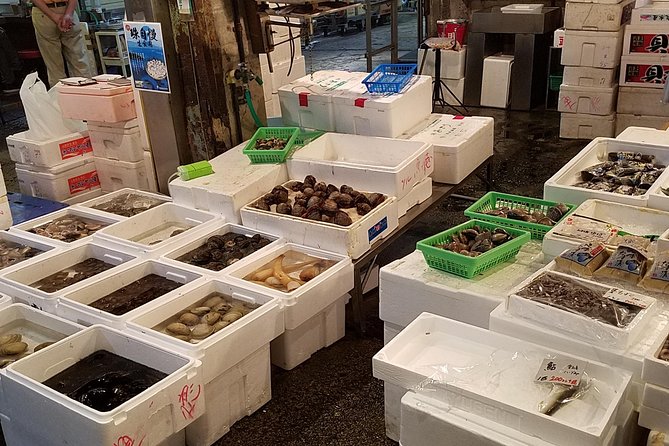
Sennichimae Doguyasuji Shotengai adds an important piece that many food tours skip. This shopping arcade is known for kitchen-related goods, and the tour includes a guided 25-minute visit.
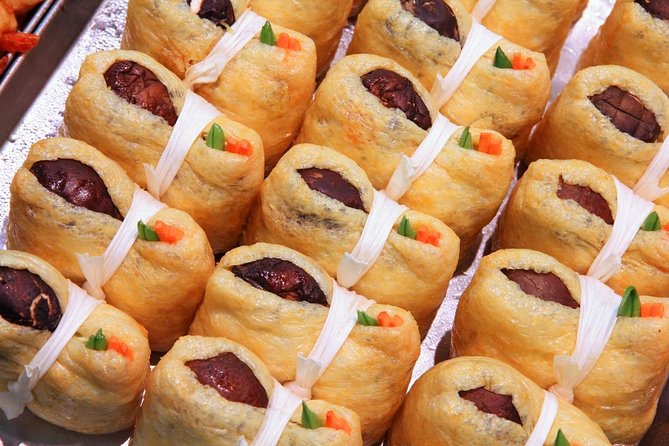
The focus here is less on eating and more on the equipment used to prepare and serve food. You might find kitchen tools, restaurant supplies, and other items connected to Osaka’s food trade. The available information does not specify exact stores or products, so keep expectations broad and listen to the guide’s explanations.
This stop gives the tour a practical edge. Food does not appear by magic at a market stall. It is selected, prepared, displayed, cooked, and served with the help of tools and supplies. Even if you do not plan to buy anything, you can see another part of the system that supports Osaka’s famous dining culture.
It may also be the best place to shop for a food-related souvenir, but purchases are not part of the tour price. If you are tempted by a kitchen item, leave room in your budget and luggage.
Namba is the final food district
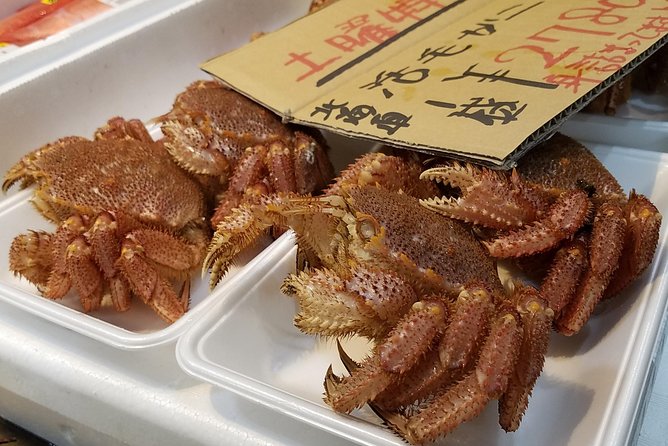
The tour finishes in Namba, one of Osaka’s main central areas. The itinerary allows about 25 minutes for guided sightseeing and walking here. The final stop gives the route a natural ending near a major part of the city, after you have moved through markets, shopping streets, Korea Town, and kitchen-supply shops.
Namba works well as a final reference point because it brings you back to a busy central setting after the more specialized market visits. You can use what you have learned about local ingredients, prepared food, and shopping customs as you continue exploring on your own.
The tour does not promise a final included meal or a fixed restaurant recommendation. That is worth noting. You finish with ideas and location knowledge, but you remain responsible for anything you choose to eat afterward.
What $59 buys you, and what it does not
At $59 per person, the tour is best viewed as a guided orientation to Osaka’s food districts rather than a four-hour tasting package. You are paying for a small-group guide who can connect several neighborhoods and explain what you are seeing.
The value improves if you want help with unfamiliar markets. A guide can save you from walking through Kuromon or Tsuruhashi without understanding the difference between displays, shops, and local customs. The route also covers more ground than a simple visit to one market.
The extra costs are clear:
- Transportation during the tour costs 330 yen per adult.
- Food and snack purchases are not included.
- Drinks and refreshments are not included.
- Souvenirs are not included.
You should bring comfortable shoes and enough spending money for anything you want to sample. Since the tour lasts four hours, even a few small purchases can add up. The format is a good fit for someone who wants choice rather than a preselected tasting menu.
Group size, languages, and pace
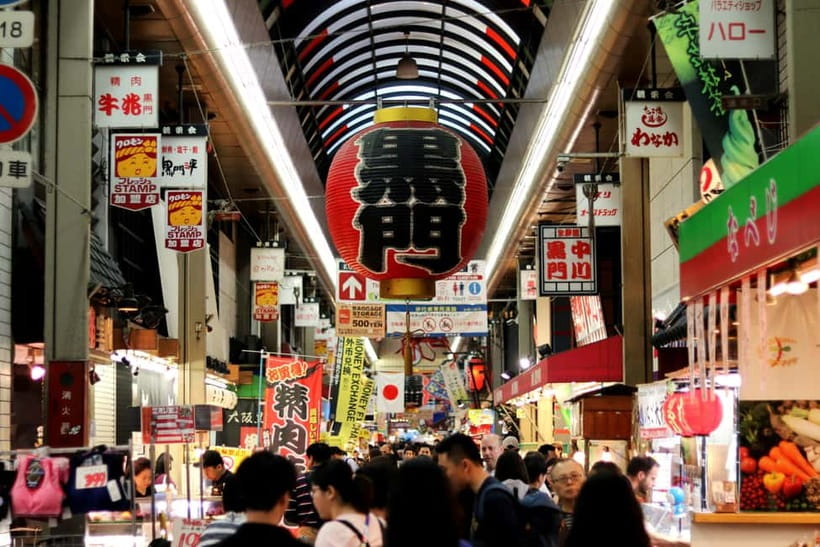
The group is limited to eight participants. That is a useful size for markets, where large groups can block aisles and make it hard to hear. A smaller group also gives you a better chance to ask about a particular fish, cut of meat, vegetable, or Korean specialty.
Guiding is available in English, Spanish, and French. Ferdinand has guided in at least one French-language experience, and his perspective as a French resident of Japan may appeal to people who enjoy cultural explanation alongside food shopping.
The route lists roughly 25 minutes at each of seven stops. That creates a clear rhythm, but it also means the tour is not designed for lingering. You will walk, listen, browse, and move on. Wear comfortable shoes, and do not plan an elaborate shopping session at every location.
Free cancellation is available up to 24 hours before the start time, and you can reserve without paying immediately. Those options help if your Osaka schedule is still shifting, but the key planning issue remains the pace and extra spending.
Who should book this Osaka market walk?
I would choose this tour if you want a broad introduction to Osaka’s food culture and prefer explanation to simply wandering. It suits first-time visitors, curious eaters, and anyone who wants to compare upscale retail, neighborhood markets, Japanese-Korean food culture, seafood stalls, and restaurant-supply shops in one outing.
It is also a good choice if you have questions about Japanese food customs or feel unsure about buying unfamiliar items. The guide’s personal experience and language skills can make the markets easier to understand.
I would be more cautious if your priority is a long sit-down meal, a fixed list of tastings, or plenty of free time at every market. You pay for your own food, and the four-hour schedule keeps moving.
Should you book it?
Book this experience if you want to see several sides of Osaka’s food world in one small-group outing. The strongest reasons are the varied route, the chance to visit Tsuruhashi and Doguyasuji as well as Kuromon, and the personal guidance offered by people such as Ferdinand.
Skip it if you mainly want included food or an unhurried market lunch. For everyone else, $59 is a reasonable price for a focused introduction, provided you budget extra for snacks, drinks, transport, and anything you take home.
FAQ
Where does the tour start?
The meeting point is the McDonald’s directly in front of Tenma Station.
How long does the tour last?
The tour lasts four hours.
How much does the tour cost?
The listed price is $59 per person.
What languages are available?
The tour is available in English, Spanish, and French.
How large is the group?
The group is limited to eight participants.
Is food included?
No. Samples, food, snacks, refreshments, and souvenirs are not included.
Do I need extra money during the tour?
Yes. You pay separately for food, drinks, snacks, souvenirs, and transportation during the tour. Transportation costs 330 yen per adult.
Which markets and districts does the tour visit?
The route includes Takashimaya Osaka Store, Pulala Tenma, Tenjinbashisuji Shopping Street, Tsuruhashi, Kuromon Ichiba Market, Sennichimae Doguyasuji Shotengai, and Namba.
Who may guide the tour?
A native or near-native speaker of your selected language leads the tour. Ferdinand has guided at least one departure.
Can I cancel for a full refund?
Yes. You can cancel up to 24 hours in advance for a full refund.
More Market Food Tours in Osaka
- Osaka: Kuromon Market Street Food Tour with Pro Local Guide
★ 5.0 · 5 reviews - Tokyo Tsukiji Fish Market Food and Culture Walking Tour
★ 5.0 · 3,184 reviews - Phuket: Full Day City Tour with Night Market
★ 4.5 · 2,888 reviews - London Bridge & Borough Market Food Tour with 7 Authentic Dishes
★ 5.0 · 1,972 reviews
Just added around Osaka
- Same Day OK! Osaka: Local Food, Izakaya & Local Bites Tour!★ 4.8 · 17 reviews
- Eat Like a Local in Osaka – Private Custom Street Food Tour★ 4.3 · 33 reviews
- Osaka Shinsekai Street Food Tour – Evening★ 5.0 · 2 reviews
- Okonomiyaki&Takoyaki for Families:Osaka Street Food Festival★ 5.0 · 4 reviews
- Osaka: Local Foodie Tour in Dotonbori and Shinsekai★ 4.7 · 95 reviews
- Osaka: Takoyaki Keychain and Magnet-Food Replica Workshop★ 5.0 · 2 reviews
- Osaka Okonomiyaki Cooking Experience for Families & Groups★ 4.9 · 8 reviews
- Osaka: Namba Guided Local Food Tour (Taste 15 dishes)★ 5.0 · 6 reviews
Osaka Street Food Tours, compared.
Hungry Osaka Street Food Tour:15 Tastings & 3 Drinks with a Local
Read our review →
Osaka Local Foodie Walking Tour in Dotonbori and Shinsekai
Read our review →
Hungry Osaka Street Food Tour: 15 Dishes & 3 Drinks
Read our review →
Kuromon Market Food Walking Tour in Osaka (6 stops, 6 tastes)
Read our review →
Osaka: Kuromon Market Food Walking Tour (6 stops, 6 tastes)
Read our review →
Osaka Cooking Class: Okonomiyaki &Japanese cuisines experience
Read our review →
[1 Group Only] Osaka Street Food Tour for Family
Read our review →
Browse the lists this tour appears in