REVIEW · KYOTO STREET FOOD TOURS
Kyoto: Local Food Tasting Tour at the Nishiki Market
Kyoto’s Nishiki Market is a long, narrow corridor of food stalls, shops, smells, and crowds. It is also easy to misread. A guide helps you spot tofu skin, local home cooking, hamo tempura, wagyu skewers, and Kyoto seasonings that you might otherwise walk past. I like the mix of five planned tastings and small discoveries along the way. I also like that the tour adds shrines and shopping streets, so you get more than a quick snack crawl.
The small group, capped at six, keeps the walk personal. Guides such as Ayu, Toshi, Takuma, Yume, and Miho have been praised for explaining food clearly and answering questions about Japanese customs. The main drawback is that this is a tasting walk, not a full lunch, and the tour cannot accommodate vegetarian, halal, kosher, gluten-free, or allergy-related diets.
Key points to know before booking
- Five Kyoto specialties included: Expect tastes such as yuba, obanzai, hamo tempura, wagyu steak skewers, and other market treats.
- Nishiki Market needs a guide: The 400-year-old market has about 130 food stalls, and a local guide makes the narrow lanes easier to handle.
- Food and culture share the stage: The route includes Nishiki-Tenmangu Shrine, Shinkyogoku Shopping Arcade, and Teramachi Street.
- Small groups matter: With no more than six participants, you can ask questions and get help choosing unfamiliar foods.
- A tea ceremony is optional: Add a 90-minute session with kimono dressing and a tea master at 2:00 PM.
- Plan for walking and crowds: Wear comfortable shoes, bring rain gear, and leave large bags at your accommodation.
Why Nishiki Market is better with a local guide
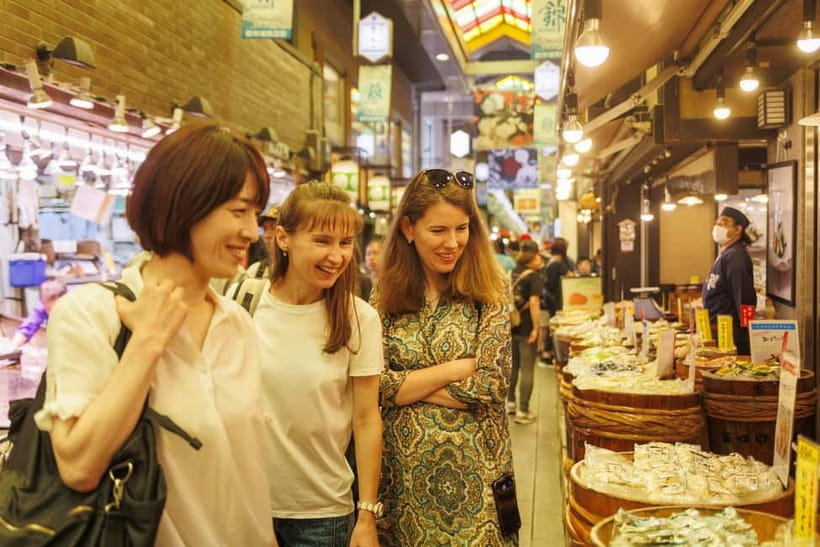
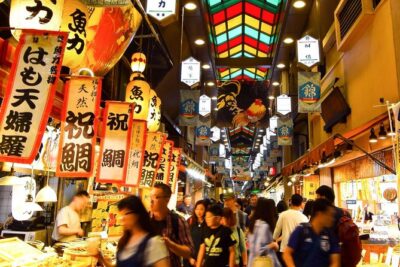
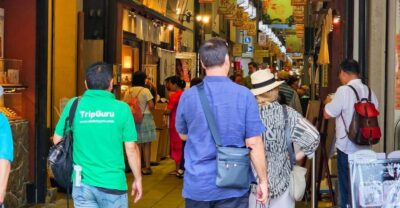
Nishiki Market has been serving Kyoto for roughly 400 years. Its 130 food stalls stretch through a covered shopping lane, with each shop offering its own narrow specialty. That sounds simple until you arrive and face menus, signs, samples, and a steady stream of people.
I like this tour because it gives the market a purpose. You are not merely wandering from one counter to the next. Your guide explains what you are looking at, selects a manageable set of tastings, and puts local food into a cultural setting.
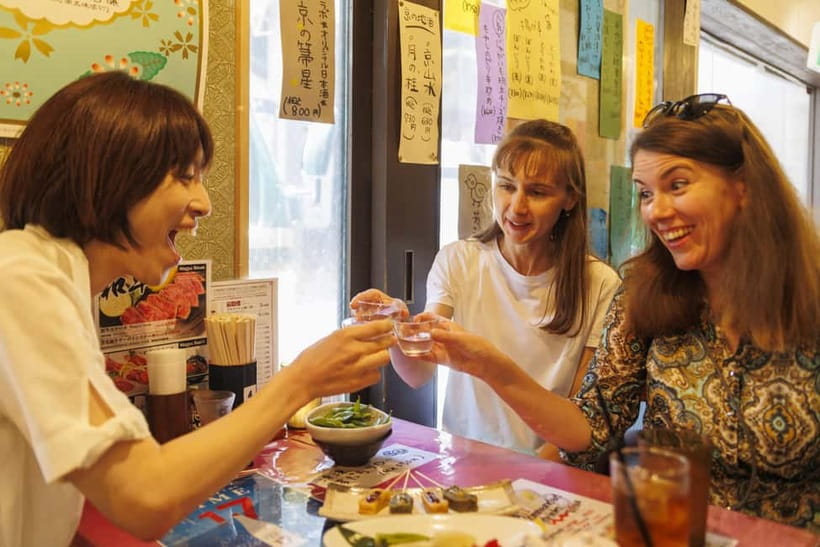
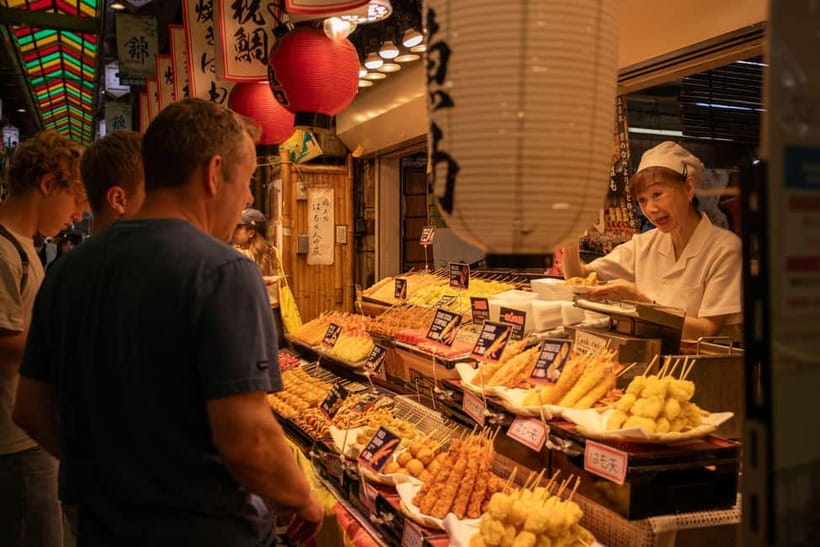
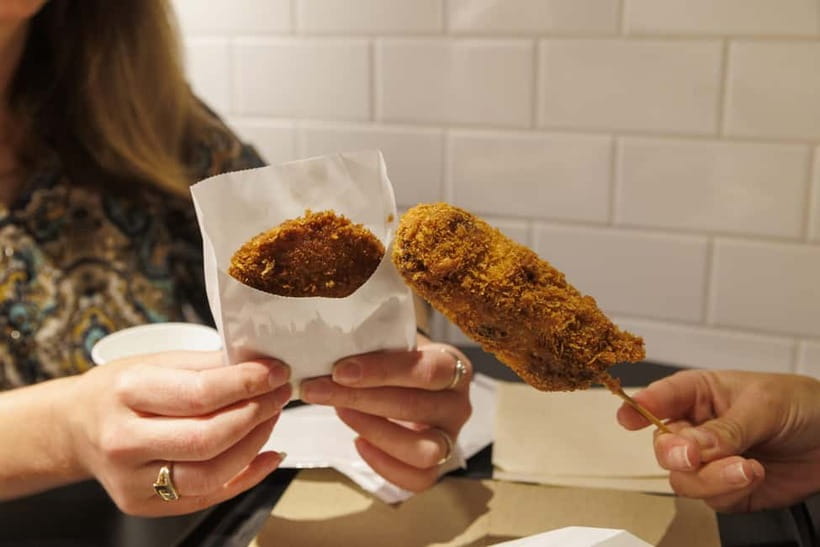
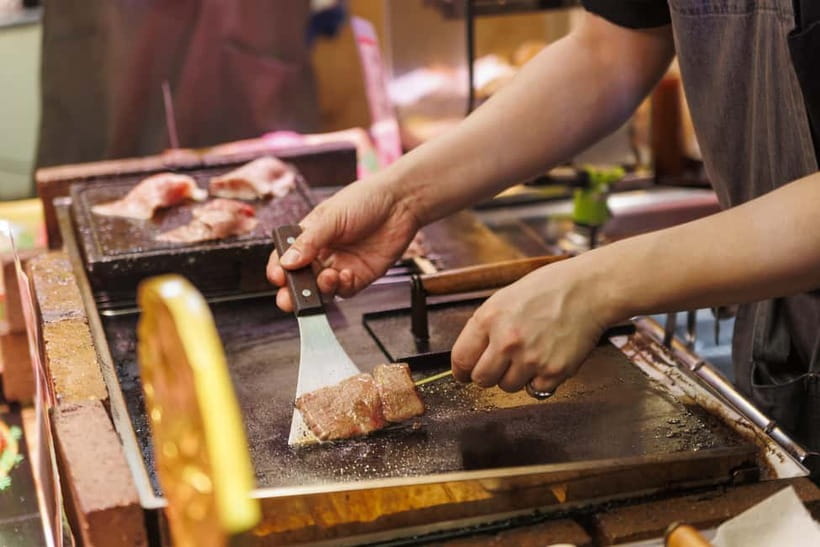
The food is not limited to the familiar sushi and ramen that dominate many first visits to Japan. You may try yuba, the delicate skin formed during tofu production, along with obanzai, the home-style cooking associated with Kyoto. Hamo tempura offers another local specialty, while a wagyu steak skewer gives you a more immediately familiar bite.
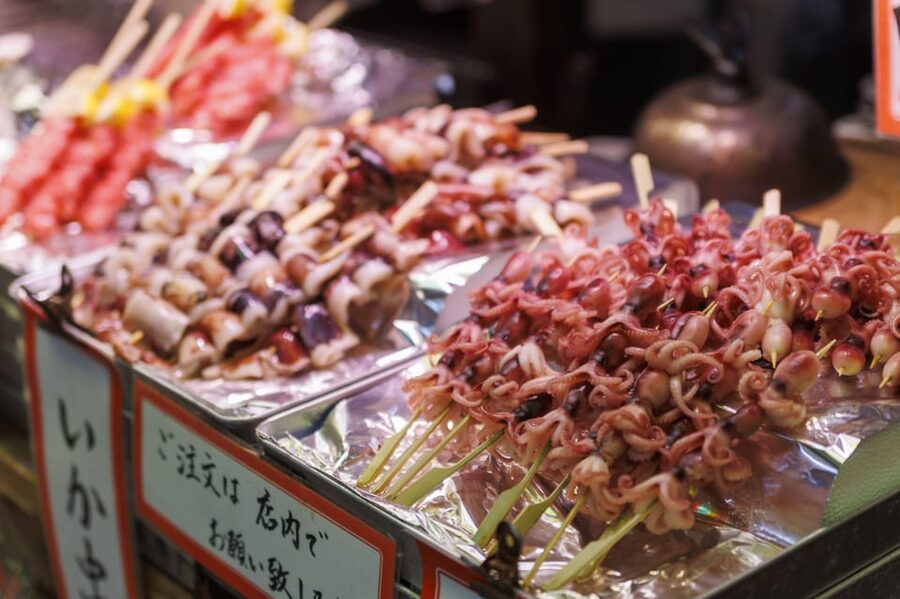
Additional samples can include Kyoto seasonings, crackers, Japanese-flavored honey, and other small treats. The exact selection can vary, so think of the five featured foods as the backbone of the walk rather than a fixed restaurant menu.
More Fish Market and Seafood Tours in Kyoto
- Nishiki Market Brunch Walking Tour (7 Tastings + Brunch)
★ 5.0 · 1,355 reviews - Kimono Tea Ceremony at Kyoto Maikoya, NISHIKI
★ 5.0 · 911 reviews - Kyoto Nishiki Market Food and Culture Walking Tour
★ 5.0 · 412 reviews
The food stops: small portions, wide range
This experience works best if you enjoy tasting rather than sitting down for one large meal. Each stop gives you a small look at a different part of Kyoto’s food culture.
Yuba can be a useful introduction to the lighter, more refined side of Kyoto cooking. A guide can explain how it is made and why tofu products matter in Japanese cuisine. If tofu skin sounds unexciting, this is precisely the kind of food that benefits from context and a willing first bite.
Obanzai brings you closer to everyday Kyoto food. It is local home cooking, not a formal banquet, and the point is variety and familiarity rather than showy presentation. This stop helps keep the tour grounded in what people eat at home.
Hamo tempura is one of the more distinctive tastings. Hamo is a conger eel associated with Kyoto cuisine, and tempura gives it a crisp, approachable form. Several guides have encouraged people to try foods they would not have ordered alone, and this is a good example of the tour’s value.
Wagyu steak skewers provide a richer, heartier bite. You get the pleasure of trying a premium Japanese beef without committing to a full steakhouse meal. The contrast between wagyu, yuba, tempura, and home cooking keeps the food stops from feeling repetitive.
The remaining tastes may include market snacks and local condiments. These are useful because they show how much of Japanese food culture lives in small additions: a seasoning, a sweet, a cracker, or a sample offered at a specialist shop.
I would eat lightly beforehand. The tour does not promise a full meal, but several tastings can add up. One past experience lasted about three and a half hours and included enough food that a large breakfast would have been a mistake.
The walking route beyond the market
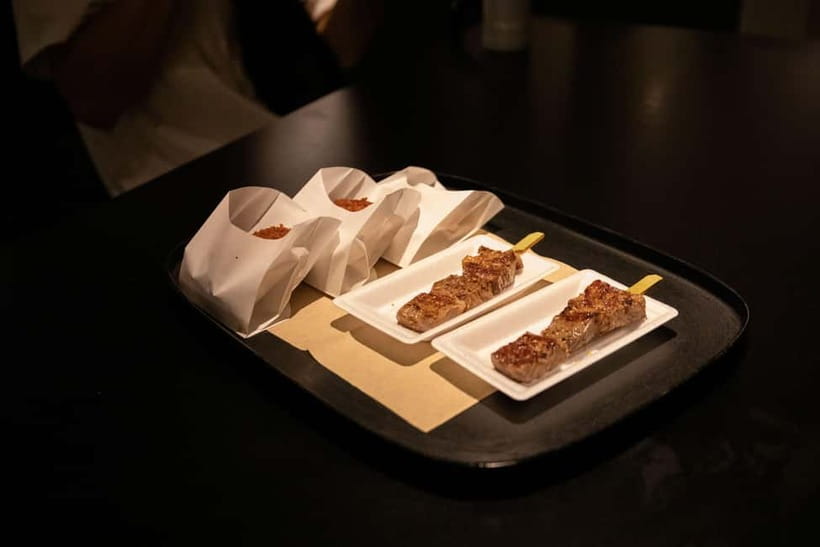
The Nishiki Market portion lasts about 90 minutes. That is enough time to sample food without turning every stall into a stop, though the crowded lane can slow the group.
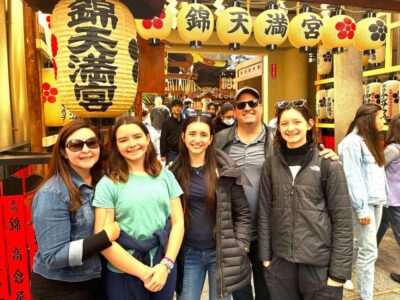
After the market, the route continues to Nishiki-Tenmangu Shrine for about 10 minutes. This gives you a change of pace and a chance to connect food and neighborhood life with Kyoto’s religious traditions. Your guide can explain what you are seeing and answer questions about customs and local history.
The tour then moves through Shinkyogoku Shopping Arcade, where you have about 45 minutes of guided sightseeing and shopping. This section is useful if you want to browse after tasting, and several people have enjoyed stopping at additional shops along the way. Keep your spending in check, since a food tour can quickly become a shopping trip as well.
A short stop at another local point of interest follows, then the route reaches Teramachi Street Shopping District for about 30 minutes. This broadens the experience beyond Nishiki’s food stalls and gives you a better sense of Kyoto’s central shopping area.
The route finishes at one of three possible drop-off points, including the original Shijo area, Nishiki Orizuruya, or Kyoto Takashimaya S.C. The exact meeting and ending points depend on the option you book, so check the location details carefully before setting out.
The guides are the main reason to book
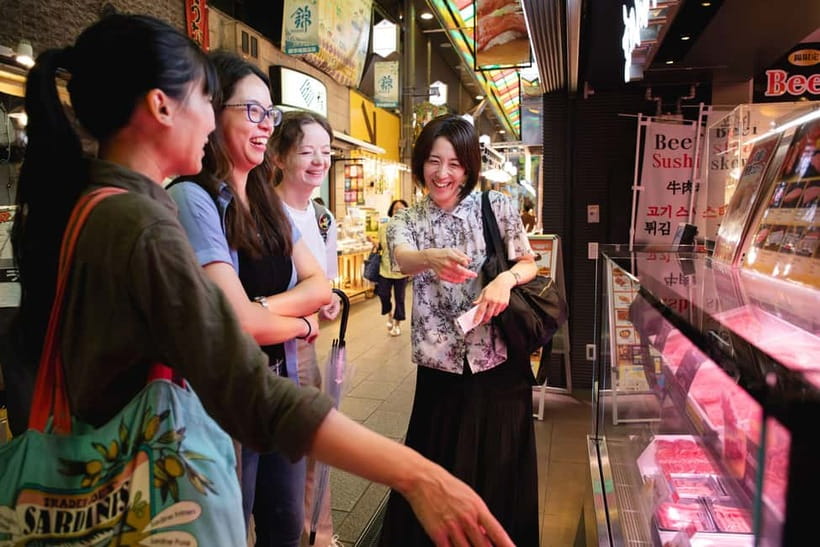
The food is important, but the guide makes the experience work. The strongest part of this tour is the human connection: a local person who can explain a dish, answer a question, adjust the pace, and help you move through a crowded market.
Ayu has been praised for combining food stops with clear explanations of Kyoto culture. Toshi is known for a friendly manner and for taking time to explain dishes and customs. Takuma has helped families, answered questions in strong English, and encouraged people to try unfamiliar foods. Yume, Miho, Satomi, Annie, Saki, and other guides have also been singled out for warmth, patience, and good local advice.
You should not expect the same guide every day, so book this for the format and local access rather than for a particular person. Still, the repeated pattern is clear: guides are expected to explain the food, not simply point to it.
The small group limit of six is a real advantage. In a larger group, a narrow market lane can make conversation awkward. Here, you have a better chance to ask why a food is prepared a certain way, what a shrine represents, or where to go next in Kyoto.
More Street Food Market Tours in Japan
- Kyoto: Nishiki Market Tea Ceremony with Koto Performance
★ 4.8 · 294 reviews - Kyoto: Nishiki Market and Depachika Food Tour with a Local
★ 4.7 · 76 reviews - Kyoto: Nishiki Market Tour with a Local Foodie & Tastings
★ 4.5 · 67 reviews - Nishiki Market Food Tour with Cooking Class
★ 4.9 · 42 reviews
How the pace feels in practice
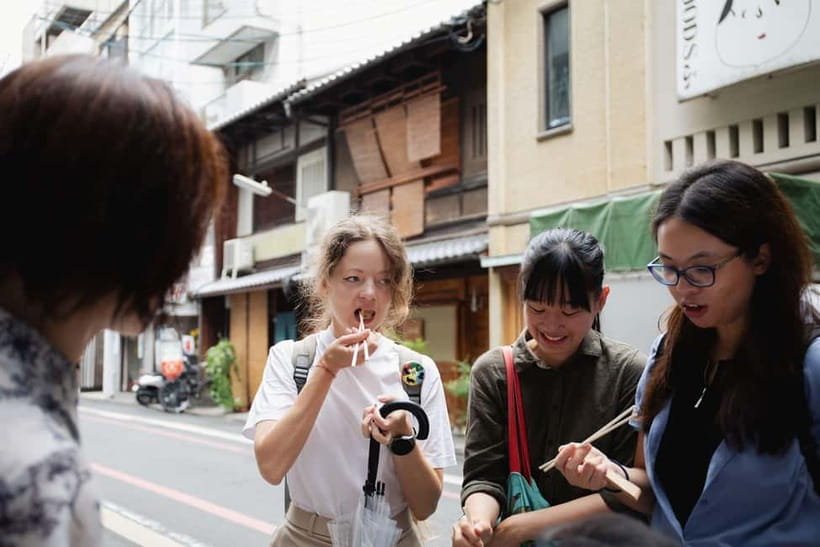
The tour combines eating, walking, shopping, and short cultural explanations. That mix keeps the three-hour experience from feeling like a lecture or a long sequence of samples.
One of the most useful details is the pace. Several people have described the balance of food, walking, and learning as comfortable. The market itself can be crowded, so do not expect a slow stroll at every point. You will be moving through narrow spaces and pausing where the guide can safely gather the group.
The advertised duration is three hours, or 270 minutes in the supplied details. Individual experiences have sometimes lasted around three and a half hours, and older accounts describe even longer walks. Allow extra time after the tour if you have a train, reservation, or fixed appointment.
This is a group walk, so the guide cannot stop indefinitely at every shop. At the same time, the small size allows some flexibility. A guide may help you sample an extra item or answer questions about something that catches your eye, but that should be treated as a bonus rather than a guaranteed part of the route.
The optional kimono tea ceremony
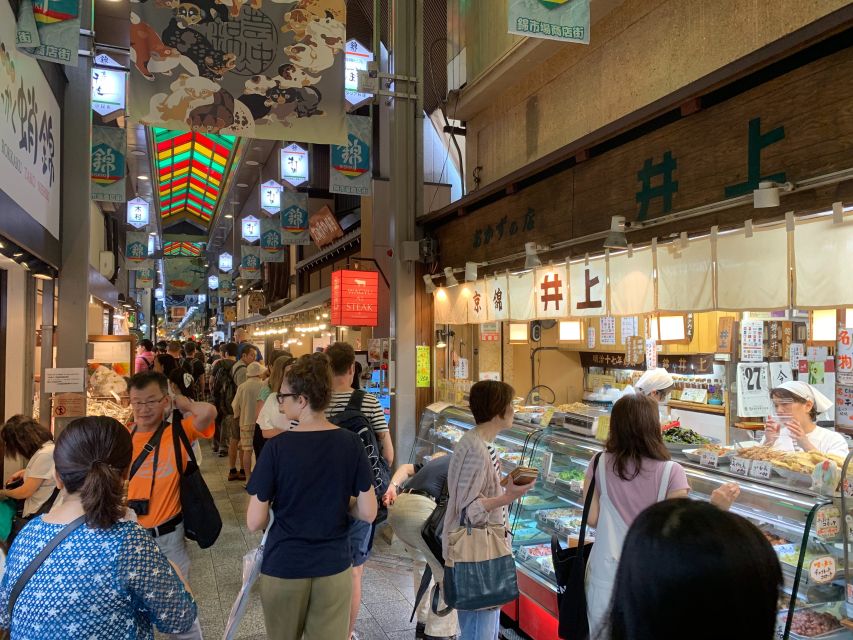
You can add a traditional tea ceremony after the market tour. The session begins at 2:00 PM, and you must make your own way to the venue near Nishiki Market.
The 90-minute experience starts with professional kimono dressing. You then join a tea ceremony led by a tea master, with explanations of the meaning behind the movements and gestures. The session ends with time for commemorative photographs in a traditional setting.
This is a good add-on if you want a more formal cultural activity after the informal market walk. It is less useful if you want a long lunch break or plan to spend the afternoon at another distant attraction. Check the timing closely, since the tea ceremony is a separate option and requires you to reach the venue yourself.
Is $78 a fair price?
At $78 per person, the value depends on how much help you want. You are paying for a local English-speaking guide, five featured foods, additional tastings, a small group, and a route that continues beyond the market.
If you already know Nishiki Market, speak Japanese, and feel comfortable choosing unfamiliar foods, you could cover much of the area independently. One four-star assessment made exactly that point: the market is interesting, and the guide is pleasant, but some people may feel able to explore it alone.
For a first visit, I think the price is easier to justify. You avoid ordering blindly, learn what you are eating, and sample several specialties without buying full portions at every shop. The cultural explanations and shrine visits add value, especially early in a Kyoto stay when you are still learning how the city works.
The tour is also useful for solo visitors. You get company without paying for a private guide, and a small group makes it easier to ask questions. Families can enjoy it too, though children should be comfortable walking, standing, and trying new foods.
The tea ceremony costs more if selected as an option. It should be judged separately from the food tour because it is a distinct 90-minute activity with kimono dressing and a tea master.
Practical matters that affect your day
Wear comfortable shoes. You will walk through the market, arcades, shrine areas, and shopping streets, and you may spend time standing while food is prepared or explained.
Bring rain gear. The tour continues as a walking experience, and the weather can affect your comfort even though Nishiki Market itself is covered in places.
Do not bring luggage or a large bag. Narrow market lanes are easier to navigate with a small day bag, and large items can obstruct the group.
This activity is not suitable for wheelchair users or people with mobility impairments. It is a walking tour through crowded commercial areas, with no stated accommodation for limited mobility.
The provider cannot accommodate vegetarian, halal, kosher, gluten-free, or allergy-related requests. If you have any of these needs, this is not a safe booking choice. The food includes seafood, meat, tofu products, and other ingredients, and the tasting plan is not designed for substitutions.
You can cancel up to 24 hours before the start for a full refund, and the reserve-now, pay-later option can help if your schedule is still changing. The meeting point may vary by booking option, so read that detail rather than assuming every group begins at the same place.
Who should book this Kyoto food walk?
I would choose this tour for a first visit to Kyoto, especially if Nishiki Market is high on your list and you want help making sense of it. It is also a smart first or second-day activity because guides often give practical suggestions for the rest of your time in the city.
Food-curious visitors will get the most from it. You do not need to be an adventurous eater, but you should be willing to try small portions of foods that may be unfamiliar.
Families with older children can enjoy the variety, and solo visitors benefit from the company and easy conversation. The six-person limit is particularly helpful if you want to ask questions without holding up a large group.
I would skip it if you need a guaranteed dietary plan, dislike walking in crowds, or prefer to spend three hours at one sit-down meal. I would also skip it if you have already explored Nishiki carefully and feel confident choosing its specialties on your own.
Should you book it?
Book this tour if you want a friendly local guide to turn Nishiki Market into a readable food lesson. The best reasons are the small group, the range of tastings, and the guides’ ability to connect food with Kyoto customs and neighborhood history.
The tour is not a luxury meal, and it is not fully flexible for dietary needs. But for a first-time visitor who wants to try yuba, obanzai, hamo tempura, wagyu, and other local bites without guessing at every stall, $78 is a reasonable price. Add the tea ceremony if you want a more formal cultural experience and can reach the venue by 2:00 PM.
FAQ
How long does the Nishiki Market food tour last?
The activity is listed as three hours, with the supplied details also showing 270 minutes. Some past experiences have lasted around three and a half hours, so allow extra time afterward.
How many people are in the group?
The group is limited to six participants, not including the English-speaking guide.
What foods are included?
The included foods are listed as yuba, obanzai, hamo tempura, wagyu steak skewers, and other special tastings. Additional samples may include Kyoto seasonings, crackers, and Japanese-flavored honey.
Is the tea ceremony included?
The tea ceremony is included only when you select the option with the tea ceremony. It is a separate 90-minute session near Nishiki Market that begins at 2:00 PM.
What language is the tour offered in?
The live tour guide speaks English.
Can dietary restrictions be accommodated?
No. The tour cannot accommodate vegetarian, halal, kosher, gluten-free, or allergy-related requests.
Is the tour suitable for wheelchair users?
No. The activity is not suitable for wheelchair users or people with mobility impairments.
What should I bring?
Bring comfortable shoes and rain gear. Do not bring pets, luggage, or large bags.
More Market Food Tours in Kyoto
- Tokyo Tsukiji Fish Market Food and Culture Walking Tour
★ 5.0 · 3,184 reviews - Phuket: Full Day City Tour with Night Market
★ 4.5 · 2,888 reviews - London Bridge & Borough Market Food Tour with 7 Authentic Dishes
★ 5.0 · 1,972 reviews - Tokyo: Tsukiji Fish Market Food and Walking tour
★ 5.0 · 1,724 reviews
More Street Food Market Tours in Kyoto
- Golden Pavilion, Nijo Castle, & Nishiki Market Half day tour
★ 5.0 · 29 reviews - Kyoto: Nishiki Market Food Tour
★ 4.9 · 21 reviews - Taste of Nishiki Market Walking Food Tour with Local guide
★ 5.0 · 17 reviews - Kyoto: Nishiki Market Food Tour with Local Guide
★ 4.6 · 5 reviews
Just added around Kyoto
- Taste of Nishiki Market Walking Food Tour with Local guide★ 5.0 · 17 reviews
- Nishiki Market Food Tour with Cooking Class★ 4.9 · 42 reviews
- Kyoto: Nishiki Market Tour with a Local Foodie & Tastings★ 4.5 · 67 reviews
- Golden Pavilion, Nijo Castle, & Nishiki Market Half day tour★ 5.0 · 29 reviews
- Kyoto:Seasonal Kaiseki Reservation at Hanasaki Nishiki★ 5.0 · 3 reviews
- Kyoto: Hands-on Takoyaki and Okonomiyaki Cooking (1 Hour)★ 4.7 · 25 reviews
- Kyoto: Nishiki Market Food Tour with Local Guide★ 4.6 · 5 reviews
- Kyoto: Nishiki Market Food Tour★ 4.9 · 21 reviews
Kyoto Street Food Tours, compared.
Nishiki Market Brunch Walking Tour (7 Tastings + Brunch)
Read our review →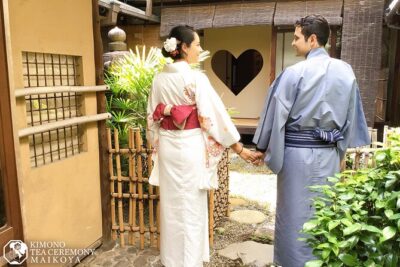
Kyoto Nishiki Market Food and Culture Walking Tour
Read our review →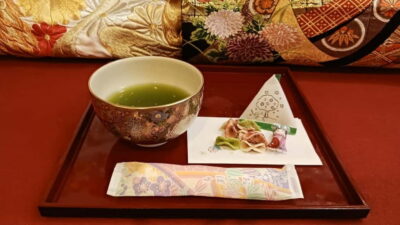
Kyoto: Nishiki Market Tea Ceremony with Koto Performance
Read our review →
Gyoza Cooking Class in Kyoto: Traditional Japanese Dumplings
Read our review →
Kyoto: Nishiki Market and Depachika Food Tour with a Local
Read our review →