REVIEW · TOKYO STREET FOOD TOURS
Tokyo: Tsukiji Fish Market Visit and Asakusa Food Tour
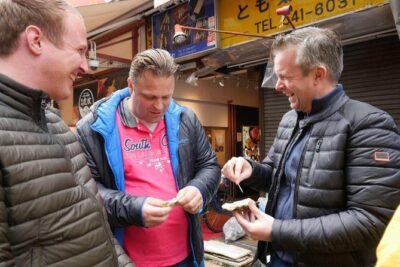
Tsukiji and Asakusa give you two very different tastes of Tokyo in one morning and afternoon. At Tsukiji, you sample seafood and market snacks before sitting down for sushi. In Asakusa, you slow the pace with a Japanese café stop, Nakamise shopping street, and Senso-ji Temple.
I like the small group of up to 10 and the way the tour combines food with useful local context. I also like the range of tastings, from tuna sashimi and sake to Japanese omelet and matcha-style sweets. Your guide, Kyoko, is known for helping visitors find good souvenirs and introducing corners of the market you might miss alone.
The main limitation is that you do not enter Tsukiji’s inner market. You explore the outer market area, which is still full of shops and food stalls, but anyone expecting access to wholesale auction areas should adjust expectations. The 8:30 AM start is also firm, so arriving early matters.
Key points at a glance
- Taste six different Japanese specialties: Expect Japanese omelet, fried fish cake, fresh tuna sashimi, sake, sushi, and Japanese sweets.
- Visit Tsukiji without rushing between districts: The market portion lasts about three hours, including the guided walk and food tastings.
- Travel in a group limited to 10 people: This makes it easier to hear the guide and ask questions in crowded streets.
- See Asakusa’s classic sights after lunch: The route includes the Asakusa Culture Tourist Information Center, Nakamise Shopping Street, and Senso-ji Temple.
- Take a café break with traditional sweets: The stop gives you a quiet pause after the market and before more sightseeing.
- Plan for an early start: The tour begins at 8:30 AM sharp at the main gate of Tsukiji Hongan-ji Temple.
Why this Tokyo food tour works well
This is a useful choice if you want to cover two major Tokyo districts in half a day without handling every train connection, food decision, and market turn yourself. Tsukiji and Asakusa are not next door to each other, so the included public transport transfer saves time and keeps the day moving.
The experience is also more than a meal with a few sightseeing stops attached. Food is the thread that connects the morning. You see where ingredients are sold, learn about Tsukiji’s role in Tokyo’s food culture, taste several small items, and finish with sushi at a local restaurant.
The tour costs $151 per person. That is not a bargain food walk, but the price includes the English-speaking guide, all listed food, and transport from Tsukiji to Asakusa. You are paying for several tastings, a sit-down sushi meal, guided sightseeing in two districts, and the convenience of a small group. If you already know Tsukiji and Asakusa well, you may find the price high. If this is your first Tokyo visit and you want an organized introduction, the package is easier to justify.
More Fish Market and Seafood Tours in Tokyo
- Tokyo Tsukiji Fish Market Food and Culture Walking Tour
★ 5.0 · 3,184 reviews - Tokyo: Tsukiji Fish Market Food and Walking tour
★ 5.0 · 1,724 reviews - Tokyo: Tsukiji Fish Market Guided Walking Tour
★ 4.9 · 1,397 reviews
Meeting at Tsukiji Hongan-ji Temple
Your morning begins at the main gate of Tsukiji Hongan-ji Temple. This is a clear landmark, but do not cut the timing close. The tour starts at 8:30 AM sharp, and missing the opening section could mean losing the temple introduction and the group’s first market walk.
The temple visit lasts about 15 minutes. Tsukiji Hongan-ji gives the day a thoughtful opening because it places the market in a wider cultural setting before you start eating. Your guide can explain the site and point out details you might pass without noticing.
This is a short stop, not a full temple tour. Think of it as an orientation before the food-focused part of the morning. Wear shoes suited to several hours on foot, since the route includes market streets, shopping areas, temple grounds, and city sidewalks.
Walking Tsukiji’s outer market
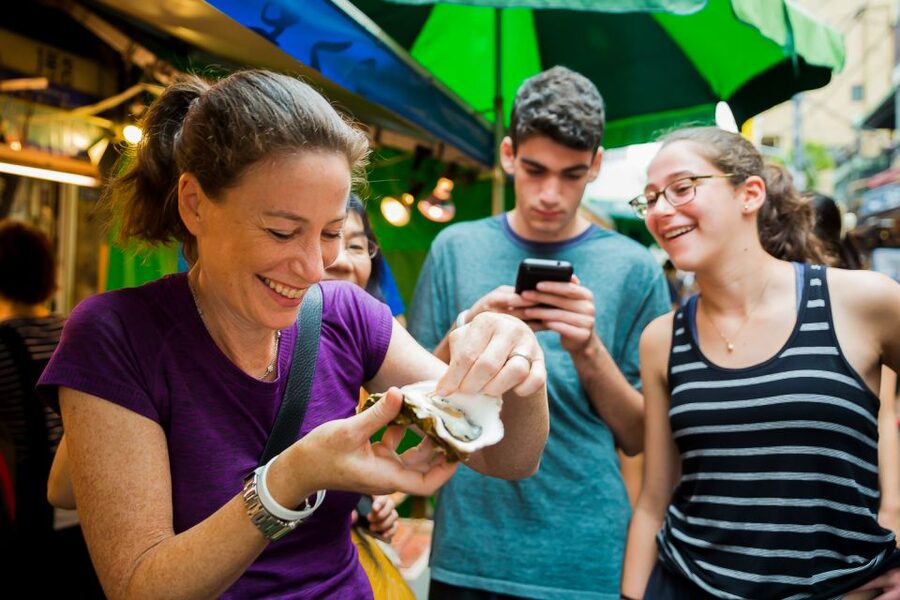
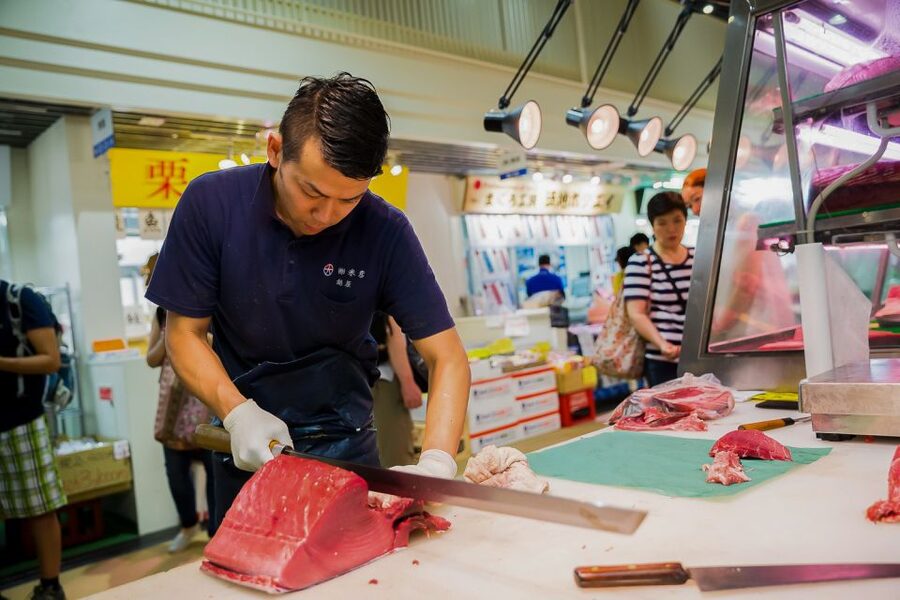
The Tsukiji Fish Market portion lasts about two hours, followed by about an hour of food tasting. The market is lined with shops selling seafood, vegetables, cooking goods, and prepared food. You will see a working commercial district where locals and professional chefs shop, rather than a museum built only for sightseeing.
The important distinction is that this tour does not enter Tsukiji’s inner market. That means you should not book it expecting wholesale operations or the famous auction experience associated with Tokyo’s former central fish market. Instead, you explore the outer market, where the public can browse stalls, sample foods, and shop.
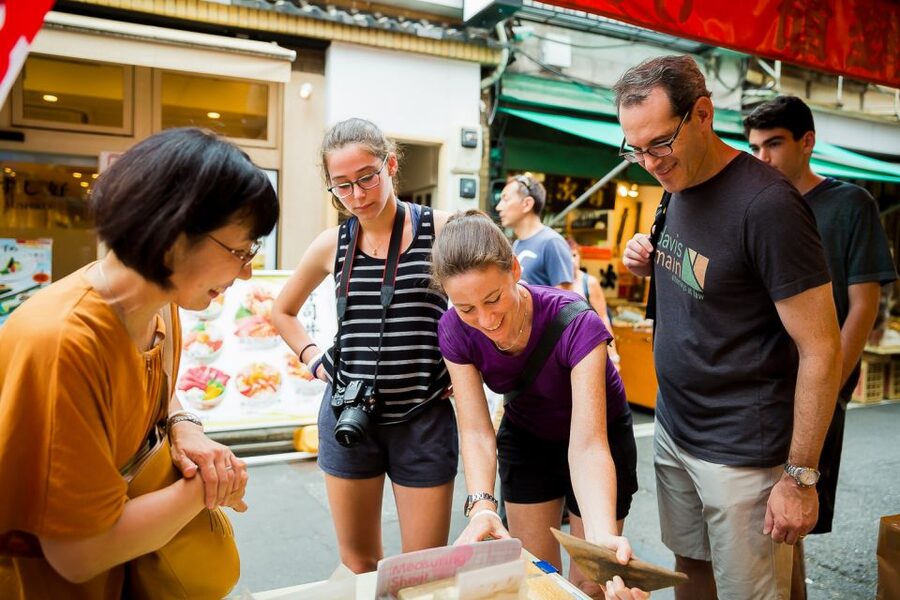
I like this setup for a first visit because a guide can help you make sense of the narrow paths and busy storefronts. The market can feel confusing when you are trying to decide what to eat, where to stop, and how to avoid blocking the flow of shoppers. A local guide helps the group move efficiently and explains what you are seeing as you go.
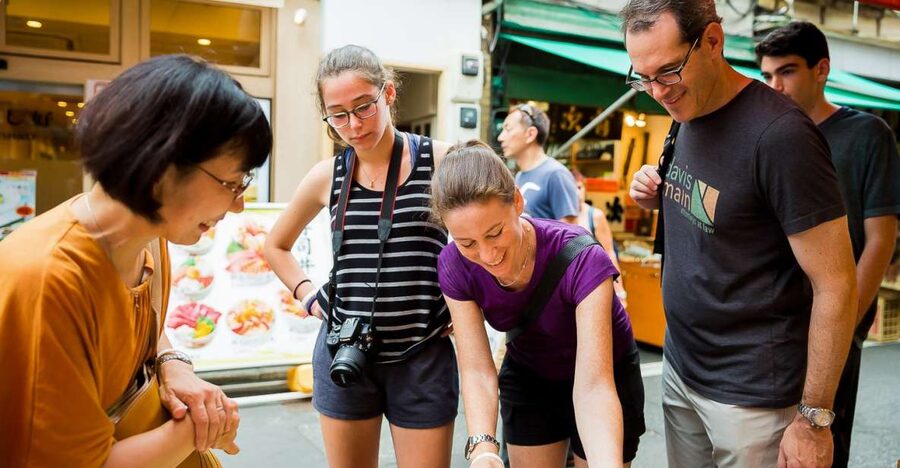
Guide Kyoko is especially useful if you want to buy food-related souvenirs. She knows many vendors and can help you choose items, which is more practical than simply walking past rows of unfamiliar products. This is one of the tour’s strongest personal touches.
Six Japanese tastes, from fish cake to sushi
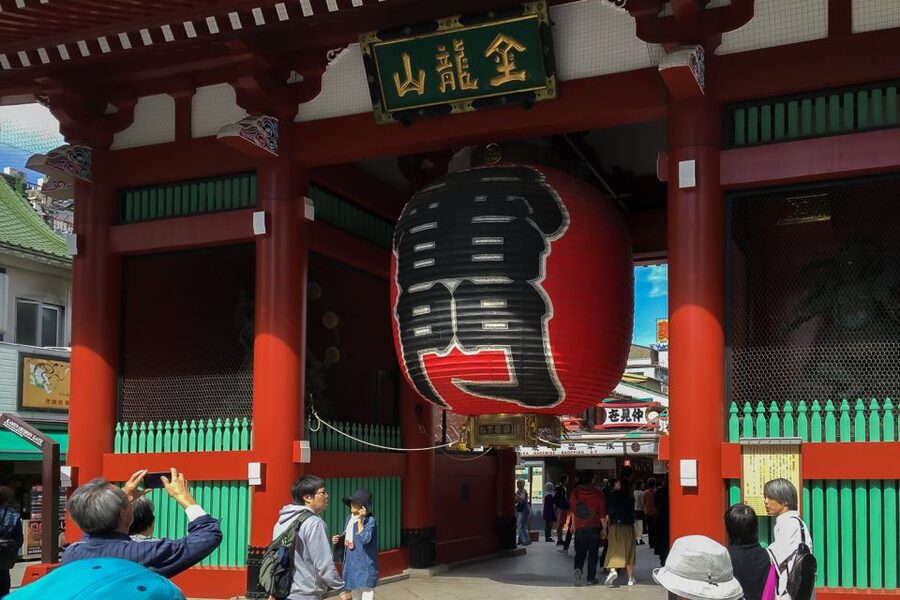
Food tasting takes up a large part of the morning. The listed foods are Japanese omelet, fried fish cake, fresh tuna sashimi, sake, sushi at a local sushi restaurant, and Japanese sweets.
The Japanese omelet gives you a taste of a familiar market specialty in a distinctly local form. Fried fish cake adds another texture and shows that the food experience is not limited to raw seafood. Tuna sashimi and sushi offer the more expected Tsukiji highlights, but the sequence of smaller tastings helps you compare different ingredients and preparations.
The sushi lunch is the main meal. Since it takes place at a local sushi restaurant, you get a seated break after eating your way through the market. The tour description does not specify the exact sushi menu, so you should not book it expecting particular fish or a set number of pieces.
Sake is included, but drinking age rules matter. In Japan, the minimum drinking age is 20. Anyone under 20 receives an alternative drink. You should also tell the operator about allergies or food preferences in advance. This is especially important for a tour centered on seafood, raw fish, and several separate tastings.
The walk-and-eat format can be fun, but it is not the slow, formal style of a long restaurant meal. You will sample foods while moving through the market, then have the sushi stop as the more settled part of the meal. If you prefer to sit down for every course, this may feel rushed.
More Street Food Market Tours in Japan
- Tsukiji Fish Market Guided Tour and Sushi Making with Pro Chef
★ 5.0 · 775 reviews - Tokyo: Tsukiji Fish Market Food and Culture Walking Tour
★ 4.7 · 757 reviews - Tsukiji Fish Market: Street Food & Culture Walking Tour
★ 5.0 · 669 reviews - Tsukiji Fish Market Small-Group Food Walking Tour
★ 5.0 · 621 reviews
The transfer from Tsukiji to Asakusa
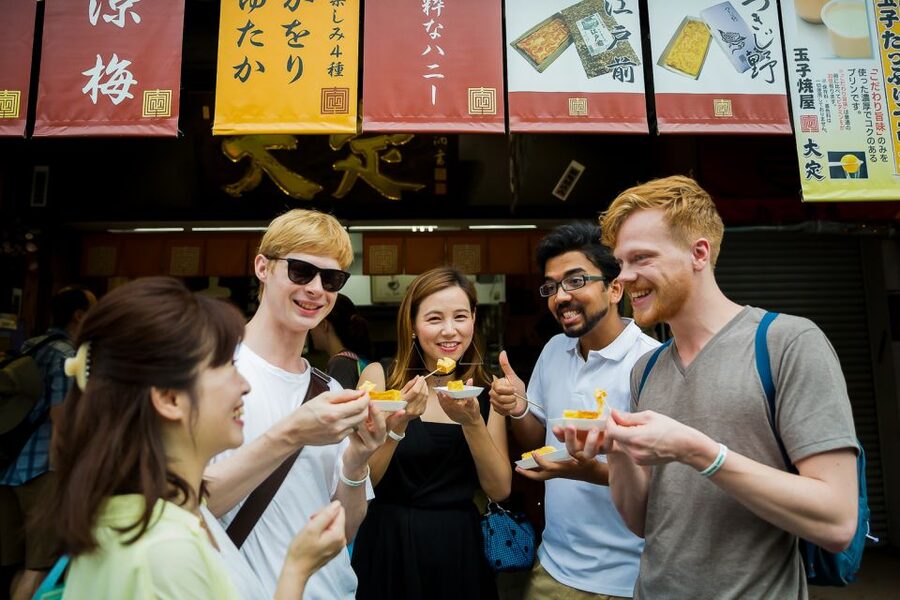
After Tsukiji, the group uses public transportation to reach Asakusa. The transfer takes about 15 minutes, giving you a quick change of scenery from market commerce to one of Tokyo’s best-known traditional districts.
Transportation from Tsukiji to Asakusa is included, but hotel pickup is not. You are responsible for reaching the starting point and making your way home afterward. The tour ends around 2 Chome-18-13 Kaminarimon, near the Asakusa sights listed for the final section.
The move between districts is one reason the tour is efficient. You do not lose time figuring out a route between two separate sightseeing days. At the same time, a group transfer means you follow the guide’s schedule rather than choosing your own pace.
Asakusa Culture Tourist Information Center and Nakamise
The Asakusa section begins at the Asakusa Culture Tourist Information Center, where the guide gives a short introduction of about 10 minutes. This helps you understand the area before entering the main sightseeing corridor.
From there, you continue to Nakamise Shopping Street for about 15 minutes. The street leads toward Senso-ji and is filled with shops selling snacks, small gifts, and traditional-style souvenirs. It is an easy place to browse, but this stop is guided and brief, so you may not have much time for serious shopping.
If buying gifts matters to you, ask your guide for help during the visit. Kyoko’s experience with market vendors is useful earlier in the day, and the guide can also help you understand what kinds of souvenirs fit your interests. Just remember that shopping is a side benefit here, not the main purpose.
Senso-ji, Tokyo’s oldest Buddhist temple
Senso-ji gets about 25 minutes of guided attention. It is the major cultural landmark in Asakusa and gives the tour a strong finish after the food stops.
The temple is one of Tokyo’s most visited sights, so seeing it with a guide helps you focus on the main features instead of simply taking photos and moving on. You will have a short explanation of the temple and its place in Asakusa, followed by time in the surrounding district.
Twenty-five minutes is enough for an introduction, not a leisurely temple visit. If you want to study every gate, browse nearby streets, or return for evening views, plan a separate visit. The benefit of including Senso-ji here is convenience. You get a first look at the temple without giving up a full day.
A 75-minute look at traditional Asakusa
The final Asakusa guided section lasts about 75 minutes. This longer portion gives the guide time to explain the district beyond the temple approach. The route includes a walk of about 10 minutes and time to explore the local area.
Before or during this part, you stop at a Japanese café for traditional sweets, including a savory-sweet option such as a matcha green tea parfait. This pause is welcome after the Tsukiji tastings and the walk through Nakamise. It also gives you a chance to sit, talk with the guide, and enjoy a slower Tokyo moment.
The café stop is not only about dessert. It balances the day. The market is noisy and active, while the café gives you a place to rest before finishing the Asakusa walk. If you do not have much of a sweet tooth, the stop may be less important to you, but it is still a useful break.
Group size, pace, and practical comfort
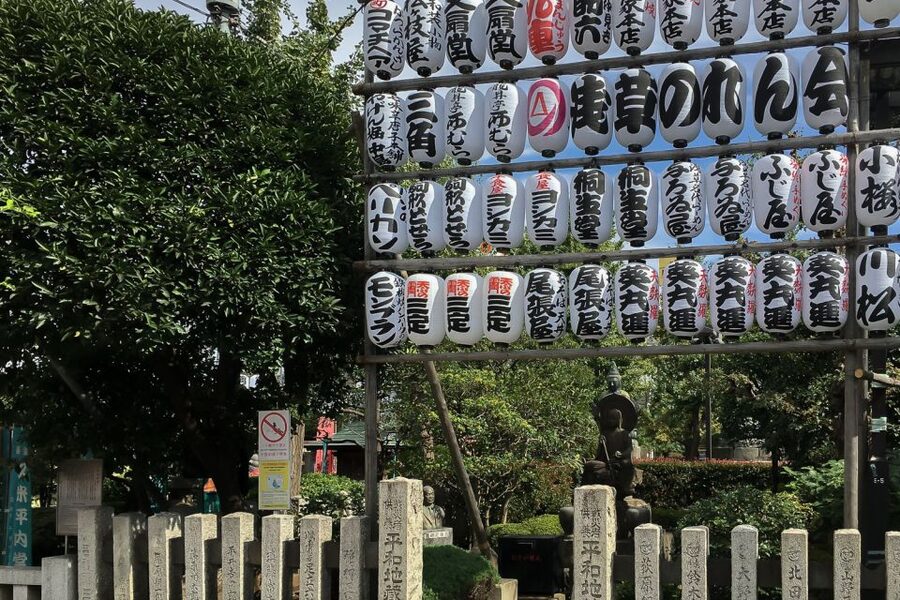
The group is limited to 10 participants. That is a good size for a market tour because you can usually stay close to the guide without the experience feeling like a large procession. It also gives you a better chance to ask questions about ingredients, customs, and places to shop.
The pace is active. You spend several hours walking, eating while moving through parts of Tsukiji, using public transport, and touring Asakusa. Anyone who needs frequent rest stops should keep this in mind, since the schedule has several fixed sections.
The tour lasts 5.5 hours. Starting at 8:30 AM, it takes up most of the morning and early afternoon. You still have plenty of time afterward for more Tokyo sightseeing, but the early start means you should plan breakfast lightly or arrive ready for the first tastings.
English is the tour language. An English-speaking guide leads the entire experience, including the temple visits, market explanations, food stops, and Asakusa sightseeing.
Who should book this experience?
I would recommend this tour to first-time visitors who want a guided introduction to Tokyo food and traditional neighborhoods. It suits you especially well if you want to try several Japanese foods but do not want to choose every stall on your own.
It is also a good match for travelers with only a few days in Tokyo. The route brings together Tsukiji, Asakusa, Senso-ji, market food, sushi, sweets, and public transport in one organized half-day.
Families and mixed-interest groups may appreciate the variety. Food lovers get market tastings and sushi, while culture-focused visitors get temples and neighborhood history. People under 20 can join, but they receive an alternative drink instead of sake.
You may want a different experience if you are seeking the inner market, a seafood auction, a private tour, or a relaxed full-day food crawl. The group format and firm schedule are practical, but they limit your freedom to linger.
Should you book the Tsukiji and Asakusa tour?
Book it if you want efficient coverage of two districts, several included tastings, and a guide who can make the market easier to understand. The combination of Tsukiji food, a sushi lunch, Asakusa sweets, and Senso-ji gives you a broad first taste of old and working Tokyo.
Skip it if entering the inner market is your main goal, or if $151 feels high for a group food tour. Also think twice if you dislike early starts or eating some food while walking.
For the right visitor, the value comes from the structure. You do not just visit two famous areas. You connect the food, shops, temples, and local streets into one manageable day, with Kyoko’s vendor knowledge adding practical help along the way.
FAQ
Where does the tour begin?
The tour begins at the main gate of Tsukiji Hongan-ji Temple.
What time does the tour start?
The tour begins at 8:30 AM sharp. You should arrive on time for the meeting.
Does the tour enter Tsukiji’s inner market?
No. The tour visits the outer Tsukiji market area and does not enter the inner market.
What food is included?
Included foods are Japanese omelet, fried fish cake, fresh tuna sashimi, sake, sushi at a local sushi restaurant, and Japanese sweets.
Is sake included for participants under 20?
Participants under 20 receive an alternative drink because the minimum drinking age in Japan is 20.
How does the group travel from Tsukiji to Asakusa?
The group uses public transportation, and transport from Tsukiji to Asakusa is included.
Where does the tour finish?
The activity finishes in the Asakusa area at 2 Chome-18-13 Kaminarimon, Taito-ku, Tokyo.
More Market Food Tours in Tokyo
- Private Toyosu & Tsukiji Market Adventure with Tuna Auction
★ 4.8 · 191 reviews - Tokyo: Toyosu Tuna Auction &Tsukiji Market Gourmet Adventure
★ 4.8 · 187 reviews - Tokyo: Tsukiji Fish Market Tour with 6 Stops & Seafood Lunch
★ 4.5 · 165 reviews - Inside Tokyo’s Kitchen: Tsukiji Market, Food & Culture Tour
★ 5.0 · 162 reviews
More Street Food Market Tours in Tokyo
- Tokyo: Tsukiji Fish Market Sushi Making Class with Pro Chef
★ 4.9 · 506 reviews - Tokyo Food Tour Taste Fresh Delights at Tsukiji Market
★ 5.0 · 429 reviews - Tokyo Tsukiji Fish Market Tour and Sushi Making Lesson
★ 5.0 · 390 reviews - Tsukiji Fish Market: Street Food & Culture Walking Tour
★ 4.8 · 259 reviews
Just added around Tokyo
- Tokyo: Tsukiji walk & sushi private tour with Uni Students★ 5.0 · 17 reviews
- Tokyo: Private Tsukiji Street Food & Sake with Local Guide★ 5.0 · 3 reviews
- Tokyo: Tsukiji Market Guided Tour & Sushi-Making Experience★ 4.4 · 11 reviews
- Tokyo: Tsukiji Market and Hama-rikyu Gardens Guided Tour★ 4.8 · 73 reviews
- Tokyo Tsukiji Food & Culture Private Tour Licensed Guide★ 4.9 · 28 reviews
- Tokyo: Tsukiji Fish Market Foodie and Educational Tour★ 5.0 · 4 reviews
- Tokyo: Tsukiji Fish Market Culture Tour with Sashimi Tasting★ 4.6 · 54 reviews
- Tokyo: Tsukiji, Ginza, and Asakusa Japanese Culture Tour★ 5.0 · 2 reviews
Tokyo Street Food Tours, compared.
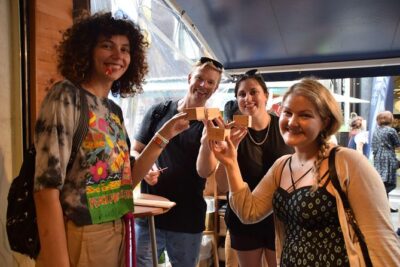
Tokyo Tsukiji Fish Market Food and Culture Walking Tour
Read our review →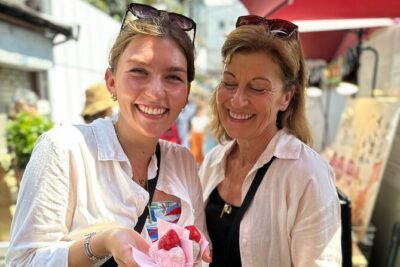
Tokyo: Tsukiji Fish Market Food and Walking tour
Read our review →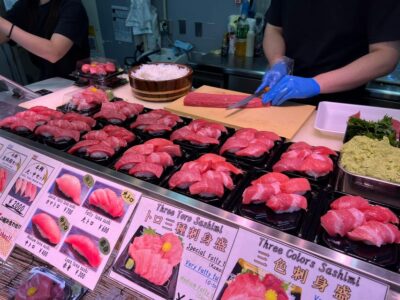
Tokyo: Tsukiji Fish Market Guided Walking Tour
Read our review →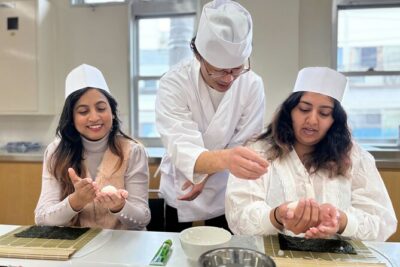
Tokyo Sushi Making Class in Tsukiji with Professional Chef
Read our review →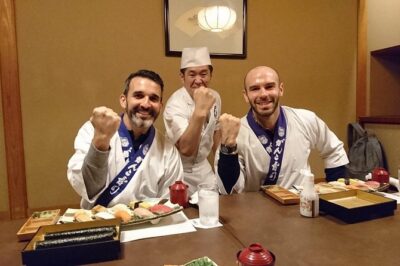
Tsukiji Fish Market Guided Tour and Sushi Making with Pro Chef
Read our review →Tokyo: Tsukiji Fish Market Food and Culture Walking Tour
Read our review →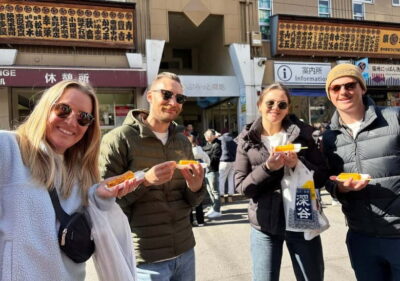
Tsukiji Fish Market: Street Food & Culture Walking Tour
Read our review →