REVIEW · TOKYO STREET FOOD TOURS
Tokyo: Guided Walking Tour of Tsukiji Market with Breakfast
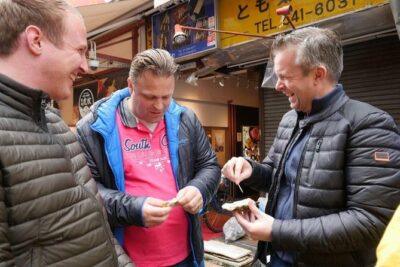
Tsukiji is best approached with an appetite and a little help. This 150-minute morning walk takes you from the unusual exterior of Tsukiji Hongwanji Temple into the market’s narrow lanes, where wholesalers, cooks, and food sellers get on with the serious business of feeding Tokyo. You sample seven local specialties along the way, rather than simply looking at food behind glass.
I like the way the tour turns an intimidating market into an easy breakfast stop, and I like the human touch. Guides such as Yumi, Nori, Minoko, and Rico have helped guests choose food, translate with sellers, and adjust tastings for picky eaters. The main consideration is pace: the market can be crowded, some English explanations may take extra attention, and $85 is a fair price only if you plan to make full use of the tastings and guidance.
Key points to know before booking
- Seven breakfast tastings fill the 150-minute visit: Expect items such as grilled seafood or beef skewers, Japanese omelette, tuna sandwiches, fried fish paste skewers, tea, dashi soup stock, and a drink.
- The temple is an easy meeting point: Tsukiji Station’s Hibiya Line Exit A1 is about 50 meters from the entrance.
- Small groups keep the market manageable: The tour is limited to 10 people, with some departures becoming private or nearly private.
- Guides can shape the food experience: You can explain dislikes or dietary preferences, and guides have offered alternatives when guests did not want to try a particular item.
- The market visit is more than a tasting crawl: You see expert wholesalers at work and hear how Japanese food connects with culture and religion.
- Bring good walking shoes: You will spend the full tour on your feet in crowded market lanes.
Starting beneath Tsukiji Hongwanji Temple

The tour begins in front of Tsukiji Hongwanji Temple, a useful meeting point because it is close to the subway. From Tsukiji Station on the Hibiya Line, take Exit A1, turn left, and look for the temple entrance about 50 meters away.
The temple’s exterior gives the morning a strong opening. Its architecture has Indian-inspired Buddhist touches, which look quite different from the timber temple designs you may expect in Tokyo. The visit here is from the outside, so do not book this tour expecting a long temple interior visit or a formal religious ceremony.
Still, this short stop adds purpose to the food walk. You begin by seeing how religion and cuisine can sit side by side in Japanese culture. The guide can explain the local setting before you enter the market, giving the tastings more context than a simple list of snacks.
This is also where you want to arrive early. The meeting point is straightforward, but arriving late can cause trouble. One person who missed the tour had to seek help afterward, so allow extra time to find the station exit and temple entrance. Tokyo’s subway is efficient, but stations can be larger and more confusing than their maps suggest.
More Fish Market and Seafood Tours in Tokyo
- Tokyo Tsukiji Fish Market Food and Culture Walking Tour
★ 5.0 · 3,184 reviews - Tokyo: Tsukiji Fish Market Food and Walking tour
★ 5.0 · 1,724 reviews - Tokyo: Tsukiji Fish Market Guided Walking Tour
★ 4.9 · 1,397 reviews
Entering the narrow lanes of Tsukiji Outer Market
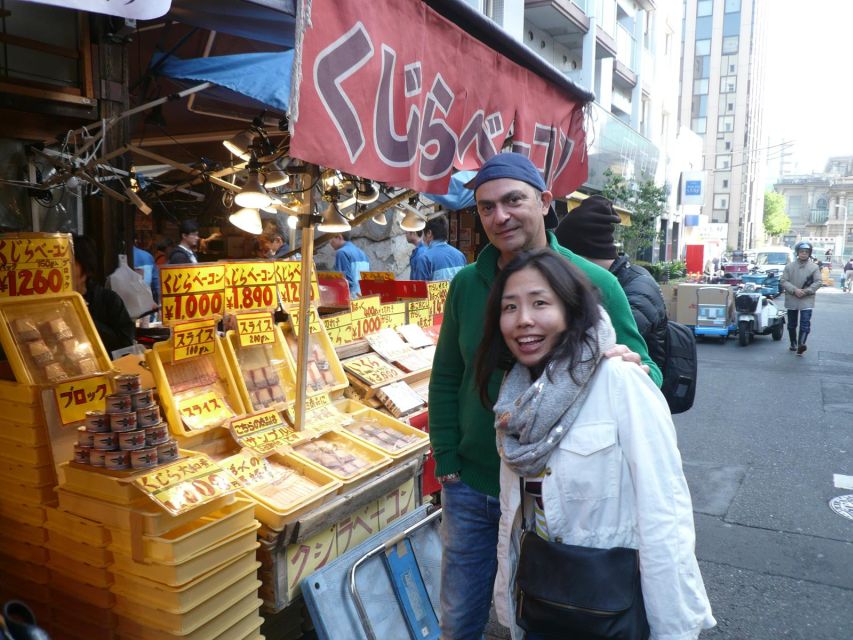
From the temple, you walk into Tsukiji Outer Market. This is the part of the morning where a guide earns the fee. The market is full of shops, restaurants, stalls, unusual products, and workers moving with purpose. You can certainly walk around alone, but it is easy to miss the best food, block a working lane, or hesitate over a menu you cannot read.
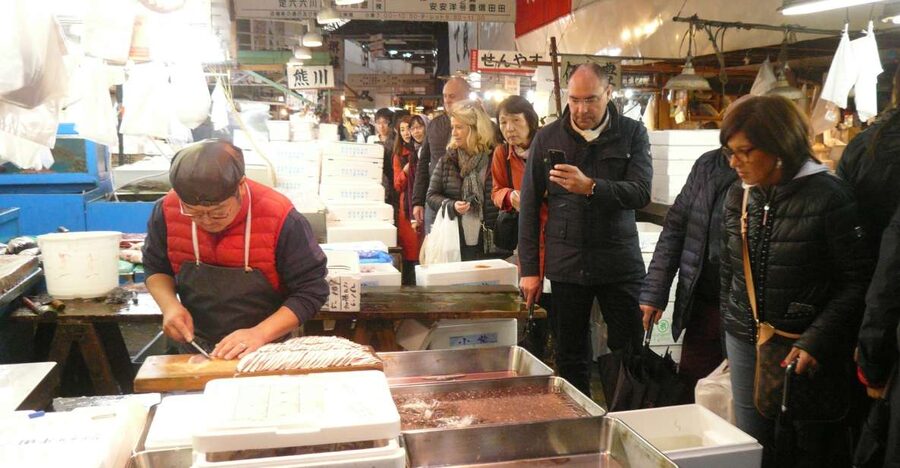
A good guide does not just lead you from stall to stall. The guide explains what you are seeing and helps you watch the market without getting in the way. You may see wholesalers handling seafood, shopkeepers preparing food, and sellers serving customers at close range. The point is not a staged show. It is an active working market where your visit happens around real business.
The group limit of 10 matters here. Tsukiji’s lanes are not built for a large tour party, and a smaller group can pause without taking over a shopfront. Several departures have also ended up with only a family or a couple of participants, which gives the guide more room to adjust the route and food choices. You should not count on a private tour, but a small group is part of the design.
Crowds are part of the bargain. You will be walking through popular lanes with many other people, and some food lines may move slowly. That can make the tour feel less relaxed than a sit-down breakfast. On the other hand, the crowded setting is exactly why local help is useful.
Seven tastings that make this breakfast worthwhile
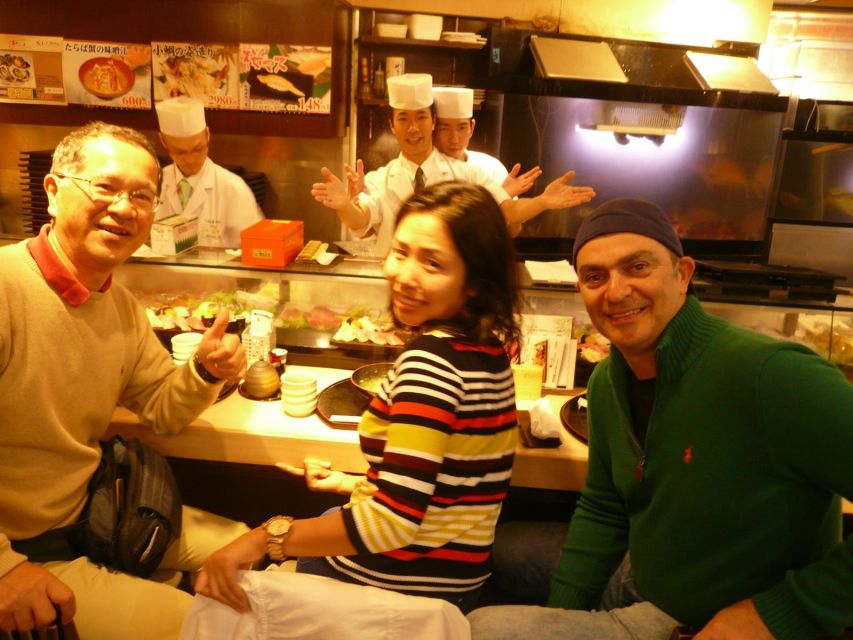
The tour includes seven local tastings, with the exact order depending on market conditions and the guide’s choices. The listed selection includes grilled seafood or beef skewers, a Japanese-style omelette, tuna sandwiches, fried fish paste skewers, a drink, Japanese tea, and dashi soup stock.
The grilled skewer is likely to be one of the tour’s most approachable bites. Seafood gives you a direct taste of the market, while wagyu beef offers a more luxurious sample. Since the tour description allows for seafood or beef, you should not assume you will receive every meat and seafood option. If one choice does not appeal to you, tell the guide early.
The Japanese omelette shows a gentler side of Japanese breakfast food. It is a useful counterpoint to grilled items and fish paste. The tuna sandwich is another practical market snack, while the fried fish paste skewer gives you a chance to try a texture and preparation you might not choose on your own.
Tea and dashi do a different job. Tea lets you pause between food stops, and dashi gives you a taste of the savory stock behind many Japanese dishes. That small sample can help you understand why Japanese cooking often has such a strong, clean savory base without relying on heavy sauces.
The food adds up. One person described the tour as a lot of food and advised arriving hungry. That is sensible advice. This is not a token sample followed by a separate breakfast. For many people, the seven tastings will function as breakfast and morning snacks combined.
Food flexibility is one of the strongest practical features. Guides have changed selections when someone did not eat a particular item, offered alternatives, and helped translate choices at stalls. This will suit you if you are cautious with unfamiliar foods, traveling with a picky teenager, or simply want control over what goes into your breakfast.
You should still communicate clearly. The information confirms that guides can adjust the experience, but it does not promise a specific allergy protocol or a fully customized menu. Tell the guide about dislikes and restrictions at the start, then confirm each item before eating it.
Why a guide adds real value at Tsukiji
The biggest advantage is not simply finding food. It is knowing what you are looking at and how to buy it. Guides have helped with translation, waited in lines while members of the group explored, and spoken with vendors so people could order the food they actually wanted.
That kind of help matters in a market where decisions come quickly. You may see a skewer, sandwich, or prepared fish item and have no easy way to ask what it contains. A guide can explain the choice and keep the group moving.
The cultural explanations also give the walk a wider frame. The tour connects Japanese cuisine with religion and local customs, beginning at Tsukiji Hongwanji Temple and continuing through the market. You are not getting a formal food lecture, but you do receive enough background to understand that these dishes are part of everyday life, not just photo opportunities.
The guides have different names and personalities, and the experience seems to benefit from that personal approach. Yumi has been praised for organizing the route and arranging unusual tastings. Nori has helped with local suggestions and even assisted someone with the trip back to a hotel. Minoko has worked with another guide to answer questions and keep the visit moving. Rico has also been remembered warmly for adapting the experience.
Do not treat those names as a guarantee that a particular guide will lead your departure. They do show the sort of support you can expect from the team: practical help, conversation, and a willingness to respond to the group.
More Street Food Market Tours in Japan
- Tsukiji Fish Market Guided Tour and Sushi Making with Pro Chef
★ 5.0 · 775 reviews - Tokyo: Tsukiji Fish Market Food and Culture Walking Tour
★ 4.7 · 757 reviews - Tsukiji Fish Market: Street Food & Culture Walking Tour
★ 5.0 · 669 reviews - Tsukiji Fish Market Small-Group Food Walking Tour
★ 5.0 · 621 reviews
How the timing shapes your morning

At two and a half hours, the tour is long enough to cover the temple, market, explanations, and seven tastings without taking your entire day. The finish is early enough for you to keep exploring Tsukiji on your own afterward, which is a useful feature.
That timing also makes the activity a good first or second morning plan in Tokyo. You get oriented in one of the city’s major food areas, then remain free for another neighborhood, museum, or tour. If you plan to continue eating at the market after the tour, pace yourself. The included food is substantial.
The exact starting time depends on availability, so check the departure before booking. Morning is important here because the activity is built around breakfast and market work. You will want comfortable shoes, and I would avoid wearing anything that makes walking or standing difficult.
The tour is listed as wheelchair accessible, which is useful information for planning. Even so, the market’s narrow lanes and crowds may affect how easy each part feels in practice. If you use a wheelchair, contact the provider before booking to discuss the route and current conditions.
Is $85 good value?
At $85 per person, this is not the cheapest way to eat at Tsukiji. You could buy individual snacks yourself for less, especially if you already know where to go and can manage menus and ordering without help.
The price becomes more reasonable when you count what it includes: a live English-speaking guide, a 150-minute walk, seven tastings, temple context, market orientation, vendor translation, and help choosing alternatives. You are paying for access to a smoother morning, not only for the food.
I would see the value this way:
- Good value for first-time visitors: You get an introduction to the market without spending your morning guessing what to order.
- Good value for cautious eaters: The guide can explain unfamiliar items and adjust choices.
- Good value for families: A small group and flexible food choices can make the outing easier with children or picky teenagers.
- Less attractive for confident food explorers: If you enjoy wandering alone and already know what you want to eat, the guided fee may be hard to justify.
- Less attractive if you want a quiet meal: This is a walking tour through a working market, not a seated breakfast.
The included tastings are the main reason to book. If you skip much of the food, the value drops. Arrive hungry and use the guide’s help to try items you would not easily select by yourself.
Who will enjoy this Tsukiji morning?
I would recommend this tour to someone visiting Tokyo for the first time, especially if Japanese food feels exciting but a little hard to navigate. It also works well for couples, families, and small groups who want a guided introduction before returning to the market independently.
Food-focused visitors will appreciate the range of samples, from grilled seafood and beef to tea and dashi. Culture-focused visitors will value the temple opening and the link between religion and cuisine. The tour also suits people who prefer conversation and explanation to simply taking photographs.
You may want to skip it if you dislike crowded markets, standing for long periods, or eating several small portions in quick succession. It is also not the right pick if your main goal is a long temple visit. The temple is an opening landmark, while Tsukiji is the main event.
English is the tour language. Most people should manage well, but one person found the guide’s English difficult to follow at times. If you need slow, highly detailed explanations, stay close to the guide and ask for clarification when needed. The small group format makes that easier.
Practical details for a smooth visit
Meet in front of Tsukiji Hongwanji Temple. From Tsukiji Station, take Hibiya Line Exit A1, turn left, and walk about 50 meters to the temple entrance.
Wear comfortable shoes. The tour runs for 150 minutes and includes walking, standing, crowded lanes, and food stops. I would also arrive with an open mind but a clear idea of your limits. Tell the guide what you do not eat rather than waiting until a tasting is placed in front of you.
The activity is offered in English and has a maximum group size of 10. It is wheelchair accessible. You can cancel up to 24 hours before the start for a full refund, and the reserve-now, pay-later option allows you to hold a place without paying immediately. Check the available start times before committing your morning.
Should you book the Tsukiji food tour?
Book it if you want a guided, food-heavy introduction to one of Tokyo’s best-known market areas. The strongest reasons are the seven tastings, the small group, and the practical help with translation and food choices. The temple stop gives the morning a cultural start, while the market walk shows you how the area works beyond its famous snacks.
Skip it if you prefer to wander alone, want a cheap breakfast, or need a quiet seated meal. For everyone else, especially first-time Tokyo visitors, $85 buys a useful orientation and plenty to eat. Arrive hungry, wear good shoes, and treat the guide as your key to ordering with confidence rather than as someone who simply points out stalls.
FAQ
Where does the Tsukiji walking tour meet?
The meeting point is in front of Tsukiji Hongwanji Temple. From Tsukiji Station on the Hibiya Line, take Exit A1, turn left, and walk about 50 meters to the temple entrance.
How long does the tour last?
The tour lasts 150 minutes, or two and a half hours. It includes the temple exterior, the market walk, cultural explanations, and seven tastings.
What food is included?
The seven tastings include grilled seafood or beef skewers, a Japanese-style omelette, tuna sandwiches, fried fish paste skewers, a drink, Japanese tea, and dashi soup stock. The exact choices may vary.
Is the tour conducted in English?
Yes. The live tour guide speaks English, and English is the listed tour language.
How many people can join the group?
The tour is limited to 10 participants. Some departures may have fewer people and can sometimes become private or nearly private.
Is the tour wheelchair accessible?
The activity is listed as wheelchair accessible. Since the route passes through market lanes and crowded areas, contact the provider if you need to discuss practical access details.
Can I cancel the booking?
You can cancel up to 24 hours in advance for a full refund. A reserve-now, pay-later option is also available.
More Street Food Walking Tours in Japan
- Tokyo Tsukiji Fish Market Food Tour: 15 Stops & Walk Local Street
★ 5.0 · 139 reviews - Tokyo: Tsukiji Market Walking Tour & Sushi Cooking Class
★ 4.6 · 122 reviews - Tokyo’s Kitchen: Tsukiji Market Food & Culture Walk
★ 4.7 · 74 reviews - Tokyo: Secret Food Walking Tour
★ 4.7 · 38 reviews
More Street Food Market Tours in Tokyo
- Tokyo: Tsukiji Fish Market Sushi Making Class with Pro Chef
★ 4.9 · 506 reviews - Tokyo Food Tour Taste Fresh Delights at Tsukiji Market
★ 5.0 · 429 reviews - Tokyo Tsukiji Fish Market Tour and Sushi Making Lesson
★ 5.0 · 390 reviews - Tsukiji Fish Market: Street Food & Culture Walking Tour
★ 4.8 · 259 reviews
Just added around Tokyo
- Tokyo: Tsukiji walk & sushi private tour with Uni Students★ 5.0 · 17 reviews
- Tokyo: Private Tsukiji Street Food & Sake with Local Guide★ 5.0 · 3 reviews
- Tokyo: Tsukiji Market Guided Tour & Sushi-Making Experience★ 4.4 · 11 reviews
- Tokyo: Tsukiji Market and Hama-rikyu Gardens Guided Tour★ 4.8 · 73 reviews
- Tokyo Tsukiji Food & Culture Private Tour Licensed Guide★ 4.9 · 28 reviews
- Tokyo: Tsukiji Fish Market Foodie and Educational Tour★ 5.0 · 4 reviews
- Tokyo: Tsukiji Fish Market Culture Tour with Sashimi Tasting★ 4.6 · 54 reviews
- Tokyo: Tsukiji, Ginza, and Asakusa Japanese Culture Tour★ 5.0 · 2 reviews
Tokyo Street Food Tours, compared.
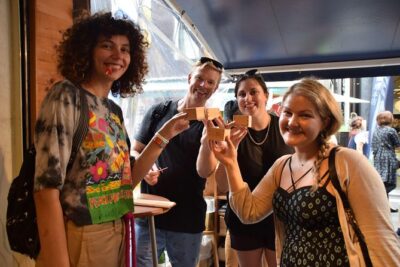
Tokyo Tsukiji Fish Market Food and Culture Walking Tour
Read our review →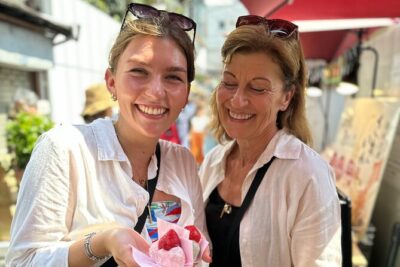
Tokyo: Tsukiji Fish Market Food and Walking tour
Read our review →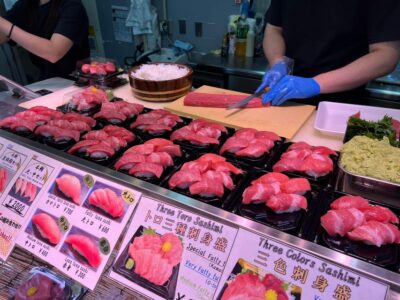
Tokyo: Tsukiji Fish Market Guided Walking Tour
Read our review →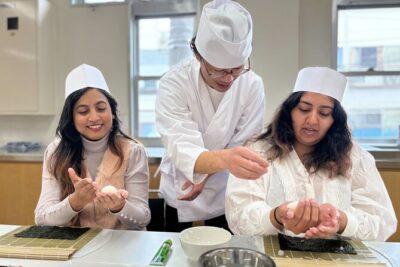
Tokyo Sushi Making Class in Tsukiji with Professional Chef
Read our review →
Tsukiji Fish Market Guided Tour and Sushi Making with Pro Chef
Read our review →Tokyo: Tsukiji Fish Market Food and Culture Walking Tour
Read our review →
Tsukiji Fish Market: Street Food & Culture Walking Tour
Read our review →