REVIEW · TOKYO STREET FOOD TOURS
Tokyo: Guided Walking Tour of Tsukiji Market with Lunch
Tsukiji is best understood one bite at a time. This 165-minute walk takes you from the Indian-inspired exterior of Tsukiji Hongwanji Temple into the market’s narrow lanes, where wholesalers, food stalls, and specialty shops work close together. You get nine tastings, not just a look around.
I like the small group size, which makes it easier to keep up and ask questions. I also like the way the food connects to Japanese religion and daily culture, especially when the guide explains why certain ingredients and dishes matter.
The catch is value. At $113 per person, this is not a cheap lunch, and the food is tasting-sized rather than a grand meal. If you expect premium sushi at every stop, you may leave disappointed. Clear expectations matter here.
Key points at a glance
- Nine tastings in one market walk: Try seafood or beef skewers, omelette, tuna sushi, rice balls, dessert, tea, dashi, and more.
- A useful meeting point: Tsukiji Hongwanji Temple is only about 50 meters from Tsukiji Station’s Exit A1.
- Small groups of 10 or fewer: This helps your guide manage queues and keep the group together in tight market lanes.
- Guides who add local context: Guides such as Hide, Tomoko, Yumiko, and Sachiko have been praised for their market and cultural explanations.
- A real market atmosphere: You pass working wholesalers, restaurants, stalls, and shops rather than visiting a staged food attraction.
- Best for curious eaters: It suits you if you want orientation, explanation, and many small samples more than a luxury dining experience.
Starting at Tsukiji Hongwanji Temple

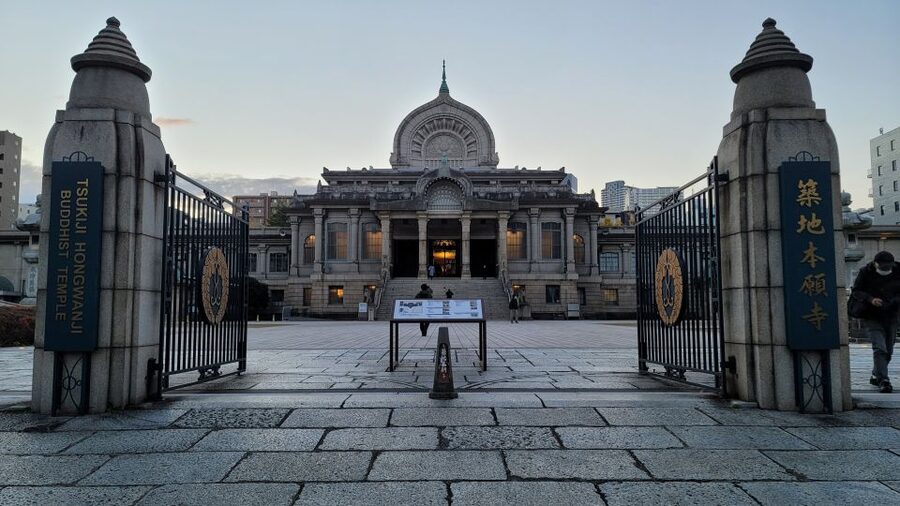
Meet in front of Tsukiji Hongwanji Temple, an easy spot to reach from Tokyo’s Hibiya Line. Take Tsukiji Station Exit A1, turn left, and the temple entrance is about 50 meters away. That short walk from the station is useful in a city where meeting points can otherwise be hard to find.
The tour begins with the temple’s exterior. Its design has an unusual Indian-inspired look, quite different from the wooden Buddhist temples many people picture in Japan. You do not go inside as part of this experience, but the building gives the walk a good cultural opening.
This first stop also sets up one of the tour’s stronger ideas: food in Japan is not treated as mere fuel. Religion, custom, season, respect for ingredients, and everyday habits all overlap. A good guide can make the later tastings feel connected rather than random.
The guide speaks English, and the group is limited to 10 people. That is a sensible number for Tsukiji, where lanes can be narrow and food counters may have little spare room. You should still arrive ready to walk at the group’s pace.
More Fish Market and Seafood Tours in Tokyo
- Tokyo Tsukiji Fish Market Food and Culture Walking Tour
★ 5.0 · 3,184 reviews - Tokyo: Tsukiji Fish Market Food and Walking tour
★ 5.0 · 1,724 reviews - Tokyo: Tsukiji Fish Market Guided Walking Tour
★ 4.9 · 1,397 reviews
Entering Tsukiji Outer Market
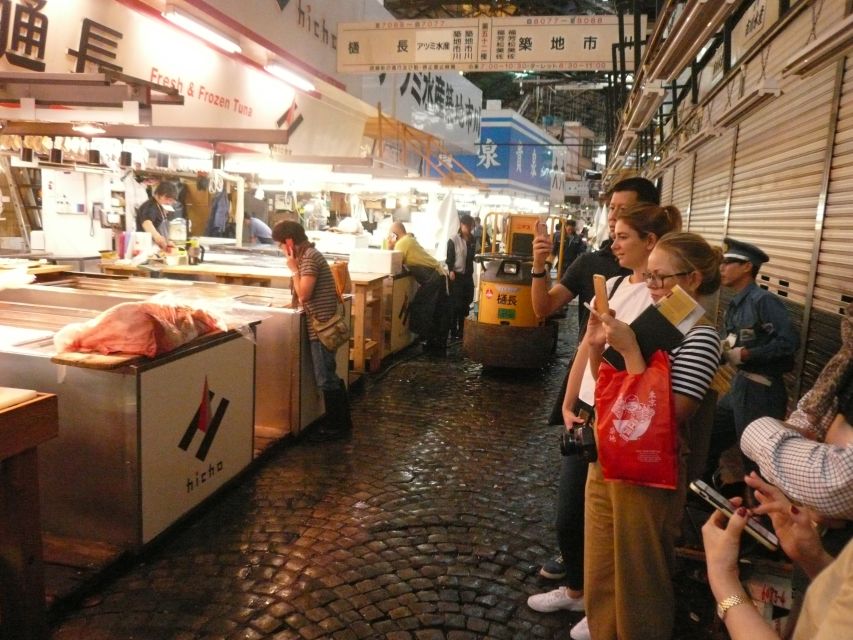
From the temple, you move into Tsukiji Outer Market, a famous food district filled with shops, restaurants, stalls, and businesses linked to seafood and Japanese cooking. The route covers a fairly compact area, so do not expect a long city hike or a tour of every corner.
The compact route has two sides. It keeps the experience manageable and gives you more time to understand what you are seeing. But one three-star assessment described the area covered as small, with some of the allotted time feeling stretched. If you have already explored Tsukiji on your own, the walk may feel familiar unless the guide’s explanations add a new layer.
That explanation is the main reason to book. On your own, you can see counters of fish, unusual products, and busy workers, but you may not know what is worth trying or how the market operates. A guide can point out details you would otherwise pass without noticing.
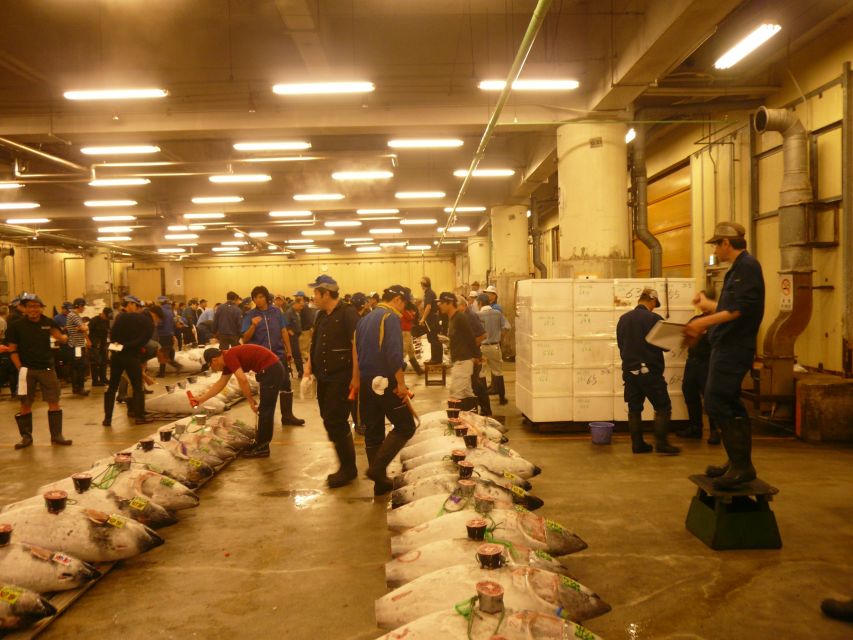
The market is not presented as a quiet museum. Expert wholesalers are busy at work, and you should expect an active commercial setting. Be polite, stay out of working paths, and follow the guide closely. This is a place where people are earning a living, not simply posing for photographs.
Nine tastings, from skewers to dashi
The food is served as a series of samples during the walk. The exact order can vary, but the planned selection covers a broad range of Japanese flavors and textures:
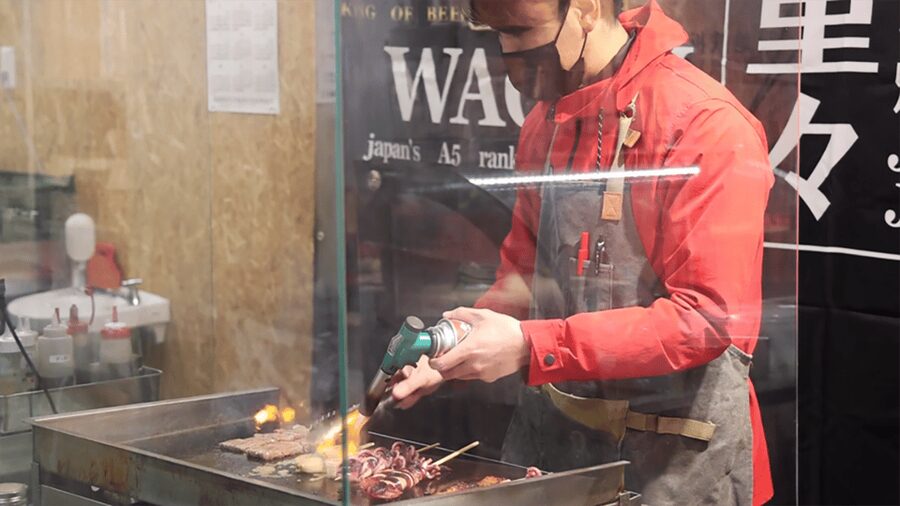
- Grilled seafood or beef skewers
- Wagyu beef or yakitori-style skewers
- Japanese omelette
- Tuna sushi
- Fried fish paste skewers
- Filled rice balls
- Dessert
- A drink
- Japanese tea
- Dashi soup stock
The wording allows some variation, so you should not assume every tasting will be an expensive wagyu portion or a top-grade sushi serving. The attraction is range. In less than three hours, you sample grilled, fried, raw, sweet, savory, liquid, and tea-based flavors.
The Japanese-style omelette, often known as tamagoyaki, gives you a softer, slightly sweet taste that contrasts with seafood. Fried fish paste skewers show how fish is used in a form other than sushi. Filled rice balls offer a simple, filling counterpoint to the more delicate samples.
Tuna sushi is included, but one unhappy assessment found the sushi average and the tuna mayonnaise rice balls underwhelming. Another described some grilled fish as greasy and the dessert as a strawberry-based item that did not make much of an impression. These comments are worth taking seriously, especially at this price.
Food quality can vary by stall, timing, and personal taste. A market tasting walk is not the same thing as a carefully plated restaurant meal. I would book this for the chance to try many local foods with guidance, not because every bite is guaranteed to be exceptional.
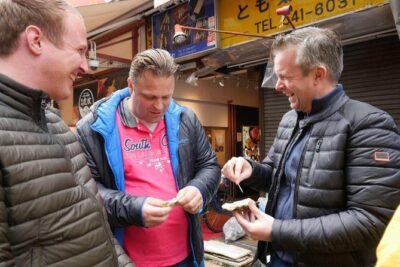
The strongest practical touch comes from the guides’ handling of the food. Tomoko was praised for queuing at stalls while the group looked around, and for bringing food boxes and cleaning wipes to keep the tastings organized. That kind of help matters in a crowded market, where juggling several samples can quickly become awkward.
What the guides add to the market

The guide can make or break this experience. The most warmly received guides include Hide, Tomoko, Yumiko, and Sachiko. Hide was praised for directing the group toward foods worth trying. Tomoko was described as relaxed and easy to follow, with useful explanations of the market’s culture and past.
Yumiko and Sachiko worked together, which helped with navigation and food handling. An assistant can be useful when one person is ordering or collecting samples while the other keeps the group together. You should not assume every departure includes the same guide or an assistant, but these examples show the kind of support that can shape the day.
The English level may also affect your experience. One assessment noted a language barrier at the start and felt the food did not match expectations. If you have detailed questions about ingredients, allergies, or preparation, ask early and clearly.
The tour is conducted in English. Its value comes partly from interpretation: why the market works as it does, how food connects with culture, and what you are looking at in the stalls. If you only want to eat and move on, you may find the explanations slow. If you want context, the walking format earns its place.
More Street Food Market Tours in Japan
- Tsukiji Fish Market Guided Tour and Sushi Making with Pro Chef
★ 5.0 · 775 reviews - Tokyo: Tsukiji Fish Market Food and Culture Walking Tour
★ 4.7 · 757 reviews - Tsukiji Fish Market: Street Food & Culture Walking Tour
★ 5.0 · 669 reviews - Tsukiji Fish Market Small-Group Food Walking Tour
★ 5.0 · 621 reviews
Is $113 a fair price?
At $113 per person, the price includes the guide and nine local specialties. It does not include a full restaurant meal or a private tour. The group is capped at 10, so you are paying for a hosted introduction to Tsukiji as much as for the food itself.
I would break the value into three parts. First, there is the food. Nine samples can add up, but portions are tasting-sized and the selection may include ordinary items such as rice balls, tea, or soup stock. Second, there is the guide’s time and market knowledge. Third, there is the convenience of having someone choose stops, explain dishes, and help with queues.
The price works better for a first visit to Tsukiji than for someone who has already eaten their way through the market. It also works better if you treat the tour as a cultural walk with food rather than a premium tasting menu.
A rating of 4.4 from 24 ratings suggests that the experience usually lands well, but it is not flawless. The highest praise centers on friendly guides, smooth navigation, useful history, and the feeling of seeing a different side of a familiar market. The lower scores focus on food quality, the compact route, and the gap between the advertised idea of a food tour and the actual samples.
That split gives you a clear booking test: if the guide and market access are worth about $113 to you, book it. If you mainly want outstanding sushi and generous portions, spend the money at a restaurant or explore the stalls independently.
Timing, walking, and accessibility
The tour lasts 165 minutes, or two hours and 45 minutes. That is long enough for a proper orientation and several stops without taking up your entire day in Tokyo. Check the available start times when booking, since the start time is not fixed in the details provided.
Wear comfortable shoes. You will be walking through market streets and standing at food stops, and the ground-level market setting is more practical than polished. The activity is listed as wheelchair accessible, though the narrow, active nature of market lanes means it is still sensible to confirm your own access needs before booking.
The meeting point is well served by public transport. Tsukiji Station on the Hibiya Line is the clearest route, with Exit A1 almost beside the temple. For a smooth start, aim to be at the temple entrance before the stated meeting time rather than trying to locate the group after entering the market.
The group size is limited to 10. That is small enough for questions and personal attention, but it is not a private tour. You will still need to share the guide and may need patience when a stall is crowded.
Who will enjoy this Tsukiji walk?
I would recommend it most strongly to a first-time Tokyo visitor who wants a gentle introduction to Japanese food customs. It is also a good fit if you are nervous about ordering alone, unsure which stalls are worth your time, or interested in the market’s working life as well as its snacks.
Families can also find the format useful. The tastings vary enough to keep the food experience moving, and the guides have handled groups with more than one guide or assistant. Still, picky eaters may not love every sample, and the $113 price adds up quickly for a family.
Food-focused visitors should look closely at their priorities. You will taste tuna sushi, grilled items, an omelette, dashi, tea, and sweets, but this is not a specialist sushi tour. It is also not a long list of high-end wagyu courses. The tour gives you breadth and guidance.
Repeat visitors to Tsukiji may get less from the route itself. The area covered is fairly small, and you may already know the main lanes. In that case, the guide’s cultural explanations and personal food recommendations need to be the reason you return.
Should you book it?
Book this tour if you want a guided introduction to Tsukiji, nine different tastes, and a small group that can move through the market without much fuss. Guides such as Hide, Tomoko, Yumiko, and Sachiko have made the experience especially strong through clear explanations, friendly help, and smart handling of queues and food.
Skip it if your main goal is a large meal or luxury-level sushi. The food can be ordinary, the route is compact, and $113 is a serious price for tasting portions.
My practical verdict: this is a good cultural food walk with uneven value as a meal. Go for the market access, context, and organization. Keep your expectations focused on sampling and learning, and Tsukiji should reward the time.
FAQ
Where does the tour meet?
Meet in front of Tsukiji Hongwanji Temple. From Tsukiji Station on the Hibiya Line, take Exit A1 and turn left. The temple entrance is about 50 meters from the station.
How long does the experience last?
The tour lasts 165 minutes, or two hours and 45 minutes.
How many food tastings are included?
Nine local specialties are included. The selection includes grilled seafood or beef skewers, Japanese omelette, tuna sushi, fried fish paste skewers, filled rice balls, dessert, a drink, Japanese tea, and dashi soup stock.
Is the tour conducted in English?
Yes. The live tour guide speaks English.
How large is the group?
The tour is limited to 10 participants.
Is the tour wheelchair accessible?
Yes, the activity is listed as wheelchair accessible.
What should I bring?
Bring comfortable shoes, since the experience involves walking through Tsukiji Outer Market.
More Street Food Walking Tours in Japan
- Tokyo Tsukiji Fish Market Food Tour: 15 Stops & Walk Local Street
★ 5.0 · 139 reviews - Tokyo: Guided Walking Tour of Tsukiji Market with Breakfast
★ 4.4 · 134 reviews - Tokyo: Tsukiji Market Walking Tour & Sushi Cooking Class
★ 4.6 · 122 reviews - Tokyo’s Kitchen: Tsukiji Market Food & Culture Walk
★ 4.7 · 74 reviews
More Street Food Market Tours in Tokyo
- Tokyo: Tsukiji Fish Market Sushi Making Class with Pro Chef
★ 4.9 · 506 reviews - Tokyo Food Tour Taste Fresh Delights at Tsukiji Market
★ 5.0 · 429 reviews - Tokyo Tsukiji Fish Market Tour and Sushi Making Lesson
★ 5.0 · 390 reviews - Tsukiji Fish Market: Street Food & Culture Walking Tour
★ 4.8 · 259 reviews
Just added around Tokyo
- Tokyo: Tsukiji walk & sushi private tour with Uni Students★ 5.0 · 17 reviews
- Tokyo: Private Tsukiji Street Food & Sake with Local Guide★ 5.0 · 3 reviews
- Tokyo: Tsukiji Market Guided Tour & Sushi-Making Experience★ 4.4 · 11 reviews
- Tokyo: Tsukiji Market and Hama-rikyu Gardens Guided Tour★ 4.8 · 73 reviews
- Tokyo Tsukiji Food & Culture Private Tour Licensed Guide★ 4.9 · 28 reviews
- Tokyo: Tsukiji Fish Market Foodie and Educational Tour★ 5.0 · 4 reviews
- Tokyo: Tsukiji Fish Market Culture Tour with Sashimi Tasting★ 4.6 · 54 reviews
- Tokyo: Tsukiji, Ginza, and Asakusa Japanese Culture Tour★ 5.0 · 2 reviews
Tokyo Street Food Tours, compared.
Tokyo Tsukiji Fish Market Food and Culture Walking Tour
Read our review →
Tokyo: Tsukiji Fish Market Food and Walking tour
Read our review →
Tokyo: Tsukiji Fish Market Guided Walking Tour
Read our review →
Tokyo Sushi Making Class in Tsukiji with Professional Chef
Read our review →
Tsukiji Fish Market Guided Tour and Sushi Making with Pro Chef
Read our review →Tokyo: Tsukiji Fish Market Food and Culture Walking Tour
Read our review →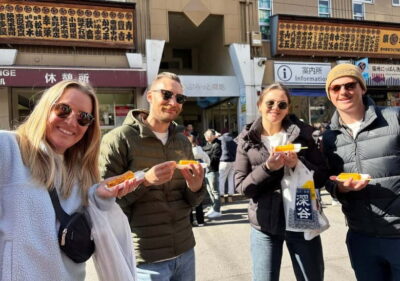
Tsukiji Fish Market: Street Food & Culture Walking Tour
Read our review →