REVIEW · TOKYO STREET FOOD TOURS
Tokyo Tsukiji Fish Market Food and Culture Walking Tour
Tsukiji is best understood with something to eat in your hand. This three-hour walk takes you through the outer market, where you can watch vendors handle tuna, uni, shellfish, and other seafood, then sample sushi or a seafood bowl, Wagyu beef, fish cakes, omelet, fruit, tea, and more. I like the local guide-led route and the chance to see where top chefs shop. I also like that guides such as Kiyo, Naz, Shoko, and Masa add food advice, market history, and help with shopping.
The main catch is that this is the outer Tsukiji market, not the old inner wholesale market or tuna auction. The food portions may feel light for the price, and the final meal may be sushi or a seafood bowl depending on the day. You also need to eat fish and accept that vegetarian, halal, gluten-free, and allergy-specific requests are not accommodated.
Key points to know before you book
- Start at Tsukiji Honganji Temple: Meet at the main gate, not the back side, and arrive early because the group leaves at the stated time.
- Taste a broad range of foods: Expect seafood, Wagyu beef skewers, fish cakes, Japanese omelet, seasonal fruit, dashi soup, green tea, and either sushi or a seafood bowl.
- Explore the outer market: You will see retail stalls and food shops rather than the former inner wholesale market and tuna auction.
- Guides make the difference: Past tour leaders have included Kiyo, Naz, Shoko, Masa, Yuki, Joy, and Nick, with strong praise for clear explanations and local food tips.
- Plan around market closures: The Uogashi wholesale section is closed Wednesdays, Sundays, and other market holidays, which means some tastings will not be available.
- Bring walking shoes and an appetite: The route lasts about three hours and includes plenty of standing and walking through crowded lanes.
Why Tsukiji works best as a guided food walk
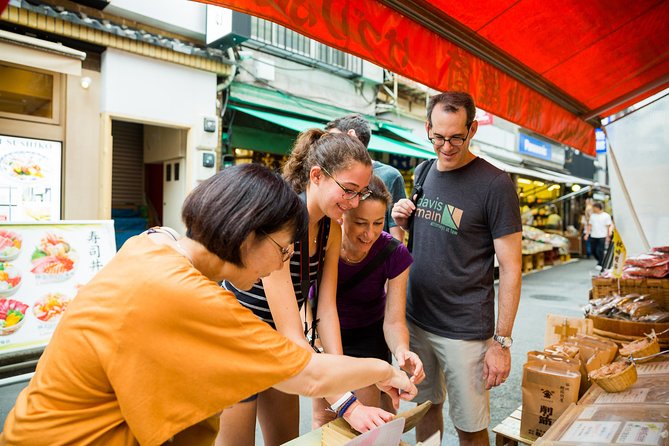
Tsukiji can look simple on a map, but the outer market is a tight maze of stalls, counters, shops, and narrow lanes. You can wander alone, of course. The trouble is knowing what is worth stopping for, what a strange-looking ingredient is, and how to buy without blocking the people who shop here every day.
That is where this tour earns its keep. Your guide meets you outside Tsukiji Honganji Temple, a memorable starting point in its own right, then leads you into the market. Along the way, you learn why Japanese cooks come here for fresh seafood, how the market changed after the inner wholesale operation moved, and how ordinary ingredients fit into Japanese cooking.
I especially like the mix of explanation and tasting. You are not simply marched from one food counter to another. At its best, the tour connects what you see with what you eat. A box of sea urchin becomes a lesson in seafood quality. A piece of fish cake or Japanese omelet becomes a small look at everyday Japanese food rather than just a photo stop.
The strongest part of the experience depends on your guide. Kiyo, Naz, Miky, Kayoko, Mieko, Yuki, Shoko, Sean, Take, Masa, Nick, Yuko, Joy, and others have led groups. The most praised guides explain food clearly, adjust their walking pace, answer questions, and point out shops you might miss alone. Smaller groups can make it easier to hear and leave room for a little shopping.
More Fish Market and Seafood Tours in Tokyo
- Tokyo: Tsukiji Fish Market Food and Walking tour
★ 5.0 · 1,724 reviews - Tokyo: Tsukiji Fish Market Guided Walking Tour
★ 4.9 · 1,397 reviews - Tokyo Sushi Making Class in Tsukiji with Professional Chef
★ 5.0 · 1,177 reviews
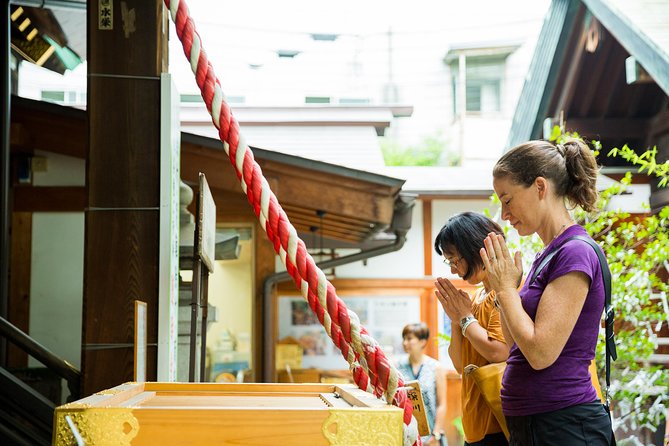
Meeting at Tsukiji Honganji Temple
The official meeting point is the main gate of Tsukiji Honganji Temple, at 3-chōme-15-1 Tsukiji, Chuo City. This detail matters. The instructions specifically warn you not to go to the back side of the temple, since map directions may lead you there.
Arrive before the start time. The group leaves promptly, and a late arrival does not extend the tour. There is also no refund for arriving late on the day, so build in time to find the gate and orient yourself.
The temple gives the walk a useful cultural opening. Some guides include a short look at the building and explain its unusual design before turning toward the market. It is an easy detail to skip on your own, but it helps set the tone for a morning about food, place, and custom.
Stop one: Tsukiji Jogai Market
The main portion of the walk takes place in Tsukiji Jogai Market, the outer market. Give this section about an hour and a half. It is where the tour has room to slow down, inspect ingredients, and sample several small foods.
You might see seafood vendors displaying fish and shellfish, boxes of uni, tanks with pufferfish, or workers cutting large bluefin tuna. These sights are not arranged for a formal show. They are part of a working food district, so your guide helps you understand what you are seeing without getting in the way.
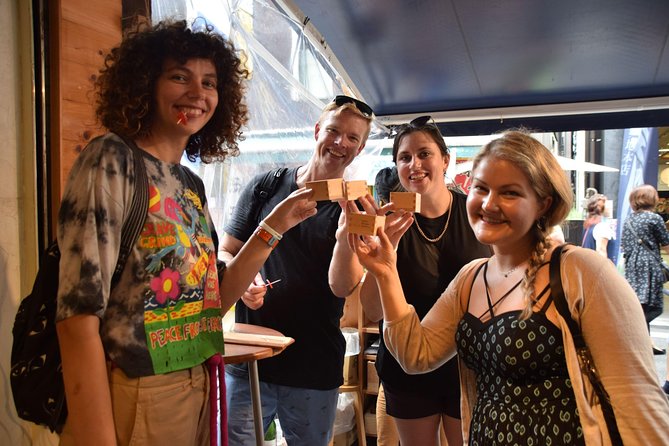
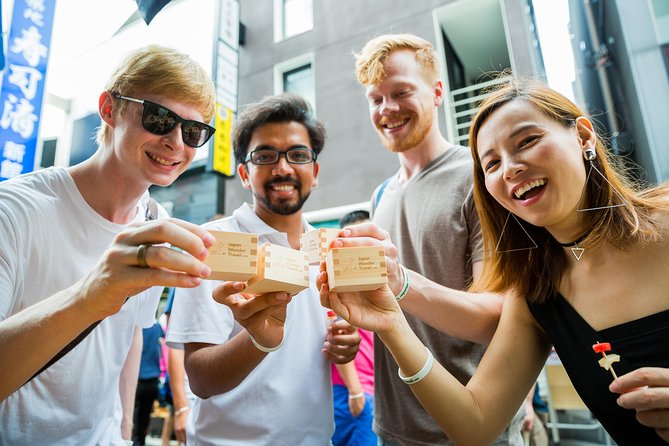
Tastings can include dashi soup, green tea, seaweed, fish cakes, Japanese omelet, seasonal fruit, and other snacks. Wagyu beef skewers are another possible highlight. The selection makes the experience useful for people who want more than sushi. Japanese cooking depends on far more than raw fish, and the route gives you a taste of that wider pantry.
The food is served in small portions as you walk. That is convenient in a crowded market, but it also explains the most important caution about value: do not assume this is a large breakfast or lunch replacement from the first bite. The tour includes lunch and snacks, yet one portion of the final meal may not satisfy a very hungry eater.
Some guides also help you choose items to take home. Shoko, for example, has been especially useful for explaining how she uses market ingredients and spices in her own cooking. That kind of advice is more practical than simply hearing a list of product names.
Stop two: Old Tsukiji Market and the food stops
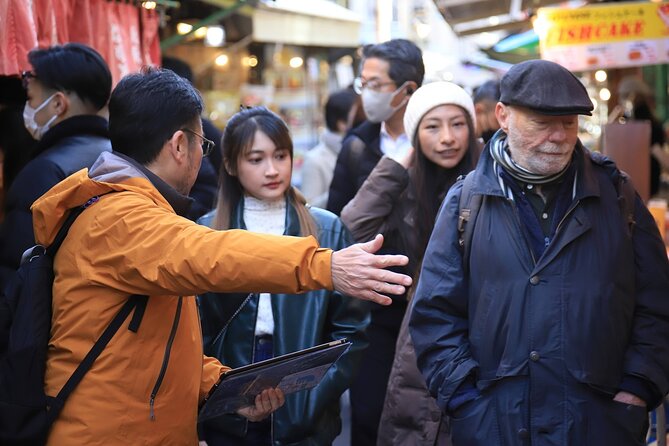
The next part lasts about 30 minutes and focuses on food. The name can confuse people, so set your expectations carefully. You are exploring the old Tsukiji area and its remaining market activity, not entering the former inner wholesale market.
This is one of the places where a guide adds real value. You may pass shops selling ingredients, prepared food, and kitchen goods while learning how local shoppers use them. If you want kitchen tools, the route can include a stop at a kitchenware shop.
The market is not a museum. It can be crowded, noisy, and active, with little space to pause. That is part of its appeal, but it can also make the tour feel slow if the group has to wait at several stalls. A patient guide who keeps everyone together without rushing is important here.
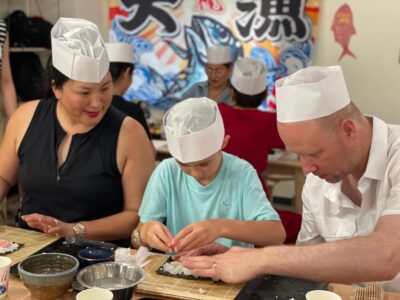
One possible food highlight is watching fish prepared at a restaurant before sitting down to eat. A group once had the chance to see sea bass prepared and then make sushi. That is not something you should treat as guaranteed, but it shows the kind of hands-on or behind-the-counter moment that can make the route memorable.
More Street Food Market Tours in Japan
- Tsukiji Fish Market Guided Tour and Sushi Making with Pro Chef
★ 5.0 · 775 reviews - Tokyo: Tsukiji Fish Market Food and Culture Walking Tour
★ 4.7 · 757 reviews - Tsukiji Fish Market: Street Food & Culture Walking Tour
★ 5.0 · 669 reviews - Tsukiji Fish Market Small-Group Food Walking Tour
★ 5.0 · 621 reviews
Stop three: Tsukiji Uogashi
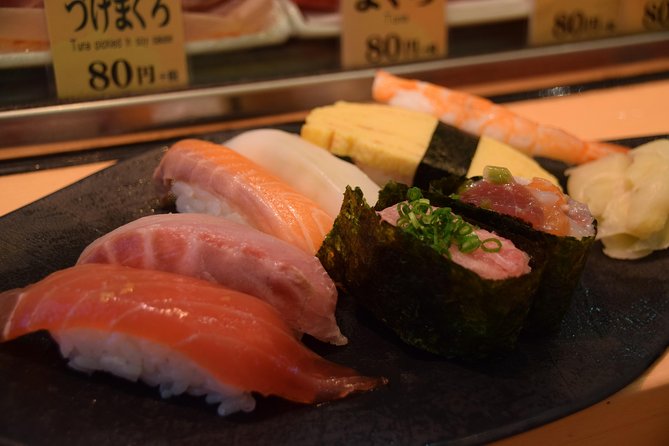
The Uogashi section takes about 30 minutes and offers a look at a small wholesale market with many kinds of fresh fish. This is a useful stop for anyone curious about how seafood reaches Japanese restaurants and home kitchens.
There is a scheduling issue. Uogashi is closed Wednesdays, Sundays, and other market holidays. On those days, the route changes, and some items, including Japanese omelet, fish cake, and fruit, cannot be served because the relevant shops are closed.
This is not a minor footnote if you are booking for a particular food. Check the day before paying, especially if you care about seeing the wholesale section. The tour still operates on closed-market days, but the experience will not be identical.
Also remember that Uogashi is not the famous former inner market. If your main goal is the old tuna auction or a behind-the-scenes visit to the original wholesale floor, this is the wrong product. You will see the outer market and a smaller wholesale area, not the former auction experience.
Stop four: Sushi or seafood bowl
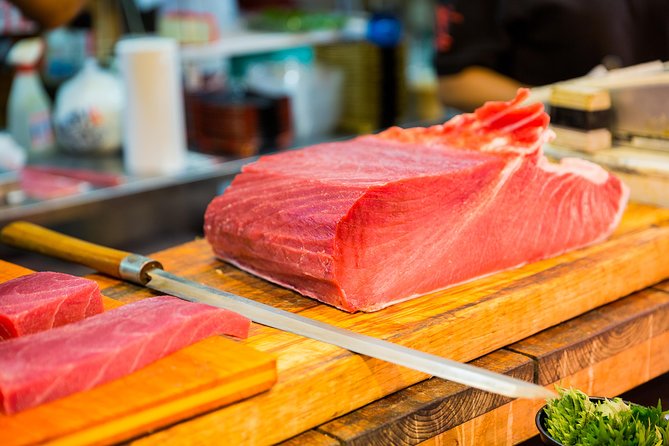
The final 30 minutes center on a proper serving of sushi or a seafood bowl. The exact choice depends on the day and time. You do not get to select between the two as a fixed menu option.
This ending gives the tour a clear finish. After sampling small bites, you sit down for a more substantial seafood meal. Nick’s route, for example, has included a sashimi lunch at Moritaya, with a preparation demonstration and notably good fish. Other groups have had sushi, including eel, squid, tuna, and other seafood.
The restaurant stop is also the part most likely to split opinions. Some people find it a delicious payoff, while others feel the restaurant is too tourist-oriented or that the group has little choice once it arrives. I would book this for the market access and guide commentary first, with lunch as an included benefit rather than the sole reason to pay.
How much food do you really get?
The tour includes lunch and snacks, but the food arrives as a sequence of tastings, not a long restaurant meal. You might sample dashi, tea, seaweed, fish cakes, omelet, fruit, Wagyu, sushi, or a seafood bowl. The exact lineup changes with shop hours, market closures, and the day’s route.
For many people, that is enough for a satisfying morning. I like tasting several small foods because it gives you more range than ordering one dish at a restaurant. Still, I would not arrive completely empty-stomached if you need a large meal.
The seafood is central. You need to be comfortable eating fish, and the tour is not suitable if you cannot eat seafood. Vegetarian, halal, gluten-free, and allergy-related requests cannot be accommodated. The minimum drinking age is 20, and anyone younger receives another drink instead.
The guide can make or break the morning
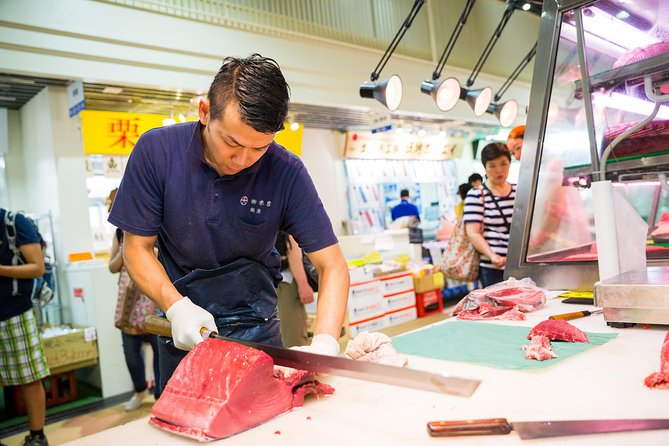
The experience gets its personality from the person leading it. Strong guides have made the market easier to read, especially for first-time visitors. Naz has been praised for finding foods that are easy to miss. Shoko has helped people choose ingredients and explained how she cooks with them. Masa has combined history, food, patience, and humor.
Nick’s approach has included urban sights alongside thoughtful tastings, ending with sashimi. Yuki has been clear and professional, including a sushi-making moment. Joy has helped people move through the crowds while keeping the mood friendly. Even returning visitors have found new corners with a guide such as Mitch.
That does not mean every departure will feel identical. Some guides are more energetic than others, and communication can vary. A few people have found the pace slow or the explanations difficult to follow. With a maximum of 20 people, the group is not guaranteed to be tiny, although some departures may have only four or even become a private-feeling walk outside peak season.
Price, pace, and practical value
At $99.49 per person, this is not the cheapest way to eat at Tsukiji. You can buy food at the market on your own for less, and independent visitors have more control over portions and restaurant choice.
The price makes more sense if you want a guide to handle the route, explain ingredients, introduce local customs, and lead you to several stops in three hours. It can also save time on a first visit, when the market’s choices and crowds make it hard to know where to begin.
I would call it good value for a first-time visitor who wants context and variety, but weaker value for someone who already knows Tsukiji and prefers to choose every bite. The guide’s help with ordering, shopping, and cultural details is the main thing you are paying for.
Wear comfortable walking shoes. You will spend much of the morning on your feet, and the route can be crowded. The meeting point is near public transportation, but transport to the temple and personal purchases are not included.
Free cancellation is available up to 24 hours before the start time. Inside that window, changes and refunds are not accepted.
Who should book this Tsukiji experience?
I would choose this tour for a first Tokyo visit, a food-focused morning, or a traveler who feels uneasy entering a busy market alone. It also suits curious eaters who want to try fish cakes, uni, Wagyu, eel, squid, Japanese omelet, and other foods beyond the standard sushi lineup.
It is a good fit for people who enjoy learning while they eat. The strongest guides connect the stalls to Japanese cooking, local customs, temple culture, and the market’s changing role in Tokyo.
I would skip it if you want the old inner wholesale market, a tuna auction, a large sit-down feast, or strict control over every restaurant stop. I would also skip it if you have dietary restrictions listed above, cannot eat fish, or dislike walking and standing.
Should you book the Tsukiji food walk?
Book it if you want a friendly introduction to the outer market and value a local guide more than a bargain meal. The best version gives you a full sensory morning: tea and dashi, fish and fruit, Wagyu and omelet, narrow market lanes, kitchen tools, temple architecture, and a final sushi or seafood bowl.
Just book with clear expectations. This is not the former wholesale market, the tasting portions are not unlimited, and the final restaurant meal varies. Arrive early at the correct temple gate, wear good shoes, check the market’s closed days, and come ready to eat seafood. Done on those terms, it is a practical and flavorful way to get your bearings in Tsukiji.
FAQ
Where does the Tsukiji food tour meet?
Meet at the main gate of Tsukiji Honganji Temple, at 3-chōme-15-1 Tsukiji, Chuo City, Tokyo. Do not go to the back side of the temple, since map directions may lead there.
How long does the tour last?
The experience lasts approximately three hours.
What food is included?
Included tastings may include dashi soup, green tea, seaweed, fish cakes, Japanese omelet, seasonal fruit, Wagyu beef skewers, and other market foods. The final meal is either sushi or a seafood bowl, depending on the day and time.
Is lunch included?
Yes. Lunch and snacks are included, although the exact lunch is either sushi or a seafood bowl.
Can I join if I am vegetarian or cannot eat fish?
No. The tour does not accommodate vegetarian, halal, gluten-free, or allergy-related requests, and you must be able to eat fish.
What should I wear?
Wear comfortable walking shoes because the tour is mainly on foot.
What happens if I need to cancel?
You can cancel for a full refund up to 24 hours before the experience start time. Cancellations or changes made less than 24 hours before the start are not accepted for a refund.
More Street Food Walking Tours in Japan
- Tokyo Tsukiji Fish Market Food Tour: 15 Stops & Walk Local Street
★ 5.0 · 139 reviews - Tokyo: Guided Walking Tour of Tsukiji Market with Breakfast
★ 4.4 · 134 reviews - Tokyo: Tsukiji Market Walking Tour & Sushi Cooking Class
★ 4.6 · 122 reviews - Tokyo’s Kitchen: Tsukiji Market Food & Culture Walk
★ 4.7 · 74 reviews
More Street Food Market Tours in Tokyo
- Tokyo: Tsukiji Fish Market Sushi Making Class with Pro Chef
★ 4.9 · 506 reviews - Tokyo Food Tour Taste Fresh Delights at Tsukiji Market
★ 5.0 · 429 reviews - Tokyo Tsukiji Fish Market Tour and Sushi Making Lesson
★ 5.0 · 390 reviews - Tsukiji Fish Market: Street Food & Culture Walking Tour
★ 4.8 · 259 reviews
Just added around Tokyo
- Tokyo: Tsukiji walk & sushi private tour with Uni Students★ 5.0 · 17 reviews
- Tokyo: Private Tsukiji Street Food & Sake with Local Guide★ 5.0 · 3 reviews
- Tokyo: Tsukiji Market Guided Tour & Sushi-Making Experience★ 4.4 · 11 reviews
- Tokyo: Tsukiji Market and Hama-rikyu Gardens Guided Tour★ 4.8 · 73 reviews
- Tokyo Tsukiji Food & Culture Private Tour Licensed Guide★ 4.9 · 28 reviews
- Tokyo: Tsukiji Fish Market Foodie and Educational Tour★ 5.0 · 4 reviews
- Tokyo: Tsukiji Fish Market Culture Tour with Sashimi Tasting★ 4.6 · 54 reviews
- Tokyo: Tsukiji, Ginza, and Asakusa Japanese Culture Tour★ 5.0 · 2 reviews
Tokyo Street Food Tours, compared.
Tokyo: Tsukiji Fish Market Food and Walking tour
Read our review →
Tokyo: Tsukiji Fish Market Guided Walking Tour
Read our review →
Tokyo Sushi Making Class in Tsukiji with Professional Chef
Read our review →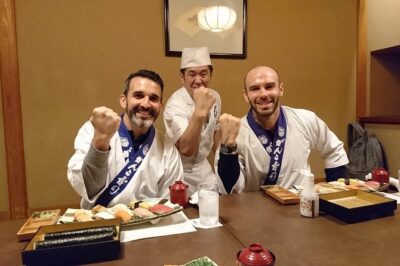
Tsukiji Fish Market Guided Tour and Sushi Making with Pro Chef
Read our review →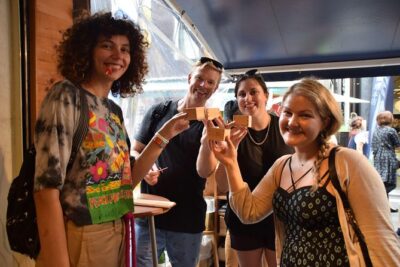
Tokyo: Tsukiji Fish Market Food and Culture Walking Tour
Read our review →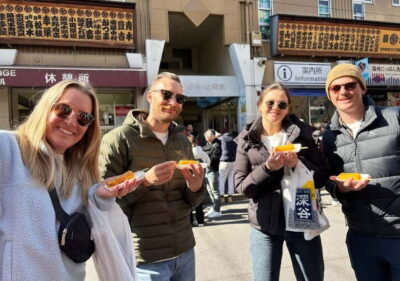
Tsukiji Fish Market: Street Food & Culture Walking Tour
Read our review →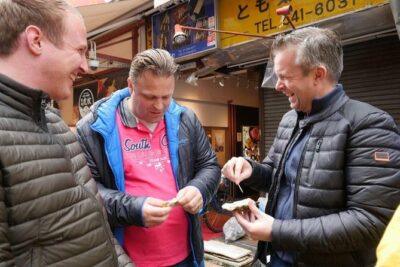
Tsukiji Fish Market Small-Group Food Walking Tour
Read our review →