REVIEW · TOKYO STREET FOOD TOURS
Tokyo : Tsukiji Fish Market Food Walking & Shrine Visit Tour
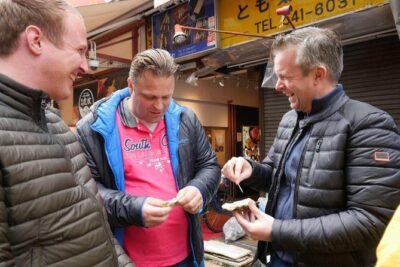
Tsukiji is best understood with your appetite switched on. This two-hour food walk takes you through the Outer Market for sashimi, Wagyu, fruit, tamagoyaki, tea, and umami soup, then adds a visit to Namiyoke Inari Jinja, where you learn how to worship at a Shinto shrine.
I like the six-person limit, which should make it easier to hear the guide and ask questions in tight market lanes. I also like the useful rhythm: eat, learn, visit the shrine, see the fish wharf, then return to the market with a better idea of where you may want to shop on your own.
The main consideration is timing. The tour includes many tastings, but it does not include lunch, and two hours passes quickly. Go hungry, as one German participant sensibly advised, and tell the company about allergies, vegetarian needs, or vegan needs before you arrive.
Key points to know before booking

- A full tasting menu in two hours: Try fresh sashimi, premium Japanese beef, fruit, tea, umami soup, and rolled omelette.
- A small group of six or fewer: The format allows for a more personal guide experience in crowded market lanes.
- Two start times: Choose 8:00 AM or 10:30 AM, depending on your morning plans and appetite.
- Namiyoke Inari Jinja adds cultural context: You learn the proper way to pray rather than simply passing through for a photo.
- Yuki has earned special praise: The English-speaking guide is noted for pointing out good things to try and explaining Tsukiji’s culture and past.
- The $90 price pays for guidance and tastings: It is most worthwhile if you want an organized introduction rather than a self-guided market visit.
Why this Tsukiji walk works well
Tsukiji Outer Market rewards curiosity, but it can also feel like a lot at once. There are food stalls, specialist shops, old customs, seafood displays, and narrow lanes where you may not know what to order or how to behave. This tour gives you a route and a guide, then lets the food do much of the talking.
You are not simply taken from one famous sight to another. The experience moves through the market in stages. First, you get an introduction to the area and its artisans. Then you stop at Namiyoke Inari Jinja to learn about Japanese religious practice. After that, you see the fish wharf and return to the market for more food and browsing.
That order makes sense. You begin with flavor, pause for culture, and finish with a second look at the market. By the end, you should have a short list of places you may want to revisit without the group.
The tour is conducted in English, and the guide meets you at the main gate of Tsukiji Hongwanji Temple. With groups limited to six participants, this is a better fit for you if you prefer a conversation over a formal lecture.
More Fish Market and Seafood Tours in Tokyo
- Tokyo Tsukiji Fish Market Food and Culture Walking Tour
★ 5.0 · 3,184 reviews - Tokyo: Tsukiji Fish Market Food and Walking tour
★ 5.0 · 1,724 reviews - Tokyo: Tsukiji Fish Market Guided Walking Tour
★ 4.9 · 1,397 reviews
Meeting at Tsukiji Hongwanji Temple
The meeting point is in front of the main gate of Tsukiji Hongwanji Temple. An English-speaking guide waits there for the group, with start times listed at 8:00 AM and 10:30 AM.
That location is practical because it gives you a clear landmark before entering the market. It also prevents the common problem of meeting deep inside a crowded shopping area, where signs and lanes can be confusing.
You should arrive ready to walk and eat. The tour lasts two hours, and lunch is not included. Think of the food as a substantial tasting route rather than a sit-down meal.
The early start may suit you best if you want a lively market atmosphere and a head start on the rest of your Tokyo day. The later start may work better if you prefer a slower morning. Either way, avoid a full breakfast. The tasting list is long enough to make breakfast unnecessary.
First look at Tsukiji Outer Market
The first market section lasts about 40 minutes and combines walking, guided explanation, photo stops, and shopping time. Your guide introduces Tsukiji through the people who work there, the products they handle, and the customs that shape the market.
This is where the guide matters most. A market can look like a string of shops when you walk alone. With someone explaining the work and pointing out notable foods, you get a clearer sense of why certain stalls matter and what deserves your attention.
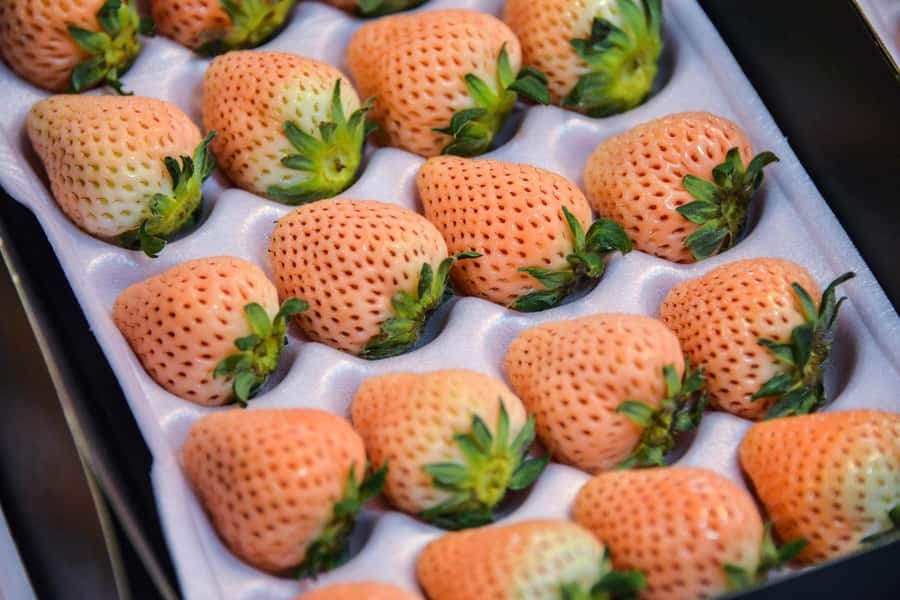
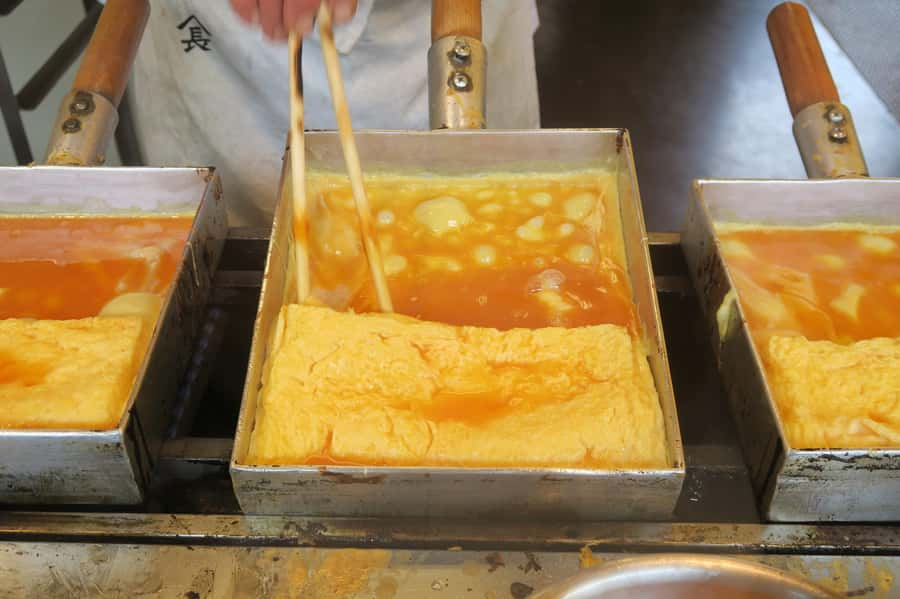
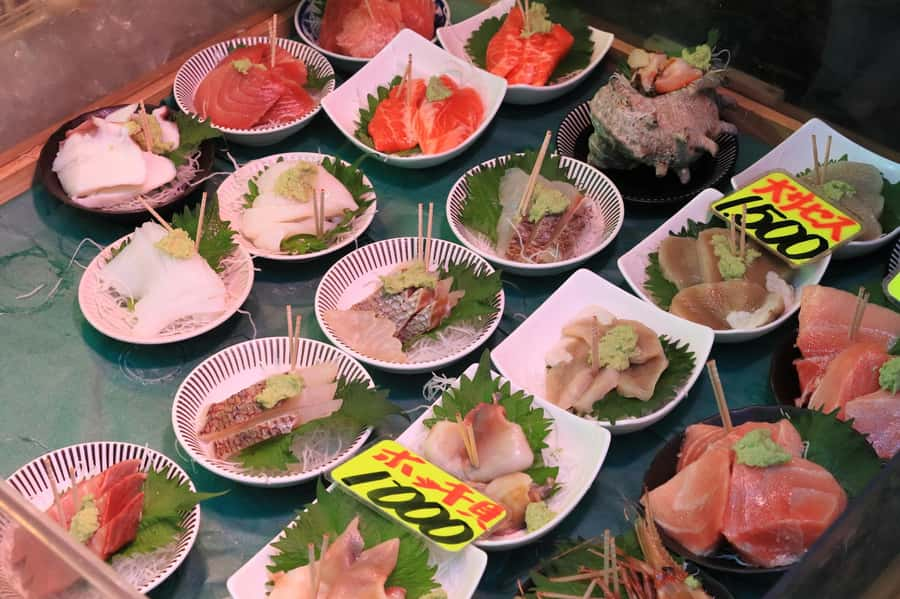
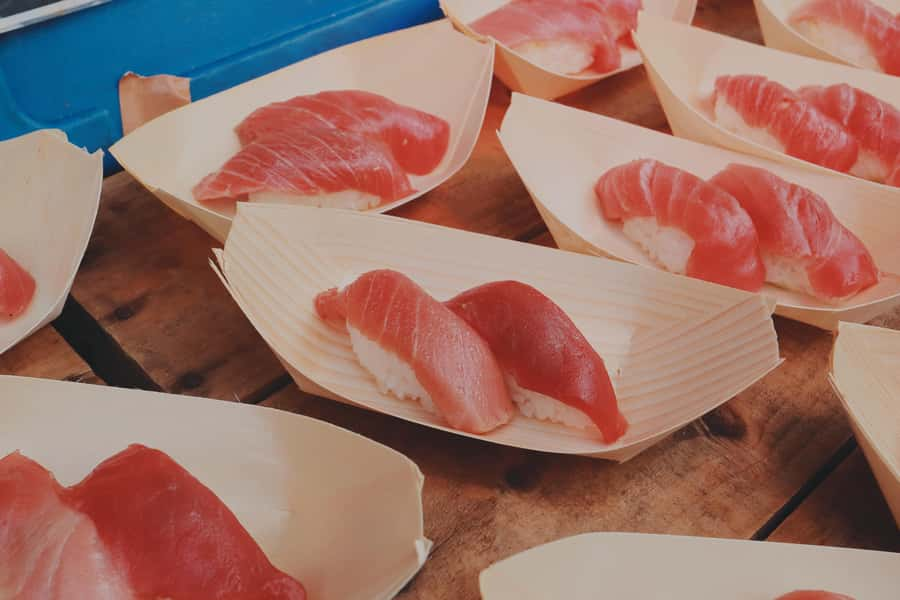
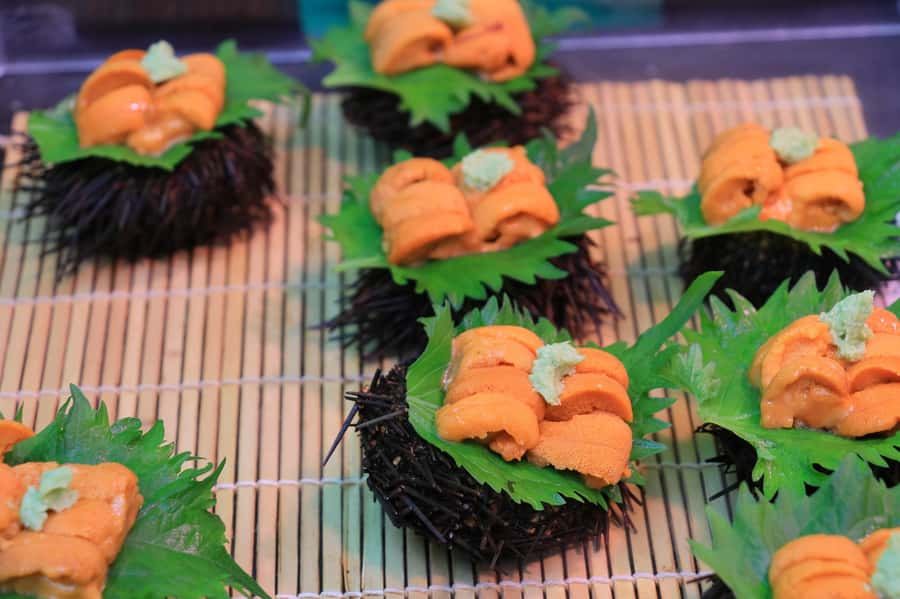
The food selection is the tour’s main draw. You can expect fresh seafood sashimi, premium Japanese Wagyu tasting, Japanese fruit, tea, umami soup, and tamagoyaki. These small portions let you sample several sides of Japanese food culture without committing to one large meal.
Sashimi gives you the direct taste of the sea that makes Tsukiji famous. Wagyu provides a very different experience, with premium beef as a contrast to the seafood. Fruit, tea, soup, and tamagoyaki round out the route with sweeter, warmer, and more familiar flavors.
You should listen closely when the guide explains how to approach each stop. The point is not only to eat. It is to understand what you are tasting and how the market connects food with craft and daily work.
Namiyoke Inari Jinja and the art of worship
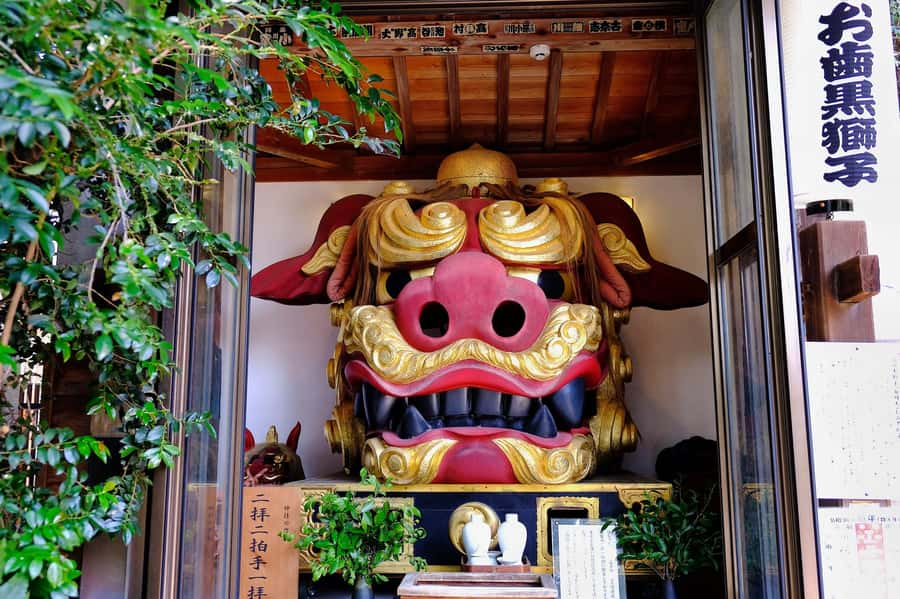
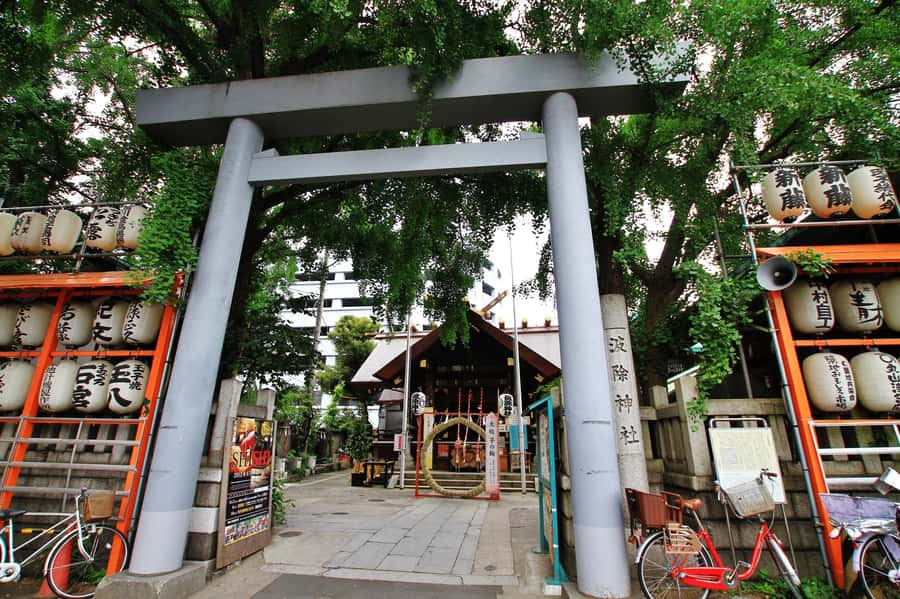
After the first market walk, the group visits Namiyoke Inari Jinja for about 30 minutes. This shrine stop gives the tour a welcome change of pace and connects Tsukiji’s food culture with Japanese religious tradition.
You learn about the myths connected to Japanese culture and the proper way to pray at a Shinto shrine. That practical instruction is valuable because many visitors know a shrine is important but are unsure what to do once they arrive.
The visit is not only a photo stop. You get a chance to practice the traditional method of worship under the guide’s direction. For you, that means the shrine becomes part of the experience rather than a quick backdrop between food stops.
The 30-minute visit is also long enough to ask questions without turning the tour into a long history lesson. If you are interested in local customs, this may be the most distinctive part of the morning. If you came only for food, it is still a useful pause that gives the tour more balance.
More Street Food Market Tours in Japan
- Tsukiji Fish Market Guided Tour and Sushi Making with Pro Chef
★ 5.0 · 775 reviews - Tokyo: Tsukiji Fish Market Food and Culture Walking Tour
★ 4.7 · 757 reviews - Tsukiji Fish Market: Street Food & Culture Walking Tour
★ 5.0 · 669 reviews - Tsukiji Fish Market Small-Group Food Walking Tour
★ 5.0 · 621 reviews
The fish wharf and Tsukiji’s working side
The route then moves to the fish wharf, described as the heart of Tsukiji. Here you observe how the fresh catch is handled and get a closer look at the working side of the market.
This portion helps explain why the earlier sashimi tasting matters. Seafood at Tsukiji is not just a finished dish on a plate. It depends on handling, timing, skill, and the people who work with the catch before it reaches the customer.
The information provided does not promise access to restricted work areas or a behind-the-scenes tour. You should expect observation from the public route, with your guide explaining what you are seeing.
That distinction is important. The wharf stop adds useful context, but it is not a private fishing or wholesale operation. You are there to watch and learn while respecting the working environment.
A second market pass with more food
The final market section lasts about 50 minutes. You return to Tsukiji Outer Market for more visits, food tastings, and photo opportunities.
This second pass is one of the tour’s smartest features. After the first round, you know more about the products and have had time to notice what interests you. You may now recognize a shop or ingredient that would have meant little to you at the start.
The guide can point out more food to try, including the listed sashimi, fruit, Wagyu, tea, soup, and tamagoyaki tastings. The exact order of the tastings may vary, but the overall plan is clear: sample several specialties, learn the market’s character, and leave with ideas for a return visit.
You also have shopping time. The tour does not include lunch, private transport, or a separate restaurant meal, so this is the point where you can decide if you want to buy additional food on your own.
I would treat the final market section as a scouting session. Make a note of shops you want to revisit, but do not feel you need to purchase everything during the group walk. You return to Tsukiji Hongwanji Temple at the end, so the route forms a simple loop.
What the $90 price really covers
At $90 per person, this is not the cheapest way to walk through Tsukiji. You can enter the Outer Market without joining a tour, and you can buy individual snacks on your own.
The value comes from the combination of food, explanations, shrine instruction, and a small group. You are paying for a guide to help you choose what to taste, explain the market’s customs, and connect the food with the working life of Tsukiji.
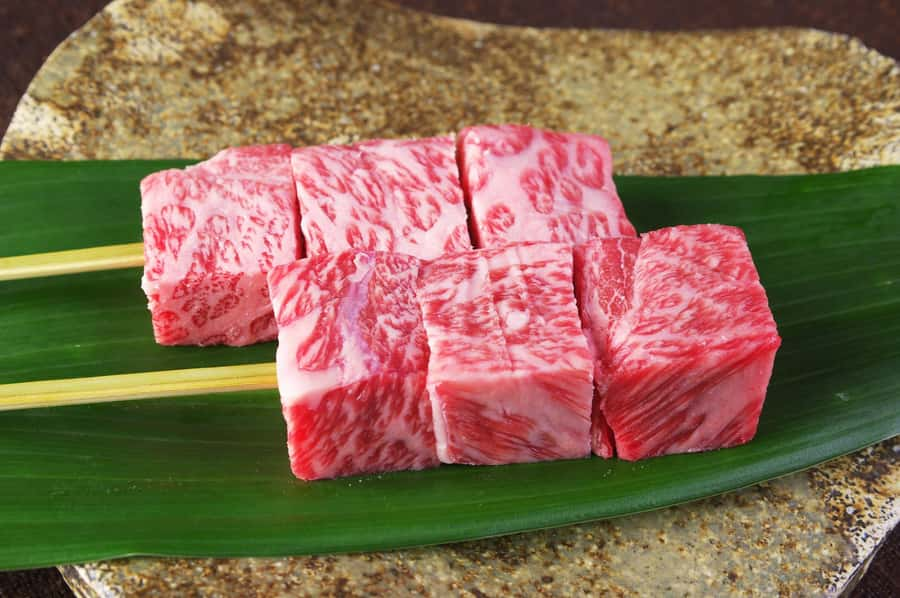
The included tasting list is substantial: fresh seafood sashimi, premium Japanese beef, fruit, Japanese tea, umami soup, and tamagoyaki. If you tried all of those independently, you would still need to know where to go and how to fit the stops into a short morning.
The price makes the most sense for a first visit, especially if you are nervous about ordering unfamiliar food or want cultural context along with breakfast-style tasting. It makes less sense for you if you already know Tsukiji well, speak Japanese comfortably, or prefer to wander without a schedule.
The tour’s five-star score comes from only three published ratings, so I would not treat it as a large statistical sample. Still, the specific praise is useful. Yuki is singled out for energy, guidance on what to try, and explanations of the market’s culture and past. That is exactly the kind of help this tour needs to justify its price.
Food needs and practical planning
Allergy, vegan, and vegetarian requests can be accommodated if you tell the company in advance. Do not wait until the meeting point. The tour centers on food, so the guide needs notice to adjust the tastings.
The standard menu includes seafood and Wagyu, but the company states that meals can be customized. Ask ahead about the exact substitutions available for your needs rather than assuming every item can be replaced in the same way.
The tour does not include lunch. For most people, the tastings should function as a generous morning meal, but you may want a later lunch depending on your appetite.
Wear comfortable shoes for walking. This is not a formal restaurant tasting, and the route includes the market, shrine, and fish wharf. The activity description does not promise private transportation, so plan to make your own way to the meeting point and away from the final stop.
Free cancellation is available up to 24 hours before the activity for a full refund. You can also reserve now and pay later, which helps if your Tokyo schedule is still changing.
Who should book this experience
This tour suits first-time visitors to Tsukiji who want a clear introduction without spending half a day planning food stops. It is also a good choice if you like small groups, direct access to an English-speaking guide, and a mix of eating and cultural instruction.
Food-focused visitors will appreciate the variety. You get seafood, beef, fruit, soup, tea, and tamagoyaki rather than repeating one category. People interested in Japanese customs will value the shrine visit and the chance to learn proper worship.
Families and mixed-interest groups may also find the format useful, provided everyone is comfortable with walking and tasting foods that may be unfamiliar. The group size of six keeps the experience more personal than a large coach-style outing.
You may want to skip it if you prefer a long, relaxed lunch, a private guide, or a self-directed market morning. Two hours is efficient, but it also means the route keeps moving. This is a guided introduction, not an all-day food crawl.
Should you book the Tsukiji food and shrine tour?
Book it if you want to taste widely and understand what you are seeing. The strongest parts are the small group, the mix of seafood and Japanese specialties, the shrine instruction, and the chance to learn from a guide such as Yuki.
Go hungry, tell the company about dietary needs in advance, and choose your start time carefully. At $90, the tour is worth considering when you value guidance and a planned tasting route more than the lowest possible cost.
If you already know Tsukiji or prefer total freedom, explore on your own. If you want a compact first look at the market with food, culture, and practical help in one morning, this is a sensible choice.
FAQ
Where does the Tsukiji tour meet?
The group meets in front of the main gate of Tsukiji Hongwanji Temple.
What time does the tour start?
The available starting times are 8:00 AM and 10:30 AM. You should check availability for your chosen date.
How long does the activity last?
The tour lasts two hours.
How many people are in the group?
The group is limited to six participants.
Is the tour conducted in English?
Yes. The activity includes an English-speaking live guide.
What food is included?
The tasting menu includes fresh seafood sashimi, Japanese fruit, premium Japanese Wagyu, Japanese tea, umami soup, and tamagoyaki.
Is lunch included?
No. Lunch is not included, although the tour includes several food tastings.
Does the tour visit a shrine?
Yes. The group visits Namiyoke Inari Jinja for about 30 minutes.
Can the food be adjusted for allergies or special diets?
Yes. Meals can be customized for allergies, vegan guests, and vegetarian guests if you inform the company in advance.
What is the cancellation policy?
You can cancel up to 24 hours before the activity for a full refund. You can also reserve now and pay later.
More Street Food Walking Tours in Japan
- Tokyo Tsukiji Fish Market Food Tour: 15 Stops & Walk Local Street
★ 5.0 · 139 reviews - Tokyo: Guided Walking Tour of Tsukiji Market with Breakfast
★ 4.4 · 134 reviews - Tokyo: Tsukiji Market Walking Tour & Sushi Cooking Class
★ 4.6 · 122 reviews - Tokyo’s Kitchen: Tsukiji Market Food & Culture Walk
★ 4.7 · 74 reviews
More Street Food Market Tours in Tokyo
- Tokyo: Tsukiji Fish Market Sushi Making Class with Pro Chef
★ 4.9 · 506 reviews - Tokyo Food Tour Taste Fresh Delights at Tsukiji Market
★ 5.0 · 429 reviews - Tokyo Tsukiji Fish Market Tour and Sushi Making Lesson
★ 5.0 · 390 reviews - Tsukiji Fish Market: Street Food & Culture Walking Tour
★ 4.8 · 259 reviews
Just added around Tokyo
- Tokyo: Tsukiji walk & sushi private tour with Uni Students★ 5.0 · 17 reviews
- Tokyo: Tsukiji Market Guided Tour & Sushi-Making Experience★ 4.4 · 11 reviews
- Tokyo: Private Tsukiji Street Food & Sake with Local Guide★ 5.0 · 3 reviews
- Tokyo: Tsukiji Market and Hama-rikyu Gardens Guided Tour★ 4.8 · 73 reviews
- Tokyo Tsukiji Food & Culture Private Tour Licensed Guide★ 4.9 · 28 reviews
- Tokyo: Tsukiji Fish Market Foodie and Educational Tour★ 5.0 · 4 reviews
- Tokyo: Tsukiji Fish Market Culture Tour with Sashimi Tasting★ 4.6 · 54 reviews
- Tokyo: Tsukiji, Ginza, and Asakusa Japanese Culture Tour★ 5.0 · 2 reviews
Tokyo Street Food Tours, compared.
Tokyo Tsukiji Fish Market Food and Culture Walking Tour
Read our review →
Tokyo: Tsukiji Fish Market Food and Walking tour
Read our review →
Tokyo: Tsukiji Fish Market Guided Walking Tour
Read our review →
Tokyo Sushi Making Class in Tsukiji with Professional Chef
Read our review →
Tsukiji Fish Market Guided Tour and Sushi Making with Pro Chef
Read our review →Tokyo: Tsukiji Fish Market Food and Culture Walking Tour
Read our review →
Tsukiji Fish Market: Street Food & Culture Walking Tour
Read our review →