REVIEW · TOKYO STREET FOOD TOURS
Tokyo: Tsukiji Fish Market Food and Culture Walking Tour
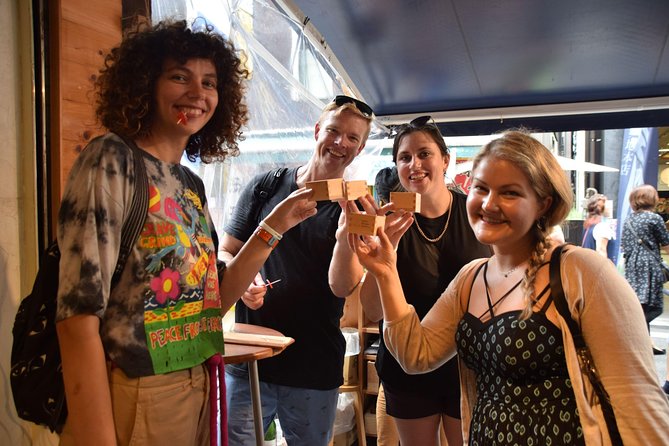
Tsukiji is best understood with a guide, especially when you are facing a maze of food stalls and have no idea which counter serves the good stuff. This three-hour walk takes you through the outer market, with stops for Wagyu beef, tamagoyaki, fish cakes, seasonal fruit, and sushi or a seafood bowl.
I like the small group size, limited to two to eight people, and the mix of food and local context. Guides such as Shun, Nazu, Kenji, and Miki have earned repeated praise for explaining market customs, helping with ordering, and keeping the pace friendly. The main catch is that the market is crowded, and some stalls close on Wednesdays, Sundays, public holidays, and other market-closure days.
Key points at a glance
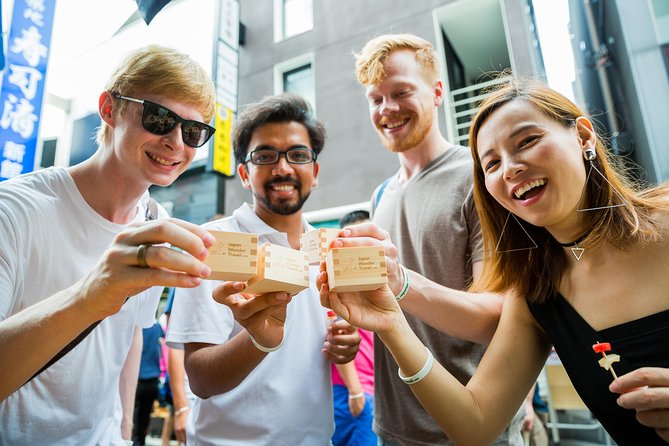
- Food-first introduction: Try Wagyu skewers, Japanese omelet, fried fish cake, fruit, and either sushi or a seafood bowl.
- A small group of two to eight: The format makes it easier to ask questions and stay with your guide in busy lanes.
- Tsukiji Honganji meeting point: You begin at the main gate of the distinctive temple beside the market.
- Market know-how: Your English-speaking guide explains what top chefs seek, how the market developed, and how to approach unfamiliar foods.
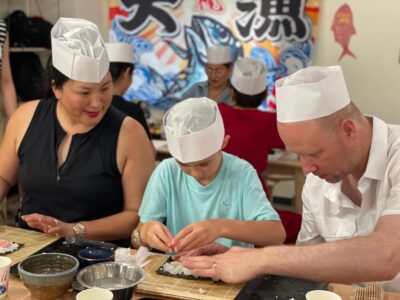
- A proper final meal: The tour ends with sushi or a seafood bowl, with a fish preparation demonstration on some outings.
- Important food limits: Vegetarian, vegan, halal, and gluten-free requests cannot be accommodated.
Starting at Tsukiji Honganji Temple
Your meeting point is the main gate of Tsukiji Honganji Temple, officially listed as 浄土真宗本願寺派 築地本願寺. It is a practical landmark beside Tsukiji Market and a much better meeting place than a random market alley.
Allow time to find the gate before the start. One person who missed the train connection was able to join partway through, but that is not something to plan on. The market is crowded enough without arriving in a panic.
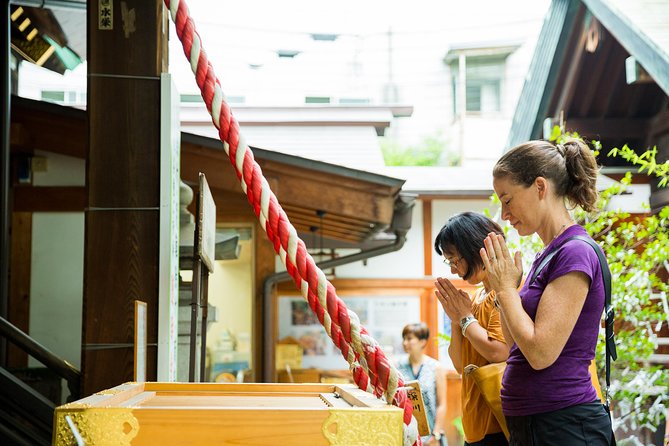
The temple also gives the outing a useful cultural opening. Guides have explained the temple’s history, local customs, and proper shrine or temple etiquette before leading the group into the food lanes. One guide even showed visitors the cleansing ritual. That short introduction helps you see Tsukiji as more than a place to collect snacks.
Wear shoes you can walk in for three hours. The route is not suitable for wheelchair users or people with mobility impairments, and there is a moderate amount of walking. Comfortable clothes matter too, since you will spend much of the morning moving through crowded market lanes.
More Fish Market and Seafood Tours in Tokyo
- Tokyo Tsukiji Fish Market Food and Culture Walking Tour
★ 5.0 · 3,184 reviews - Tokyo: Tsukiji Fish Market Food and Walking tour
★ 5.0 · 1,724 reviews - Tokyo: Tsukiji Fish Market Guided Walking Tour
★ 4.9 · 1,397 reviews
Finding your way through the outer market
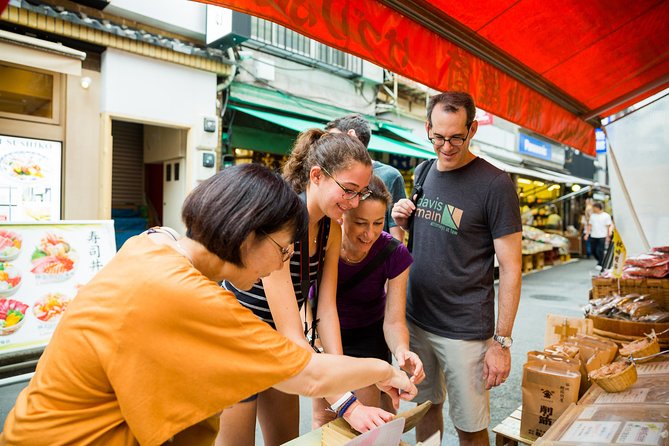
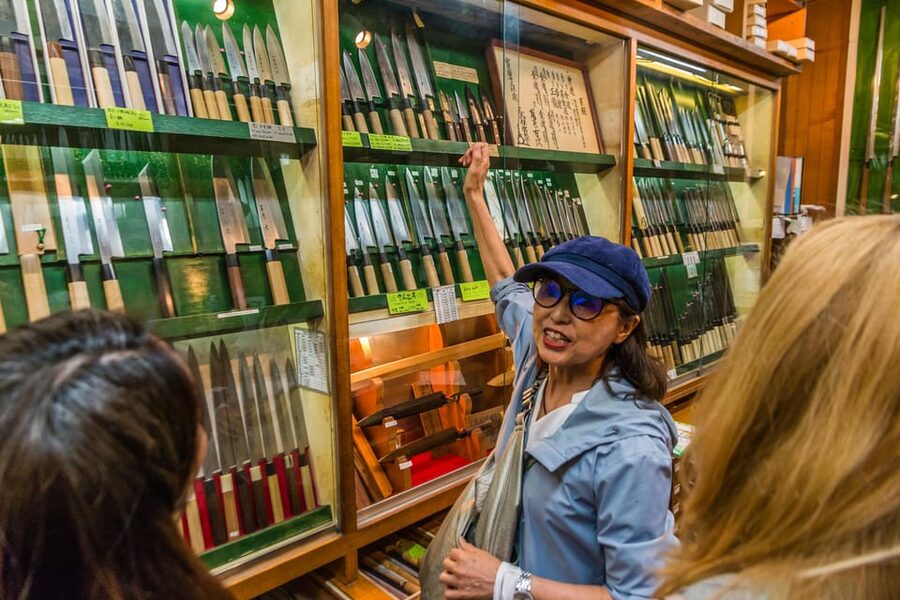
The first market segment is a guided walk of about 30 minutes, followed by roughly two and a half hours of food stops and exploration. You are not simply marched from one tasting to the next. The guide points out fish and shellfish sellers, specialty shops, prepared foods, and ingredients used in Japanese cooking.
This is where the tour earns its keep. On your own, it is easy to choose a stall because it looks busy or because the food is easy to recognize. Your guide can explain what you are looking at, how it is eaten, and which foods are worth your limited stomach space.
The market is narrow, crowded, and full of competing smells. That is part of the fun, but it can also make Tsukiji tiring. Rain creates a further problem because umbrellas, people, and shop awnings make it harder to hear. Stay close to the guide and ask for explanations to be repeated if the lane gets noisy.
The group limit of eight helps. A group of four, as one outing had, feels almost personal. You can ask questions without holding up a large crowd, and the guide can watch the pace more closely. Still, the market remains a working food district, not a quiet museum. Shopkeepers are serving customers, and you should follow the guide’s lead about where to stop.
The tasting route, from Wagyu to seasonal fruit
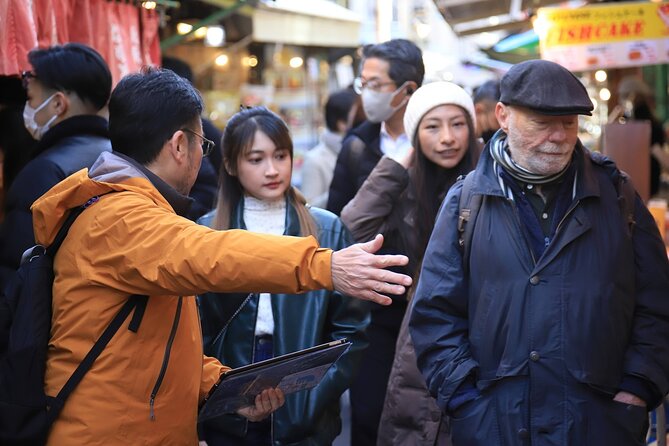
The food is the main reason to book this experience, and the included menu covers a useful range of Japanese market food. The exact order and selection can vary, but the planned tastings include:
- High-grade Wagyu beef skewers
- Fresh fish in a seafood bowl or sushi
- Japanese omelet, or tamagoyaki
- Seasonal fruit
- Fried fish cake
- Other small samples along the route
The Wagyu skewer is often the food highlight. It gives you a rich, hot bite without committing to a full restaurant meal. Several guides have taken groups to especially good beef stalls, and one group went back after the tour to buy another skewer. That is a good sign for anyone who wants a memorable first taste of Japanese beef.
Tamagoyaki is a different experience. This sweet-savory Japanese omelet is soft, warm, and easy to overlook when you are distracted by raw fish and grilled meat. A guide can explain why it is common in market food culture and help you understand the difference between a quick snack and a more formal meal.
Fish cakes and seasonal fruit add variety. The fruit can be especially good when the market is carrying its best produce, though availability depends on the season and the shops that are open. The fried fish cake offers a simple, savory stop between richer foods.
Do not expect every bite to be an expensive delicacy. One participant felt that the middle tastings were less special than the Wagyu and final fish dish. That is a fair point. The tour’s value comes from the total route, the guidance, and the chance to try several categories of food, not from every sample being a luxury item.
You should also budget for anything you buy beyond the included menu. Guides may help you choose tea, fruit, seafood, or another snack, but those personal purchases are not part of the $96 price.
The final sushi or seafood bowl
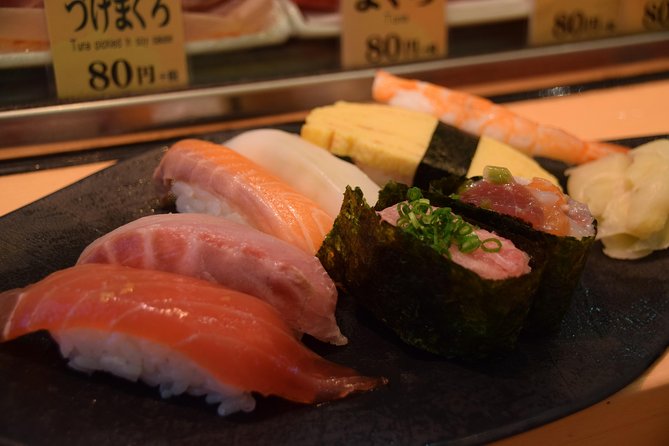
The meal at the end gives the tour a satisfying finish. Depending on the day, you receive either sushi or a fresh fish bowl. The operator does not promise one specific option, so choose this tour for the market experience rather than for a guaranteed seafood bowl.
On some outings, a sushi chef demonstrates how to cut and prepare the fish before serving the dish. That turns lunch into a short lesson rather than a plate simply placed in front of you. It also helps you connect the market stalls with the work that happens in a Japanese sushi kitchen.
The seafood bowl can be substantial, especially after several samples. If you eat breakfast before the tour, keep it light. The route is designed to leave you well fed, and one guide described the final stop as a fun presentation as well as a meal.
Alcohol is not listed as included. If you order sake or beer, expect to pay separately. The minimum drinking age in Japan is 20, and this outing is primarily about food and culture rather than drinking.
If the scheduled restaurant suddenly closes, an alternative meal is provided. That protects the basic structure of the tour, but it cannot guarantee the precise restaurant or dish you may have imagined.
More Street Food Market Tours in Japan
- Tsukiji Fish Market Guided Tour and Sushi Making with Pro Chef
★ 5.0 · 775 reviews - Tsukiji Fish Market: Street Food & Culture Walking Tour
★ 5.0 · 669 reviews - Tsukiji Fish Market Small-Group Food Walking Tour
★ 5.0 · 621 reviews - Tokyo: Tsukiji Fish Market Sushi Making Class with Pro Chef
★ 4.9 · 506 reviews
What the guides add to the experience
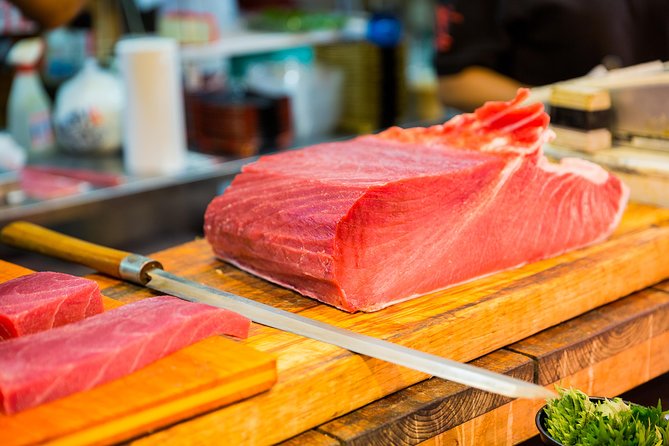
The guides are the strongest part of this outing. Names praised repeatedly include Shun, Nazu, Miki, Kenji, Robert, Luna, Yuki, Yoshiko, and Nazu. You cannot count on receiving a particular person, but the pattern is clear: the guide’s role is much more than pointing at stalls.
Shun has been described as especially warm, clear, and entertaining, with strong explanations of Japanese food and culture. Nazu has helped people understand the market’s past while explaining food choices. Robert has combined history, humor, and practical help, including recommendations for places to visit after the tour.
Miki, Kenji, Luna, Yuki, and Yoshiko have also been praised for keeping the walk friendly and easy to follow. Guides have helped visitors choose tea to take home, find foods they would not have tried alone, and understand how to behave at a temple.
You should value this help if you are nervous about ordering in a crowded Japanese market. A guide can bridge the gap between seeing a tray of unfamiliar seafood and deciding what you actually want to eat.
The history component varies with the guide and the pace of the group. Some outings included detailed explanations of the inner and outer markets and the evolution of the neighborhood. Another person wanted more history and found the outing stronger as a food introduction. If history is your main goal, ask questions early and make your interest clear.
Timing, crowds, and market closure days
The market is active in the morning, but early does not mean empty. An 8:30 Saturday outing encountered heavy crowds, even with some drizzle. Midweek can be calmer, but the day must be chosen carefully.
The fish market and some shops are closed on Wednesdays, Sundays, public holidays, and other designated closure days. On those dates, the Japanese omelet, fish cake, and fruit may not be available because the relevant shops are closed. The tour may still run, but the food selection and market atmosphere will be different.
This is the most important booking detail. Check the market calendar before choosing your date, especially if you are visiting on a public holiday. The tour information does warn about closures, but it is easy to miss among the other booking details.
Rain does not automatically ruin the outing, but it makes the walking harder. Umbrellas take up space, stalls feel tighter, and hearing the guide becomes more difficult. If you have flexibility, choose a dry weekday and avoid the busiest morning periods.
Is $96 a fair price for three hours?
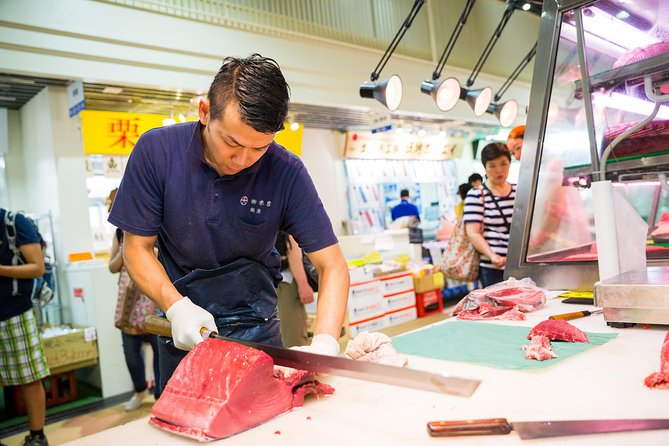
At $96 per person, this is not a cheap snack crawl. You are paying for several tastings, a final sushi or seafood meal, an English-speaking guide, and the convenience of moving through Tsukiji with someone who knows the area.
The value is strongest for a first visit. If you do not speak Japanese, have only one morning in Tsukiji, or feel unsure about ordering from small stalls, the guide can save time and prevent disappointing choices. The small group also makes the experience more personal than a large bus-style tour.
The value is weaker if you already know Tsukiji well or prefer to browse slowly and choose every dish yourself. You will have less freedom to linger at one stall because the group follows a set route. Some tastings are simple, and the exact selection changes with shop hours and market conditions.
I would also treat the included food as a full breakfast and lunch combination, not as a series of tiny samples. You receive enough food to make the price easier to justify, especially when the Wagyu and final seafood dish are included.
Free cancellation up to 24 hours before the start and the option to reserve now and pay later make it easier to fit into a changing Tokyo schedule. Those policies do not solve the market-closure issue, so check both the cancellation terms and the date before committing.
Who should book this Tsukiji walk?
This tour suits you if you want a guided first look at Japanese market food without spending time researching individual stalls. It is especially useful for couples, solo visitors, and small groups who enjoy trying several foods but want help with ordering and context.
It also works well early in a Tokyo visit. You can use the guide’s tips for the rest of your trip, including ideas about food, tea, nearby sights, and Japanese etiquette. Save time afterward to return to shops that caught your eye. One of the best features of the tour is getting a map in your head before exploring on your own.
You should skip it if you are vegan, vegetarian, require halal or gluten-free food, or need wheelchair access. The tour cannot accommodate those dietary requests, and the walking conditions are not suitable for limited mobility.
You may also prefer a self-guided visit if you want a quiet pace or dislike group schedules. Even with eight people or fewer, Tsukiji itself is crowded, and the guide cannot remove that pressure.
Should you book the Tsukiji Market Food and Culture Walking Tour?
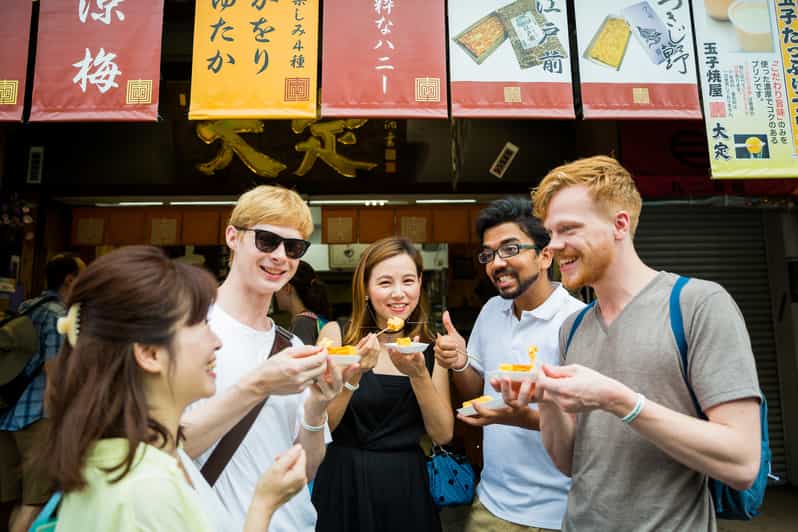
I would book it for a first Tokyo visit, particularly on a weekday when the market shops are open. The combination of Wagyu, tamagoyaki, fish cake, fruit, and a final sushi or seafood dish gives you a broad introduction to Tsukiji, while guides such as Shun, Nazu, Kenji, and Miki add the local detail that is hard to get by wandering alone.
Book with realistic expectations. The food selection can change, some middle tastings may feel less impressive than the main stops, and the market can be loud and crowded. If you accept those limits, $96 buys a useful three-hour orientation, a proper meal, and a much better chance of finding the good stuff without guessing.
FAQ
Where does the Tsukiji food tour meet?
You meet your English-speaking guide at the main gate of Tsukiji Honganji Temple, listed as 浄土真宗本願寺派 築地本願寺.
How long does the tour last?
The tour lasts three hours. It includes about 30 minutes of guided market walking followed by roughly two and a half hours of guided exploration and food tasting.
What food is included?
The included menu features high-grade Wagyu beef skewers, Japanese omelet, seasonal fruit, fried fish cake, and either sushi or a fresh seafood bowl, depending on the day.
Is sushi or a seafood bowl guaranteed?
No. The final dish depends on the day. The tour provides either sushi or a seafood bowl, and an alternative is offered if the planned restaurant suddenly closes.
Does the tour run when Tsukiji Market is closed?
The fish market and some shops are closed on Wednesdays, Sundays, public holidays, and other market-closure days. The tour may still operate, but the omelet, fish cake, and fruit may not be available on those dates.
Can vegetarians, vegans, or people with dietary restrictions join?
The tour cannot accommodate vegetarian, vegan, halal, or gluten-free requests. It is also not suitable for wheelchair users or people with mobility impairments.
More Street Food Walking Tours in Japan
- Tokyo Tsukiji Fish Market Food Tour: 15 Stops & Walk Local Street
★ 5.0 · 139 reviews - Tokyo: Guided Walking Tour of Tsukiji Market with Breakfast
★ 4.4 · 134 reviews - Tokyo: Tsukiji Market Walking Tour & Sushi Cooking Class
★ 4.6 · 122 reviews - Tokyo’s Kitchen: Tsukiji Market Food & Culture Walk
★ 4.7 · 74 reviews
More Street Food Market Tours in Tokyo
- Tokyo Food Tour Taste Fresh Delights at Tsukiji Market
★ 5.0 · 429 reviews - Tokyo Tsukiji Fish Market Tour and Sushi Making Lesson
★ 5.0 · 390 reviews - Tsukiji Fish Market: Street Food & Culture Walking Tour
★ 4.8 · 259 reviews - Private Toyosu & Tsukiji Market Adventure with Tuna Auction
★ 4.8 · 191 reviews
Just added around Tokyo
- Tokyo: Tsukiji walk & sushi private tour with Uni Students★ 5.0 · 17 reviews
- Tokyo: Private Tsukiji Street Food & Sake with Local Guide★ 5.0 · 3 reviews
- Tokyo: Tsukiji Market Guided Tour & Sushi-Making Experience★ 4.4 · 11 reviews
- Tokyo: Tsukiji Market and Hama-rikyu Gardens Guided Tour★ 4.8 · 73 reviews
- Tokyo Tsukiji Food & Culture Private Tour Licensed Guide★ 4.9 · 28 reviews
- Tokyo: Tsukiji Fish Market Foodie and Educational Tour★ 5.0 · 4 reviews
- Tokyo: Tsukiji Fish Market Culture Tour with Sashimi Tasting★ 4.6 · 54 reviews
- Tokyo: Tsukiji, Ginza, and Asakusa Japanese Culture Tour★ 5.0 · 2 reviews
Tokyo Street Food Tours, compared.
Tokyo Tsukiji Fish Market Food and Culture Walking Tour
Read our review →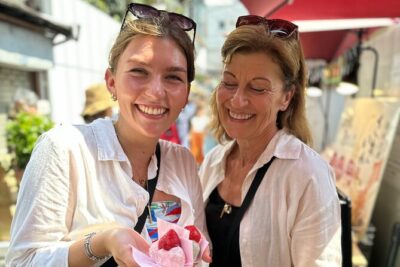
Tokyo: Tsukiji Fish Market Food and Walking tour
Read our review →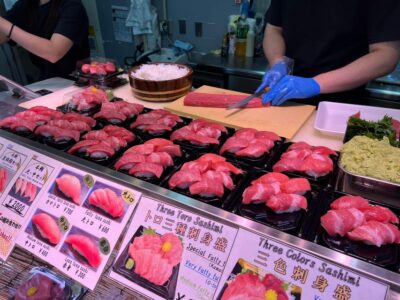
Tokyo: Tsukiji Fish Market Guided Walking Tour
Read our review →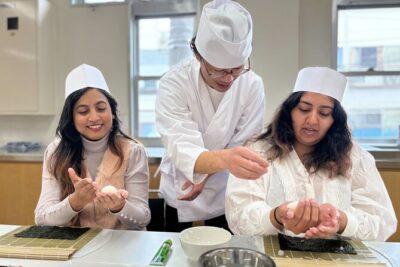
Tokyo Sushi Making Class in Tsukiji with Professional Chef
Read our review →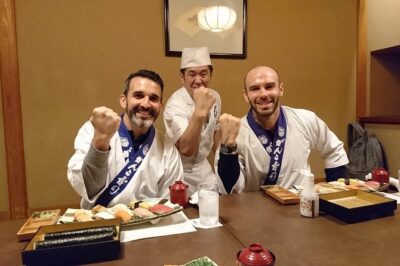
Tsukiji Fish Market Guided Tour and Sushi Making with Pro Chef
Read our review →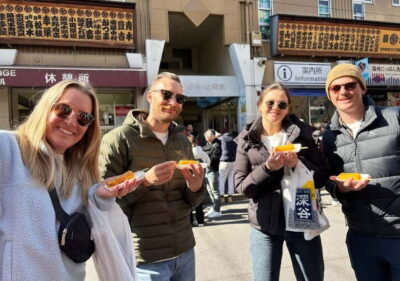
Tsukiji Fish Market: Street Food & Culture Walking Tour
Read our review →
Tsukiji Fish Market Small-Group Food Walking Tour
Read our review →