REVIEW · TOKYO STREET FOOD TOURS
Tsukiji Fish Market: Street Food & Culture Walking Tour
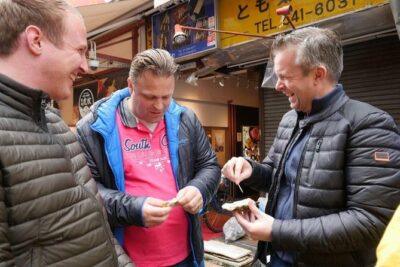
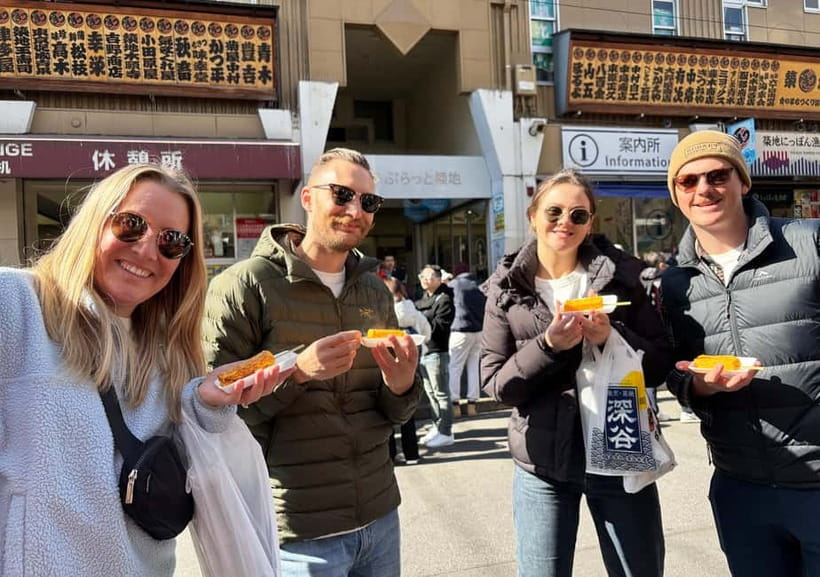
Tsukiji is best understood one bite at a time. This two-hour walking tour begins at Tsukiji Hongwanji Temple, then moves through the outer market for tuna, wagyu, grilled seafood, traditional snacks, and the occasional surprise. The food is only half the story. Your guide explains how Japanese cooks preserve ingredients, build umami, and choose the right seasoning.
I like the calm temple introduction and the useful fresh wasabi set, which gives you a better sense of how the real thing changes a bite of fish. I also like the flexible tasting style. You can sample what interests you and spend more or less on extra food as you go. The main drawback is the calendar: on Wednesdays, Sundays, and national holidays, roughly half the market shops may be closed.
Key points before you book
- Fresh wasabi changes the tasting experience: The guide’s special wasabi set adds a sharp, fragrant note to seafood and other dishes.
- The temple gives the market context: A 20-minute visit to Tsukiji Hongwanji Temple introduces local customs, architecture, and purification rituals before the food stops begin.
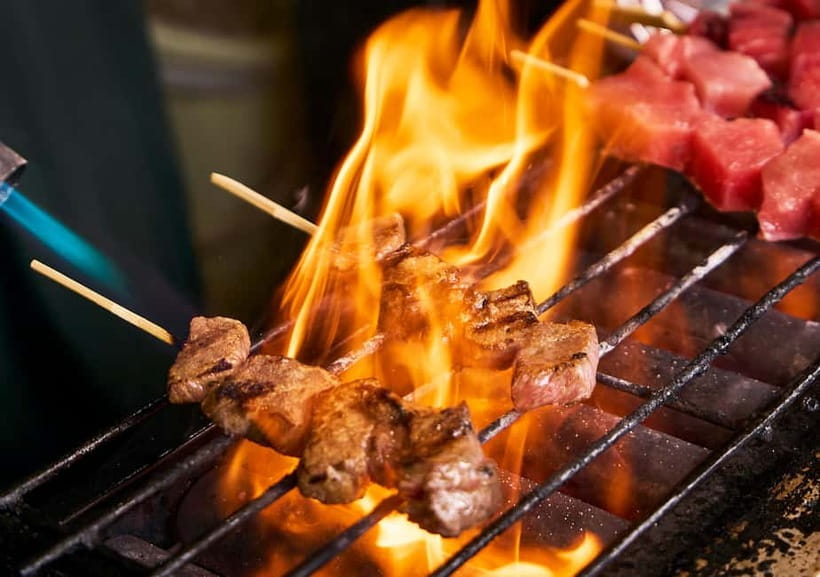
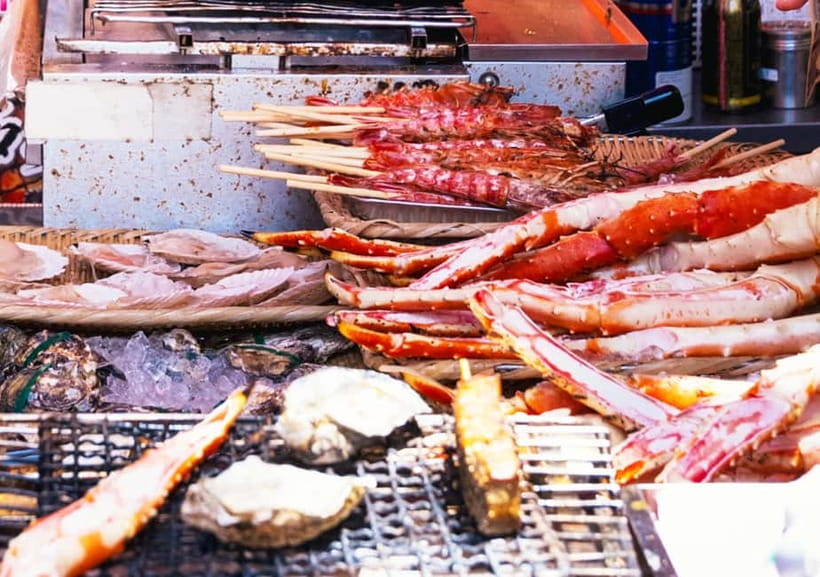
- Expect more than sushi: Tuna, wagyu, eel, grilled scallops, fish cakes, omelets, dumplings, skewered octopus, and other traditional foods may appear along the route.
- The guide matters here: Guides including Kawa, George, Mao, Tomo, Kenny, Chihiro, and Daichi have been praised for explaining ingredients, finding good-value stalls, and adjusting tastings to personal preferences.
- Bring cash: Food choices beyond the included tasting can require additional payment, and cash is specifically recommended.
- Choose your day carefully: Wednesdays, Sundays, and national holidays can be much quieter because many shops close.
Starting at Tsukiji Hongwanji Temple
The meeting point is at Tsukiji Hongwanji Temple, whose coordinate is 35.66661467955698, 139.77199430835137. Your exact meeting arrangement can vary by booking option, so check the details before setting out.
The temple is a smart starting point. Its grand exterior and detailed carvings give you a pause from Tokyo’s traffic and prepare you for the food culture ahead. Inside, the atmosphere is quieter and more reflective than the market streets. The guided visit lasts about 20 minutes, enough time to hear about the temple and learn the purification procedure used before entering a shrine or temple area.
I appreciate this opening because it prevents Tsukiji from becoming just a succession of snacks. You get a brief look at the customs and religious setting that shape everyday Japanese life, then move into the practical world of shopping and cooking.
This part is also useful for first-time visitors who are unsure how to behave at religious sites. Your guide can explain what to do instead of leaving you to copy the nearest person. The temple is not the main event, but it gives the tour a better rhythm.
More Fish Market and Seafood Tours in Tokyo
- Tokyo Tsukiji Fish Market Food and Culture Walking Tour
★ 5.0 · 3,184 reviews - Tokyo: Tsukiji Fish Market Food and Walking tour
★ 5.0 · 1,724 reviews - Tokyo: Tsukiji Fish Market Guided Walking Tour
★ 4.9 · 1,397 reviews
Reading the Tsukiji Outer Market
The principal part of the tour takes place in Tsukiji Outer Market. The guided market visit and food tasting run for about 80 minutes, followed by another 20-minute guided segment through the market area. In practice, that gives you a focused introduction rather than enough time to inspect every lane and shop.
The outer market is a place for ingredients, prepared food, kitchen goods, and small specialty shops. You may see seafood, spices, preserved products, ceramics, and other items tied to Japanese cooking. Your guide helps you understand what you are looking at and, just as important, which foods are worth your limited appetite and budget.
That local direction is where the $22 price earns its keep. You could walk through Tsukiji on your own, but it is easy to spend time at random stalls or miss the reason one ingredient costs more than another. A guide can explain cooking uses, preparation methods, and the customs behind the food instead of leaving you with a quick photo and no context.
Several guides have been praised for taking personal preferences seriously. George has directed people toward good food at reasonable prices, while Kawa has adjusted the route to suit different tastes and explained ingredients in clear English. Tomo, Mao, Kenny, Chihiro, and Daichi have also been singled out for friendly explanations and practical recommendations.
The guide names are not guaranteed. They vary by date and group, but the pattern is useful: the experience depends heavily on the person leading it. A good guide turns a crowded market into a readable one.
What you might taste in 80 minutes
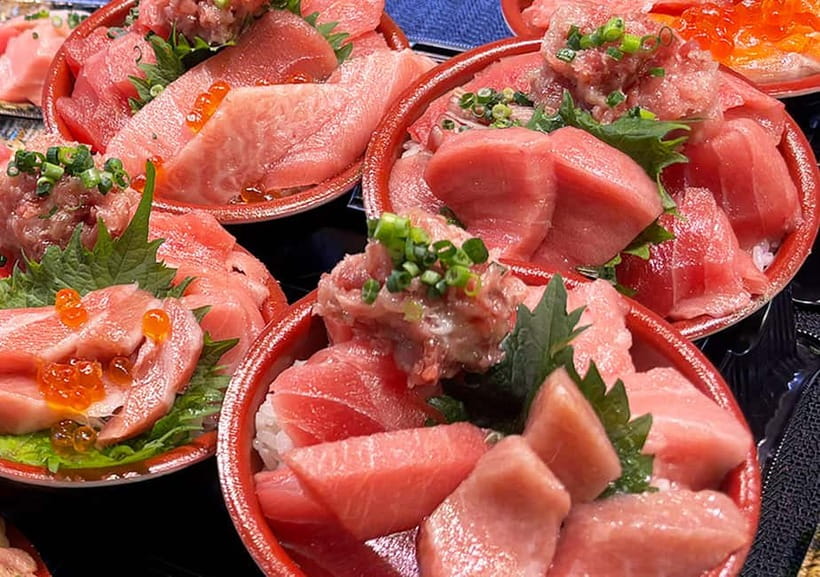
Come hungry, but do not eat nothing all morning if you are sensitive to rich food. The tastings can add up quickly, especially when you combine seafood, wagyu, dumplings, grilled items, and sweets or snacks.
Tuna is one of the natural highlights. You may see it prepared for sushi or sashimi, and some tours include a fish-cutting demonstration. Watching a large piece of fish become neat portions helps explain the value of knife work and careful handling. It also gives you a clearer idea of how much skill sits behind a simple-looking piece of sushi.
Wagyu is another popular stop. A wagyu sirloin skewer has been a favorite for some participants, and it offers a useful contrast to raw seafood. The meat is rich, so sharing or choosing a smaller portion may make sense if you want room for several other tastes.
Other foods mentioned along the route include eel, grilled scallops, fish cake, omelet, dumplings, skewered octopus, sushi, and sashimi bowls. You might also encounter rice snacks, unusual seafood, or ingredients you have never tried. The exact selection depends on open shops, market conditions, and your guide’s route.
The tour is not simply a fixed meal. You are encouraged to choose what appeals to you, and the guide can explain what you are buying. This is especially helpful if you have never faced a Japanese market counter and do not know the difference between a familiar-looking item and a local specialty.
Fresh wasabi and the craft behind the food
The special wasabi set is one of the more distinctive touches. Freshly grated wasabi has a cleaner, more fleeting heat than the common green paste served with inexpensive sushi. It can sharpen fish without covering its flavor.
Your guide may pair it with seafood or another tasting. Use a small amount first. The point is to notice the fragrance and short burst of heat, not to bury the food under a mound of seasoning.
The wider lesson is about balance. Japanese cooking often depends on preserving the character of an ingredient, then adding just enough salt, sweetness, heat, or acidity to make it clearer. The guide can also explain traditional preservation techniques and how they build umami over time.
That explanation gives the market visit lasting value. You are not just learning where to eat lunch. You are learning why dried, fermented, cured, or pickled ingredients matter in Japanese cooking. Once you understand that, you may look at the stalls differently during the rest of your trip.
More Street Food Market Tours in Japan
- Tsukiji Fish Market Guided Tour and Sushi Making with Pro Chef
★ 5.0 · 775 reviews - Tokyo: Tsukiji Fish Market Food and Culture Walking Tour
★ 4.7 · 757 reviews - Tsukiji Fish Market: Street Food & Culture Walking Tour
★ 5.0 · 669 reviews - Tsukiji Fish Market Small-Group Food Walking Tour
★ 5.0 · 621 reviews
A fish market tour that is also a shopping lesson
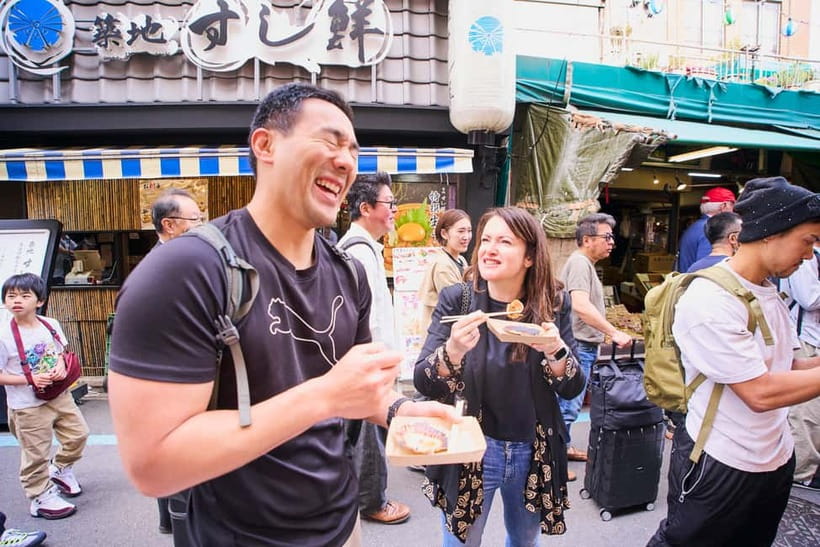
One strength of this experience is the chance to see how locals shop for food. The guide can point out ingredients used at home, cooking tools, snacks to take away, and specialty products that are easy to overlook.
Some people use the market visit to buy rice snacks or other food for later. Others browse ceramics and kitchen-related goods. You should keep your purchases manageable because the tour is on foot and the market can be crowded.
I would treat the shopping advice as a bonus rather than the main reason to book. The tour is short, so you will not have unlimited time to compare every shop. Still, a guide’s suggestions can prevent a poor-value purchase and help you find something connected to Japanese cooking rather than a generic souvenir.
The food guidance is also practical for cautious eaters. If you are unsure about an ingredient or preparation method, ask. The guides have been praised for identifying what is in a dish and explaining how it was cooked. That can give you the confidence to try something new without ordering blindly.
Timing, crowds, and closed shops
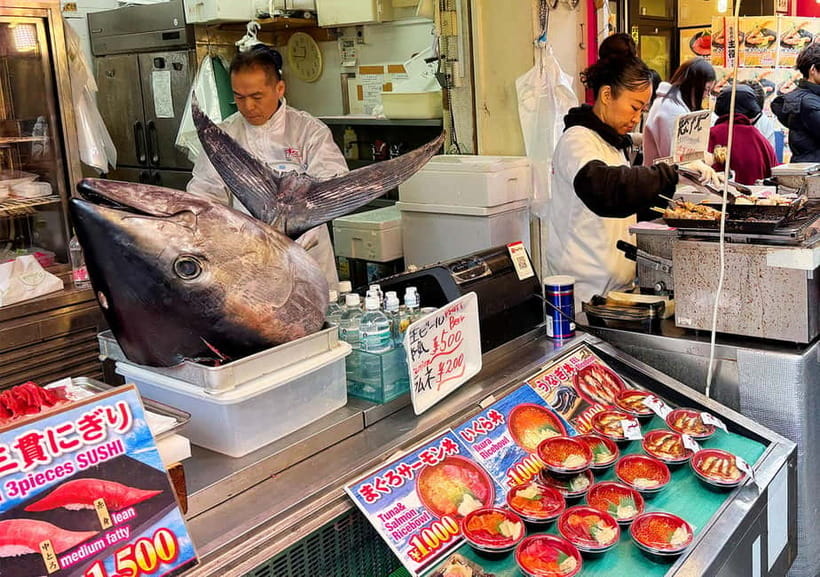
The market is not identical every day. On Wednesdays, Sundays, and national holidays, about half of the Tsukiji Outer Market shops may be closed. The tour still operates, but the route and food selection can be more limited.
This is the biggest planning issue. If you want the fullest choice of stalls and the best chance of seeing active fish preparation, avoid those days when possible. One person specifically wished they had not booked a Wednesday because fewer shops were open and the fish-cutting activity was not available.
The market can also be busy, and the tour involves walking and standing. Wear comfortable shoes and keep your belongings close. The experience is wheelchair accessible, but market conditions and open shop areas can still affect how easily you move through the route.
Summer heat deserves attention too. One guide made a point of finding shade during a hot July tour, but you should still arrive ready for outdoor walking. In colder months, the market’s open-air sections may feel brisk while indoor shops are more sheltered.
Is the $22 price good value?
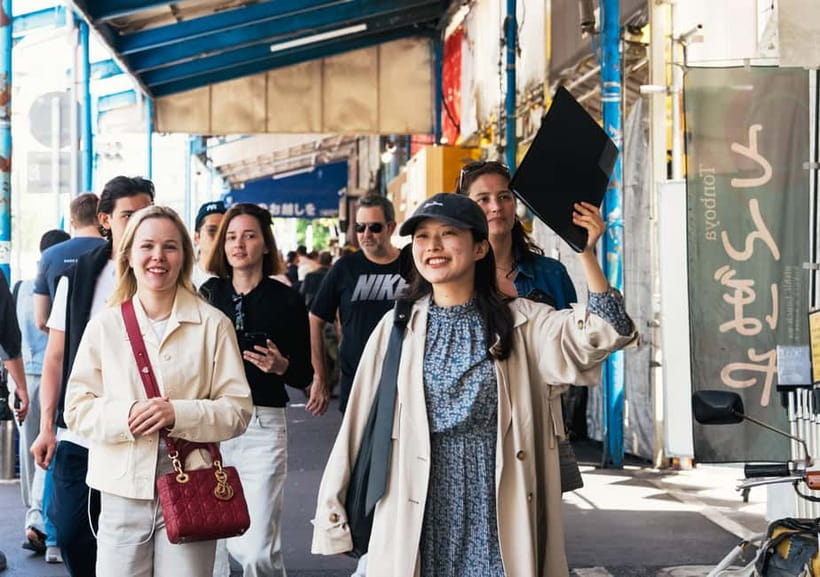
At $22 per person, this is a low-cost way to get an organized introduction to Tsukiji. You receive a guide, a temple visit, a structured market walk, food tastings, and an explanation of ingredients and cooking traditions.
The value is strongest if you are new to Tokyo or uncomfortable ordering food in an unfamiliar market. The guide saves you time, explains what you are seeing, and can steer you toward good choices. Several people have also found the portions and tastings substantial enough to feel full by the end.
Read the price correctly, though. The tour fee does not mean you can purchase every appealing snack without extra cost. The experience gives you tastings, while the market also offers optional food to buy. Bring cash, decide what you most want to try, and avoid spending your entire food budget at the first stall.
If you have already spent a lot of time in Tsukiji and are comfortable speaking with vendors, you may be able to explore independently. One person felt the market could be visited with a little research. That is fair. The tour’s advantage is not access to a secret marketplace. It is the guide’s interpretation, route planning, and help with food choices.
Who will enjoy this tour most?
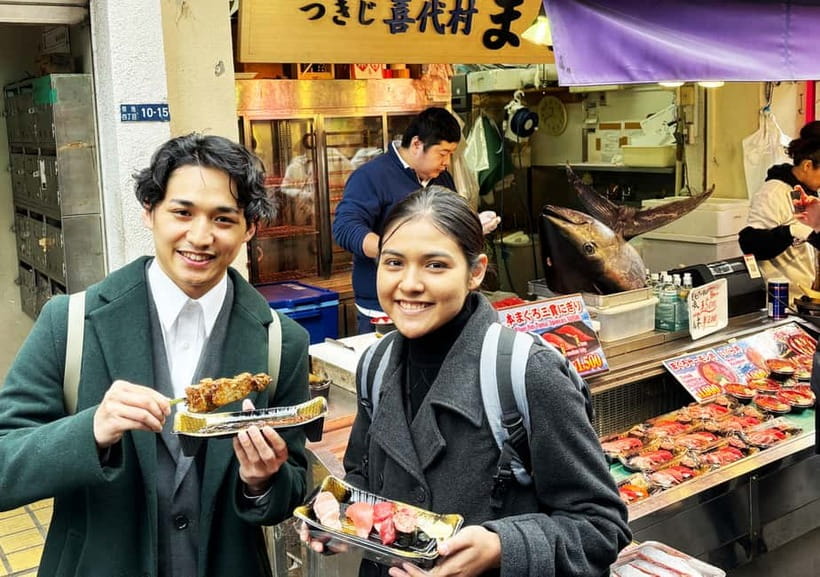
I would recommend it to first-time visitors to Tokyo, food-focused travelers, couples, and small groups who want a friendly introduction without spending half a day. It also suits people who want to try seafood but need help understanding what they are ordering.
The experience works well for adventurous eaters because the guide can introduce unusual ingredients gradually. It also suits cautious eaters, since you can ask questions and choose what you want to taste.
Families may appreciate the short two-hour format, though very young children may find the crowded market and standing less comfortable. The wheelchair-accessible designation is useful, but anyone with mobility concerns should still confirm the exact meeting arrangement and route conditions.
You should skip it if your main goal is a long, independent shopping session or a full restaurant-style meal. This is a guided sampler and cultural walk, not a private food feast or a behind-the-scenes tour of every part of the market.
Booking details worth knowing
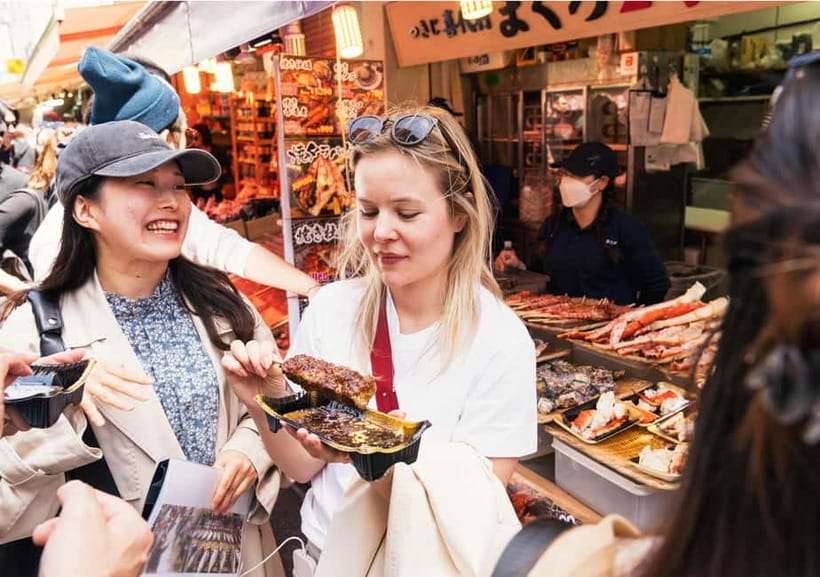
The tour lasts two hours and is conducted in English by a live guide. Small groups are available, and some bookings may feel especially personal when attendance is low. That matters in Tsukiji because a smaller group can make it easier to hear explanations, ask questions, and move between stalls.
Bring cash, comfortable shoes, and an appetite. Check the meeting-point instructions carefully because the starting option may vary, even though Tsukiji Hongwanji Temple is the key location.
Free cancellation is available up to 24 hours before the experience for a full refund, and you can reserve now and pay later. Those options are useful if your Tokyo schedule is still shifting.
Should you book the Tsukiji market walk?
Book it if you want a guided first taste of Tsukiji, especially if you value food explanations as much as the food itself. The temple opening, fresh wasabi, fish preparation, and range of tastings give the visit more shape than a simple wander through market stalls.
Choose a day when more shops are open, carry cash for optional purchases, and arrive ready to sample rather than just photograph. If you prefer complete independence, you can explore Tsukiji alone. But for $22, this tour offers a practical introduction, useful food advice, and a better chance of understanding what you are eating.
FAQ
How long does the Tsukiji Fish Market tour last?
The experience lasts two hours. The schedule includes about 20 minutes at Tsukiji Hongwanji Temple, around 80 minutes of guided market exploration and tastings, and another 20 minutes in the outer market.
Where does the tour meet?
The main meeting location is Tsukiji Hongwanji Temple, but the exact starting option may vary by booking. Check your confirmation for the final meeting details.
What foods can I expect to try?
Possible tastings include tuna, sushi, wagyu, eel, grilled scallops, fish cakes, omelets, dumplings, skewered octopus, and other traditional market foods. The exact selection depends on the available shops and the day.
Is fresh wasabi included?
The experience includes a special wasabi set provided by the guide. Freshly grated wasabi may be used with the food tastings to show how it affects flavor.
Do I need to bring cash?
Yes. Cash is listed as an important item to bring. You may also want to buy additional food or market products beyond the included tastings.
Can I take the tour on a Wednesday, Sunday, or national holiday?
Yes, tours are still possible on those days, but about half of the Tsukiji Outer Market shops may be closed. The food selection and market atmosphere can differ from a usual day.
Is the tour wheelchair accessible?
Yes, the activity is listed as wheelchair accessible. Because the route passes through an active market, check the meeting details in advance if you need specific accessibility arrangements.
More Street Food Walking Tours in Japan
- Tokyo Tsukiji Fish Market Food Tour: 15 Stops & Walk Local Street
★ 5.0 · 139 reviews - Tokyo: Guided Walking Tour of Tsukiji Market with Breakfast
★ 4.4 · 134 reviews - Tokyo: Tsukiji Market Walking Tour & Sushi Cooking Class
★ 4.6 · 122 reviews - Tokyo’s Kitchen: Tsukiji Market Food & Culture Walk
★ 4.7 · 74 reviews
More Street Food Market Tours in Tokyo
- Tokyo: Tsukiji Fish Market Sushi Making Class with Pro Chef
★ 4.9 · 506 reviews - Tokyo Food Tour Taste Fresh Delights at Tsukiji Market
★ 5.0 · 429 reviews - Tokyo Tsukiji Fish Market Tour and Sushi Making Lesson
★ 5.0 · 390 reviews - Private Toyosu & Tsukiji Market Adventure with Tuna Auction
★ 4.8 · 191 reviews
Just added around Tokyo
- Tokyo: Tsukiji walk & sushi private tour with Uni Students★ 5.0 · 17 reviews
- Tokyo: Private Tsukiji Street Food & Sake with Local Guide★ 5.0 · 3 reviews
- Tokyo: Tsukiji Market Guided Tour & Sushi-Making Experience★ 4.4 · 11 reviews
- Tokyo: Tsukiji Market and Hama-rikyu Gardens Guided Tour★ 4.8 · 73 reviews
- Tokyo Tsukiji Food & Culture Private Tour Licensed Guide★ 4.9 · 28 reviews
- Tokyo: Tsukiji Fish Market Foodie and Educational Tour★ 5.0 · 4 reviews
- Tokyo: Tsukiji Fish Market Culture Tour with Sashimi Tasting★ 4.6 · 54 reviews
- Tokyo: Tsukiji, Ginza, and Asakusa Japanese Culture Tour★ 5.0 · 2 reviews
Tokyo Street Food Tours, compared.
Tokyo Tsukiji Fish Market Food and Culture Walking Tour
Read our review →
Tokyo: Tsukiji Fish Market Food and Walking tour
Read our review →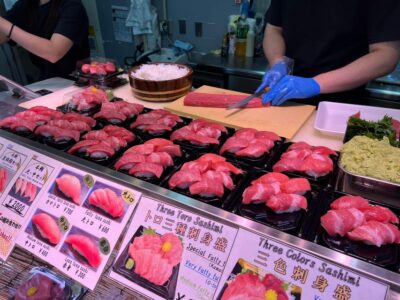
Tokyo: Tsukiji Fish Market Guided Walking Tour
Read our review →
Tokyo Sushi Making Class in Tsukiji with Professional Chef
Read our review →
Tsukiji Fish Market Guided Tour and Sushi Making with Pro Chef
Read our review →Tokyo: Tsukiji Fish Market Food and Culture Walking Tour
Read our review →
Tsukiji Fish Market: Street Food & Culture Walking Tour
Read our review →