
REVIEW · KYOTO STREET FOOD TOURS
Gyoza Cooking Class in Kyoto: Traditional Japanese Dumplings
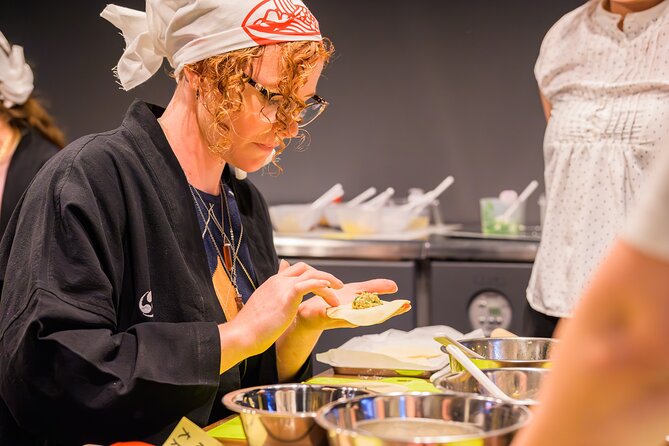
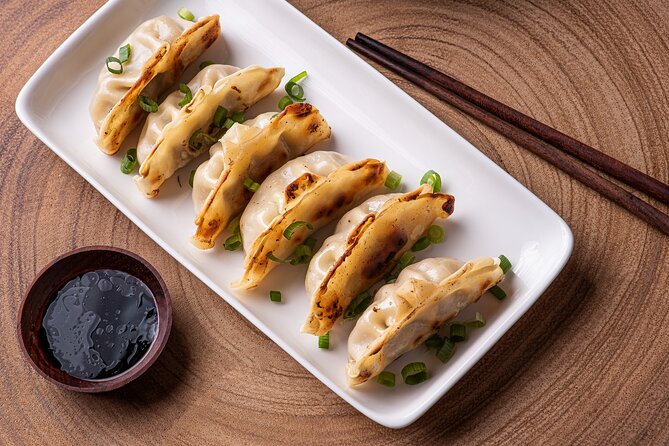
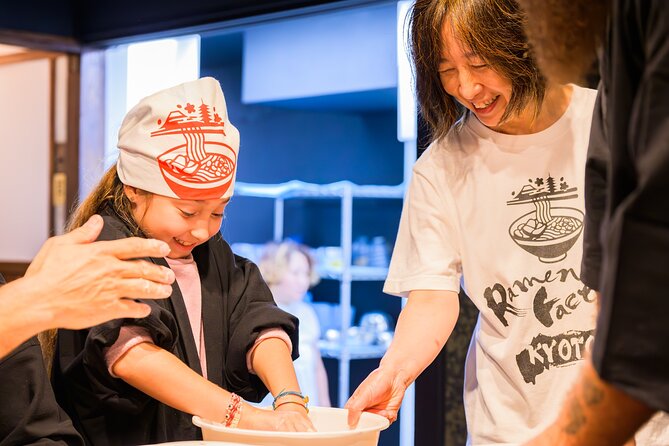
The best part of this Kyoto activity is that you do not simply eat gyoza, you make the whole dumpling from scratch. In a traditional townhouse, you choose a filling, prepare wrappers, learn the folds, and cook roughly 10 to 12 dumplings per person. Hama, Maya, Ryo, and Yo are among the English-speaking instructors who lead the class.
I like the personal working stations and the fact that you take home an apron, not just a few food photos. I also like the optional Samurai armor session, which gives families and first-time visitors a playful link to Kyoto’s past. The main consideration is price: at $118.19 per person, this is not a cheap meal, and the advertised 90 minutes may stretch closer to two hours.
Key points to know before booking
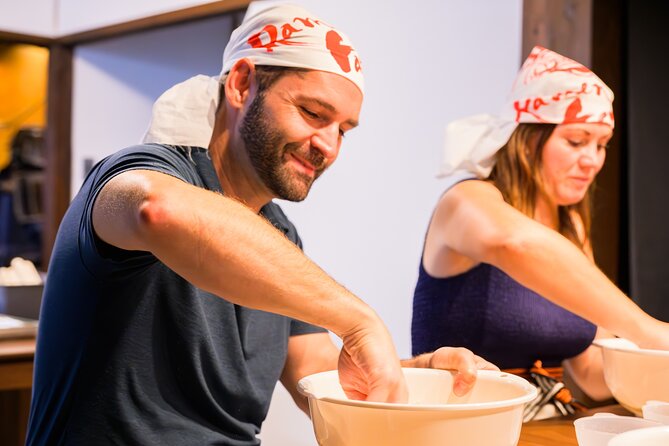
- Make gyoza from the beginning: You prepare the wrappers, select a filling, fold the dumplings, and cook them yourself.
- Learn in a traditional Kyoto townhouse: The setting gives the class more character than a standard modern cooking studio.
- English-speaking instructors lead the class: Hama, Maya, Ryo, and Yo are named instructors associated with the experience.
- Expect about 10 to 12 dumplings per person: Several class details point to a satisfying meal, so arrive ready to eat.
- Try Samurai armor after cooking: The dress-up session is optional and works especially well for family photos.
- Bring home a useful souvenir: An apron is provided, and you can ask about receiving the recipe before you leave.
Making Japanese gyoza in a Kyoto townhouse
Gyoza began in China, but Japan developed its own familiar version of the dumpling. This class gives you a practical way to see that evolution through food. You are not watching a chef perform from across the room. You are working through each stage yourself.
The class takes place at 230-1 Kamimyōkakujichō in Nakagyo Ward. That address is near public transportation, and the activity returns to the same meeting point when it ends. Private transportation is not included, so you need to make your own way there and back.
The townhouse setting matters. A cooking class can feel like a studio lesson anywhere in the world, but a traditional Kyoto home gives the activity a stronger sense of place. You still focus on a simple dish, yet the room connects the meal to the city around you.
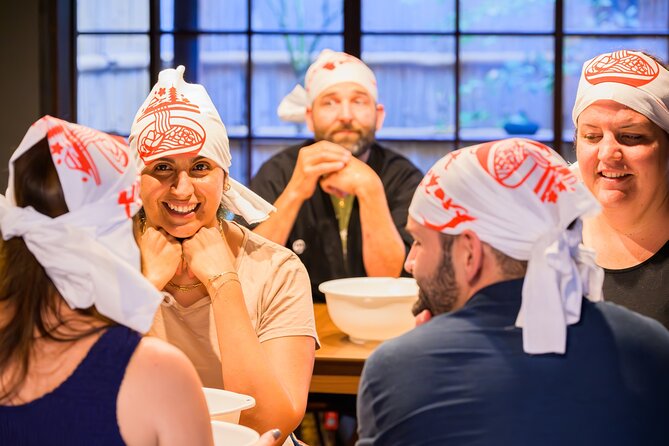
The maximum group size is 20 people. That is large enough for a lively class but small enough to retain a hands-on format, especially since the setup gives each person a personal working station. If you prefer a quieter lesson, an evening time may be worth considering. One participant booked the 6:00 pm class and ended up with a private session because no one else had booked it.
That private experience cannot be guaranteed, of course. Still, the possibility is useful to know. Smaller groups may give you more time to ask questions, practice the folds, and chat with the instructor.
More Dumpling and Dim Sum Tours in Japan
- Gyoza Cooking Class in Kyoto: Traditional Japanese Dumplings
★ 5.0 · 12 reviews - Ramen and Gyoza Cooking Class in Osaka
★ 5.0 · 202 reviews - Cooking Ramen&Gyoza/KatsuCurry/Bento/Okonomiyaki+Store Tour@Osaka
★ 5.0 · 138 reviews
Choosing a filling and preparing the wrappers
The cooking begins with choices rather than a fixed meal placed in front of you. You select your preferred filling, then work through the ingredients and tools provided for the class. The exact filling options are not specified, so you should not assume the class covers every dietary need or offers a particular meat-free choice. If food restrictions matter to you, ask the provider before booking.
The wrapper lesson is one of the strongest parts of the experience. Many people know gyoza as neat crescent-shaped dumplings, but the wrapper is the foundation. You make it from scratch, then learn how to handle it without tearing it or overfilling it.
That is where an instructor makes a real difference. Hama has been praised for making the steps easy to follow, while Maya is noted for clear English and a friendly teaching style. Ryo is described as personable, and Yo brings an easygoing manner to the class. The instructor names may vary by session, but the format remains the same.
You might also get paper practice before working with the real wrappers. That small step can save frustration. Folding gyoza looks simple until the first wrapper refuses to close properly. A quick practice run lets you understand the motion without wasting food.
Do not worry about making every dumpling look identical. The value is in learning a repeatable technique you can use at home. By the end, you should have more confidence handling the wrapper, adding the filling, and sealing the edges.
Folding 10 to 12 dumplings per person
Once the wrappers and filling are ready, you shape the gyoza. This is the most social part of the lesson, since everyone is working with the same basic task while comparing their folds and results.
The class produces around 10 to 12 dumplings per person. That number makes the price easier to judge because you are not paying for a tiny tasting portion. You are making enough food for a proper snack or light meal, plus gaining a skill you can repeat at home.
I like this kind of cooking activity for families with older children and teenagers. The work is active without being physically demanding, and the steps are simple enough to follow with help. One family with a 10-year-old found that everyone could take part, including the cultural and Samurai elements.
Younger children may need help with the wrapper and filling, but the available information does not set a minimum age. If you are booking with children, check age requirements directly before paying.
The class also works well for couples, friends, and solo visitors. A solo participant may find the small-group format particularly useful, and a quiet session could possibly become a private lesson. You can ask questions about Japanese food, gyoza, or Kyoto while your hands stay busy.
Cooking the dumplings with a professional machine
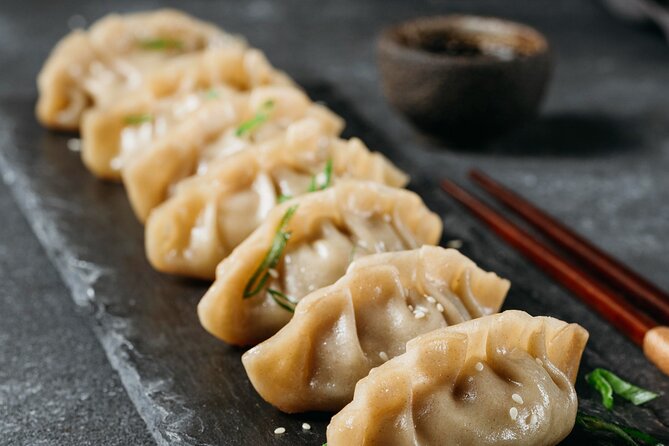
The final cooking step uses a professional baking machine. This removes some of the uncertainty that comes with cooking gyoza at home. You still make and fold the dumplings, but the equipment helps produce a reliable result.
That is good news if you care more about learning and eating than mastering every bit of restaurant technique. You will not be left guessing about heat, timing, or whether the bottoms have cooked properly.
At the same time, the machine means this is not a full lesson in every traditional pan-frying method. The class focuses on making the dumplings and getting them cooked well. If your goal is to reproduce the exact cooking setup at home, ask the instructor how to adapt the method to your own kitchen.
The finished food is the payoff. You eat what you have prepared, and the portion of 10 to 12 gyoza gives you a real sense of the work involved. Arrive hungry, especially if you have come straight from sightseeing.
A few practical touches make the class more useful after the trip. You receive an apron as a souvenir, and one participant also kept a headband. If you want the recipe, ask before leaving. In one case, a recipe was forgotten at departure and the provider offered to send it afterward, but it is better to request it while you are there.
More Dumpling and Dim Sum Tours in Kyoto:
- Hong Kong: Street Food Tour with Locals – Dim Sum and Wonton
★ 4.8 · 673 reviews - Warsaw’s No 1 cooking class-Polish dumplings with liqueur tasting
★ 5.0 · 576 reviews - Hong Kong Day Tour: Priority Peak Tram, City Walk & Dim Sum
★ 4.5 · 266 reviews - Xi’an: Great Tang Dynasty Night Show & Dumpling Meal Option
★ 4.4 · 177 reviews
The Samurai armor photo session
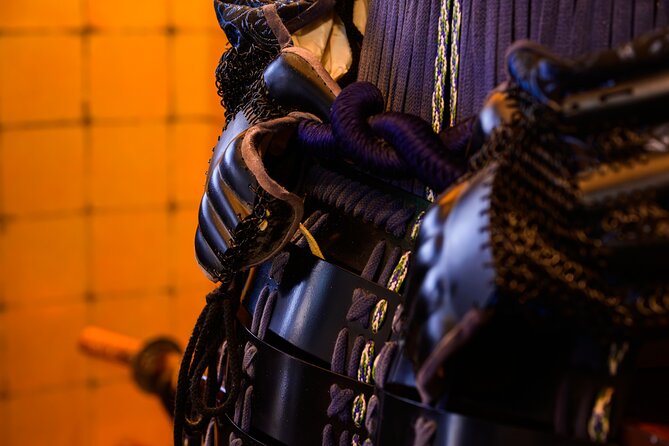
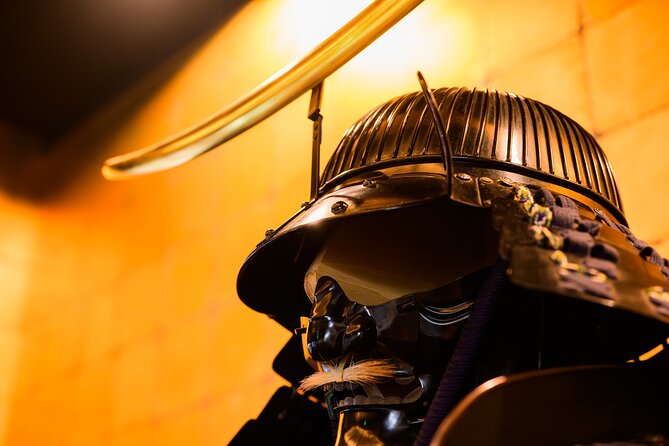
After cooking, you may have the option to dress in Samurai armor and take photos. This is not required, so you can skip it if you would rather finish with the food or keep the activity focused on cooking.
For families, the armor adds a second activity after the dumplings are finished. It gives children a clear memory of the day and creates photos that feel different from the usual temple snapshots. Adults who enjoy Japanese history and costume photography may also find it worthwhile.
Keep your expectations in check. This is an optional photo moment, not a full Samurai history tour or martial arts lesson. The cultural discussion is woven into the cooking class, with some attention to Japanese history and Samurai culture. If you want an extended historical lecture, this is not the right booking.
The combination works because it balances food and culture. Gyoza gives you something to do with your hands, while the armor adds a visual connection to Japan’s past. Neither part needs to carry the entire experience on its own.
What the English instruction is like
The class is designed for English-speaking visitors. Clear instruction matters here because the work has several small stages, from preparing wrappers to sealing the dumplings.
Maya’s English has been singled out as easy to understand, and Hama is praised for making the process simple and fun. Ryo and Yo are also described as personable instructors. The exact teacher depends on the session, but the class is built around direct guidance rather than a silent demonstration.
You should still ask questions when you need help. Cooking classes move at a set pace, and folding can be the one stage where a quick correction saves a lot of trouble. The maximum group size of 20 means the room may not feel private, but individual workstations help keep you involved.
The teaching style appears aimed at beginners. You do not need prior cooking experience to understand the basic sequence. The useful test is not whether your first dumpling looks perfect. It is whether you can make another one with less help.
Is $118.19 good value?
At $118.19 per person, this class is priced well above the cost of simply ordering gyoza in Kyoto. You should book it for the activity, instruction, cultural setting, and souvenir, not as a bargain meal.
The value improves if you want a hands-on experience that fits into a short sightseeing day. The scheduled duration is about 1 hour 30 minutes, though some sessions take closer to two hours. That longer timing can be a benefit if you like a relaxed pace, but it may matter if you have a restaurant reservation or evening train to catch.
You receive an English-speaking instructor, cooking tools, the food you prepare, and an apron. The optional armor photos add another memorable element. Private transportation is not included, so allow time and money for your own route to the townhouse.
I would compare the price with what you want from your Kyoto schedule. If you are only looking for a quick lunch, it is expensive. If you want to take home a practical skill and a souvenir while spending time in a traditional setting, the cost becomes easier to justify.
The class is especially good value for people who enjoy doing rather than simply seeing. You leave with more than a photograph of a meal. You know the basic process for making Japanese gyoza at home, and you can share it with family or friends.
Timing, meeting point, and cancellation details
The activity begins and ends at 230-1 Kamimyōkakujichō, Nakagyo Ward, Kyoto, 604-0025, Japan. It is near public transportation, but no private transfer is supplied. Use the mobile ticket and confirm the meeting details before setting out.
The experience has a maximum capacity of 20 people. Confirmation is provided at booking, and free cancellation is available when you cancel at least 24 hours before the start time. Cancellations or changes made inside that 24-hour window are not refunded or accepted, with the cut-off based on local Kyoto time.
Build in a little space around the advertised 90 minutes. The cooking itself may take about an hour and a half, while some sessions run to roughly two hours. That extra margin protects you from rushing through the final food or photo session.
Who will enjoy this class most?
I would recommend it to first-time visitors who want an easy introduction to Japanese food culture. You do not need to know much about gyoza in advance, and the lesson gives you a clear beginning, middle, and end.
It also suits families with older children and teenagers. Each person can take part, and the Samurai armor option adds variety. Couples and friends get a shared activity that is more engaging than sitting across a restaurant table.
Solo visitors should not dismiss it. A small booking may mean more direct time with the instructor, and one evening session became a private class. That cannot be promised, but the format is welcoming to individuals.
You may want to skip it if you have strict dietary requirements that have not been confirmed, if you dislike group activities, or if $118.19 feels too high for a dumpling lesson. You should also choose another experience if your main goal is a long, detailed study of Samurai history.
Should you book the Kyoto gyoza class?
Book this class if you want to make your own food, learn a simple skill, and leave Kyoto with an apron and a meal you prepared yourself. The traditional townhouse, personal workstations, English-speaking teachers, and optional Samurai photos give it more substance than a quick cooking demonstration.
I would especially choose it for families, food-focused visitors, and anyone who likes practical souvenirs. Hama, Maya, Ryo, and Yo are associated with a friendly, clear teaching style, and the class is structured for beginners.
Think twice if you are counting every yen or have a tight schedule. The price is high for gyoza alone, and the session may last closer to two hours than 90 minutes. For the right visitor, though, the lasting value is the recipe in your hands, the food on your plate, and the chance to recreate a small piece of Kyoto at home.
FAQ
Where does the gyoza cooking class meet?
The class meets at 230-1 Kamimyōkakujichō, Nakagyo Ward, Kyoto, 604-0025, Japan. It ends back at the same meeting point.
How long does the experience last?
The listed duration is approximately 1 hour 30 minutes. Some sessions take about two hours, so allow extra time if you have plans afterward.
Is the class taught in English?
Yes. An English-speaking instructor leads the class. Named instructors connected with the experience include Hama, Maya, Ryo, and Yo.
How many people can join?
The maximum group size is 20 people. Each participant has a personal working station.
Is Samurai armor included?
After the cooking class, you may optionally dress in Samurai armor and take photos. The armor activity is not required.
Can I cancel for a refund?
You can cancel for a full refund if you do so at least 24 hours before the experience start time. Cancellations and changes made less than 24 hours in advance are not accepted or refunded.
More Workshops in Kyoto
- Tokyo Sushi Making Class in Tsukiji with Professional Chef
★ 5.0 · 1,177 reviews - Tokyo: Tsukiji Fish Market Sushi Making Class with Pro Chef
★ 4.9 · 506 reviews - Mexican Cooking Class with Food Market Visit in Mexico City
★ 5.0 · 506 reviews - Buenos Aires: Empanadas and Alfajores Guided Cooking Class
★ 4.8 · 486 reviews
More Cooking Classes in Kyoto
- Nishiki Market Food Tour with Cooking Class
★ 4.9 · 42 reviews - Kyoto: Hands-on Takoyaki and Okonomiyaki Cooking (1 Hour)
★ 4.7 · 25 reviews - Small Group Cooking Class & Market Food Tour in Florence
★ 5.0 · 1,574 reviews - Athens: Food Market Visit and Cooking Class with Wine
★ 4.9 · 1,087 reviews
Just added around Kyoto
- Taste of Nishiki Market Walking Food Tour with Local guide★ 5.0 · 17 reviews
- Nishiki Market Food Tour with Cooking Class★ 4.9 · 42 reviews
- Golden Pavilion, Nijo Castle, & Nishiki Market Half day tour★ 5.0 · 29 reviews
- Kyoto:Seasonal Kaiseki Reservation at Hanasaki Nishiki★ 5.0 · 3 reviews
- Kyoto: Nishiki Market Tour with a Local Foodie & Tastings★ 4.5 · 67 reviews
- Kyoto: Hands-on Takoyaki and Okonomiyaki Cooking (1 Hour)★ 4.7 · 25 reviews
- Kyoto: Nishiki Market Food Tour with Local Guide★ 4.6 · 5 reviews
- Kyoto: Nishiki Market Food Tour★ 4.9 · 21 reviews
Kyoto Street Food Tours, compared.
Nishiki Market Brunch Walking Tour (7 Tastings + Brunch)
Read our review →
Kyoto Nishiki Market Food and Culture Walking Tour
Read our review →
Kyoto: Nishiki Market Tea Ceremony with Koto Performance
Read our review →
Kyoto: Local Food Tasting Tour at the Nishiki Market
Read our review →
Kyoto: Nishiki Market and Depachika Food Tour with a Local
Read our review →
Kyoto: Nishiki Market Tour with a Local Foodie & Tastings
Read our review →Browse the lists this tour appears in